
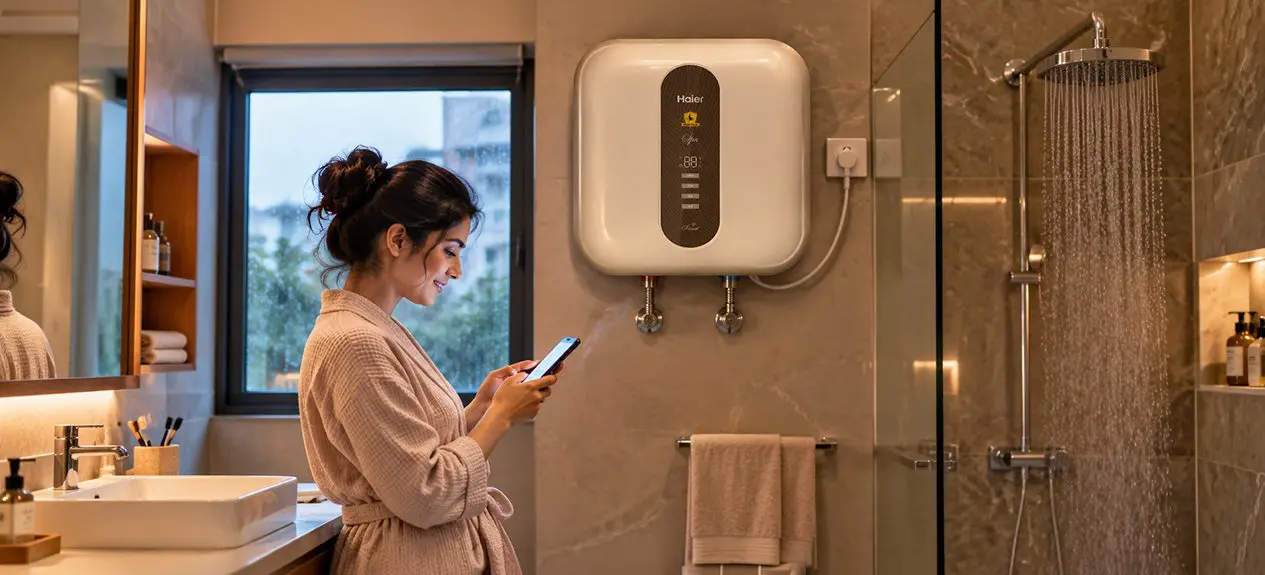

Many homes have hot water on tap every day, but the water heater usage could be quite different from home to home. Some keep it on at fixed times; others only when needed. A smart geyser adds another layer of control to this routine by bringing app-based features to everyday water heating.
For anyone considering a wifi water heater, the real difference isn’t just that the appliance can connect to a phone. More important is how those linked features fit into everyday routines, how much control they offer, and whether they make the experience more useful in the long term.
So what’s the difference between a regular water heater and a Wi-Fi-enabled one?
What Makes a Wi-Fi Geyser Different from a Regular Water Heater?
It’s not as easy as connecting the appliance to Wi-Fi. A smart model can add a more connected layer to everyday use, making it easier to understand the geyser status, interact with its functions and manage it as part of a broader home routine.
- You can easily check the geyser’s operating status. Depending on the model, the connected interface can provide information on whether the water heater is on and give useful information on what it is currently doing.
- You can receive selected alerts on the interface you are connected to. Some smart water heaters can send some operating updates or notifications via the app. This adds another level of awareness than a normal geyser that mostly relies on physical indicators.
- Controls are integrated into one digital interface. A Wi-Fi-enabled model will allow supported controls and information to be displayed in one interface, instead of having different functions accessed only by buttons or knobs on the unit.
- It’s a more natural fit for a connected-home routine. If you already have app-controlled appliances in your home, a Wi-Fi geyser can be added to the connected setup. This is less about adding the technology for the sake of technology, and more about making appliance management feel more integrated.
How Does Smart Geyser Scheduling Work?
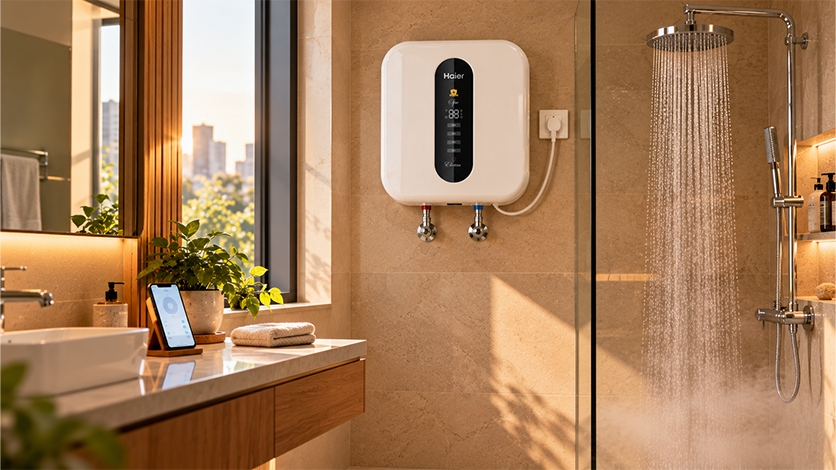
Smart geyser scheduling enables you to schedule your water heater to operate in advance, rather than having to manually switch it on each time. Usually, you can select a preferred time and, depending on the model, the required water temperature as well using a compatible app. It will follow that schedule as long as the power supply and Wi-Fi connection are there when the schedule is saved.
This can be particularly useful in homes with relatively predictable hot-water timings such as for morning baths or evening use. Instead of having to remember to switch on the geyser every day, the schedule becomes part of the routine, with the ability to change the settings when plans change.
Wish to know about the boom of Wi-Fi-enabled water heaters?
Read through The Rise of Wi-Fi Connected Water Heaters: Benefits for Modern Homes
How Can Scheduling Hot Water Help Reduce Power Use?
The advantage of scheduling is that it gives more distinct limits to the heating cycle. Instead of treating every day the same, users can decide when the geyser really needs to work and remove heating periods that are not serving a practical purpose.
- Avoids heating when not needed at certain times of the day. A geyser does not have to run in the same window each day. Scheduling can keep it dormant during working hours, late nights, or other times when hot water is unlikely to be needed.
- You can have different heating plans for different days. Water-use patterns often vary between weekdays and weekends. Rather than following the same heating pattern seven days a week, a flexible schedule can match those changes.
- Heating can be turned off when the house is empty. Holidays, days no one is at home, or when you are away travelling, scheduled heating can be switched off or adjusted. This helps prevent the use of electricity for hot water that would otherwise not be used.
- Improved planning of several hot-water periods. If hot water is required at two different times during the day, the user can set specific heating windows for those times, as opposed to the geyser constantly running in between those times.
What Else Can You Do with Geyser App Control?
Connecting a water heater to an app can take the experience beyond basic heating controls. Depending on the model and app, the user has access to settings and support functions that make the appliance easier to handle over time.
- From one location, you can control the operating modes. Some of the connected water heaters have different modes to meet different usage requirements. An app will make it easier to see and select the supported mode than to fiddle with a number of controls on the appliance.
- Receive useful notifications or alerts. Compatible apps will be able to notify you about certain functions or appliance activity. It can make it easier to stay up to date without having to physically check the geyser
- Easier access to device preferences. Digital controls can display available settings more neatly than physical buttons or displays. This can be handy when users want to view or alter the configuration of a given function.
- Basic appliance support. Depending on the platform they are connected to, users may also be able to use the app for product information, troubleshooting guidance or other support options. This can help make the daily situations of appliance management easier.
When Is a Smart Geyser Most Useful at Home?
A smart geyser does not have equal utility in every house. The value is more apparent when the use of hot water creates practical needs beyond simple on-and-off operation.
- In homes with a hot-water demand that can vary day-to-day. On some days, some households use a lot more hot water than others. A smart geyser can provide you with more flexibility when usage is not fully predictable.
- In homes with frequent visitors or changing occupancy. If rates for hot water usage change, more control over the geyser can make it easier to adapt without relying on one set usage pattern.
- In homes where users don’t want to do unnecessary manual intervention. Those who prefer to make fewer repeated adjustments throughout the day may find daily operation feels more streamlined with smart features.
- In homes that want more control over comfort settings. Others just want more control over how their water heater works, not just basic preset operation. That’s where a clever model can give you that extra bit of control that’s really useful.
Is a Wi-Fi Geyser Worth It for the Way You Use Hot Water?
If a Wi-Fi geyser is worth it or not depends a lot on how you use hot water at home. The added convenience can be a big deal if you’re planning on using things like app-based controls, flexible settings and connected functions often. By contrast, if you have a very simple water-heating routine that doesn’t change much, you may already be doing what you need with a basic model.
So, is a Wi-Fi geyser worth it? The real question is, do the smart features actually solve a real-world, everyday issue, or are they just another layer of technology? Before you make up your mind, you should compare these features with the basics like capacity, energy rating, insulation, safety and pressure suitability.
What Should You Look for When Choosing a Smart Water Heater in India?
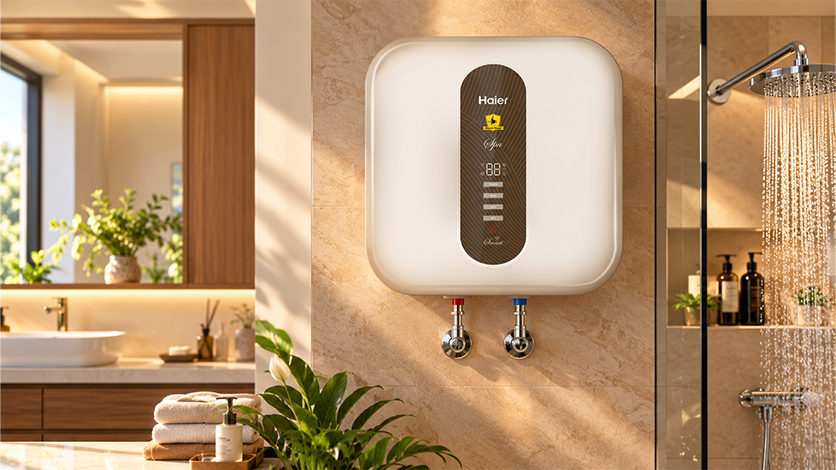
After the basic water heating needs are met, the next thing is to check how well the smart features are implemented. A water heater that’s attached should be easy to use in everyday life, not just impressive on a feature list.
- See how easy the app is to use. Controls should be simple enough that you can get by without having to dig through complicated menus. A good app should speed up the process of routine adjustments and reduce the learning curve.
- Find a connection that is secure and dependable. The smart features are only as good as the geyser’s ability to reliably connect to the home network and app. Frequent disconnects can make connected functions frustrating to use.
- Verify that the app is updated and supported regularly. Long-term, software support is a key thing. Phones and operating systems change over time, and apps that are consistently updated are more likely to remain compatible, secure and functional.
- Make sure the smart features are actually smart for you. That features are more interconnected doesn’t make a model better. The best smart geyser is one that has features that are in line with how you actually use hot water, instead of adding options that you are unlikely to use.
How Haier Smart Water Heaters Make Hot-Water Scheduling More Practical
Our goal is to develop smart water heaters that make hot-water routines easier to manage, not just more connected. In select Haier models, we pair scheduling, memory functions and remote control with practical features that support day-to-day performance, efficiency and durability.
- Schedule Mode allows us to make heating more predictable
You can use the app to change the exact time the water heater turns on and the temperature you like best. This means you can schedule the heating for a morning bath, evening routine or other regular requirement, instead of just manually turning it on and off.
- Smart Timer helps us keep up with recurring routines
Our Smart Timer feature is designed for homes that use hot water regularly at the same times of day. It has a defined operating period so users can get into a more organised routine without having to make the same adjustments each time.
- Smart Memory makes it easy to use again and again
If your hot-water preferences are more or less the same from day to day, our Smart Memory function comes in handy. It also helps to minimise repeated setting changes and makes the whole experience feel more uniform for everyday household use.
- The features are integrated into the Haier Smart Wi-Fi Water Heaters
Our Haier 25L Square 5 Star Water Heater Smart WiFi has Smart Timer, Smart Memory and Remote Control. It comes with a 5-star BEE rating, 8-bar rated working pressure, PUF insulation, overheat and over-pressure protection and a corrosion-resistant UMC tank. This allows us to combine convenience with the basic performance and protection features that still count in everyday water heating.
Conclusion
The best smart geyser is one whose connected features are able to solve a real-world everyday problem. Scheduling can move heating closer to when hot water is really needed, and app control can make it easier to change when routines change.
Wi-Fi alone doesn’t make a water heater energy-efficient. The real value lies in sensible use of the scheduling and remote controls, along with the right capacity, insulation and energy rating.
Frequently Asked Questions
What is a smart Wi-Fi geyser?
A smart Wi-Fi geyser is a Wi-Fi-connected water heater that can be controlled using a companion mobile app. Depending on the model, you can turn it on and off, change the temperature and set heating schedules remotely.
Are Wi-Fi geysers worth it?
These are good for households that frequently change, schedule, or remotely control the temperature. The value is in the frequency of use of these smart features.
Do smart geysers save electricity?
They can help to reduce waste by allowing heating to be timed closer to when hot water is needed. However, actual electricity use will still depend on capacity, temperature settings, insulation and usage.
Can I schedule geyser hot water from an app?
Yes, we have Wi-Fi-enabled geysers where you can set heating schedules via an app. This ensures that hot water is available when you need it and not too early when you turn on the geyser.
How does smart geyser scheduling work?
You can program a preferred heating time or routine in the app, and the geyser will follow it when power and connectivity are available. You might find it’s easier to do this in the morning or at night.
Which is the best smart geyser in India?
The best smart geyser is based on the hot water needs of the home. When selecting, look at capacity, energy rating, insulation, pressure compatibility, safety features and app features.
Do smart Wi-Fi geysers save electricity?
Wi-Fi doesn’t save power, but smart scheduling and remote switching can help avoid unnecessary heating and re-heating.