
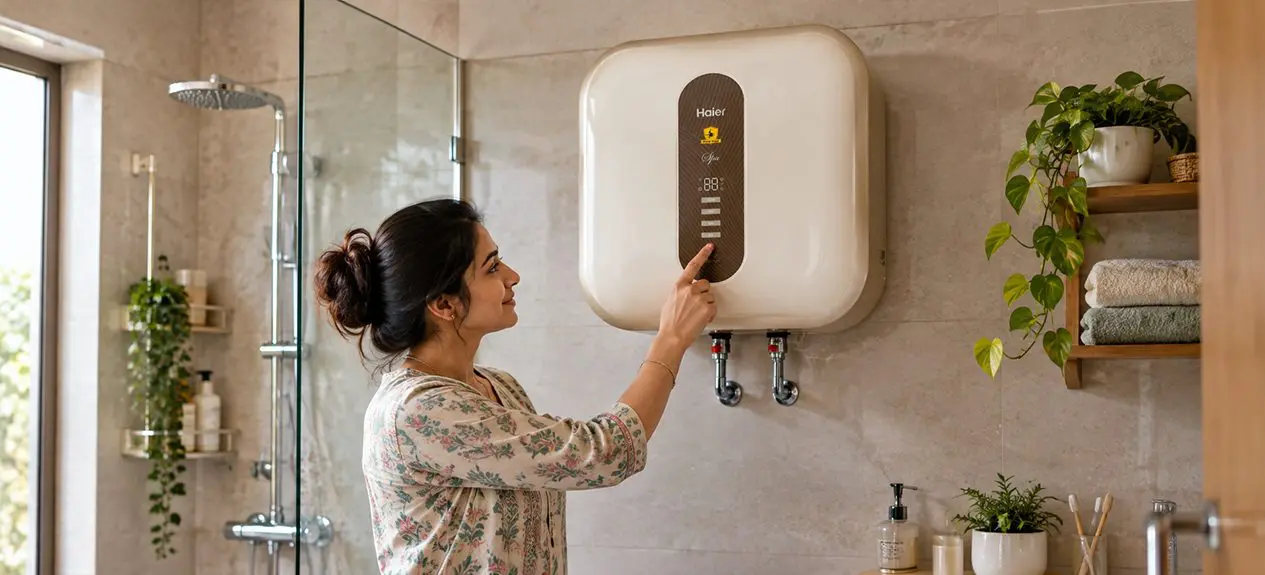

A water heater star rating is one of the first things many Indian households check before buying a geyser, yet what those stars actually mean often gets misread. A 5-star label does point to better efficiency within its category, but it doesn’t simply mean the heater draws less electricity every single time it runs.
For storage electric water heaters, the BEE rating ties primarily to standing loss, the energy lost by stored hot water sitting idle over time. Understanding that distinction makes it far easier to judge a 5 star geyser properly, estimate geyser electricity consumption with some accuracy, and decide whether paying more for a higher-rated model actually makes financial sense.
What Does a Star Rating on a Water Heater Actually Mean?
The BEE star label applies specifically to stationary storage-type electric water heaters, rating them from one to five stars based on energy performance. What it’s really measuring is how efficiently a tank holds onto heat, not simply the wattage of its heating element.
How the BEE Star Rating System Works (1 Star to 5 Star)
A rating anywhere from 1-star through 5-star reflects a different efficiency level within the applicable BEE bands. Higher ratings correspond to lower permitted standing loss under the relevant testing conditions.
In practice, this means a BEE star rating water heater carrying five stars is built to lose less stored heat than a lower-rated model would under BEE’s test conditions. It doesn’t mean the 5-star unit needs no electricity at all to heat fresh water coming in.
What “Standing Loss” Is and Why It Decides the Rating
Standing loss refers to the energy a filled storage water heater consumes while connected to power but not actively drawing water, once steady-state conditions kick in. BEE expresses this figure in kWh per 24 hours under a specified temperature difference.
Better insulation cuts this loss down. Once water has been heated, a well-insulated tank holds that heat longer, which reduces how much energy is needed to bring the stored water back up to temperature later.
How a 5-Star Water Heater Saves Electricity
The core efficiency advantage of a 5 star water heater comes from reducing heat lost while hot water sits in the tank waiting to be used. This matters most when a storage geyser stays switched on or needs to hold hot water between uses throughout the day.
A 5-star rating doesn’t mean the heater uses dramatically less electricity to raise a given quantity of cold water by the same temperature rise. That heating task depends mainly on how much water there is and how far its temperature needs to climb, not the star rating itself.
3 Star vs 5 Star: The Real Difference in Power Consumption
The real distinction in 3 star vs 5 star geyser models comes down to heat retention. A 5-star storage water heater carries a lower permitted standing loss than a lower-rated model under the same BEE test conditions.
If hot water gets used right after heating and the tank rarely sits around maintaining temperature, the gap in actual electricity bills can end up smaller than expected. For households that keep stored water hot for longer stretches, though, lower standing loss makes a more noticeable difference over time.
How Much Electricity a Geyser Uses per Month (by Capacity)
There’s no single monthly figure that applies across the board, since usage depends on how much water gets heated, the incoming water temperature, the desired temperature, how many heating cycles run, and standing losses on top of all that.
For example, heating 15 litres of water through a 40°C temperature rise takes roughly 0.70 kWh of heat. Doing that once a day for 30 days works out to around 21 kWh of useful heating energy. Actual water heater power consumption will land higher or lower depending on real-world conditions and usage patterns.
Across 10L, 15L and 25L storage heaters, the larger capacity generally needs more energy when the full tank is heated through the same temperature rise. A household’s geyser electricity consumption, then, depends far more on how much hot water actually gets used than on the star label alone.
Does Wattage Matter? 2000W vs 3000W and Your Bill
Geyser wattage determines how quickly electrical power reaches the heating element. A 3000W heater generally heats water faster than a 2000W unit under similar conditions, but it doesn’t automatically burn 50% more electricity heating the same quantity of water to the same temperature.
Running a 2kW heater for an hour uses about 2 kWh, while a 3kW heater running for that same hour uses roughly 3 kWh. If the higher-powered heater finishes the same job proportionately faster, though, total energy used can end up fairly similar between the two.
This is exactly why water heater power consumption is worth weighing alongside heating time, capacity, usage pattern and efficiency together, rather than fixating on wattage in isolation.
Are 5-Star Water Heaters Worth the Extra Price in India?
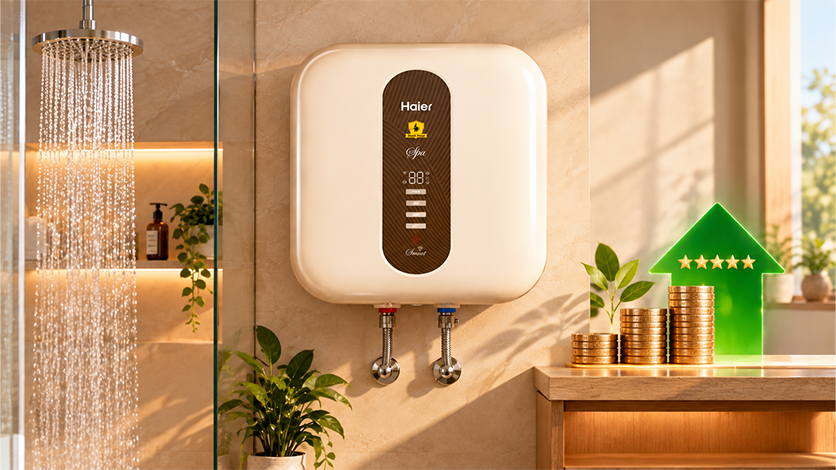
A higher-rated water heater earns its keep when it’s used often and holds hot water for extended stretches. That said, the actual financial payoff depends on the real difference in standing loss and how the household actually uses hot water day to day.
Price Gap Between 3-Star and 5-Star Models
The purchase price gap swings considerably based on capacity, brand, build quality and additional features. Star rating is only one piece of the overall pricing picture, not the whole story.
Our Haier 15L Square Spa Ivory 5 Star Water Heater comes with 2kW rated power, PUF/EPS insulation, an 8-bar rated working pressure and a glass-lined tank, backed by a 4-year product warranty and a 7-year tank warranty.
Payback Period: When the Savings Cover the Premium
The payback period hinges on the extra purchase cost against the actual drop in electricity use. It can be roughly estimated by dividing that extra upfront cost by the expected annual electricity savings.
There’s no universal payback period here, since electricity tariffs, daily usage habits, water temperature and how long the tank stays hot all vary quite a bit from one household to the next.
When a Lower Star Rating Actually Makes More Sense
A lower-rated storage heater can make sense when the initial purchase budget is the main concern and hot water only gets heated as needed. If the geyser gets switched off soon after use, standing losses simply don’t have much chance to build up.
For frequent daily use spread across several years, though, energy efficiency starts to matter more, since even fairly small reductions in heat loss add up considerably over time.
Do Instant (Tankless) Geysers Have Star Ratings?
BEE’s current residential energy documentation draws a clear line between instant water heaters (tankless) and storage water heaters: instant heaters carry no BEE 1-5 star rating, while storage water heaters fall squarely into that 1-5 star category.
That’s because the BEE star-rating methodology for storage heaters centres on standing loss from stored hot water specifically. An instant heater doesn’t hold a tank of hot water the same way, so the comparison simply doesn’t apply.
How to Check the Star Rating Before You Buy
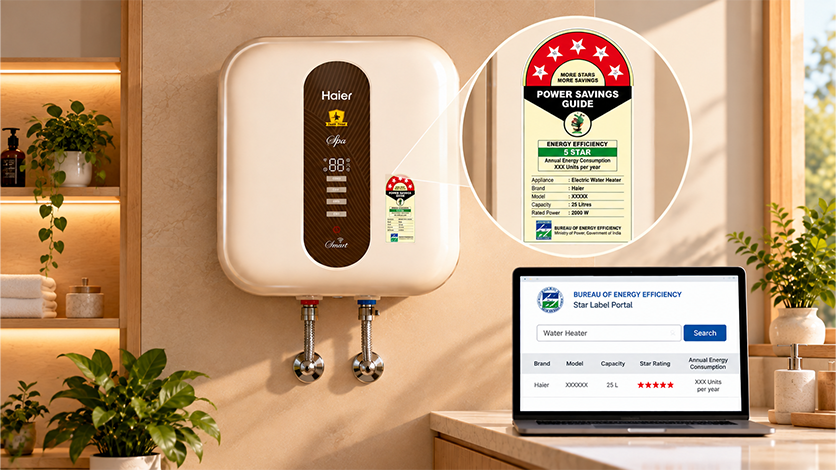
Look for the official BEE star label on the product itself, and verify the rating, capacity and other details shown alongside it. BEE also runs a Star Label portal with a search-and-compare facility for registered appliances, worth a quick check if you want to confirm things independently.
It’s also worth checking manufacturing or label validity information where that applies. Alongside the star rating itself, capacity, rated power, insulation, warranty and installation requirements all deserve a look too.
Common Myths About Water Heater Star Ratings
One common myth is that a 5-star heater always uses far less electricity than a 3-star one. The rating mainly reflects standing loss, so how much that translates into real bill savings depends heavily on usage.
Another misconception floating around is that a 3000W heater is automatically less efficient than a 2000W one. Wattage just indicates how fast electrical power gets delivered, while the actual energy needed for a heating task comes down to water quantity and temperature rise, not wattage alone.
For households hunting for the best 5 star water heater, the most useful approach weighs the BEE rating alongside capacity, insulation, heating needs, warranty and daily usage together. A 5-star rating can cut down on standby heat losses, sure, but the overall electricity bill still comes down to how much hot water the household actually consumes day to day.
FAQs
What does a 5-star rating mean on a water heater?
For a storage electric water heater, five stars point to a higher efficiency level based mainly on lower permitted standing loss under BEE’s testing conditions. It’s really about heat retention, not simply the heater’s wattage.
Is a 5-star geyser better than a 3-star one?
A 5-star storage geyser carries lower permitted standing loss than a lower-rated model under the applicable BEE criteria. Whether the extra cost is worth it comes down to usage, electricity tariffs, and how long hot water stays stored before use.
How much electricity does a 5-star geyser use?
There’s no fixed monthly number here. Consumption shifts with capacity, temperature rise, how much water gets heated, how often it’s used, and standing losses.
Do 5-star water heaters really save money in India?
They can cut down electricity wasted through heat loss from stored water. How much that actually saves depends on usage patterns, so a 5-star model doesn’t guarantee a fixed reduction on the electricity bill.
Is a 2000-watt or 3000-watt geyser better?
A 3000W heater generally heats water faster, while a 2000W unit draws less power at any given moment. Total energy needed for the same heating task can end up fairly similar once heating time is factored in.
How can I check a water heater’s BEE star rating before buying?
Check the official BEE star label on the product and verify the model details against it. BEE’s Star Label portal also offers a search-and-compare facility for registered appliances.
Which is better 2000 watt or 3000 watt geyser?
A 3000W model generally heats faster, while a 2000W model places a lighter instantaneous load on the electrical circuit. The better fit depends on heating speed needs, electrical capacity and usage patterns.
How much electricity does a 15 ltr geyser consume per month?
A 15L geyser’s consumption shifts with usage and temperature rise. As a rough illustration, heating 15L through a 40°C rise takes about 0.70 kWh of useful heat, before losses are accounted for.
Which is the best 5 star geyser in India?
The right 5-star geyser depends on capacity, household usage, installation conditions, warranty and the features you actually need. A 15L 5-star storage model tends to suit many individual or small-family bathroom setups well.