
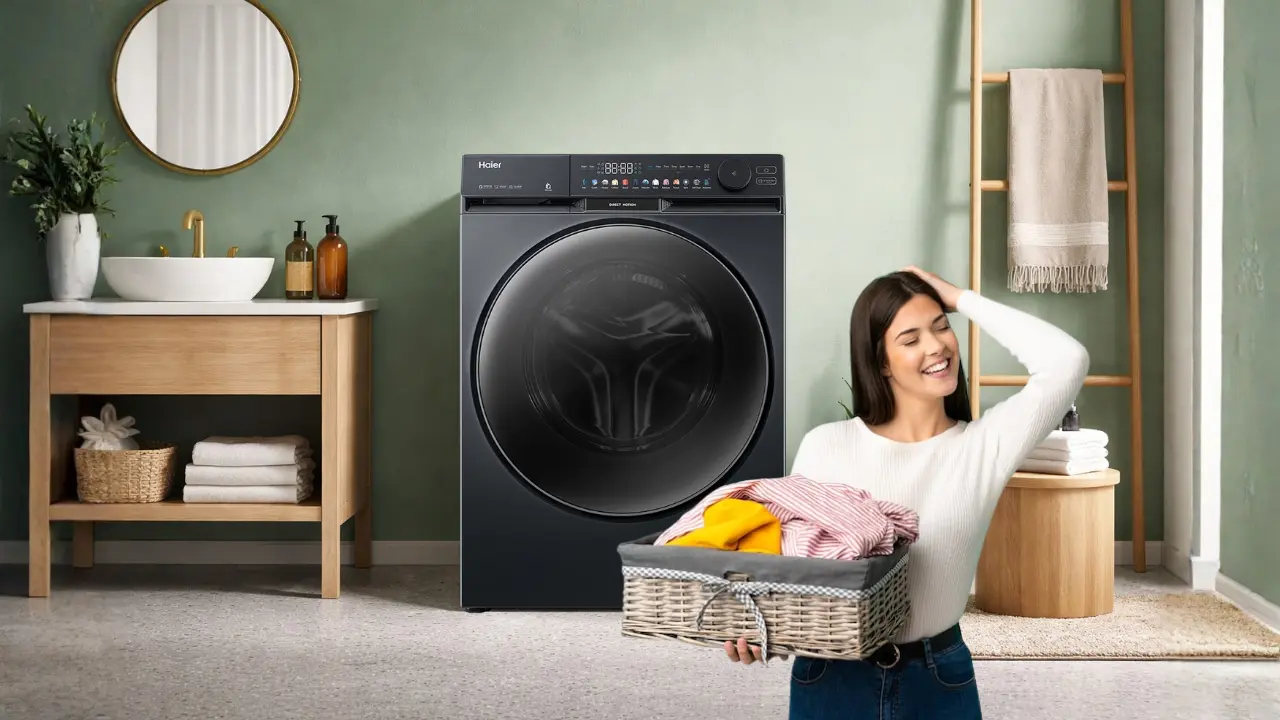

Better wash results today come from doing less, not more.
Less button pressing means fewer decisions, fewer mistakes, and far more consistent cleaning. Modern washing machines now sense fabric, load size, and dirt level automatically.
The result is clothes that come out cleaner, fresher, and better cared for, without you standing in front of a control panel making guesses.
This is not about convenience alone.
It is about intelligence quietly doing the work.
The moment every Indian home recognises.
It is a weekday evening.
Work is done. The phone is still buzzing. Dinner is half planned. One laundry basket waits patiently in the corner. Office shirts. Gym wear. Towels that need a proper wash.
You open the washing machine.
And then comes the pause.
Which program today?
Cotton or mix?
Extra rinse or normal?
What about spin speed?
Most people pick something familiar and move on.
Not because they do not care.
Because laundry should not demand thinking time.
This is exactly where less button pressing starts to matter.
Why more options often mean worse wash results
Here is a quiet truth most brands avoid.
Poor wash results usually come from human guesswork, not bad machines.
Wrong temperature weakens fabric.
Wrong spin speed stretches clothes.
Wrong water level wastes electricity and still leaves detergent residue.
Studies on appliance usage in urban households consistently show that most users rely on the same one or two wash modes, regardless of fabric type. Familiarity wins over accuracy.
When machines depend on manual decisions, wash quality becomes inconsistent by design.
That system is outdated.
The hidden system behind better washing
Better washing does not come from pressing more buttons.
It comes from removing friction.
Think of it like driving in traffic.
Manual gears demand attention.
Automatic gears free the driver to focus on the road.
Laundry works the same way.
The more decisions a washing machine asks from you, the higher the chance of error.
The fewer decisions it needs, the more predictable and reliable the outcome.
This is the thinking behind modern front load washing machines.
What less button pressing really means
Less button pressing does not mean fewer features.
It means smarter defaults.
Modern machines now use intelligent sensing to automatically decide:
- Fabric type based on movement and absorption
- Load weight through drum feedback
- Dirt level by monitoring wash water
- Water usage for each cycle
- Spin speed that balances cleaning and fabric care
In practice, one thoughtful action replaces ten uncertain ones.
You load the clothes.
You press once.
The system takes over.
That is not laziness.
That is intelligent design.
Why this matters more in Indian homes
Indian laundry is not simple.
Hard water in many cities
Mixed loads in almost every wash
Dust and humidity that demand frequent washing
Constant awareness of electricity and water use
Older washing machines assume ideal conditions.
Indian homes are rarely ideal.
When machines fail to adapt, people compensate. Longer washes. Extra detergent. Extra rinses.
The cost appears later as higher bills, faded clothes, and more wear.
Smart automation solves this quietly, without asking you to change habits.
How AI-led washing improves real results
Let us get specific.
Machines like the Haier 10 Kg Fully Automatic Front Load Washing Machine HW100-DM14F9BKU1 and the Haier 12 Kg F9 Front Load Washing Machine HW120-DM14F9BKU1 are designed around one-touch intelligence.
Instead of fixed programs, these machines analyse the wash in real time.
They respond instead of assuming.
For example:
- Light office loads get shorter cycles with lower water usage
- Mixed cotton loads receive drum movement that prevents tangling
- Delicate fabrics get gentler agitation automatically
- Heavier loads trigger deeper cleaning without manual input
This is where less button pressing delivers better wash results, not by chance, but by system design.
The quiet role of the AI Colour Panel
A common misconception is that smart machines are complicated.
In reality, the opposite is true.
The AI Colour Panel used in models like HW100-DM14F9BKU1 and HW120-DM14F9BKU1 simplifies interaction. Instead of long instruction manuals, the display guides choices visually and clearly.
You see what matters.
You ignore what does not.
The interface reduces hesitation, not adds to it.
Why drum size and motor design matter here
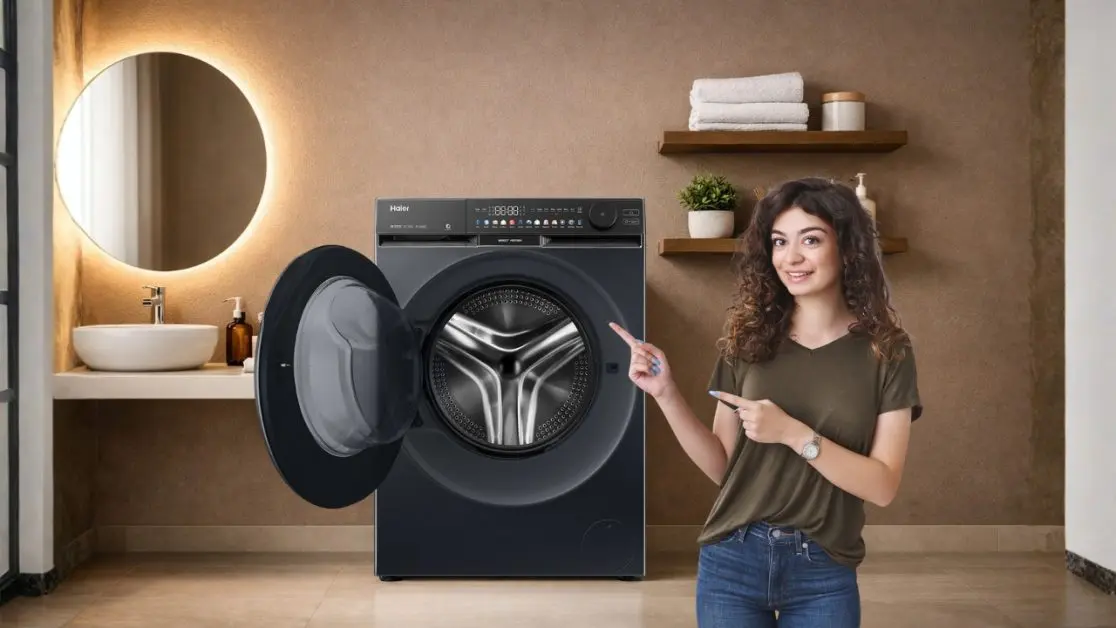
Automation only works when hardware supports it.
Large-capacity drums allow clothes to move freely instead of clumping together.
Advanced motors provide precise control at every stage of the wash.
Both the Haier 10 Kg and 12 Kg front load machines use a Direct Motion Motor. This motor connects directly to the drum, reducing vibration and improving control.
What does that mean in daily life?
- Quieter operation during night washes
- More stable spin cycles
- Better accuracy when adjusting wash intensity
Smart software needs reliable hardware to deliver real results.
Energy efficiency happens as a side effect
Most people choose intelligent washing machines for convenience.
Savings come later.
When machines adjust water, time, and spin automatically:
- Electricity usage drops without effort
- Water wastage reduces per wash
- Overwashing becomes rare
- Clothes last longer
Efficiency becomes an outcome of precision, not discipline.
That is how sustainable design should work.
Three approaches to washing clothes
Most households fall into one of these patterns.
Option 1: Manual control every time
- Full control
- High effort
- Inconsistent results
- Time-consuming
Option 2: Using the same program always
- Convenient
- Poor fabric care
- Inefficient water use
- Long-term damage
Option 3: Intelligent one-touch washing
- Minimal effort
- Consistent cleaning
- Optimised energy and water use
- Better fabric longevity
The third option wins quietly, especially in busy homes.
Why first homes and busy lives benefit most
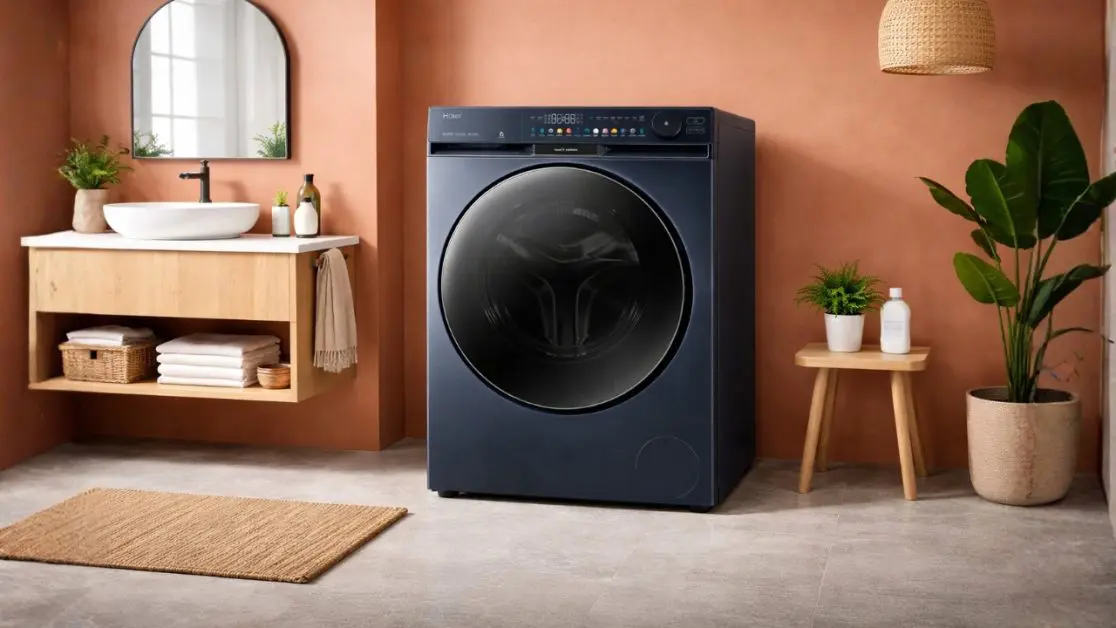
For couples setting up a new home, appliances shape daily routines for years.
For working professionals living solo, laundry often runs late at night.
For families, mixed loads are unavoidable.
In every case, simplicity matters more than control.
Machines that reduce involvement fit more naturally into real routines.
They do not demand attention.
They earn trust.
The future of washing feels boring, and that is perfect
The best appliances do not demand admiration.
They disappear into the background.
When laundry becomes:
- Load the clothes
- Press once
- Walk away
Life feels lighter.
No second-guessing.
No trial and error.
No unnecessary decisions.
Just clean clothes, ready when needed.
The one insight worth remembering
Good technology does not ask you to learn it.
It learns how you live.
Less button pressing is not about convenience alone.
It is about respecting attention, time, and everyday rhythms.
In Indian homes where days are full and choices are constant, that matters more than ever.
Clean clothes should not require strategy.
They should simply happen.
Frequently Asked Questions
Am I damaging my clothes by using the same wash mode every time?
Yes, gradually. Using one program for all loads often means:
1. Too much heat for delicate fabrics
2. Excessive spin that stretches clothes
3. Unnecessary water and detergent residue
Damage happens slowly, which is why most people do not notice until clothes fade or lose shape.
What does “less button pressing” really mean in practice?
It means:
1. You load the clothes
2. Press once
3. The system decides fabric care, water, time, and spin
Features still exist, they are just automated instead of manual.
What does “less button pressing” actually mean in daily use?
You load the clothes, press once, and the machine decides fabric type, water level, wash intensity, and spin speed automatically.
Why do I feel more confident using simpler panels?
Because reduced options lower hesitation. You act instead of second-guessing.
What’s the single biggest reason less button pressing improves wash results?
Because fewer human decisions mean fewer errors. Intelligence replaces guesswork, quietly and consistently.