
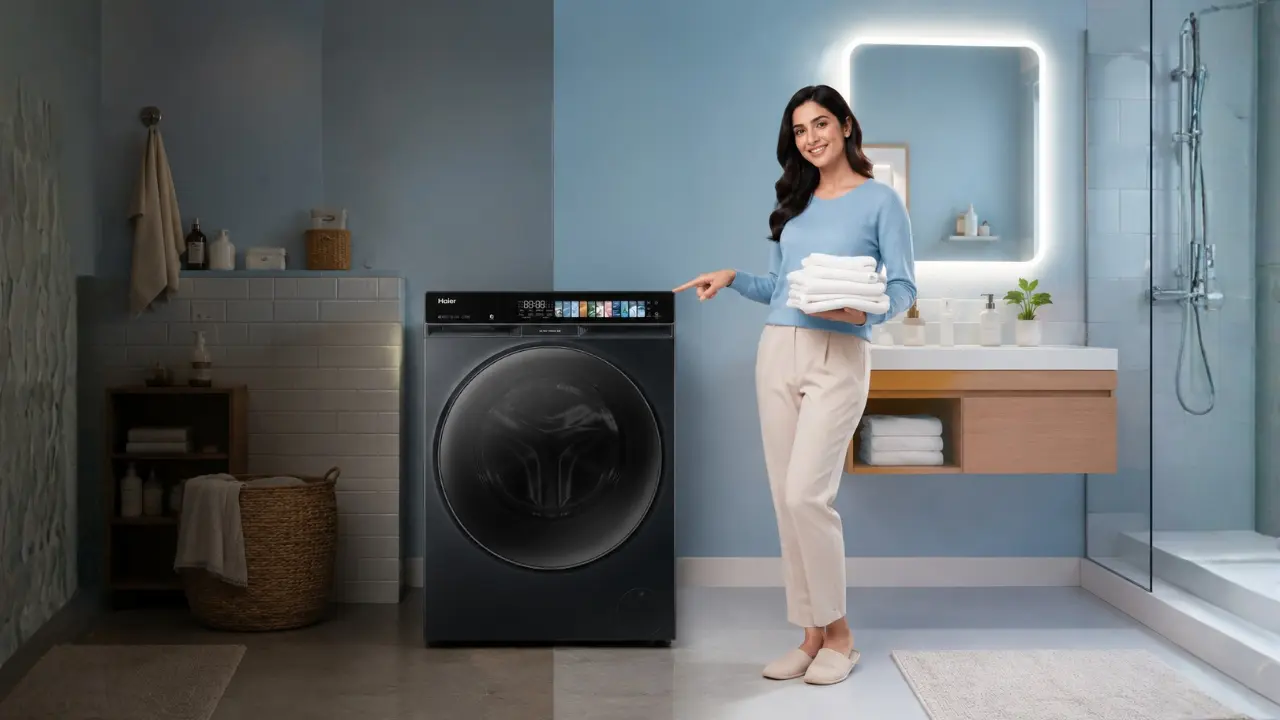

Smart panels are changing how Indian households interact with appliances. Traditional panels focus on basic control. Smart panels focus on clarity, speed, personalisation, and decision-making. The difference is not just technology. It is a cognitive load. One system asks you to remember. The other system helps you think less.
Summer evenings reveal appliance design faster than advertisements do.
A parent walks into the kitchen while talking on the phone. Someone else is checking laundry cycles before dinner. A teenager lowers the AC temperature after returning from coaching classes. The TV is already running highlights from the IPL match.
And in the middle of all this, nobody wants friction.
Nobody wants to decode symbols.
Nobody wants to rotate stiff knobs.
Nobody wants to search through confusing manuals.
That is the real shift happening inside Indian homes.
The conversation is no longer about appliances alone.
It is about interaction.
Because eventually, every machine becomes a user experience problem.
Traditional Panels Were Built for Control. Smart Panels Are Built for Context.
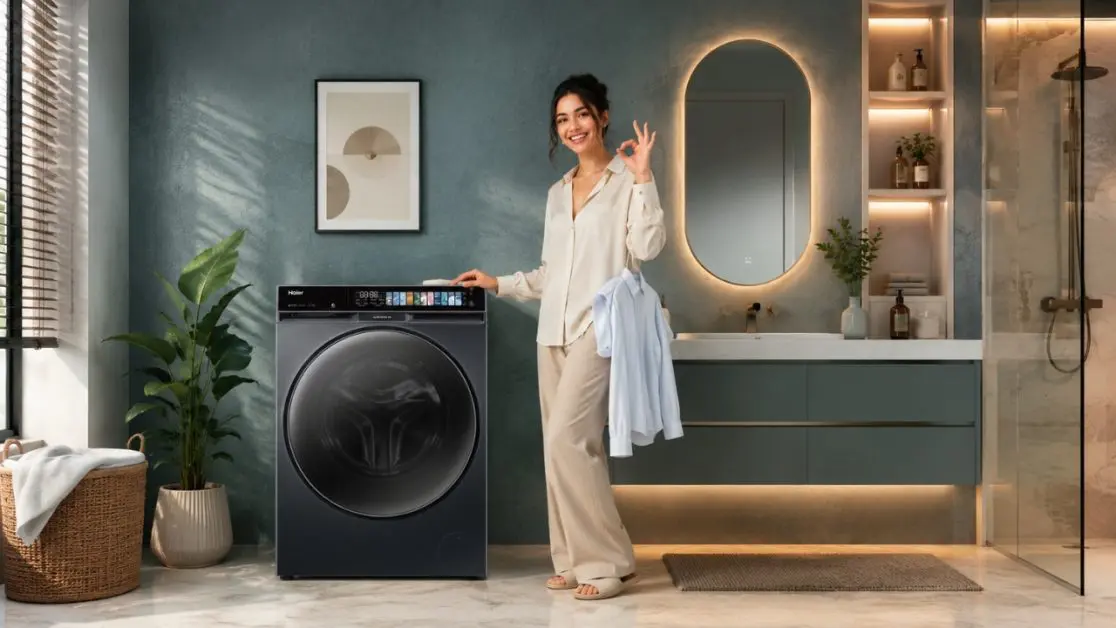
For years, traditional appliance panels followed one principle: function over flow.
Buttons. Knobs. Switches. Indicators.
They worked. Mostly.
But they also assumed something important. They assumed the user would adapt to the machine.
Smart panels reverse that equation.
Now the machine adapts to the user.
That sounds small until you notice how daily life actually works.
The old system depended on memory
Traditional panels required people to remember settings manually:
- Which wash cycle works for school uniforms
- Which temperature setting cools the room fastest
- Which microwave mode handles reheating versus grilling
- Which indicator light means “done”
Over time, households developed rituals around appliances.
Parents remembered combinations.
Children avoided touching controls entirely.
Guests got confused instantly.
The appliance functioned.
The experience did not always scale.
Smart panels reduce decision fatigue
A modern smart panel does something subtle but powerful.
It reduces thinking.
That is not laziness.
That is design maturity.
Good technology removes invisible effort.
Features commonly seen in smart panels today include:
- Touch-based controls
- AI-assisted recommendations
- Real-time cycle visibility
- Visual icons instead of cryptic abbreviations
- App integration
- Voice-enabled interactions
- Energy usage tracking
The shift matters because modern households already manage too many decisions daily.
Every unnecessary interaction becomes friction.
And friction compounds.
The Interface Changes Behaviour Faster Than the Machine Does
Most people think appliance upgrades are about hardware.
Bigger drums.
Faster compressors.
More cooling modes.
Important, yes.
But interface design changes behaviour even faster.
Think about smartphones.
The biggest revolution was not processing power.
It was usable.
Appliances are moving through the same transition now.
A washing machine is no longer just a washing machine
Consider front-load washing machines.
Traditional panels often rely on rotary dials and layered option combinations. They work well once users learn them.
But smart display panels create a different experience entirely.
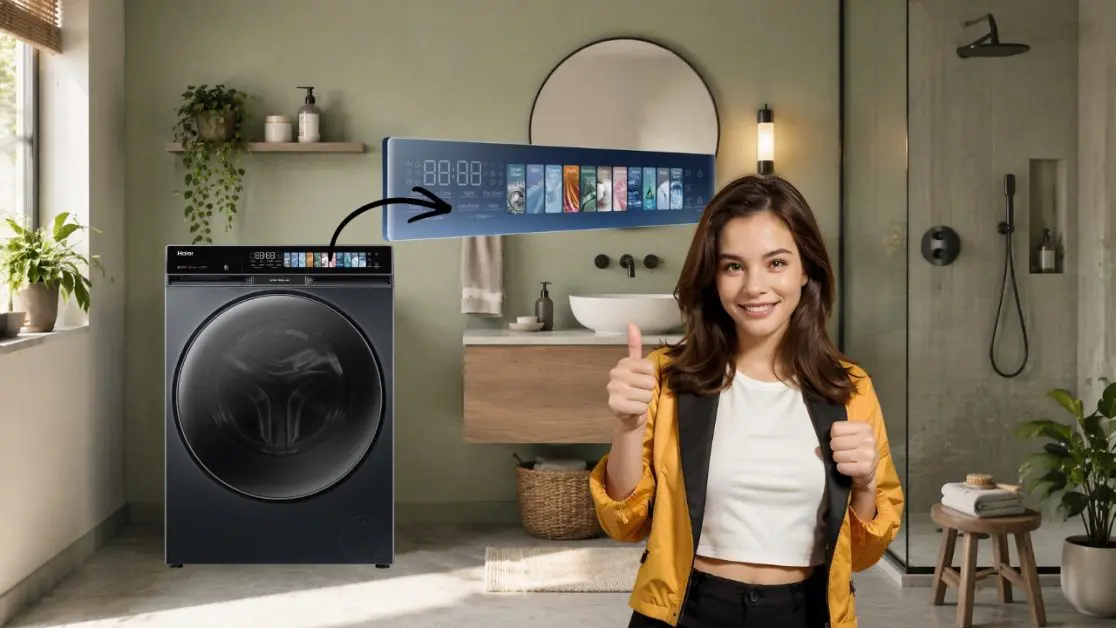
Machines like the Haier 12 Kg F11 Front Load Washer & Dryer Washing Machine or the Haier 10 Kg F9 Pro Front Load Washer Washing Machine use large display interfaces that visually communicate cycle stages, temperature adjustments, wash duration, and smart settings more intuitively.
The hidden advantage is not aesthetics.
It is confidence.
People use more features when they understand them instantly.
That changes appliance value over time.
Visibility creates trust
Traditional panels often hide complexity behind abbreviations.
“Cot.”
“Syn.”
“Mix.”
Users guess.
Or ignore features completely.
Smart panels surface information clearly:
- Remaining time
- Water temperature
- Delay settings
- Dryness level
- Energy mode visibility
The appliance feels less mechanical.
More collaborative.
And trust increases when systems explain themselves.
Why Younger Buyers Gravitate Toward Smart Panels
Millennial and Gen Z buyers grew up with responsive interfaces.
Swipe.
Tap.
Preview.
Personalise.
That expectation now extends into homes.
A refrigerator panel is no longer compared only to another refrigerator.
It is subconsciously compared to a smartphone experience.
That changes the benchmark entirely.
Modern homes reward intuitive systems
A couple setting up their first apartment usually optimises around three things:
- Space
- Simplicity
- Time
Traditional panels solve function.
Smart panels solve flow.
There is a difference.
One option is functional familiarity.
The second option is adaptive convenience.
Increasingly, younger buyers choose the second.
Not because they dislike traditional controls.
Because they value mental clarity.
The emotional shift matters too
Good interfaces create emotional calm.
Bad interfaces create hesitation.
That is why people often describe certain appliances as “easy” even when they cannot explain why.
Ease is rarely accidental.
It is designed.
And smart panels quietly improve moments people repeat daily:
- Late-night laundry loads
- Quick microwave reheating before office calls
- Adjusting cooling during humid afternoons
- Monitoring appliance status remotely
Tiny improvements.
Repeated hundreds of times.
That becomes lifestyle transformation.
Traditional Panels Still Have Strengths Most People Ignore
The conversation becomes shallow when people frame traditional panels as “outdated.”
That misses the point entirely.
Some systems survive because they solve specific problems extremely well.
Traditional panels excel in reliability and familiarity
There is a reason many households still prefer physical controls.
They offer:
- Tactile feedback
- Simpler repair familiarity
- Lower learning curve for older users
- Fast direct operation
- Mechanical reassurance
A knob communicates certainty differently than a touchscreen.
Especially for older generations.
That matters in multi-generational Indian households where grandparents, parents, and children all interact with the same appliance.
Not every smart feature improves usability
This is important.
Some smart interfaces become complicated because brands mistake feature count for intelligence.
More screens do not automatically mean better experience.
A cluttered smart panel creates the same friction as a confusing traditional one.
Good interface design follows one principle:
Technology should disappear into behaviour.
That is the real benchmark.
Not brightness.
Not animation.
Not complexity.
The Hidden System Behind Smart Panels Is Predictability
People do not actually want “smart homes.”
They want predictable homes.
That distinction changes everything.
Nobody buys a washing machine because they love control panels.
They buy predictability:
- Predictable comfort
- Predictable outcomes
- Predictable routines
- Predictable energy usage
Smart panels succeed because they reduce uncertainty.
The best systems explain themselves instantly
A strong smart interface does three things well:
1. It reduces ambiguity
Users immediately understand what is happening.
2. It shortens actions
Fewer steps between intention and result.
3. It builds habits naturally
People start using advanced functions without needing tutorials.
That last point matters more than most brands realise.
Features unused are features wasted.
This is where appliance design is heading
Across categories, interface evolution is becoming central:
- Smart AC displays show real-time temperature intelligence
- Refrigerators increasingly use digital controls for cooling precision
- Microwave panels simplify multi-mode cooking visually
- Washing machines use touch interfaces for guided operation
The appliance industry is moving from hardware-led innovation to experience-led innovation.
That is the larger pattern.
What Smart Panels Actually Teach Us About Modern Living
Every generation redesigns convenience differently.
Previous generations optimised around durability.
Today’s generation optimises around mental bandwidth.
That is why interface design suddenly matters so much.
Because modern life already demands constant attention.
Notifications.
Meetings.
Traffic.
Bills.
Passwords.
Schedules.
Good appliances reduce noise instead of adding to it.
That is the hidden role of smart panels.
Not sophistication.
Relief.
The future is not “smart vs traditional”
The future is thoughtful design versus confusing design.
Some traditional interfaces still outperform poorly designed smart ones.
Some smart panels completely transform daily routines.
The real question is simpler:
Does the appliance help life flow better?
Because in the end, people rarely remember specifications.
They remember friction.
And the best home technology quietly removes it before anyone notices it was there.
Frequently Asked Questions
Should I choose a smart panel appliance or a traditional panel appliance for my home?
Choose a smart panel if you value convenience, visual guidance, app connectivity, and easier daily operation. Traditional panels are often better if you prioritize simplicity, familiarity, and physical controls.
Why do smart panels feel easier to use even when appliances have similar features?
Smart panels reduce cognitive effort by displaying information clearly, offering recommendations, and making settings easier to understand. Users spend less time remembering combinations and interpreting symbols.
Do smart panels actually save time, or are they just more modern-looking?
They can save time by reducing the number of steps needed to complete common tasks and by making settings easier to find and understand.
Why do I often ignore advanced features on traditional appliances?
Many traditional interfaces hide functionality behind abbreviations, symbols, or layered controls. If a feature isn’t obvious, most people simply stop using it.
Are smart panels worth the extra cost?
For households that use appliances frequently, the convenience, visibility, and ease of operation can justify the higher price over time.