
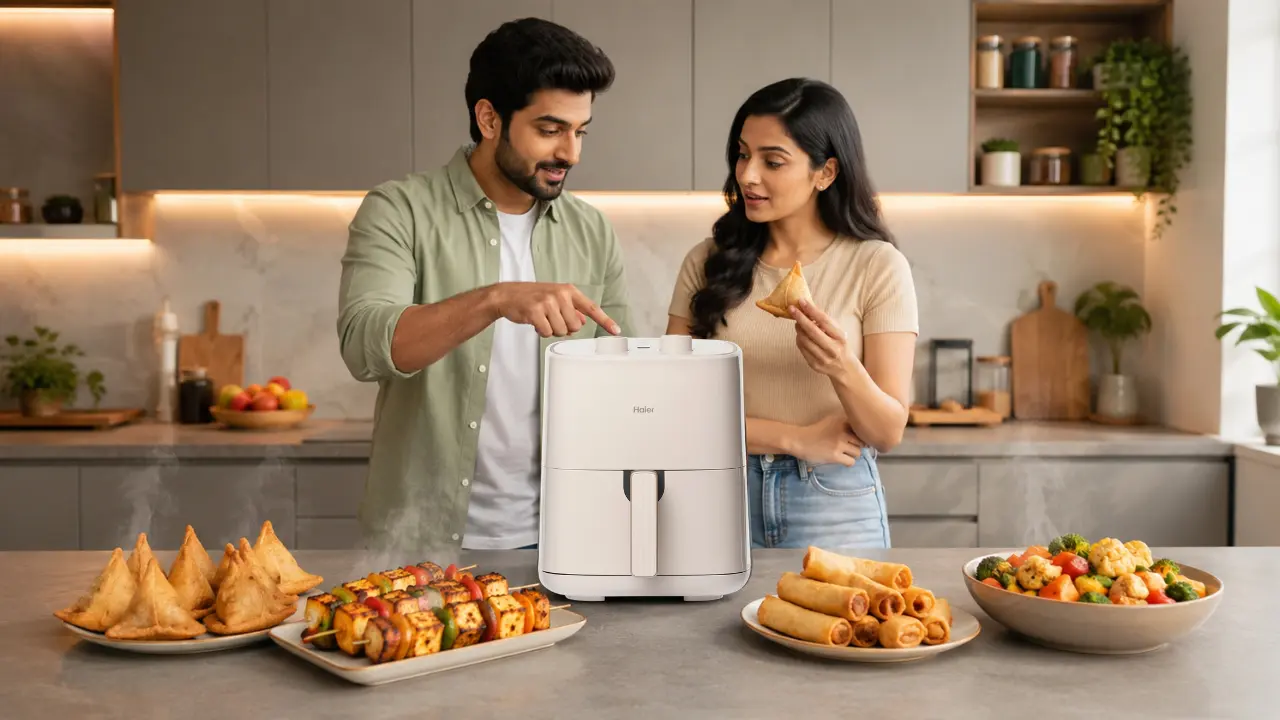

A digital air fryer suits people who want precision, convenience, presets, and consistency. A manual air fryer suits people who prefer simplicity, lower learning curves, and straightforward controls.
But the real difference is not technology.
It is how you live.
A kitchen appliance always reveals something deeper about a household. Some homes run on routines. Some run on improvisation. Some want automation. Some want control.
That is why the digital vs manual air fryer debate is less about buttons and more about behaviour.
And modern Indian kitchens are changing fast.
Why this decision suddenly matters in Indian homes
Five years ago, air fryers felt optional.
Today, they feel oddly inevitable.
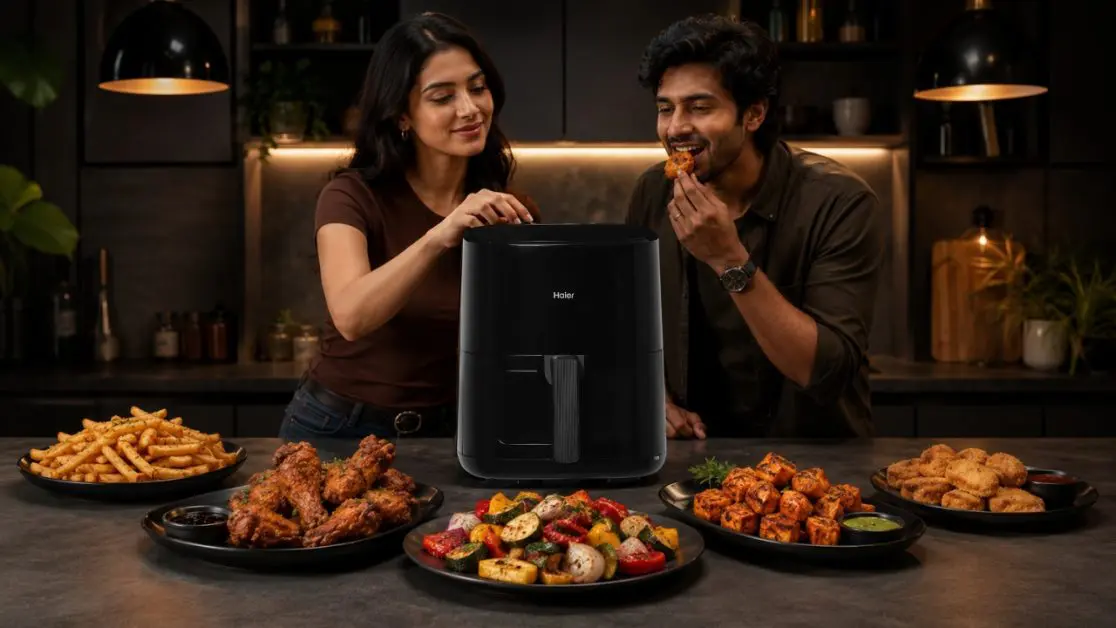
Late-night fries without deep frying. Reheating samosas without turning them soggy. Crispy paneer tikka during IPL nights. Frozen snacks for kids after tuition classes. Oil-conscious cooking without losing crunch.
The modern Indian kitchen is becoming a multi-format kitchen.
One appliance cannot do everything anymore.
Microwaves heat. Gas stoves build flavour. OTGs bake slowly. Air fryers solve speed.
That shift explains why air fryer searches in India continue to rise year after year. Health awareness matters. But convenience matters even more.
Because tired people do not want complicated cooking.
They want systems.
What exactly is a manual air fryer?
A manual air fryer uses physical knobs for temperature and timer settings.
Simple.
Turn the dial. Set the time. Start cooking.
That simplicity has advantages many people underestimate.
Why some people still prefer manual air fryers
- Easier for elderly family members
- Lower dependence on digital interfaces
- Faster learning curve
- Often more affordable
- Fewer interface distractions
- Reliable for repetitive cooking patterns
A manual air fryer behaves like an old pressure cooker. Familiar. Predictable. Functional.
There is wisdom in that.
Not every appliance needs to feel like a smartphone.
Where manual air fryers struggle
Manual systems depend heavily on user judgment.
That means:
- Overcooking becomes common
- Temperature accuracy varies
- Timing consistency depends on experience
- Multi-dish cooking gets harder
Cooking frozen nuggets is easy.
Cooking marinated fish evenly? Less easy.
Especially in busy homes where interruptions happen constantly.
What makes digital air fryers different?
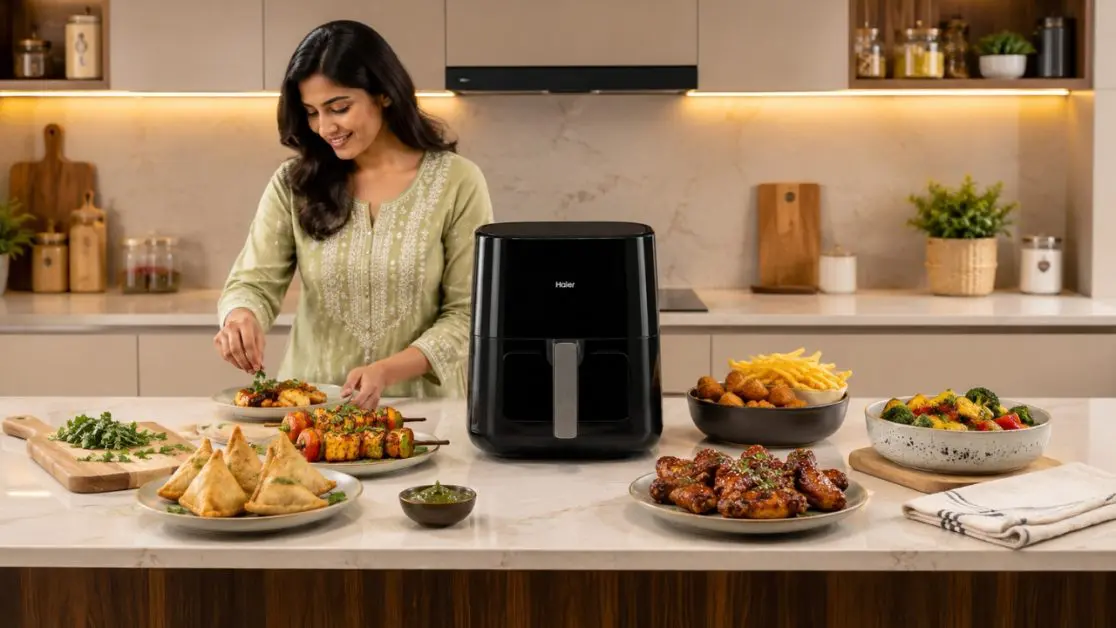
Digital air fryers introduce automation and precision.
Touch panels. Preset menus. Timers. Temperature controls. Cooking modes.
At first glance, these features seem cosmetic.
They are not.
They reduce decision fatigue.
And decision fatigue is becoming one of the hidden problems inside modern households.
Too many small choices drain energy.
A digital appliance changes kitchen behaviour
Think about weekday evenings.
Someone returns from work at 8 PM.
A child wants snacks. Someone else wants reheated kebabs. Another person wants frozen fries.
Manual systems require monitoring.
Digital systems reduce supervision.
That changes the emotional experience of cooking.
Quietly.
Key advantages of digital air fryers
1. Better cooking precision
Digital controls allow:
- Exact temperature selection
- Better timing control
- More even cooking outcomes
That matters for:
- Baking
- Frozen foods
- Multi-layer cooking
- Delicate recipes
Consistency is underrated until you experience it.
A good appliance removes guesswork.
2. Preset cooking modes simplify life
Preset modes exist for a reason.
Because most people cook the same 10 things repeatedly.
French fries. Nuggets. Paneer. Chicken wings. Spring rolls. Pizza slices.
Digital presets reduce experimentation time.
Especially useful for:
- First-time users
- Students
- Busy professionals
- Parents multitasking in the kitchen
3. Better energy and time management
Digital air fryers often optimise heating cycles more efficiently.
That means:
- Faster cooking
- Controlled heat distribution
- Reduced unnecessary runtime
Small efficiencies compound over time.
Like good habits.
Digital vs manual air fryer: the real comparison
Here is where the decision becomes clearer
| Feature | Manual Air Fryer | Digital Air Fryer |
| Controls | Knobs | Touch panel |
| Ease of use | Simple | Smart and guided |
| Precision | Moderate | High |
| Presets | No | Yes |
| Learning curve | Low | Moderate |
| Cooking consistency | Depends on user | More reliable |
| Best for | Traditional users | Busy modern households |
| Design aesthetic | Functional | Premium and modern |
The wrong way to choose is by price alone.
The right way is by household rhythm.
Who should choose a manual air fryer?
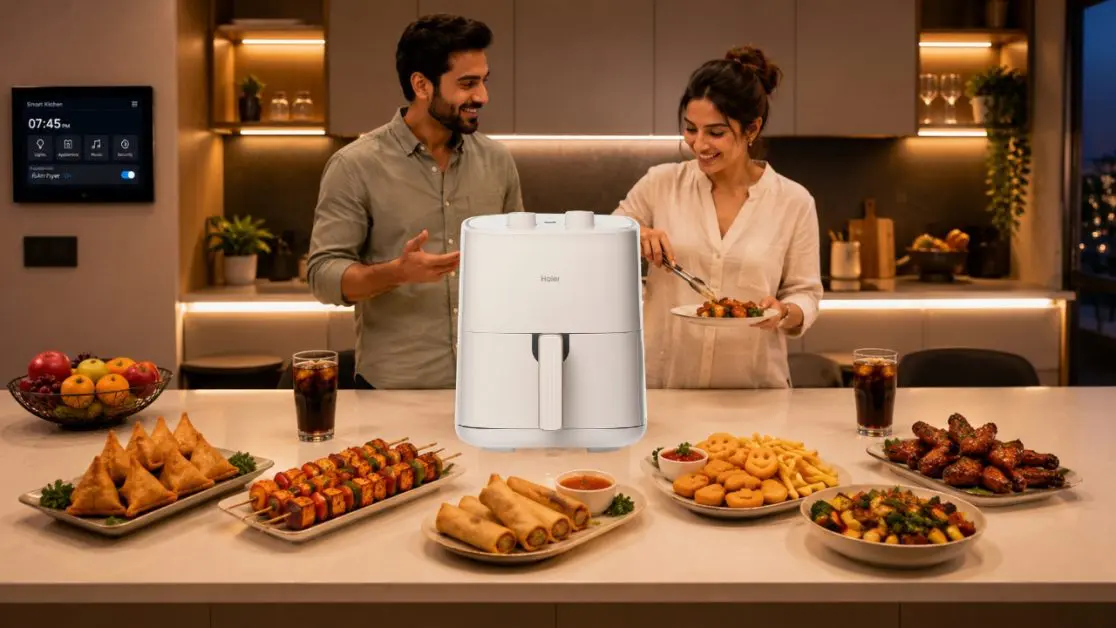
One option is simplicity
A manual air fryer works well if:
- You cook basic recipes
- You prefer physical controls
- You dislike touch interfaces
- You want a straightforward appliance
- You rarely experiment with cooking modes
Many Indian households still prefer tactile systems.
Physical knobs feel dependable.
There is psychological comfort in turning a dial and hearing a click.
Manual systems reward familiarity
If your cooking habits are repetitive, manual air fryers work beautifully.
Morning cutlets.
Evening snacks.
Weekend fries.
No complexity required.
And simplicity often ages better than over-engineered systems.
Who should choose a digital air fryer?
The second option is automation
Digital air fryers fit households where:
- Multiple people use the appliance
- Cooking schedules are unpredictable
- Precision matters
- Convenience matters more than minimalism
- Kitchen aesthetics matter
Modern urban kitchens increasingly lean this way.
Especially among:
- Young couples
- Working professionals
- Fitness-focused users
- Students living independently
Because automation is not laziness.
It is energy management.
The hidden factor most buyers ignore
People compare capacity.
People compare wattage.
But they ignore kitchen psychology.
That is the real differentiator.
A good appliance reduces friction.
Friction is what stops healthy habits.
If cooking feels complicated, people return to takeout apps.
Why air fryer design now matters as much as performance
Indian kitchens are becoming more visible.
Open kitchens.
Studio apartments.
Integrated living spaces.
Appliances no longer hide.
They participate in the room.
That explains why sleek digital air fryers increasingly attract younger buyers.
The appliance becomes part utility, part environment.
Where Haier’s approach fits into this shift
This is where brands like Haier understand something important.
Modern appliances are no longer isolated machines.
They are part of lifestyle systems.
The Haier IVORY Air Fryer 5L Capacity and Haier BLACK Air Fryer 5L Capacity reflect this evolution toward cleaner interfaces, contemporary aesthetics, and practical cooking convenience for Indian households.
The 5L capacity itself reveals thoughtful design thinking.
Large enough for family snack sessions.
Compact enough for modern kitchens.
That balance matters.
Because Indian kitchens solve for space every single day.
The future of cooking is not “smart.” It is effortless.
People often misunderstand smart appliances.
The goal is not complexity.
The goal is reducing mental load.
A digital air fryer succeeds when:
- Cooking feels easier
- Cleanup feels manageable
- Time feels protected
- Food feels consistent
Technology becomes valuable when it disappears into routine.
That is the real benchmark.
What about health? Are digital air fryers healthier?
Not automatically.
An air fryer does not magically transform unhealthy eating into healthy eating.
But it changes cooking behaviour.
That matters more.
Because systems shape habits.
Air fryers encourage:
- Reduced oil usage
- Faster home cooking
- More reheating instead of ordering out
- Portion-controlled snacking
And small behavioural shifts create long-term outcomes.
Foods Indian households commonly air fry today
- Aloo tikki
- Paneer tikka
- Chicken wings
- Frozen snacks
- Roasted makhana
- Sweet potato fries
- Samosas
- Kebabs
- Garlic bread
- Fish fillets
The appliance succeeds because it adapts to Indian eating patterns instead of forcing new ones.
The biggest misconception about digital appliances
People assume digital means complicated.
Usually, the opposite is true.
The interface absorbs complexity so the user experiences simplicity.
Think about UPI payments.
Underneath? Extremely sophisticated systems.
For the user? One tap.
Good appliance design works the same way.
So, digital or manual air fryer?
Choose a manual air fryer if:
- You value simplicity
- You prefer physical controls
- You cook familiar recipes repeatedly
- Budget matters most
- You dislike over-automation
Choose a digital air fryer if:
- You want precision
- You multitask while cooking
- You prefer guided cooking experiences
- Multiple people use the appliance
- You value convenience and consistency
Neither choice is universally better.
But one will fit your lifestyle better.
Final thought: the best kitchen appliances reduce invisible stress
The best appliances do not demand attention.
They quietly remove friction.
That is why this conversation matters.
A digital vs manual air fryer is not just a technology comparison.
It is a question about how your home functions under pressure.
Busy evenings.
Unexpected guests.
Children asking for snacks.
Work calls running late.
Parents trying to eat healthier.
Small systems shape daily life more than grand plans ever do.
And sometimes, the right appliance is not the one with the most features.
It is the one that quietly helps your household breathe easier.
Frequently Asked Questions
Should I Buy a Digital or Manual Air Fryer for My First Air Fryer?
If you’re new to air frying and want guided cooking with presets and automatic timing, a digital air fryer is usually the easier choice. If you prefer simple controls and don’t mind adjusting settings manually, a manual air fryer can be equally effective.
Is a Digital Air Fryer Worth Paying Extra For?
For many households, yes. The added precision, cooking presets, and convenience can save time and reduce guesswork. However, if you mainly cook the same snacks and recipes repeatedly, a manual model may provide excellent value.
Which Air Fryer Is Better for a Busy Family?
A digital air fryer is generally better for busy families because preset programs and precise controls reduce supervision and improve consistency when multiple people use the appliance.
I Only Cook Frozen Snacks and Fries. Do I Really Need a Digital Air Fryer?
Not necessarily. If your cooking routine is predictable and simple, a manual air fryer can handle frozen snacks, fries, nuggets, and similar foods very well.
Which Type of Air Fryer Lasts Longer?
Longevity depends more on build quality and maintenance than whether the appliance is digital or manual. A well-built air fryer of either type can last for years with proper care.