
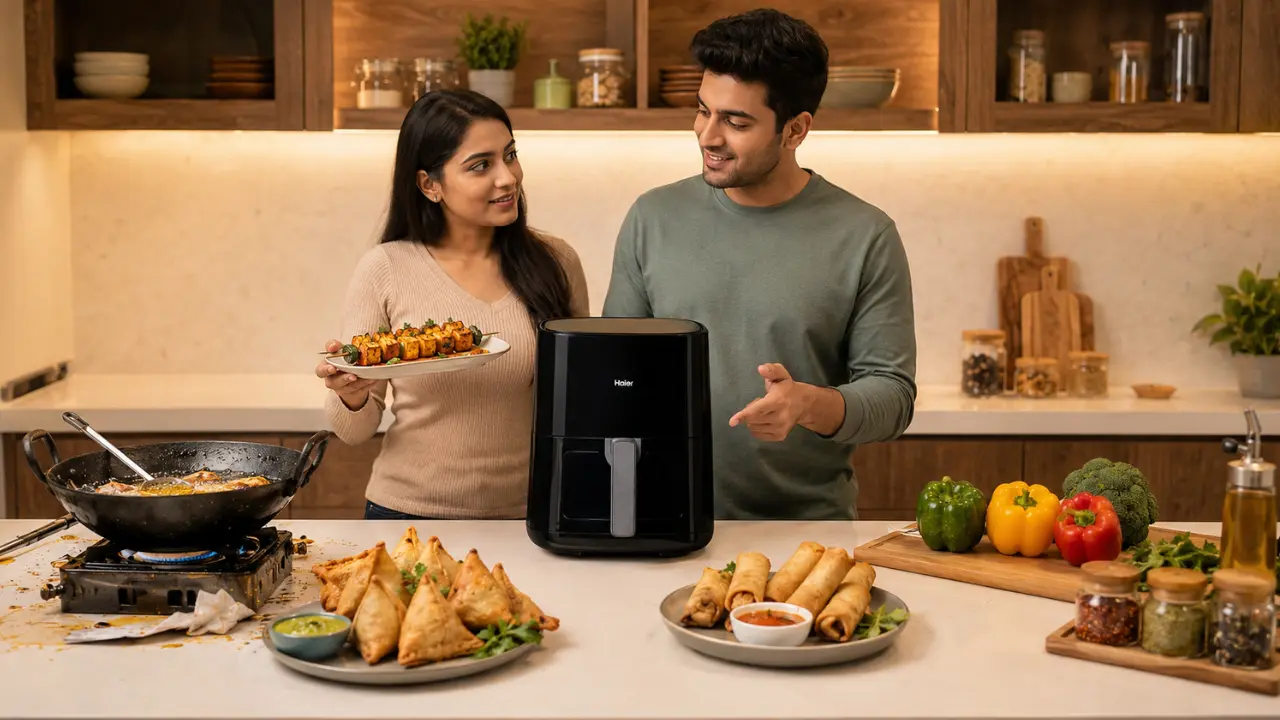

Air frying and deep frying solve the same craving in completely different ways
One gives you crunch through circulating heat. The other gives you crunch through immersion in oil.
That sounds like a small technical difference. It isn’t.
Because the way we cook food changes the way we eat, clean, spend, host guests, and even think about weeknight meals. In modern Indian homes, the question is no longer “Can this appliance cook?” The real question is: “Does this fit the rhythm of my life?”
That is where the air frying vs deep frying conversation becomes interesting.
Not as a trend.
As a lifestyle system.
The Indian kitchen is changing faster than most people realise
Think about a typical Indian evening.
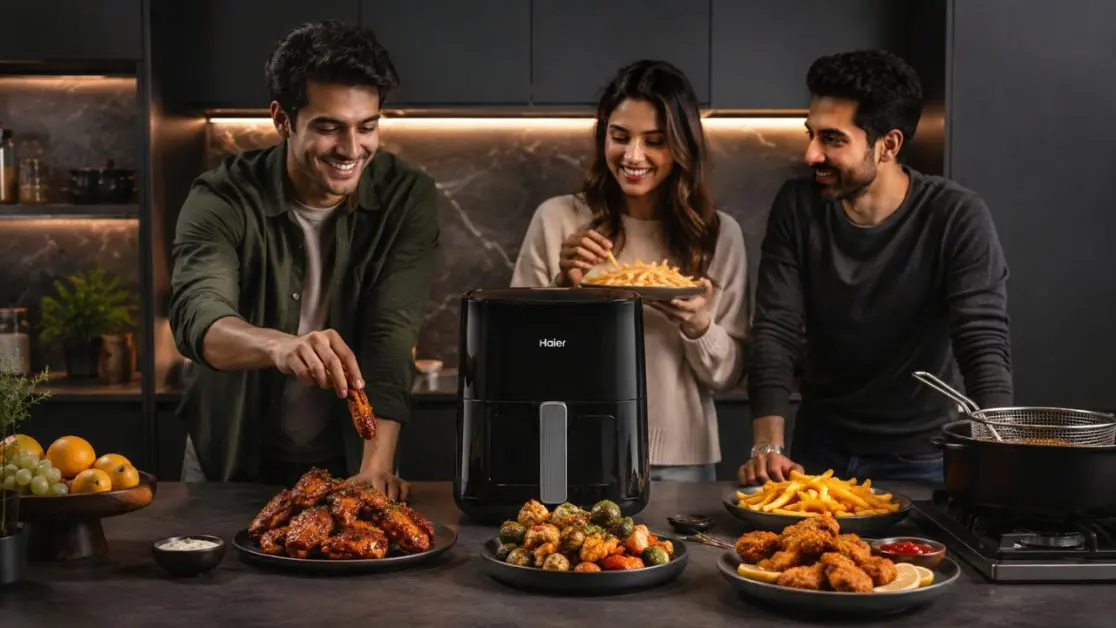
Someone is returning from office traffic. A child wants fries. Parents want lighter meals. Guests may arrive unexpectedly. Oil prices keep rising. Kitchens are getting modular but smaller. Time feels compressed.
And yet the craving for crispy food never disappears.
Pakoras during rain.
Samosas during cricket matches.
Chicken wings on weekends.
Aloo tikki during family gatherings.
Fried food is emotional food.
But every system has a cost.
Deep frying costs oil, cleanup time, ventilation effort, and often post-meal heaviness. Air frying attempts to redesign that system without removing the joy.
That’s why air fryers suddenly feel less like gadgets and more like kitchen infrastructure.
What actually happens during deep frying?
Deep frying works by submerging food in hot oil, usually between 170°C and 190°C.
The oil transfers heat rapidly. Moisture escapes. The outer layer crisps quickly.
That is why deep-fried food often has:
- A richer mouthfeel
- Faster browning
- Stronger crunch
- Distinct aroma
- Higher oil absorption
And to be fair, some foods genuinely perform better in deep oil.
Fresh jalebis.
Pooris.
Classic bhaturas.
Traditional restaurant-style fries.
Some textures are built around immersion frying. Removing oil changes the outcome.
This is important because many comparisons online oversimplify the debate. Air frying is not a magical replacement for every frying technique.
It is a different cooking philosophy.
A pressure cooker and a tandoor both cook food. But they create different experiences.
Same here.
What actually happens during air frying?
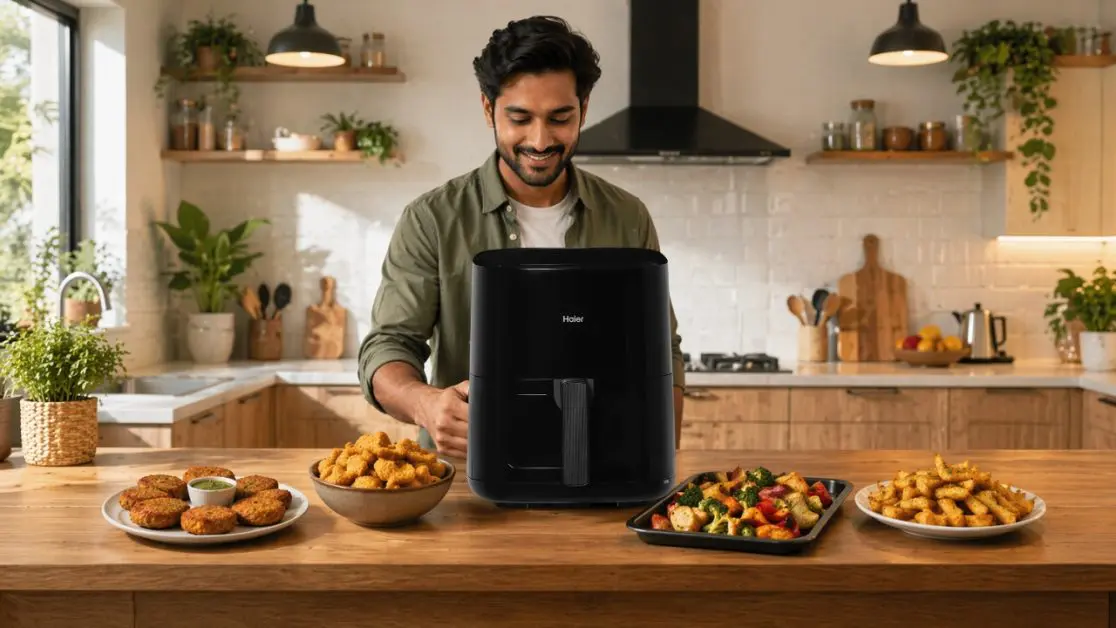
Air fryers use rapid hot air circulation to create a crisp outer texture with minimal oil.
Instead of drowning food in oil, they create a convection-based cooking environment.
Which means:
- Less oil usage
- More controlled cooking
- Reduced splatter
- Easier cleanup
- Faster reheating
- Lower lingering kitchen odours
The surprising thing?
For many everyday foods, the difference is smaller than people expect.
Especially with:
- Frozen snacks
- French fries
- Nuggets
- Paneer bites
- Chicken popcorn
- Spring rolls
- Cutlets
- Roasted vegetables
In fact, many Indian households discover something unintuitive after buying an air fryer:
They start cooking more often because the process feels less exhausting.
That changes behaviour.
And behaviour changes habits.
Air frying vs deep frying: The real comparison most people care about
1. Taste and texture
This is where deep frying still wins in some situations.
Oil creates a fuller flavour profile and more aggressive crunch. Traditional street-style frying relies heavily on this effect.
But air frying has improved dramatically.
Modern air fryers create surprisingly crisp textures, especially when food has a light coating of oil or breadcrumbs.
Here’s the hidden truth most people discover late:
Freshly deep-fried food tastes better. Everyday convenience food often works better in an air fryer.
That distinction matters.
2. Oil consumption
This is where air frying changes the equation completely.
Deep frying often requires:
- Large oil quantities
- Repeated reheating
- Oil disposal
- Frequent repurchasing
Air frying usually needs:
- One spoon of oil
- Spray coating
- Or sometimes no oil at all
Over months, that changes grocery costs and cooking habits.
Especially for families cooking snacks frequently.
The invisible cost of deep frying is not oil. It is friction
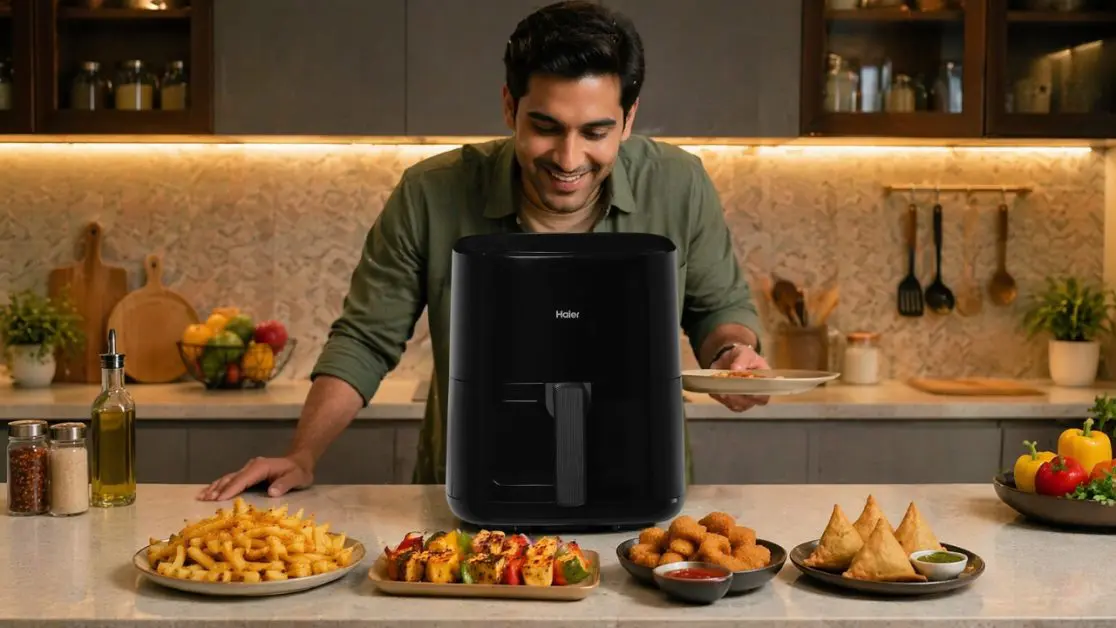
People think the main issue is calories.
Not always.
Sometimes the real problem is effort.
Think about what deep frying demands:
- Heating oil
- Monitoring temperature
- Managing splatter
- Cleaning greasy surfaces
- Storing leftover oil
- Handling smoke and smell
That friction changes cooking decisions.
Many people avoid making small snack batches simply because the cleanup feels disproportionate.
Air fryers reduce that resistance.
And when friction drops, experimentation rises.
Suddenly people try:
- Sweet potato fries
- Roasted makhana
- Air-fried momos
- Crispy bhindi
- Tandoori-style paneer
- Leftover pizza reheating
A kitchen appliance succeeds when it removes hesitation.
Not when it adds features.
Health conversations around frying are often oversimplified
Air frying is often marketed as “healthy.” That word deserves nuance.
An air fryer does not automatically transform processed food into nutritious food.
Fries are still fries.
But reducing excess oil intake can help households make lighter everyday choices without abandoning familiar flavours completely.
That balance matters in India because food is deeply cultural.
Extreme diets rarely survive family kitchens.
Systems do.
And sustainable cooking systems usually win over restrictive ones.
Why younger Indian households are shifting toward air fryers
One appliance. Multiple use cases.
This is the real driver.
Today’s buyers want kitchen appliances that multitask.
Especially in urban apartments.
Modern air fryers are increasingly used for:
- Reheating leftovers
- Baking small batches
- Grilling snacks
- Roasting vegetables
- Cooking frozen foods
- Quick evening meals
That versatility changes purchase decisions.
For solo professionals, it reduces dependence on takeout.
For parents, it simplifies evening snack prep.
For couples setting up first homes, it saves kitchen space.
Convenience scales quietly.
Where Haier fits into this shift
Haier’s approach to appliances has increasingly focused on practical modern living rather than flashy complexity.
That matters because kitchen technology often fails when it becomes intimidating.
Products like the Haier Ivory Air Fryer 5L Capacity and Haier Black Air Fryer 5L Capacity reflect something Indian homes increasingly value:
Capacity without chaos.
A 5L capacity becomes useful during:
- Family movie nights
- Festive gatherings
- Weekend snacking
- Batch cooking
And the design conversation matters too.
Modern appliances no longer live hidden in utility corners. They sit on visible countertops inside open kitchens.
Function and aesthetics now travel together.
That shift is bigger than appliances. It reflects how Indian homes themselves are evolving.
The future of frying is probably hybrid, not absolute
This is where most debates become unrealistic.
People do not permanently abandon deep frying.
Nor should they have to.
Some foods belong to festivals.
Some belong to indulgent weekends.
Some belong to nostalgia.
The smarter question is:
What deserves daily repetition?
That is where air frying becomes compelling.
One option is traditional deep frying for authentic festive cooking.
The second option is air frying for repeatable weekday convenience.
The third option is using both strategically based on the moment.
Good systems are flexible.
Rigid systems break.
A simple comparison most households can relate to
Deep Frying
- Stronger traditional flavour
- Crispier texture
- Higher oil usage
- More cleanup
- Better for certain authentic recipes
- Works well for large festive batches
Air Frying
- Minimal oil usage
- Faster cleanup
- Lower lingering odour
- Easier weekday cooking
- More appliance versatility
- Better suited for smaller modern kitchens
Neither is universally superior.
But one may fit your lifestyle better.
That is the real decision.
What this debate is actually about
Not oil.
Not appliances.
Not trends.
It is about energy.
The energy required to cook.
The energy required to clean.
The energy required to maintain habits.
Every kitchen runs on invisible systems.
Some systems create momentum.
Others create fatigue.
And the appliances people keep using are usually the ones that quietly reduce resistance.
That is why air fryers are growing across Indian homes.
Not because people suddenly stopped loving fried food.
But because modern life rewards tools that make good decisions easier to repeat.
A kitchen is not just a place where food gets made.
It is where routines either become sustainable or collapse under friction.
And often, the smartest appliance is not the one that does the most.
It is the one that makes everyday life feel lighter.
Frequently Asked Questions
Is an Air Fryer Worth Buying If I Already Have a Deep Fryer?
For many households, yes. A deep fryer excels at traditional recipes and large festive batches, while an air fryer often becomes the everyday appliance for snacks, reheating, and quick meals. The value comes from convenience rather than replacing deep frying entirely.
Should I Choose Air Frying or Deep Frying for Daily Cooking?
If you’re cooking frequently during the week, air frying is usually easier to maintain because it requires less oil, less cleanup, and less preparation. Deep frying remains a better choice for occasional indulgent meals and certain traditional recipes.
I Live in a Small Apartment. Does an Air Fryer Make More Sense Than Deep Frying?
In most cases, yes. Air fryers generate less mess, fewer lingering odours, and require less storage for oil, making them well-suited to compact urban kitchens.
Will an Air Fryer Actually Help Me Cook at Home More Often?
Many people find that it does. Because setup and cleanup are simpler, the barrier to preparing snacks and quick meals becomes much lower.
Does Air-Fried Food Taste the Same as Deep-Fried Food?
Not exactly. Deep frying usually creates richer flavour, stronger browning, and a more intense crunch. Air frying can get surprisingly close for many foods, but it produces a different texture and eating experience.
Why Do Restaurant Fries Often Taste Better Than Air-Fried Fries?
Restaurants typically use immersion frying, which creates a crisp exterior and richer mouthfeel that is difficult to replicate fully with hot air circulation.
What Foods Work Best in an Air Fryer?
Some of the most successful options include:
Frozen fries
Nuggets
Spring rolls
Paneer bites
Chicken popcorn
Cutlets
Roasted vegetables
Makhana
Air-fried momos
Which Foods Are Still Better Deep-Fried?
Traditional foods such as pooris, bhaturas, jalebis, and certain street-food-style snacks often achieve their signature texture through immersion frying.