
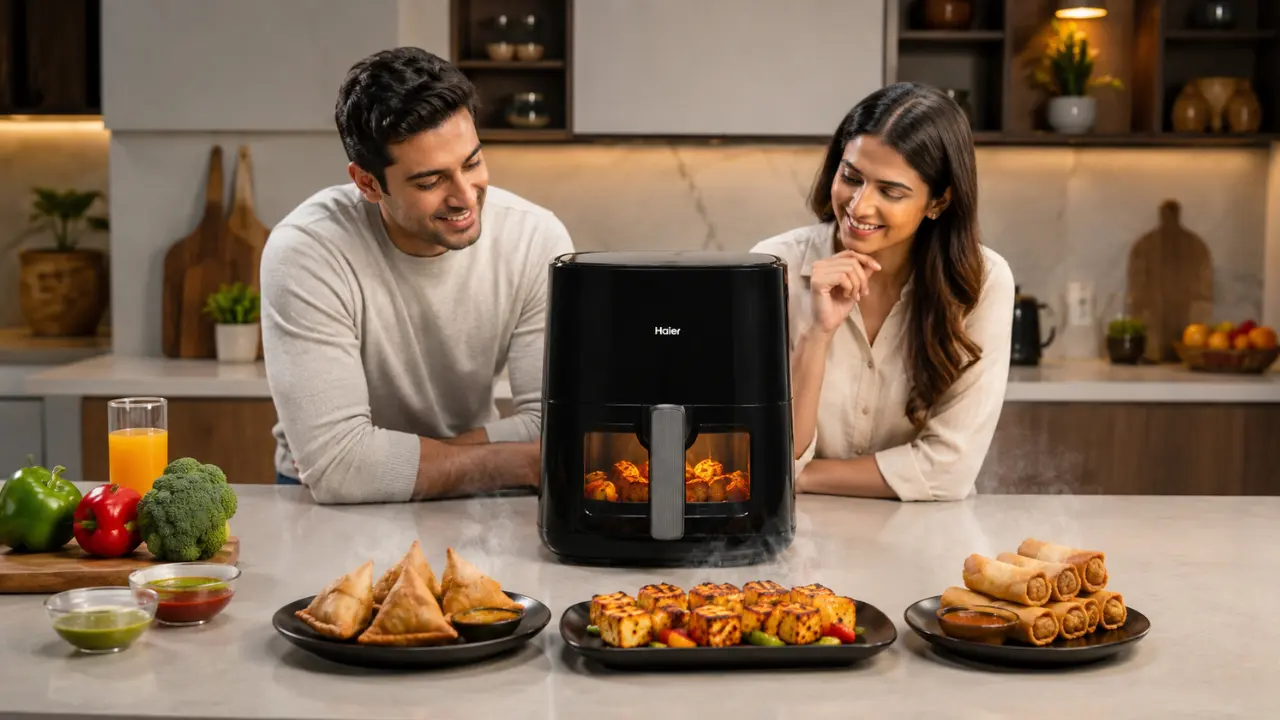

A visible window in an air fryer changes one simple thing: uncertainty.
You no longer cook blindly. You no longer keep opening the basket every few minutes. You can see the food crisping, browning, rising, melting, and finishing in real time. In modern Indian kitchens where multitasking is constant, that small design detail quietly becomes one of the most practical upgrades an air fryer can offer.
The interesting thing about kitchen technology is this:
The best innovations rarely feel dramatic.
They remove friction so naturally that you stop noticing the problem they solved in the first place.
A visible cooking window does exactly that.
Why do people keep opening the air fryer basket?
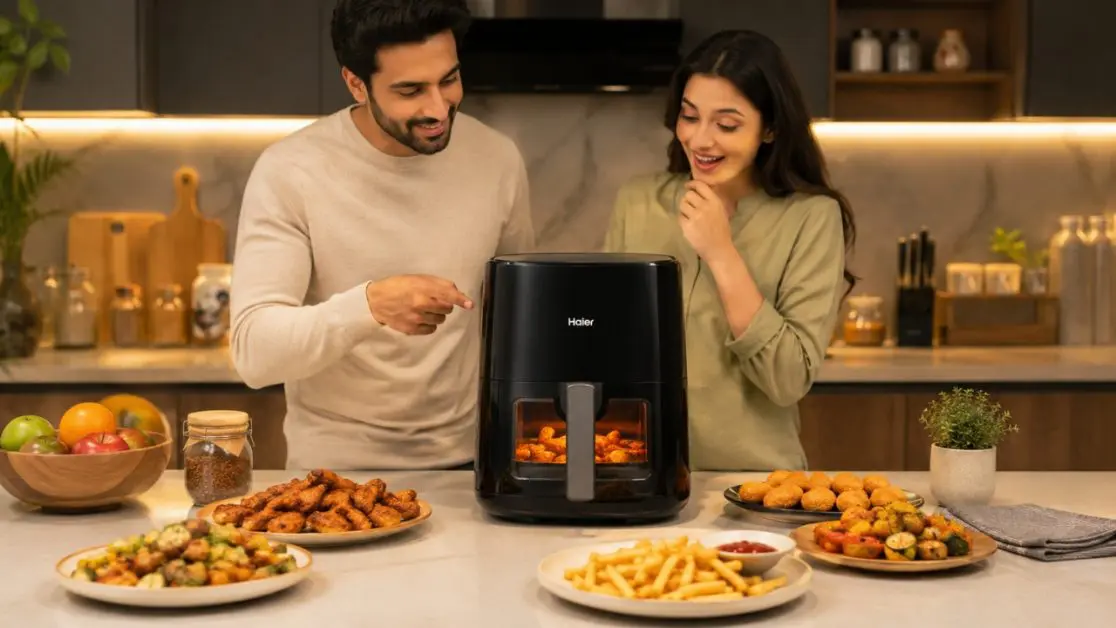
Because cooking is visual.
Indian kitchens especially rely on instinct. Not timers alone.
A mother checks whether the paneer edges have browned.
A college student watches fries turn golden.
Someone making tandoori broccoli wants the char.
Someone reheating samosas fears sogginess more than anything else.
Cooking confidence often comes from observation.
Traditional ovens always understood this. Microwaves did too. Early air fryers didn’t.
That created a strange contradiction:
- Air fryers promised convenience
- But users kept interrupting cooking cycles to “just check once”
And every interruption changes internal temperature and airflow.
Small habit. Bigger consequences.
The visible window solves a behavioural problem, not just a design problem
Most appliance discussions focus only on features.
But the real story sits elsewhere.
Human behaviour.
People do not use appliances the way instruction manuals imagine. They improvise. They peek. They multitask. They second-guess timers.
A visible window acknowledges reality.
It says: You should be able to trust the process without interrupting it.
That matters more than it sounds.
What changes when you can see the food?
- Less opening and closing
- More consistent crisping
- Better texture control
- Lower heat loss
- Easier learning for beginners
- More confidence with new recipes
The feature feels simple because the psychology behind it is invisible.
Good appliance design often works like that.
Modern Indian kitchens run on divided attention
Credits: Haier India,
One burner has chai.
Another has tadka.
Someone’s answering a work call.
Someone’s helping a child with homework.
And somewhere in the middle of all this, frozen kebabs are crisping inside the air fryer.
The kitchen is no longer a single-task environment.
It behaves more like an operations room.
That changes what “convenience” means.
Convenience is no longer speed alone
One option is faster cooking.
The second option is easier cleaning.
The third, often overlooked option, is reduced mental load.
Visible windows reduce mental load.
You glance once and know whether:
- The cheese is bubbling
- The fries need two more minutes
- The nuggets are done
- The toast is getting too dark
No interruption. No guessing.
Just clarity.
And clarity is underrated technology.
Air frying depends heavily on timing
A difference of two minutes changes outcomes dramatically.
Especially with:
- Frozen snacks
- Chicken wings
- Paneer tikka
- Garlic bread
- Cookies
- Reheated fried food
Air fryers cook quickly because hot air circulates intensely in a compact space.
That speed is useful.
But speed without visibility creates anxiety.
The invisible cost of overcooking
Overcooked food is not merely a cooking issue.
It changes behaviour.
People stop experimenting.
They avoid recipes.
They return to familiar items only.
A kitchen appliance becomes smaller in usefulness when users fear mistakes.
Visible windows encourage experimentation because they reduce risk perception.
That changes how often the appliance actually gets used.
And frequency of use is what defines whether an appliance becomes essential or decorative.
The best kitchen appliances reduce interruptions
Think about refrigerators.
Transparent vegetable drawers help you see stock levels instantly.
Glass-top washing machines let users monitor cycles.
Front-load washers became more intuitive partly because people could observe them.
Visibility builds trust.
Air fryers are following the same pattern.
A visible window creates feedback loops
You cook.
You observe.
You learn timing.
You improve results.
That loop matters.
Especially for younger Indian consumers learning independent cooking for the first time.
Many Gen Z users are entering kitchens without years of traditional cooking experience. They rely on observation more than inherited intuition.
Visible windows shorten the learning curve.
That is not merely convenient.
It is confidence engineering.
Why this matters for Indian cooking habits
Western air fryer conversations often revolve around fries and nuggets.
Indian usage is broader.
Far broader.
People use air fryers for:
- Reheating pakoras
- Roasting makhana
- Crisping parathas
- Making paneer tikka
- Grilling fish
- Air-frying peanuts
- Toasting sandwiches
- Baking cookies
- Preparing evening snacks quickly
Indian cooking also values texture intensely.
Crispness matters. Browning matters. Slight char matters.
A timer alone cannot always capture that.
Visual judgement becomes essential.
Texture is emotional
People remember texture more than recipes.
A perfectly crisp samosa feels satisfying.
A soft reheated one feels disappointing immediately.
That emotional response shapes whether families trust an appliance long term.
Visible cooking windows support texture precision because users can react in real time.
The feature becomes even more useful during gatherings
Small family gatherings expose appliance weaknesses quickly.
Because volume changes everything.
One batch cooks differently from the next.
Crowded baskets brown unevenly. Cheese melts unpredictably. Snacks disappear faster than expected.
During parties or cricket nights, visible windows become practical monitoring tools.
You can:
- Track multiple batches easily
- Avoid over-browning
- Time serving better
- Reduce repeated basket opening
That last part matters.
Because every unnecessary interruption slows the workflow of the kitchen.
And Indian hosting culture runs on kitchen rhythm.
Energy efficiency is partly about consistency
People often assume energy efficiency only depends on wattage.
Not true.
Behaviour shapes efficiency too.
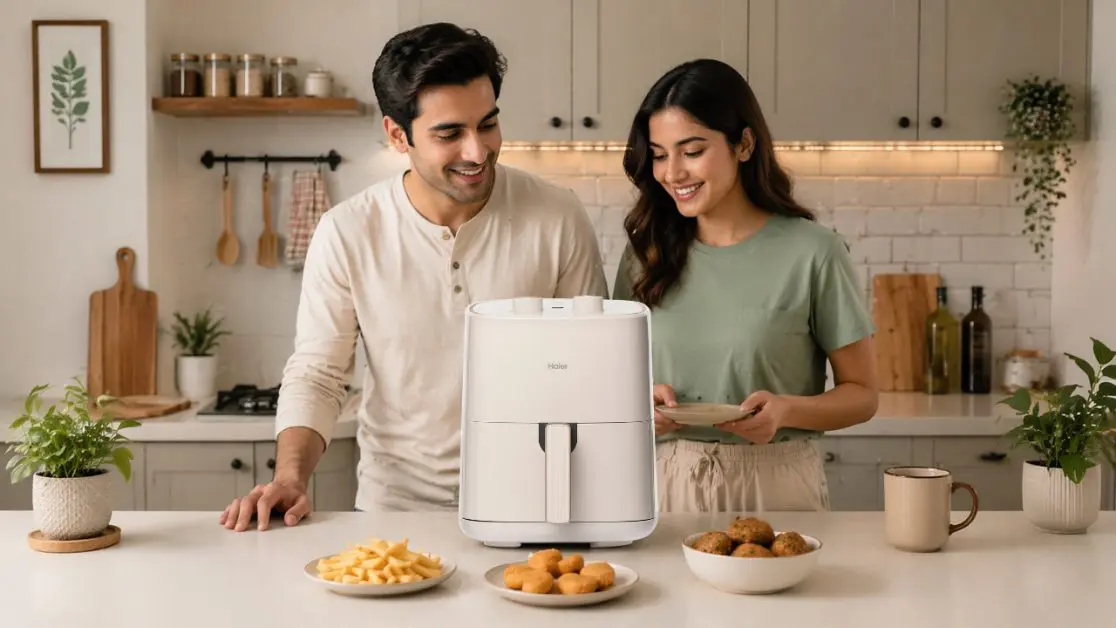
Opening an air fryer repeatedly releases heat and forces recovery cycles.
A visible window helps reduce that behaviour.
Small habits compound
One unnecessary basket opening seems harmless.
But repeated interruptions:
- Extend cooking time
- Affect airflow consistency
- Increase energy use slightly
- Reduce crispness quality
Good appliance design prevents inefficient habits before they happen.
That is systems thinking in product design.
The appliance quietly guides better behaviour.
Aesthetic features become functional features over time
At first glance, visible windows appear cosmetic.
Like something added for modern styling.
But many successful design shifts begin this way.
Kitchen islands once looked decorative. Now they shape family interaction.
Soft-close drawers once seemed luxurious. Now they feel necessary.
Visible windows in air fryers are moving through the same transition.
What begins as aesthetics often becomes expectation
Once people experience real-time cooking visibility, blind cooking feels outdated.
Because expectations evolve quickly.
Consumers adapt faster than brands anticipate.
Especially younger buyers.
Millennial and Gen Z consumers increasingly evaluate appliances on:
- Transparency
- Ease of use
- Reduced friction
- Design intelligence
- Learning simplicity
Not just raw specifications.
Haier’s approach reflects this broader shift
Modern appliance brands are no longer competing only on power or capacity.
They compete on experience.
That distinction matters.
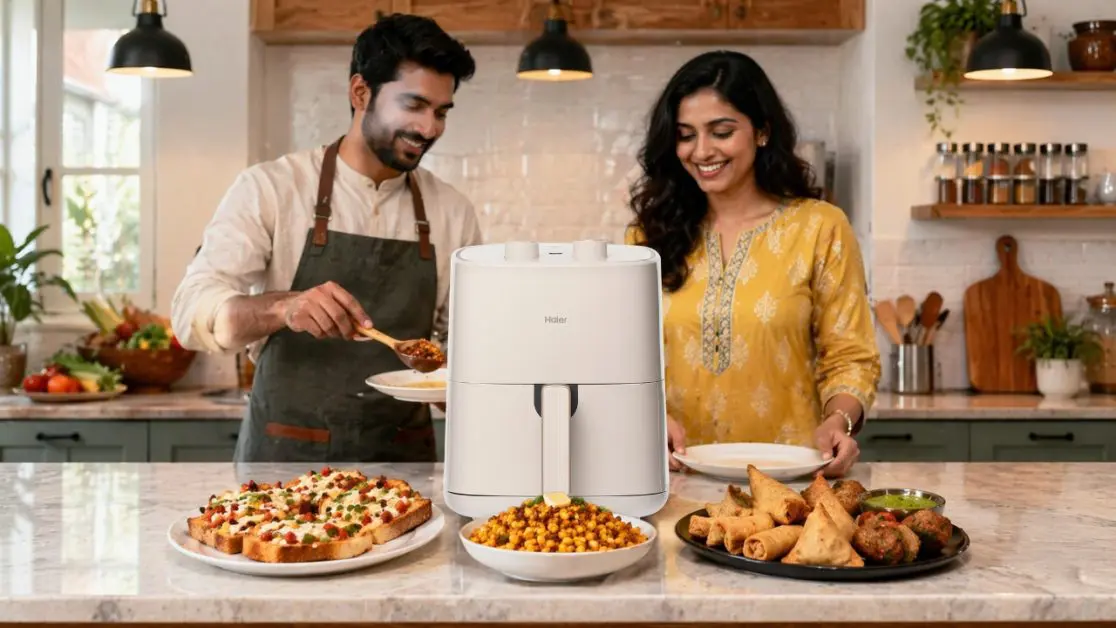
The Haier Air Fryer range, including models like the Haier Ivory Air Fryer 5L Capacity and Haier Black Air Fryer 5L Capacity, reflects how kitchen appliances are becoming more intuitive for everyday Indian usage.
The visible cooking window supports something many users quietly value:
Reassurance.
You can monitor food without disrupting the process.
That becomes especially useful during:
- Busy weekday dinners
- Quick evening snacks
- Late-night reheating
- Festival preparation
- Multi-dish cooking sessions
Technology succeeds when it fades into routine naturally.
Not when it demands attention constantly.
There is another hidden benefit: people cook more often
This pattern appears repeatedly in consumer behaviour.
When appliances feel easier, people use them more.
Not because they suddenly become passionate cooks.
Because resistance drops.
Lower friction creates new habits
One option is to order food again.
The second option is to reheat leftovers lazily.
The third option is to cook something quickly because the process feels manageable.
Visible-window air fryers make that third option easier.
You monitor progress casually.
No stress. No uncertainty.
That matters in homes where cooking competes with work schedules, commuting fatigue, endless notifications, and shrinking attention spans.
The future of appliances is not more features. It is better feedback.
That is the larger pattern hiding underneath this discussion.
Smart homes are not becoming smarter because appliances gain more buttons.
They become smarter when appliances communicate clearly with humans.
Visibility is communication.
The appliance tells you:
- The food is crisping
- The cheese is melting
- The colour is changing
- The process is working
Without alerts. Without interruptions. Without complexity.
Simple feedback creates trust.
And trust is what turns technology into habit.
Final Thoughts
The visible window in an air fryer looks like a small feature.
But small features often reshape daily behaviour more than headline innovations do.
Because real life happens in fragments.
People cook while talking, working, texting, hosting, cleaning, helping, and thinking about ten other things simultaneously.
A good appliance respects that reality.
It reduces interruptions.
It reduces uncertainty.
It reduces friction.
And sometimes, the smartest technology is not the one shouting for attention.
It is the one quietly helping dinner go right.
Frequently Asked Questions
Is a visible window in an air fryer actually useful or just a design feature?
A visible window is far more than a styling element. It allows you to monitor cooking progress without opening the basket, helping maintain consistent heat and airflow while reducing guesswork.
Should I choose an air fryer with a window or a larger capacity model without one?
If you frequently cook snacks, reheat leftovers, or try different recipes, a visible window can improve convenience and confidence. Capacity matters for larger families, but visibility often improves the overall cooking experience.
Does a visible window make air frying easier for beginners?
Yes. New users can observe browning, crisping, and cooking progress in real time, making it easier to learn timings and avoid overcooking.
Why are more modern air fryers adding viewing windows?
Manufacturers increasingly recognize that cooking is a visual activity. Windows reduce interruptions, improve user confidence, and make appliances feel more intuitive.
Will I miss having a viewing window if I buy an air fryer without one?
Many users discover how often they check food while cooking. After using a visible-window model, returning to blind cooking can feel less convenient.