
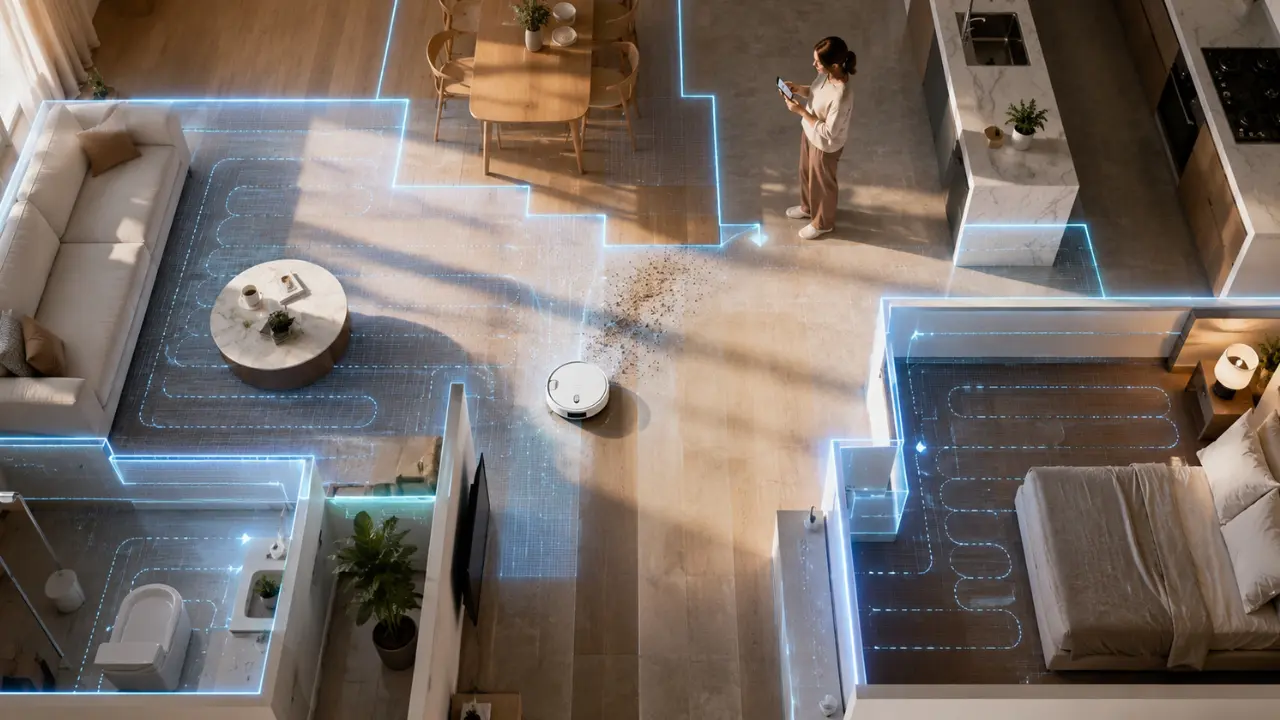

Robot vacuum cleaners map your home using a combination of AI, laser navigation, sensors, and real-time spatial analysis. Instead of moving randomly, modern robot vacuums create digital floor maps, identify obstacles, remember room layouts, and plan the most efficient cleaning path. The result is faster cleaning, better coverage, and less energy waste.
A clean home has always required effort.
Someone sweeps. Someone mops. Someone notices the dust under the sofa and promises to clean it tomorrow.
Then tomorrow becomes next weekend.
This is why robot vacuum cleaners are becoming increasingly relevant in modern Indian homes. Not because people have become lazy. Because life has become busy.
But there is something even more fascinating happening beneath the surface.
Most people think a robot vacuum simply moves around and cleans.
It doesn’t.
It learns.
And that learning starts with mapping.
The First Job Isn’t Cleaning. It’s Understanding the House.
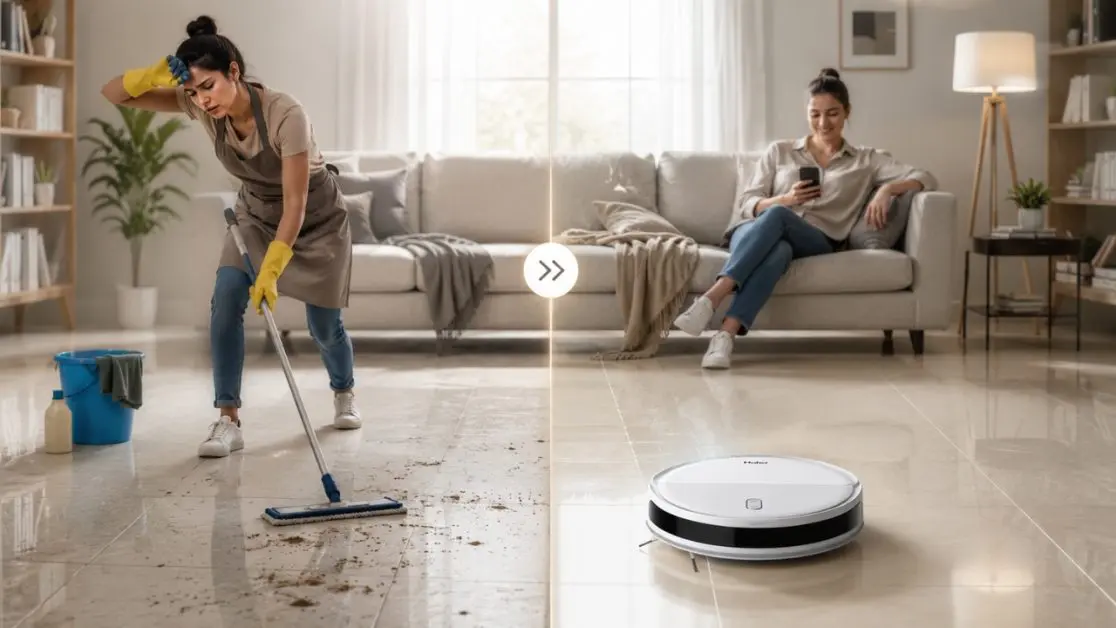
Imagine walking into a new city without a map.
You could wander randomly and eventually reach your destination.
Or you could study the roads first and move intelligently.
Robot vacuum cleaners face the same challenge.
Before cleaning efficiently, they need to understand:
- Where the walls are
- Where furniture is placed
- Which areas are accessible
- Which areas should be avoided
- How rooms connect to one another
This process is called home mapping.
The better the map, the better the cleaning.
A robot that understands a home behaves very differently from one that simply bumps into things.
That distinction changes everything.
How Does AI Create a Map of Your Home?
Modern robot vacuum cleaners use multiple technologies simultaneously.
Think of it as giving the machine several senses.
1. Laser Navigation Creates the Foundation
One of the most advanced mapping technologies today is laser navigation.
A laser sensor continuously scans the surrounding environment and measures distances between objects.
As the robot moves, it creates a digital floor plan of the house.
This is similar to how a person uses their eyes to understand a room.
The difference is that the robot measures hundreds of points every second.
The result is remarkable precision.
For example, Haier’s CIVIC X11 and CIVIC X11 PRO robot vacuum cleaners use laser navigation technology to ensure accurate cleaning paths and effective obstacle detection. They are designed to create and remember multiple floor maps for efficient cleaning.
2. Sensors Fill in the Details
Lasers provide structure.
Sensors provide context.
Most AI-powered robot vacuum cleaners use multiple sensors to detect:
- Furniture
- Walls
- Stairs
- Room edges
- Obstacles
- Changes in floor levels
These sensors constantly update the robot’s understanding of the environment.
A home is not static.
Chairs move.
Shoes appear.
School bags get dropped in hallways.
The map needs to adapt.
AI makes that adaptation possible.
Why Random Cleaning Is Becoming Obsolete
Many early robot vacuums relied on random movement patterns.
They eventually cleaned most areas.
Eventually.
The problem was efficiency.
Imagine mowing a lawn while blindfolded.
You would cover the space.
But you would waste time repeating sections and missing others.
AI mapping changes the equation.
Instead of randomness, the robot follows planned routes.
Benefits include:
- Better floor coverage
- Faster cleaning cycles
- Lower battery consumption
- Fewer missed spots
- Less repeated cleaning
Efficiency is not about working harder.
It is about removing unnecessary movement.
That principle applies to homes, businesses, and robot vacuums alike.
The Hidden Power of Multi-Map Memory
Indian homes are changing.
Duplex apartments are growing.
Independent houses have multiple floors.
Many families maintain separate living spaces, guest rooms, and work zones.
This creates a challenge.
A robot vacuum must understand more than one layout.
What Is Multi-Map Memory?
Multi-map memory allows the robot to store different floor plans and switch between them automatically.
Instead of relearning every space from scratch, it remembers.
For example:
- Ground floor layout
- First floor layout
- Guest room configuration
- Home office setup
- Holiday home floor plan
The Haier CIVIC X11 and CIVIC X11 PRO support up to five map memories, allowing efficient cleaning across multiple areas and layouts.
The insight is simple.
Memory creates speed.
The less a machine needs to rediscover, the more efficiently it can operate.
How AI Learns the Difference Between Rooms
A human immediately recognises the kitchen, bedroom, and living room.
Machines need to learn those distinctions.
AI mapping systems analyse:
- Room size
- Entry points
- Cleaning history
- Floor patterns
- Furniture placement
Over time, the robot creates logical room divisions.
This allows users to assign cleaning tasks such as:
- Clean only the living room
- Avoid the baby’s room
- Prioritise the dining area
- Clean the kitchen after dinner
A smarter map creates smarter decisions.
And smarter decisions create a cleaner home with less intervention.
Obstacle Avoidance Is More Important Than Most People Think
The average Indian home contains dozens of unexpected obstacles.
Consider a normal evening:
- Charging cables near the sofa
- Children’s toys on the floor
- Pet bowls in the corner
- Slippers near the entrance
- Dining chairs partially pulled out
Without intelligent obstacle recognition, cleaning becomes inefficient.
What AI Sees That Humans Often Ignore
Modern robot vacuum cleaners continuously assess their surroundings.
They detect:
- Object proximity
- Navigation risks
- Dead ends
- Potential collisions
The goal is not simply avoiding crashes.
The goal is maintaining cleaning momentum.
A robot that constantly gets stuck is not saving time.
It is creating another task.
That is why intelligent obstacle detection has become one of the most valuable AI features in modern cleaning systems.
The Role of AI in Mopping and Vacuuming Together
Cleaning is no longer a single-function task.
Many modern robot vacuum cleaners combine sweeping, vacuuming, and mopping.
The challenge is coordination.
The robot must determine:
- Which areas require vacuuming first
- Which surfaces need mopping
- How to optimise water usage
- How to maintain consistent coverage
The Haier CIVIC X11 combines vacuuming and mopping through a 2-in-1 cleaning system while delivering up to 5000Pa suction power for different floor surfaces.
This reflects a broader trend in smart homes.
The future belongs to systems that combine tasks rather than appliances that perform only one.
Why Mapping Matters More in Indian Homes
Technology often gets evaluated through specifications.
Real value comes from context.
Indian homes create unique cleaning challenges:
- Dust accumulation during summer months
- Frequent foot traffic
- Open balconies
- Festival preparation cleaning
- Pet hair
- Mixed flooring surfaces
In these environments, navigation quality matters as much as suction power.
A powerful vacuum that misses half the room is inefficient.
A slightly smarter vacuum often delivers better results.
Because cleaning quality begins with understanding space.
Not force.
The Bigger Shift Isn’t About Cleaning
It is easy to think robot vacuum cleaners are about floor care.
They are not.
They are about attention.
Every home runs on invisible systems.
Groceries.
Laundry.
Bills.
Cleaning.
Maintenance.
The best technology removes small decisions from those systems.
Not dramatically.
Quietly.
A robot vacuum that understands your home, remembers its layout, avoids obstacles, and cleans efficiently is doing something larger than vacuuming.
It is giving attention back to the people living there.
And that may be the most important function of AI inside the modern home.
Because the future of smart living is not machines doing more.
It is people worrying less.
Frequently Asked Questions
Is AI mapping really important in a robot vacuum cleaner?
Yes. AI mapping helps the robot understand your home layout, avoid obstacles, clean in planned routes, and reduce missed spots.
Should I choose a robot vacuum with mapping or a basic random-cleaning model?
A mapping model is better for most homes because it cleans faster, covers rooms more systematically, and wastes less battery.
Is suction power more important than smart mapping?
Both matter, but mapping decides whether the vacuum reaches the right areas. Strong suction is less useful if the robot misses parts of the room.
How do robot vacuum cleaners map your home using AI?
They use laser navigation, sensors, and AI-based spatial analysis to scan rooms, identify walls and furniture, create digital maps, and plan efficient cleaning paths.
Does a robot vacuum learn my house over time?
Yes. Advanced robot vacuums can remember layouts, room divisions, obstacles, and cleaning patterns to improve future cleaning sessions.
Does the robot vacuum know where each room is?
Many smart models can divide the home into logical room zones, allowing users to clean selected areas like the kitchen, living room, or bedroom.