


Every summer, electricity bills become the envelope nobody wants to open after running the AC nonstop. It keeps running through long afternoons and warm nights, while the meter never seems to slow down. By the end of the month, many families start questioning if that extra cooling was even worth paying for. In many homes, the issue is not how often the AC runs. It is the unit itself.
A low-rated or less efficient model can consume much more electricity than expected, even with similar usage. That is why the air conditioner’s power rating deserves more attention before buying or replacing one.
What the Star Rating Actually Means
The star rating on an AC is not a random label. In India, the Bureau of Energy Efficiency assigns star ratings based on a value called ISEER, which measures how much cooling the AC delivers per unit of electricity over a full season. A higher ISEER means the machine does more with less power.
Here is how the numbers break down:
- 5-star ACs carry an ISEER of 5.00 or above
- 3-star ACs fall between 3.99 and 4.49 on the ISEER scale
- The annual electricity gap between a 3-star and a 5-star split AC of the same capacity is typically 150 to 200 units
- At Rs. 8 per unit, that is Rs. 1,200 to Rs. 1,600 saved every year
Over five years of regular use, that is a number worth paying attention to.
Why 5 Star ACs Use Less Power
Many people think a 5-star rating is only a label that looks good. It is not. The 5-star power saving comes from the inverter compressor, which adjusts cooling instead of running at full speed all the time.
Older fixed-speed compressors work in a simple on-and-off cycle instead of adjusting their cooling. Every restart draws more electricity than many people expect. When this keeps happening throughout the day, the monthly power bill starts rising much faster than it should.
An inverter compressor runs differently. It speeds up when the room is hot and slows down once the temperature approaches your target setting. Instead of cycling off and back on, it just keeps going at a lower speed. Less electricity, same level of comfort, and no temperature swings in the middle of the night.
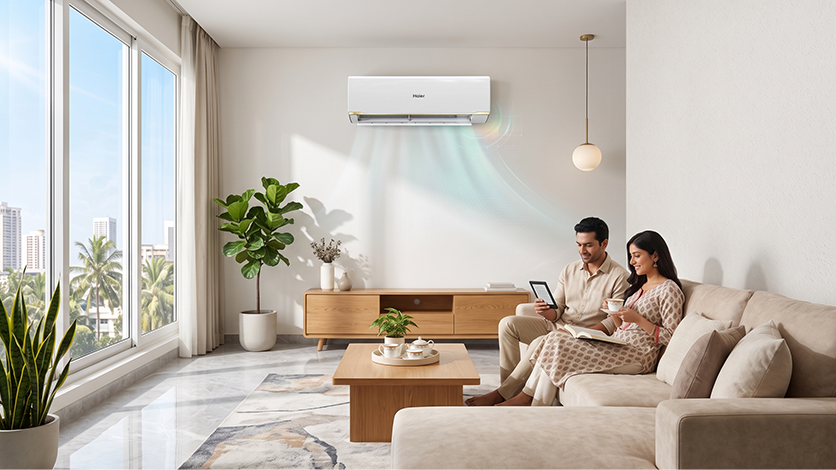
Other things that contribute to lower 5-star AC power consumption:
- Variable fan speed: The indoor fan does not run at full speed when conditions do not call for it
- Auto-convertible capacity modes: The AC steps down to 40%, 55%, or 75% load based on room conditions instead of always running at maximum
- Clean coils over time: When evaporator and condenser coils stay clean, heat exchange is faster, and the compressor works less
- Occupancy-based operation: Some models reduce output or switch off when the room sits empty
Put these together, and the savings show up not just in spec sheets but on your actual bill.
3 Star vs 5 Star: Comparison Numbers Side by Side
The table below shows the comparison between 3-star ACs and 5-star ACs over real facts and numbers:
| Feature | 3 Star AC | 5 Star AC |
| ISEER Range | 3.99 to 4.49 | 5.00 and above |
| Annual Units Used (1.5T, 8 hrs/day) | 900 to 1000 units | 700 to 800 units |
| Inverter Technology | Yes, most models | Yes |
| Estimated Annual Savings | Baseline | Rs. 1,200 to Rs. 2,400 |
| Upfront Cost | Lower | Slightly higher |
| Value Over 5 Years | Moderate | Better |
The 5-star model costs more upfront. But running the AC through six months of Indian summer every year, the price difference starts coming back within two to three years.
How Haier Builds 5 Star Efficiency Into Our ACs
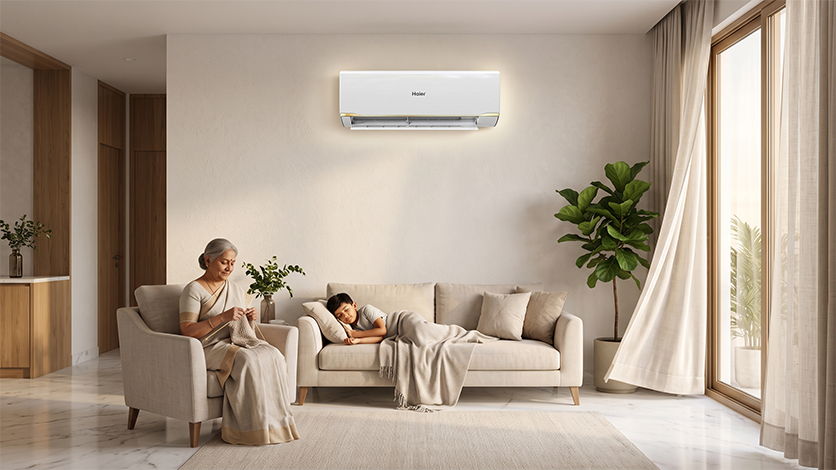
We have been making inverter ACs since 1993, and the 2026 lineup is built for Indian conditions where outdoor temperatures regularly cross 46°C. At Haier, efficiency runs through the whole machine, not just the rating on the label.
Here is what drives real 5-star power saving across our range:
- AI ECO Mode
The system continuously reads room conditions and shifts between 75%, 55%, and 40% capacity on its own. No manual adjustment needed. Compared to running at fixed full capacity, AI ECO delivers up to 56% more energy savings.
- AI Electricity Monitoring
Through the HaiSmart App, you can see real-time 5-star AC power consumption in kWh and rupees. Set a monthly target, get notified before you cross it, and review how much time the AC spent in ECO mode versus Normal mode each day.
- HEXA Inverter Technology
Our proprietary inverter setup combines six core components, including an Electronic Expansion Valve, Full DC motors, and advanced PCB frequency modulation. The AC delivers 100% cooling capacity even at 46°C outdoor temperature. Most conventional units start losing output in extreme heat and run longer to compensate. The HEXA system holds performance without derating.
- AI Human Detection
The presence sensor monitors room occupancy in real time. If the room sits empty for 15 minutes, the AC drops to 40% capacity automatically. After 30 minutes with no occupancy detected, it switches off on its own.
- IDU Frost Self Clean and ODU Cyclone Clean
Dirty coils are one of the biggest reasons ACs start consuming more power over time. The indoor unit runs an automatic frost self-clean cycle that removes up to 99.9% of dust from the evaporator. The outdoor unit uses reverse-fan action after shutdown to clear the condenser. Both features keep the compressor running efficiently for years.
Haier’s 5 Star AC Models Worth Exploring
1.7 Ton, 5 Star, ISEER 5.65. Comes with Direct Voice Control, AI Human Detection, HEXA Inverter, Supersonic Cooling, and 20-metre airflow. Backed by a 5-year comprehensive warranty and a 12-year compressor warranty.
1.6 Ton, 5 Star, ISEER 5.65. India’s first fabric finish AC built for heavy-duty summer use. Loaded with AI ECO, Human Detection, Frost Self Clean, Cyclone Clean, and HEXA Inverter technology.
Browse the full Split AC range, all manufactured at our Greater Noida plant and tested through 200 quality checks before shipping.
Does a 5-Star AC Really Reduce Your Electricity Bill?
People asking how much a 5-star AC consumes electricity usually want a specific number. It depends on room size, usage hours, and insulation, but the direction never changes.
A 1.5-ton 5-star inverter AC running 8 hours daily for 6 months lands around 700 to 800 units per year. A 3-star model of the same capacity uses 900 to 1000 units. At Rs. 8 per unit, that gap is Rs. 1,600 to Rs. 2,400 annually. Add AI ECO and auto-off from occupancy detection, and the savings can go further.
The price difference between a 3-star and a 5-star typically gets recovered within two to three years. After that, every year is just net savings.
Suggested Read: Energy Efficiency in High Humidity: Haier’s 5-Star AC Inverter Performance
Conclusion
The star rating is not a decoration on the box. It is a direct measure of how efficiently the AC uses electricity to cool your room. A 5-star split AC with inverter technology, smart capacity control, and self-maintaining coils will cost visibly less to run month after month compared to lower-rated units.
If you are buying an AC this year, the 5-star route is the right call for Indian summers. The bill will show it.
Explore Haier’s full 5-star lineup, including the Desert Rose and Gravity Series, and find the model that fits your home.
Frequently Asked Questions
What is the difference between a 3-star and a 5-star AC?
A 5-star AC has a higher ISEER rating, meaning it delivers more cooling per unit of electricity than a 3-star model. The annual gap in power consumption for the same capacity is typically 150 to 200 units, which translates into real savings over the years of regular use.
How much electricity does a 5-star AC consume?
A 1.5-ton 5-star split AC running 8 hours daily across a 6-month season consumes around 700 to 800 units per year. Exact numbers vary with room size, outdoor temperature, insulation quality, and whether smart modes like AI ECO are active regularly.
Which AC mode saves the most electricity?
ECO mode and AI ECO mode will be the most power-efficient modes for normal operation. These modes will not run the compressor at full load but at reduced capacity, 40-75%, depending on live room conditions. When coupled with occupancy-based auto-off, the power savings will be even more on days when the room is not always occupied.
Does a 5-star AC really reduce the electricity bill?
Yes, the 5-star power saving advantage comes from inverter efficiency, smart capacity reduction, and features that prevent unnecessary operation. Most households see a visible drop in monthly bills compared to running a 3-star or non-inverter unit of the same capacity.
Is a 5-star AC worth it over a 3-star for home use?
For homes using the AC 6 to 10 hours daily through the Indian summer, the 5-star model recovers its slightly higher upfront cost within two to three years through annual savings of Rs. 1,200 to Rs. 2,400. Over a standard 5-year ownership period, it is clearly a better financial decision.