
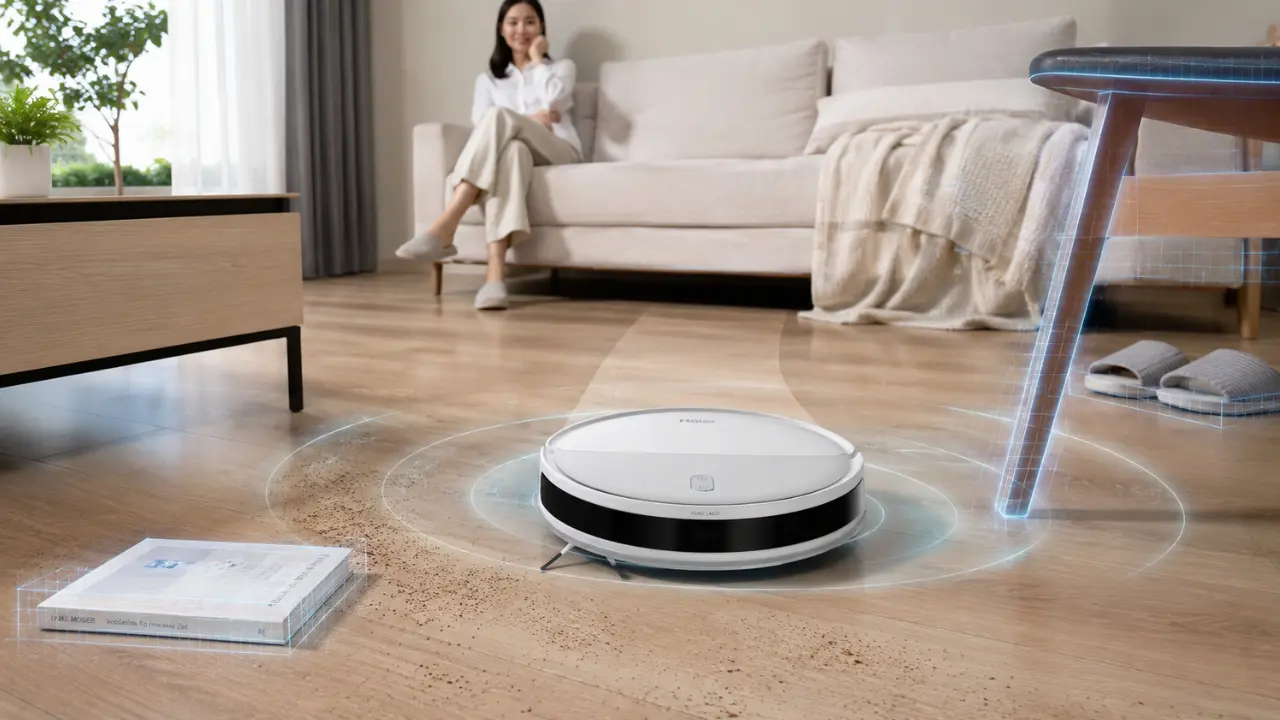

Smart sensors constantly monitor their environment, recognizing furniture, walls, stairs, pets, and everyday household items, and dynamically changing their route to assist robot vacuums in avoiding obstacles.
This enables robot vacuums to clean efficiently, avoid collisions, prevent falls and cover more of the home without constant human supervision.
A robot vacuum moving across your living room looks simple.
But what happens underneath is surprisingly sophisticated.
Think about a typical Indian home on a weekday evening.
A dining chair is slightly out of place.
A child’s toy lies near the sofa.
Someone leaves a charging cable on the floor.
The family pet decides the middle of the hallway is the perfect place to nap.
Yet the robot vacuum continues cleaning.
No panic. No confusion. No endless bumping into furniture.
Just movement.
That raises an interesting question.
How does a machine know where not to go?
The answer lies in smart sensors.
And once you understand how these sensors work, robot vacuums stop looking like cleaning gadgets and start looking like navigation systems designed for modern homes.
The Hidden Job of Every Robot Vacuum
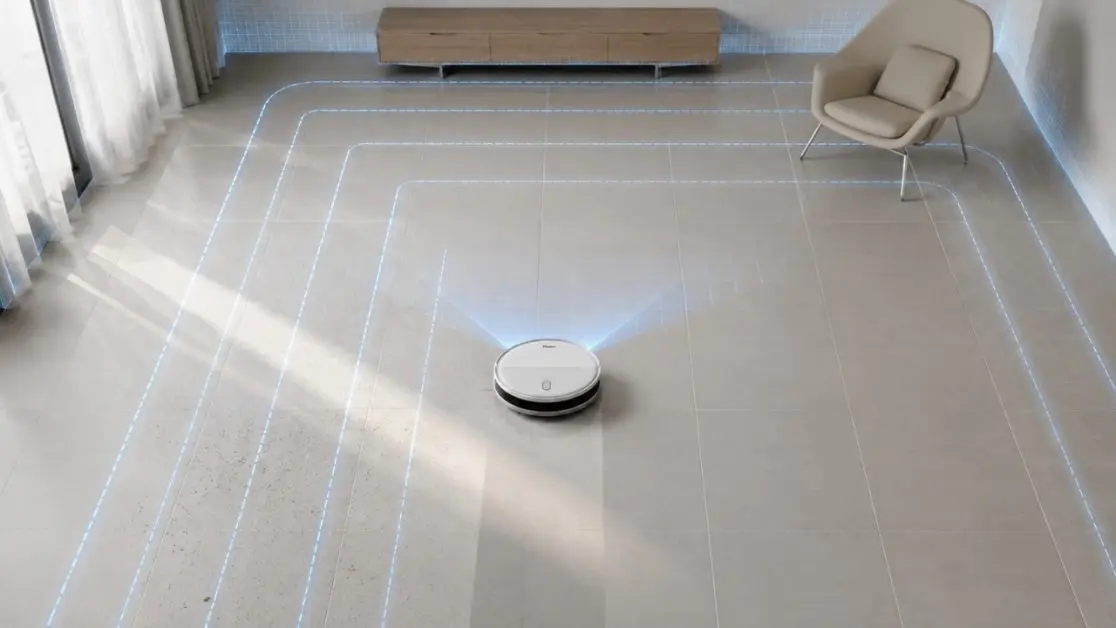
Most people assume the main purpose of a robot vacuum is cleaning.
Not exactly.
Its first job is navigation.
Cleaning only happens after navigation works.
Imagine asking someone to mop a house while blindfolded.
Even the best cleaning tools become ineffective if they cannot understand the environment.
Robot vacuums face the same challenge.
Before collecting dust, pet hair, or crumbs, they must answer three questions:
- Where am I?
- What is around me?
- Where should I go next?
Smart sensors continuously answer these questions hundreds of times during every cleaning session.
That is the invisible system powering modern robotic cleaning.
Why Random Movement No Longer Works
Early robot vacuums relied heavily on random navigation.
They moved until they hit something.
Then they changed direction.
Then repeated the process.
It worked.
But it was inefficient.
Rooms took longer to clean.
Corners were often missed.
Battery usage increased.
Furniture experienced repeated collisions.
Modern smart sensors changed that completely.
Instead of reacting to obstacles, robot vacuums now anticipate them.
That shift matters.
Because prediction is always more efficient than correction.
Laser Navigation Creates a Digital Map
One of the most important innovations in robot vacuums is laser navigation.
A laser-based system continuously scans rooms and creates a digital representation of the home.
Instead of seeing a wall only after touching it, the robot identifies it beforehand.
This creates several advantages:
- More accurate cleaning routes
- Better room coverage
- Reduced collisions
- Faster cleaning cycles
- Improved battery efficiency
The Haier CIVIC X11 and Haier CIVIC X11 PRO use laser navigation technology combined with intelligent obstacle detection and multi-map memory for efficient movement throughout the home.
The result is simple.
Less wandering.
More cleaning.
Obstacle Detection Is About Millimetres
Furniture Isn’t the Real Challenge
Most people think sofas and walls are difficult obstacles.
They are not.
Large objects are easy to detect.
The real challenge is smaller, unpredictable items.
Think about:
- Mobile charging cables
- Children’s toys
- Slippers
- Pet bowls
- Floor cushions
- Shopping bags
These objects appear unexpectedly.
And they change locations constantly.
Smart obstacle detection sensors continuously scan the floor area and adjust routes accordingly.
The goal is not simply avoiding collisions.
The goal is maintaining cleaning momentum without getting stuck.
Because every minute spent untangling a cable is a minute not spent cleaning.
Anti-Fall Sensors Protect More Than the Machine
There is another obstacle many people forget.
Empty space.
Staircases.
Split-level rooms.
Balcony drops.
Raised platforms.
Robot vacuums use anti-fall sensors that detect sudden height differences and prevent accidental drops. The Haier CIVIC series incorporates multiple sensors, including anti-fall technology, to improve operational safety.
This matters particularly in Indian duplex homes and apartments with internal staircases.
Because avoiding obstacles is important.
Avoiding gravity is even more important.
Multi-Map Memory Changes Everything
One Home Is Rarely Just One Space
Modern homes are becoming more complex.
Many families manage:
- Multiple floors
- Separate workspaces
- Guest rooms
- Children’s rooms
- Dedicated entertainment areas
A robot vacuum that relearns every room each day wastes time and battery.
That is why multi-map memory has become valuable.
The Haier CIVIC X11 and CIVIC X11 PRO support up to five stored maps, allowing efficient navigation across multiple areas without repeated mapping sessions.
Think of it like remembering directions.
The first visit takes effort.
The fifth visit feels automatic.
The same principle applies here.
Smart Sensors Help Homes With Pets
Pet owners understand a unique challenge.
The environment changes constantly.
A dog may move from one room to another.
A cat may choose a different sleeping spot every day.
Pet toys rarely stay in one place.
This creates a dynamic cleaning environment.
Smart sensors allow robot vacuums to adapt in real time rather than relying solely on fixed routes.
That flexibility matters because homes are living systems.
Not static floor plans.
The Haier CIVIC X11 PRO is also designed with pet-friendly cleaning in mind, helping manage pet hair and everyday messes more effectively.
The Real Goal Is Not Avoiding Obstacles
This sounds strange.
But obstacle avoidance is not actually the final objective.
Coverage is.
Anyone can avoid furniture by stopping.
The challenge is avoiding obstacles while still cleaning every accessible area.
The best robot vacuums balance three priorities simultaneously:
- Safety
- Coverage
- Efficiency
Remove one and the system breaks.
Too cautious?
Cleaning becomes incomplete.
Too aggressive?
Collisions increase.
Too random?
Battery life suffers.
Smart sensors create balance.
And balance is often what separates smart technology from merely automated technology.
How Voice Control and Smart Navigation Work Together
Navigation does not happen in isolation.
Today’s smart robot vacuums combine sensors with connected controls.
That means homeowners can:
- Schedule cleaning sessions
- Create custom cleaning zones
- Start cleaning remotely
- Monitor progress through apps
- Use voice assistants for commands
The Haier CIVIC X11 series supports mobile app control and voice commands through Google Assistant and Alexa integration.
This creates an important shift.
The vacuum is no longer just reacting to the home.
The home is beginning to coordinate with the vacuum.
Why Smart Sensors Matter More in Indian Homes
Indian homes create unique cleaning challenges.
Consider a typical week:
- Festival decorations appear temporarily.
- Extra chairs arrive during gatherings.
- Children’s school projects occupy floors.
- Grocery bags stay near kitchen entrances.
- Foot traffic increases during celebrations.
The environment changes constantly.
Static cleaning systems struggle in dynamic homes.
Sensor-driven cleaning systems adapt.
That adaptability is what makes robot vacuums increasingly relevant for modern Indian households.
Not because life became messier.
Because life became more fluid.
The Future of Cleaning Is Awareness
The biggest misconception about robot vacuums is that they are cleaning machines.
They are not.
They are awareness machines that happen to clean.
The cleaning brush matters.
The suction power matters.
The mopping function matters.
But sensors determine whether those features reach the right places at the right time.
A robot vacuum with powerful suction but poor navigation is like a sports car without steering.
Capability means very little without direction.
That is why smart sensors sit at the centre of modern robotic cleaning.
They help machines understand space.
They help homes operate more smoothly.
And they quietly remove one of the smallest but most repetitive tasks from everyday life.
Because the future of smart living is not about adding more effort.
It is about building systems that understand the room before they enter it.
Frequently Asked Questions
Are smart sensors important in a robot vacuum cleaner?
Yes. Smart sensors help a robot vacuum detect furniture, walls, stairs, pets, and everyday objects, allowing it to clean efficiently while reducing collisions and getting stuck less often.
Should I buy a robot vacuum with obstacle detection?
If your home has furniture, cables, toys, pets, or frequently changing layouts, obstacle detection is a valuable feature. It improves cleaning efficiency and reduces the need for manual intervention.
Do smart sensors make robot vacuums clean better?
Indirectly, yes. While suction power removes dirt, smart sensors help the robot reach more accessible areas, avoid obstacles, and follow efficient cleaning paths.
Is obstacle avoidance worth the extra cost?
For most households, especially larger or busier homes, advanced obstacle detection can save time by preventing interruptions and improving overall coverage.
How do smart sensors help robot vacuums avoid obstacles?
Smart sensors continuously scan the surroundings, detect obstacles such as furniture, walls, cables, pets, and stairs, and automatically adjust the robot’s path to avoid collisions while maintaining efficient cleaning.
How often do robot vacuum sensors scan the room?
Sensors monitor the environment continuously throughout the cleaning session, allowing the robot to react quickly to changes and navigate safely.