

Ever started a movie on a Friday night, only to spend the first ten minutes wondering why it doesn’t look nearly as good as everyone said it would? You restart the app. Check the Wi-Fi. Maybe even blame your broadband provider. Fair enough that’s what most of us do.
But here’s something people often overlook.
The internet isn’t always the culprit.
Sometimes, the TV itself has quietly become the weakest link in your entertainment setup.
Streaming platforms today aren’t serving the same quality they did five or six years ago. Films are mastered with richer colours, live sports are broadcast with smoother motion, and OTT platforms are increasingly supporting advanced HDR formats. If your television wasn’t designed to handle these improvements, chances are you’re watching only a fraction of what you’re actually paying for.
Let’s look at the signs.
Your Internet Feels Fast, Yet Streaming Doesn’t
Here’s a quick test.
Your phone streams flawlessly.
Your laptop plays 4K videos without buffering.
But your television? It takes ages to load apps, struggles while switching between menus, or suddenly drops picture quality halfway through a movie.
That’s not always a network problem.
Older televisions generally rely on slower processors, outdated wireless hardware, and operating systems that weren’t built for today’s demanding streaming platforms.
As modern OTT apps continue adding AI recommendations, higher-resolution content and richer interfaces, older hardware simply has to work harder.
The result?
- Apps launch slowly
- Menus freeze unexpectedly
- Content buffers more often
- Navigation becomes frustrating
Streaming should feel effortless. If operating your TV feels like waiting for an old smartphone to respond, it’s probably telling you something.
7 Signs Your Television Is No Longer Keeping Up
1. Everything Looks Flat
Have you ever switched between watching something on your phone and then continuing it on your TV?
Sometimes the TV somehow looks worse.
Skin tones lose warmth.
Sunsets appear washed out.
Dark scenes become grey rather than truly black.
The issue usually isn’t the content.
Modern streaming platforms are packed with HDR movies and shows that contain significantly more brightness, colour information and contrast than older televisions can reproduce.
When a television lacks modern picture processing, much of that visual detail simply disappears before it reaches your eyes.
2. Dark Scenes Become Difficult to Watch
This one frustrates almost everyone.
You’re watching a thriller.
Instead of seeing details inside a dimly lit room, everything merges into one dark patch. Characters disappear into the shadows. Important visual details become almost impossible to distinguish.
Older display technologies often struggle to balance brightness and black levels simultaneously.
Instead of creating depth, they create darkness.
Modern picture processing is designed to preserve highlight details while maintaining deep blacks, allowing every scene to remain visible without looking artificially bright.
3. Fast Action Doesn’t Look Smooth
Cricket.
Football.
Formula racing.
Action movies.
Gaming.
They all have something in common.
Motion.
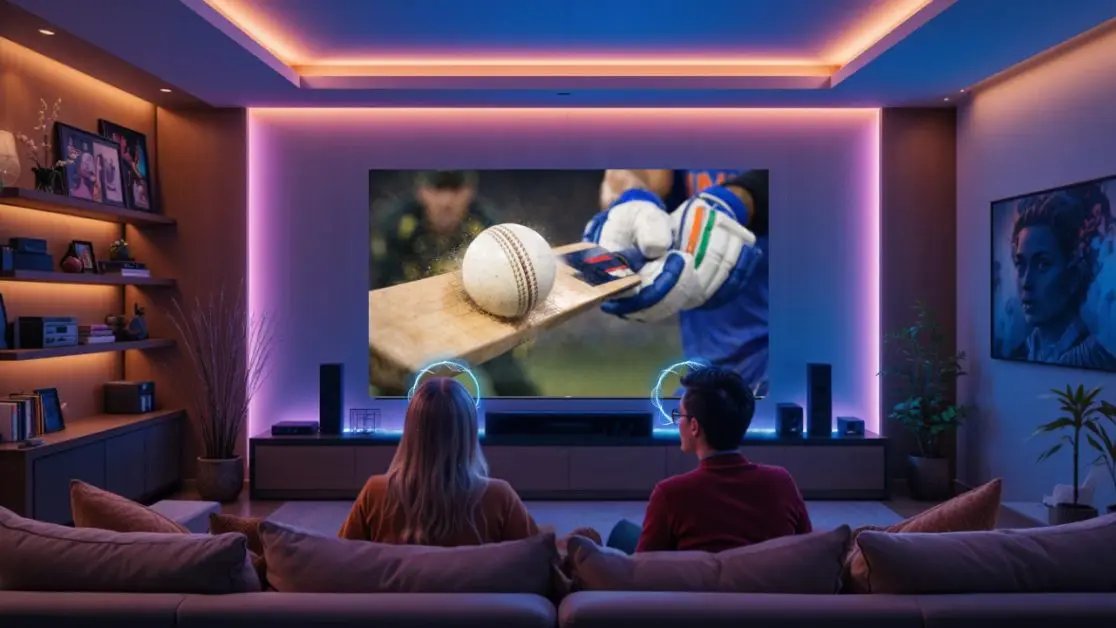
If moving objects leave behind blur, ghosting or judder, your television may no longer be capable of displaying today’s higher frame-rate content comfortably.
You might notice:
- The cricket ball becomes difficult to follow.
- Camera pans appear shaky.
- Racing sequences lose clarity.
- Fast action scenes seem less immersive.
Ironically, many people assume that’s how the broadcast looks.
Usually, it isn’t.
4. Apps Take Forever to Open
This one’s easy to ignore because it happens gradually.
One day Netflix opens in three seconds.
Months later
It takes fifteen.
Eventually, switching between streaming apps starts feeling like multitasking on an aging phone with too many apps open.
Signs include:
- Long loading screens
- Delayed voice commands
- Slow home screen navigation
- Frequent app reloads
- Delayed search results
If you’re spending more time waiting than watching, the hardware inside the TV is likely showing its age.
5. You Constantly Adjust Picture Settings
Movie mode.
Dynamic mode.
Sports mode.
Back to Standard.
Brightness up.
Contrast down.
It sounds louder.
Now softer.
Sound familiar?
Many older televisions require constant manual tweaking because they don’t intelligently adapt to different types of content or changing room lighting.
A football match during the afternoon needs different picture settings than a movie watched late at night. Yet older TVs expect users to make those adjustments manually.
Eventually, most people give up and settle for “good enough.”
6. Audio Doesn’t Match the Picture
Streaming quality isn’t just about visuals anymore.
Many OTT platforms now support immersive audio formats alongside higher-quality video.
But if your television produces flat dialogue, weak bass or unclear vocals, even beautifully shot content feels incomplete.
Some common complaints include:
- Constantly changing volume levels
- Dialogue that’s difficult to understand
- Weak cinematic impact
- Poor separation between music and speech
Great streaming isn’t only something you see.
It’s something you hear.
7. Your TV No Longer Feels Smart
Let’s be honest.
Calling an old television “smart” can sometimes feel optimistic.
Apps stop receiving updates.
Certain streaming services become unavailable.
Voice assistants respond inconsistently.
Screen casting becomes unreliable.
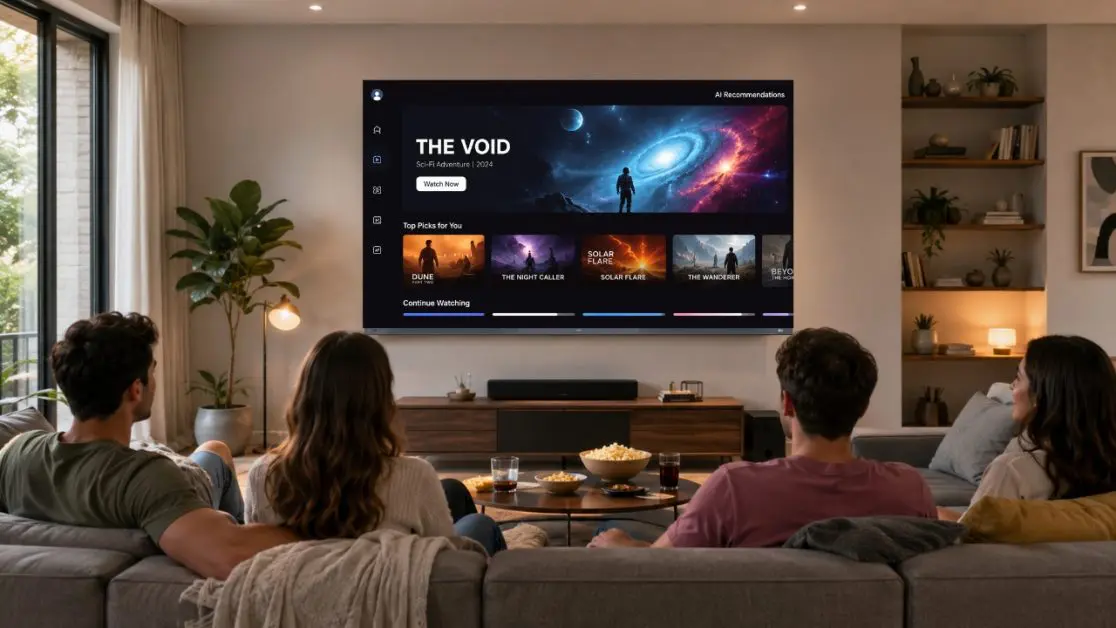
Meanwhile, every new streaming platform expects faster processors, newer software and more capable hardware.
Eventually, your television spends more time catching up than keeping up.
A Quick Reality Check
Not every issue points to a failing television. Sometimes the problem really is the internet connection, a temporary app glitch or outdated software.
However, when several of these signs appear together, it’s worth taking a closer look.
| What You Notice | What It Often Indicates |
| Frequent buffering despite good Wi-Fi | Older TV hardware struggling with modern streaming apps |
| Washed-out colours | Limited support for newer picture technologies |
| Motion blur during sports | Lower refresh capability and basic motion processing |
| Constant picture adjustments | Lack of intelligent picture optimisation |
| Slow app performance | Ageing processor and limited system resources |
| Poor dialogue clarity | Basic built-in audio system |
| Missing streaming features | Outdated smart TV platform |
The truth is, streaming technology has evolved rapidly over the past few years. Modern content is richer, brighter, faster and far more intelligent than it used to be.
A television purchased years ago may still function perfectly but functioning isn’t the same as delivering the experience today’s content is designed for.
In the next section, we’ll explore how modern AI-powered televisions overcome these limitations and why the latest Haier India QD Mini LED TVs, including the Haier New M92 Series and flagship Haier H100M96FUX QD Mini LED AI Smart Google TV, are engineered to unlock the full potential of today’s streaming platforms with AI-powered picture optimisation, Dolby Vision IQ, Google TV, high refresh rates and premium KEF-tuned audio. These capabilities are part of the official product specifications for the M92 and M96 Series.
So, What Does a Modern Streaming TV Actually Change?
Much more than they imagine.
The major improvement isn’t just to get a brighter screen or a bigger display. All the little things that get in the way of easy viewing over time: laggy app startups; shaky video quality and colors that are washed out; poor sports video quality and endless settings menu trips.
Modern high quality TVs can do a lot of that automatically.
Rather than having you manually tweak the picture for each movie or game, intelligent AI-powered systems determine what is playing and adjust it as it happens.
That’s a vastly different experience.
Why AI Has Become Such an Important Part of Streaming
Streaming platforms now deliver thousands of different types of content.
A wildlife documentary.
A live IPL match.
A suspense thriller.
An animated family film.
Each requires different picture characteristics.
Older televisions generally display everything using nearly identical processing.
Modern AI televisions don’t.
For example, the Haier New M92 Series QD Mini LED AI Smart Google TV and the flagship Haier H100M96FUX QD Mini LED AI Smart Google TV are built which integrates AI across picture, sound, gaming and entertainment, while the AI Ultra Sense Processor performs intelligent scene recognition and optimises motion, colour, contrast and depth in real time. These capabilities are part of the official product specifications.
That means less manual adjustment and more time simply enjoying what you’re watching.
Better Streaming Starts With Better Picture Intelligence
Streaming quality isn’t measured by resolution alone.
A 4K movie can still look average if the television cannot display its full dynamic range or accurately process every frame.
This is where premium display technologies begin making a visible difference.
With Haier India’s QD Mini LED televisions, several technologies work together to create a richer viewing experience:
- AI Scene Detection analyses different scenes and optimises them intelligently.
- AI Colour Boost Pro enhances colour richness naturally.
- AI HDR Enhancer Pro improves highlight and shadow details.
- AI Motion helps keep fast-moving objects smoother.
- AI Depth improves perceived detail and dimensionality.
- AI-SR enhances lower-resolution content for improved clarity.
Rather than relying on a single enhancement, these AI-based technologies work together to improve overall picture quality across different types of streaming content.
Bright Afternoon. Late-Night Movie. Same Great Experience.
One challenge many Indian households face is changing ambient light.
A movie watched at 2 PM looks completely different from the same movie at 10 PM.
Instead of asking viewers to constantly adjust brightness, compatible Haier QD Mini LED TVs support Dolby Vision IQ, which adapts picture performance according to room lighting. They also feature AI Ambient Sense, designed to automatically adjust brightness and colour temperature depending on the surrounding environment.
The experience feels more natural because the television is adapting in the background, not asking you to.
Streaming Sounds Better When Audio Keeps Up
We’ve all experienced this.
Dialogue sounds quiet.
Action scenes suddenly become too loud.
You reach for the remote again.
Premium streaming deserves audio that complements the visuals.
Haier’s new range of QD Mini LED TVs will feature Sound by KEF, Dolby Atmos and multi-channel speaker systems, with the result that these models will provide more immersive audio. The M92 Series includes a 2.1-channel speaker system, and the flagship M96 Series has a 6.2.2-channel speaker configuration to produce a more spacious soundstage for cinematic experiences.
Balanced audio can make your viewing more engaging whether you’re watching a drama that is filled with dialogue or a concert or an action-packed blockbuster.
More Than Entertainment A Smarter TV Experience
Streaming today isn’t limited to opening one app.
People switch between OTT platforms, cast videos from smartphones, search using voice commands and expect personalized recommendations.
Modern televisions are expected to manage all of that smoothly.
Haier’s latest QD Mini LED televisions include features such as:
- Google TV for personalised content discovery
- Hands-free voice control
- Google Chromecast built-in
- HaiSmart ecosystem compatibility
- Wi-Fi 6 and Bluetooth 5.2 for faster wireless connectivity
- Solar Remote on supported models
Together, these features help create a connected entertainment experience that goes beyond simply playing videos.
Which Viewers Benefit the Most?
If any of these sound familiar, upgrading your television could make a meaningful difference.
- You regularly watch movies or web series on OTT platforms.
- Live cricket, football or motorsports are part of your weekend routine.
- Your family uses multiple streaming apps every day.
- You frequently cast content from your smartphone.
- Gaming is becoming a bigger part of your entertainment.
- You want a television that adapts intelligently instead of requiring constant manual adjustments.
Why Haier India’s QD Mini LED Series Stands Out
Choosing a television isn’t only about screen size anymore.
It’s about investing in a display that’s ready for the way entertainment continues to evolve.
The Haier New M92 Series QD Mini LED AI Smart Google TV combines AI-powered picture optimisation, a 144Hz refresh rate, Dolby Vision IQ, HDR10+, Sound by KEF, Dolby Atmos, Google TV and AI Ultra Sense Processor to deliver a more intelligent streaming experience. Official specifications also include AI Ultra Sense Processor, hands-free voice control and AMD FreeSync Premium Pro for supported gaming experiences.
If you are looking for a bigger and better premium home entertainment system, then the Haier H100M96FUX QD Mini LED AI Smart Google TV offers all the above features with a 254cm (100 Inch) display, AI Ultra Sense Processor co-developed with MediaTek, up to 2160 local dimming zones, 6.2.2-channel Audio System with Sound by KEF, 90W audio output and a warranty package of four years as spelt out by Haier India.
These televisions can be used to upgrade to an older smart TV or to build an entertainment room at home that can seamlessly integrate with today’s streaming platforms, intelligent picture, immersive sound and responsive performance.
It’s Worth Asking One Simple Question
If you’re already paying for high-speed broadband and multiple OTT subscriptions, are you actually seeing and hearing the experience they’re designed to deliver?
An older television may still switch on every day, but that doesn’t necessarily mean it’s keeping pace with modern entertainment.
Haier India’s latest QD Mini LED AI Smart Google TV lineup is built for today’s viewing habits, bringing together intelligent AI processing, premium display technologies, immersive audio and smart connectivity in one complete entertainment solution.
Sometimes, the biggest streaming upgrade isn’t changing your internet plan.
It’s changing the screen you’re watching it on.
Frequently Asked Questions
1. How can I tell if my old TV is affecting streaming quality?
Common signs include slow app performance, blurry motion, washed-out colours, poor HDR performance, frequent buffering despite good internet, and outdated smart TV software.
2. Does faster internet improve streaming if my TV is old?
Not always. A high-speed internet connection cannot compensate for an older television with limited processing power or outdated display technology.
3. Why does streaming look better on newer TVs?
Modern televisions use advanced processors, AI-based picture optimisation, HDR technologies and improved refresh rates to display streaming content more accurately and smoothly.
4. What features should I prioritise in a new streaming TV?
Look for AI-powered picture processing, Dolby Vision IQ, HDR10+, a 144Hz refresh rate, Google TV, immersive audio technologies and reliable smart connectivity for a more seamless entertainment experience.
5. Which Haier TV series is suitable for premium streaming?
Haier India’s New M92 Series QD Mini LED AI Smart Google TV and the flagship Haier H100M96FUX QD Mini LED AI Smart Google TV are designed with AI-powered picture optimisation, premium sound technologies and Google TV features to enhance modern streaming experiences, based on their official specifications.