
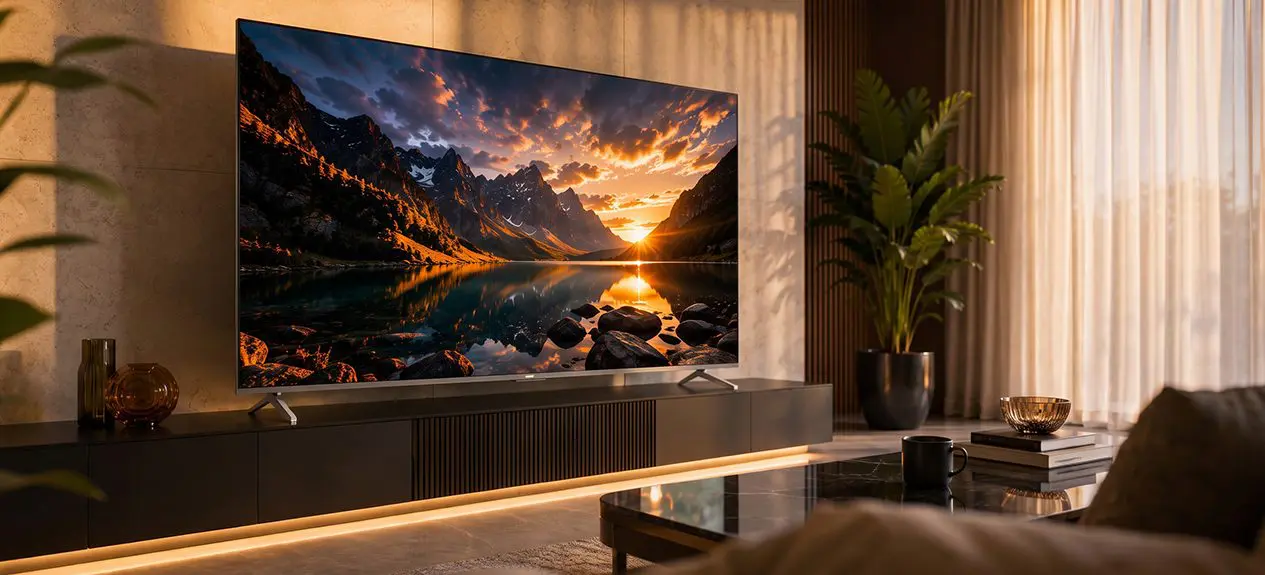

Walk into any TV showroom and the terms alone can be confusing, LED, QLED, OLED, Mini LED, and QD Mini LED. Each one changes how the picture looks in its own way, and Mini LED sits right in the middle of that list. This guide explains where a Mini LED TV fits compared to the others, then breaks down, in simple terms, why it actually improves picture quality.
The Full Picture: How Different TV Screen Types Compare
Before getting into Mini LED specifically, here’s a simple look at how the main screen types differ:
| Screen Type | How It Works | Black Levels | Brightness | Best For |
| LED | One light source behind the whole screen | Average | Moderate | Budget-friendly, everyday viewing |
| QLED | LED light with an added colour layer | Good | High | Bright rooms, colourful shows and movies |
| OLED | Each tiny dot on screen lights up on its own | Deepest black | Lower | Dark rooms, movie nights |
| Mini LED | Thousands of small lights, grouped into zones | Very good | Very high | Bright rooms, everyday family viewing |
| QD Mini LED | Mini LED lighting plus the QLED colour layer | Very good | Very high | Bright rooms that also want rich colour |
QD Mini LED is essentially Mini LED and QLED working together, one delivering precise light control, the other delivering richer colour. That combination is what the rest of this guide focuses on.
Understanding QD Mini LED
QD Mini LED brings two things together in one screen. The “QD” part stands for quantum dot, a thin layer that makes colours look richer and more true to life. The Mini LED part manages the backlighting, thousands of individually controlled LEDs, grouped into zones that dim or brighten independently for precise contrast.
Put simply, a QD Mini LED TV gives you both things at once, sharper contrast from the lighting side, and richer colour from the quantum dot layer. Neither one alone tells the full story, it’s the two working together that makes the picture look genuinely better.
The Role of Local Dimming in Improving Contrast and Detail
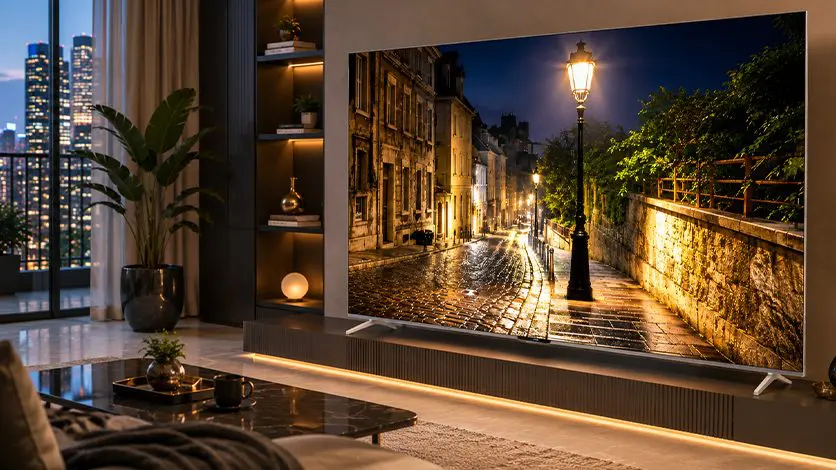
“Local dimming” is the real reason Mini LED looks better, not just a term on a spec sheet. Here’s what it actually does:
- The screen is split into small sections, each with its own tiny light behind it
- A dark section of the screen can dim down, while a bright section right next to it stays lit, both at the same time
- The more sections a TV has, the more precisely it can control light and dark areas next to each other
- This also reduces the faint glow that can sometimes appear around bright objects on a dark background, often called “blooming”
Think of a night scene with just one streetlamp lit up, or fireworks against a dark sky. This is exactly where a good Mini LED screen shows its strength.
How Mini LED Handles HDR and Colour
A great picture isn’t only about light and dark, colour matters just as much. On a well-made Mini LED screen, the picture adjusts its brightness and colour scene by scene, so a sunny outdoor shot and a dim indoor one both look correct. A wider colour range means reds, greens, and blues look closer to how they’d look in real life, not washed out or exaggerated, while smoother colour transitions keep skies, shadows, and gradients free of visible colour “steps” or banding. Together, this is what makes a scene feel real instead of just bright.
Mini LED vs OLED for Picture Quality
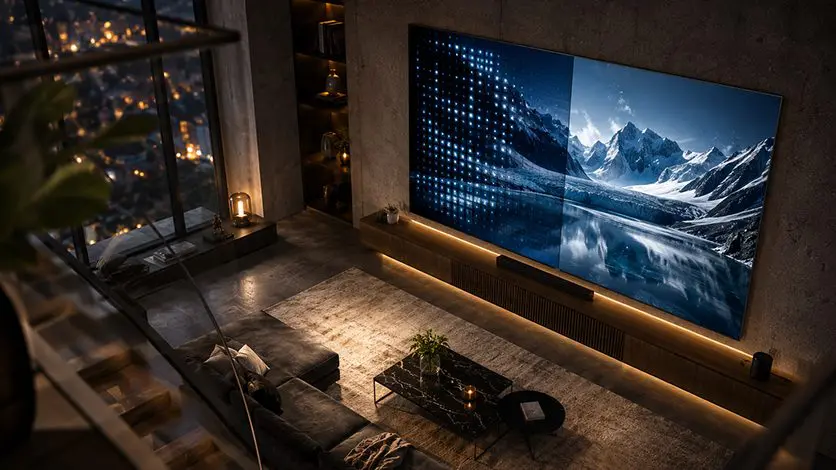
In short: Mini LEDs tend to get brighter, which works well in a well-lit room. OLED gets truer blacks, since each dot on the screen can switch off completely. Neither one wins in every situation, it really depends on how bright the room usually is and what’s being watched.
Curious exactly how much of an edge Mini LED holds in a genuinely bright room?
Read this blog: Best TV for Bright Rooms? 8 Ways Mini LED Beats OLED
Why Mini LED Fits So Well in Indian Homes
Indian living rooms tend to get more daylight and ambient light than average, bigger windows, brighter afternoons, festive lights for much of the year, and that’s exactly where Mini LED does its best work, staying clear and bright without giving up much on contrast. OLED only pulls ahead in a fully dark, dedicated home theatre room. For everyday Indian living rooms, Mini LED is the stronger choice.
How We Engineer Our Mini LED TVs
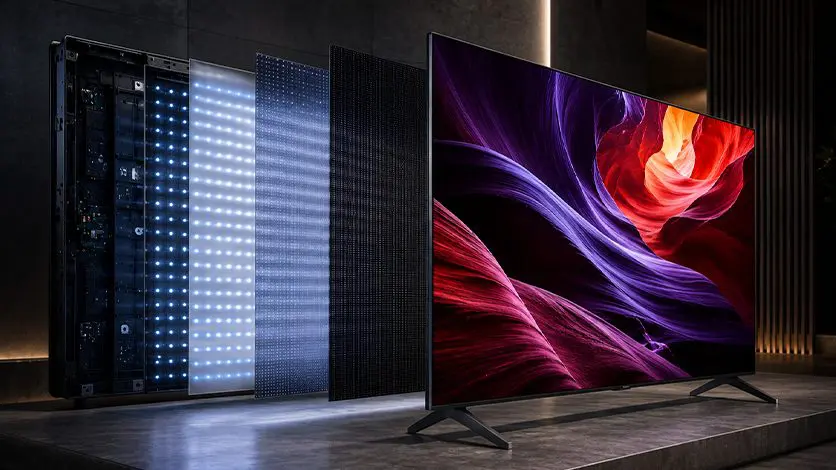
At Haier, we don’t just add Mini LED lighting and call it done. Our TVs use a smart processor that reads what’s on screen in real time and adjusts brightness, contrast, and colour automatically, scene by scene, instead of relying on one fixed setting for everything. Our M92 Series, for example, uses hundreds of individually controlled light zones depending on screen size, along with a wide, accurate colour range and HDR that adjusts based on both the content and the room’s lighting, making it one of our best mini LED TV in India picks for anyone prioritising picture quality.
We also hold a Dolby license, something very few television manufacturers can say. That’s what lets Dolby Vision run natively on our supported Mini LED models, not as a workaround, but built in from the ground up, automatically adjusting the picture to match the room’s light without any manual tweaking needed. This is the part that doesn’t show up on the box, but it’s exactly what decides whether “Mini LED” actually delivers on picture quality once the TV is switched on at home. Our full TV range covers every screen type in this guide, so the right fit is always there, whatever the room.
Conclusion
A Mini LED TV looks better because of how its light zones and colour layer work together, not just because “Mini LED” is printed on the box. More light zones mean sharper contrast, and the added colour layer in QD Mini LED is what makes the picture feel truly accurate, not just bright. Compared to LED, QLED, and OLED, Mini LED holds its own spot, and for most Indian homes, where rooms rarely stay fully dark, it’s one of the clearer picture-quality upgrades worth considering among any best mini LED TV in India shortlist.
FAQs
What is Mini LED TV technology and how does it work?
Mini LED TV technology uses thousands of small lights behind the screen, grouped into zones that dim or brighten on their own, giving much better contrast than a standard TV light.
Mini LED vs OLED, which has better picture quality?
It depends on the room. Mini LED gets brighter, better for well-lit spaces, while OLED gets truer blacks, better for darker rooms.
What is QD Mini LED?
QD Mini LED combines a rich colour layer with Mini LED lighting, giving both sharp contrast and more accurate colour in one screen.
Is a Mini LED TV worth buying in India?
Yes, for most Indian homes. Indian rooms tend to get more daylight, and that’s exactly where Mini LED performs best.