
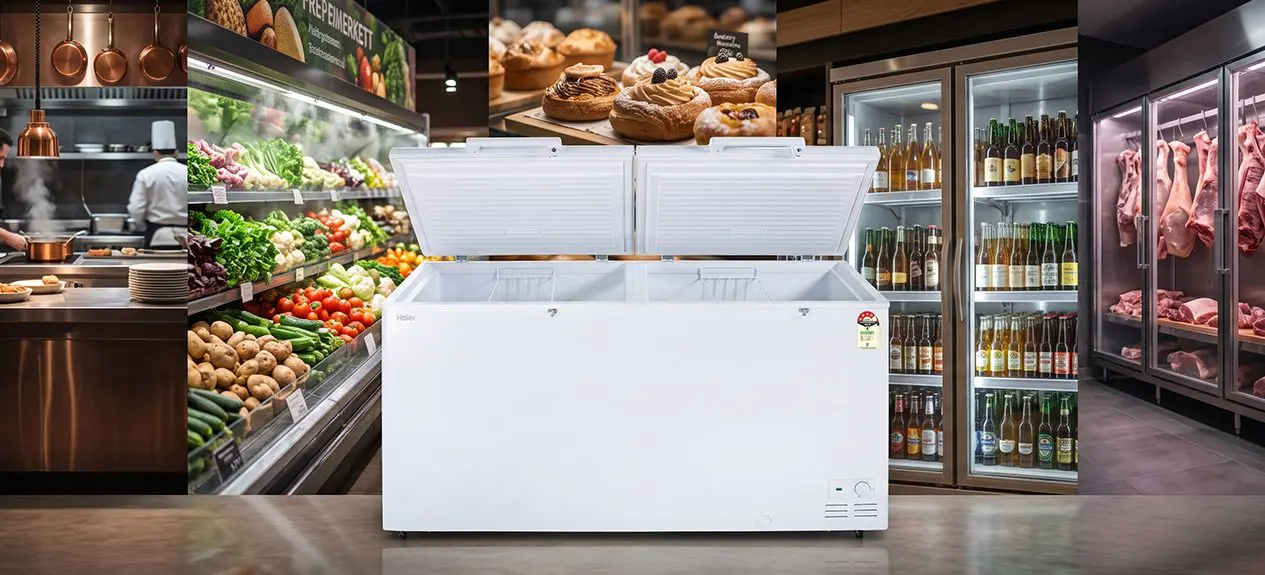

You might’ve watched too many business owners buy commercial refrigerators the wrong way. They walk into a supplier, point at something that looks right, negotiate a price, and get it installed. Six months later, they’re calling to complain about electricity bills that are higher than expected or a freezer that can’t keep up with their inventory needs. Sometimes both.
The truth is you’re not just buying equipment. You’re making a decision that impacts your operational costs, your ability to preserve inventory, and honestly, your peace of mind. Get this wrong, and you’re stuck with a machine that doesn’t fit how you actually work. Get it right, and you stop thinking about it.
The problem is most commercial fridges are sold the same way regardless of what business actually needs them. A restaurant has completely different requirements than a grocery store. A butcher shop operates nothing like a convenience store. Your refrigeration needs to match your actual operation, not what a salesman thinks you should buy.
Start With What You’re Actually Storing
Before you look at any models, sit down and think about your real inventory situation. Not what you think you might stock someday. What you actually need to keep cold right now.
How much volume are you really dealing with? Most businesses overestimate. They think “we need big capacity,” then end up with a mostly empty machine. You’re paying electricity costs on unused space. That’s money wasted every month.
What temperatures do you need? This matters more than people realize. If you’re storing meat and ice cream and regular produce, you need different temperature zones. Some units let you adjust. Others lock you into one setting. Flexibility costs more upfront but saves headaches when your product mix changes.
How do customers or staff access what you’re storing? A display case works differently than a storage freezer. Visibility matters for retail. Accessibility matters for speed. Cramming everything into the wrong format creates operational friction that compounds.
Temperature Flexibility Actually Saves Money
Here’s something most buying guides won’t tell you. The best commercial freezer isn’t necessarily the biggest one or the cheapest one. It’s the one that matches exactly how you operate.
Some businesses work with fixed inventory. Restaurant kitchens, for example. They need consistent freezing temperatures, year-round. Buy a solid freezer and forget about it.
Other businesses change their product mix seasonally or based on demand. A small retailer might stock different items in summer versus winter. A restaurant might shift what they source based on season. For these operations, convertible cooling technology pays for itself. You can switch between chilling and freezing without buying another unit. That’s practical money saving.
Energy Costs Add Up Faster Than You Think
Your electricity bill is the part of commercial refrigeration that surprises business owners. A unit that’s inefficient costs more every single month. Over a year, that’s substantial. Over five years, it’s significant money.
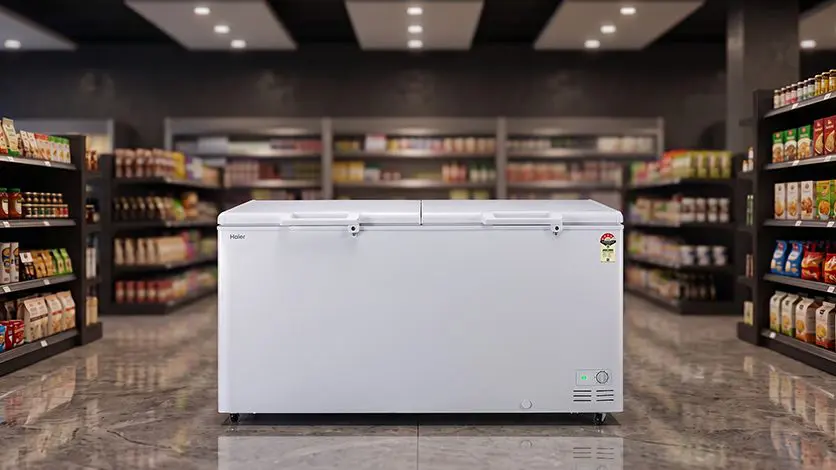
Look for certified energy ratings. In India, a 4-Star BEE rating means the unit is genuinely efficient. It’s not about being fancy; it’s about your bill at the end of the month.
Also, power supply matters in India. We deal with voltage fluctuations. Some commercial fridges freak out when voltage drops or spikes. They work harder trying to maintain temperature. That means higher power consumption. Units designed to handle voltage fluctuations stay efficient regardless. That’s not a minor feature in India.
Different Businesses Need Different Formats
A high-volume storage operation needs a hard-top freezer. You’re stacking product, access is less critical than capacity, and you need to protect your inventory from the environment. Hard-tops are workhorses. They’re built tough, they retain cold excellently, and they’re straightforward.
If you’re running a shop that stocks both chilled items and frozen products, a chest freezer with dual compartments simplifies your life. One unit. Two temperature zones. Better organization than juggling separate machines.
For retail? Glass-top freezers. People buy what they can see. A glass-top draws attention and lets customers make choices. But retail models need actual commercial-grade construction. Anti-rodent protection. Security features. Solid glass framing that doesn’t chip or crack under daily use.
What Actually Matters When You’re Looking at Models
Build quality matters more than specs. A freezer with solid insulation, a reliable compressor, and quality components stays dependable. That costs more initially but you don’t end up replacing it in five years.
Warranties tell you something true. If a manufacturer backs a unit with a solid warranty, they’re confident it’s built right. A company won’t warranty something they expect to fail. Look at warranty length and what’s actually covered.
Cooling performance in demanding conditions matters. Some units slow down when they’re in hot environments or under heavy load. Others maintain performance regardless. For India, where summer heat is brutal and kitchens get genuinely hot, this makes a real difference.
Haier’s Commercial Freezers Match What Businesses Actually Need
The Haier Deep Freezer 788L (HFC-788DPW4) works for businesses storing serious volume. You get 4-Star BEE energy efficiency, so your electricity costs stay reasonable. The convertible cooling means you can switch from freezing to chilling as your needs change. Fast pull-down cooling through 5-side freezing and dual condenser technology handles heavy loads. If power cuts out, it holds temperature for 225 hours with proper insulation. And it operates across 160-270V, handling India’s power supply without flinching.
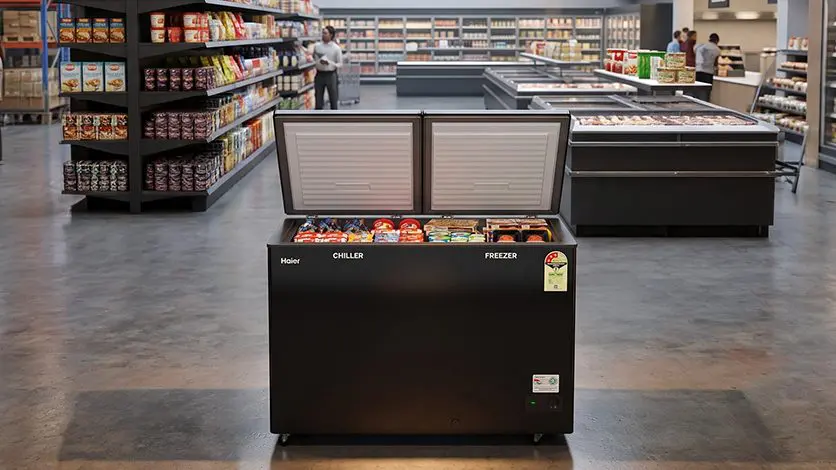
For businesses that need both chilled and frozen storage in one unit, the Haier 400L Combo (HFC-400CET) has dual temperature technology with a 55:45 split that actually makes sense organizationally. Heavy-duty wheels let you move it in a busy retail space without strain. Backed by a 4-year warranty, which tells you the build is solid.
If you’re retail and need customers to see what you’re selling, the Haier Glass Top 325L (HFC-325GL3) gives you visibility with durability. Single-mould glass frame doesn’t chip like segmented designs. Edge-to-edge metal baskets maximize what you can actually store. Anti-rodent protection protects both your inventory and the electrical components. 2026 STAR rating keeps your bills down. Lockable wheels and integrated locks add security without hassle.
The Real Decision Framework
Stop thinking about what sounds impressive. Think about what your business actually does. How much you store. What temperatures you need. Whether customers or just staff access the unit. Your space constraints. Your summer heat levels. Your electricity costs matter over years, not just the upfront price.
Buy a freezer that does what you need, not everything. That’s when you end up with equipment that works, and you stop worrying about whether you made the right choice.
FAQs
What is a commercial refrigerator, and how is it different from a home fridge?
A commercial refrigerator is designed for businesses and can handle continuous operation, frequent door openings, and larger storage requirements. Unlike a home fridge, it offers higher capacity, durable construction, and specialised options such as commercial freezers, deep freezers, chest freezers, and glass-top freezers to suit different business needs.
What temperature should a commercial fridge be set at?
The ideal temperature for a commercial fridge depends on what you’re storing. Chilled foods require refrigeration, while frozen products need much lower temperatures. If your inventory changes frequently, choosing a refrigerator with convertible cooling allows you to switch between chilling and freezing as needed.
What size commercial refrigerator do I need for my business?
A commercial refrigerator buying guide starts with assessing your actual storage needs. Consider the type and quantity of products you store, available space, and whether you need chilled, frozen, or dual-temperature storage. Choosing the right size helps maximise efficiency and avoid unnecessary energy costs.
How much does a commercial refrigerator cost in India?
The cost of a commercial refrigerator in India varies depending on its capacity, energy efficiency, cooling technology, and features. Instead of focusing only on the purchase price, consider long-term operating costs, durability, and the model that best suits your business requirements.
How much electricity does a commercial fridge consume?
The electricity consumption of a commercial fridge depends on its size, usage, and energy efficiency. Choosing a model with a higher BEE star rating and features like voltage fluctuation protection can help reduce power consumption and lower operating costs over time.
How often should a commercial fridge be cleaned and serviced?
A commercial fridge should be cleaned regularly to maintain hygiene and cooling efficiency. Routine servicing is also recommended to inspect key components, ensure consistent performance, and identify potential issues before they lead to costly repairs or downtime.