
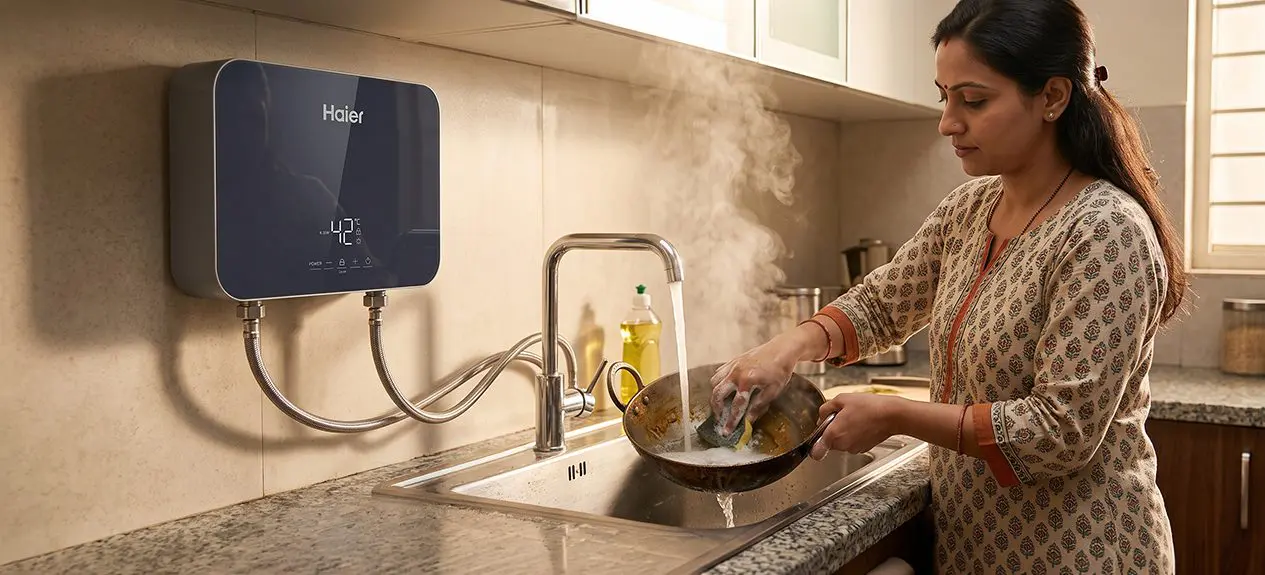

The kitchen is one of those spaces where hot water is often needed for small but frequent tasks. It may be for washing cookware after a heavy meal, dealing with oily utensils or simply making everyday cleaning more convenient.
Because these requirements are different from the longer hot water use usually associated with bathrooms, it helps to look at kitchen water heating separately. The right choice begins with understanding how, when and where hot water is actually used in the space.
Now, let’s understand why your kitchen require it’s own separate needs, so that you are clear with the baseline and well-informed before the time comes.
Why Does the Kitchen Have Its Own Hot Water Needs?
Small practical details can make a world of difference in the kitchen. Having hot water close to the washbasin makes everyday washing and cleaning up much easier to handle. What makes kitchen hot water needs special is:
- Hot water is required in brief bursts. Most kitchen chores, like washing a greasy pan or cleaning utensils after cooking, require hot water for a couple of minutes at a time, not for a long period.
- The need can arise several times a day. Each of these activities produces different hot water demands: breakfast clean-up, lunch preparation, evening cooking and washing dishes. The pattern is common, but each use is relatively brief.
- Waiting can break the flow of the kitchen. During the middle of cleaning or food preparation, waiting for hot water to become available can slow things down. Easy access makes these everyday jobs easier to deal with.
- Often there is a need for hot water near the washbasin. Most hot water in the kitchen is for washing, rinsing and cleaning. If the heater is located closer to the point of use, the installation becomes more practical, and the distance the hot water must travel is reduced.
- Kitchen space is already being put to work. Cabinets, shelves, chimneys and appliances already use up much of the available space. So a heating solution that is less bulky may be better suited to the kitchen than taking up a lot of wall or storage space.
Get to Know How a Tankless Water Heater Works
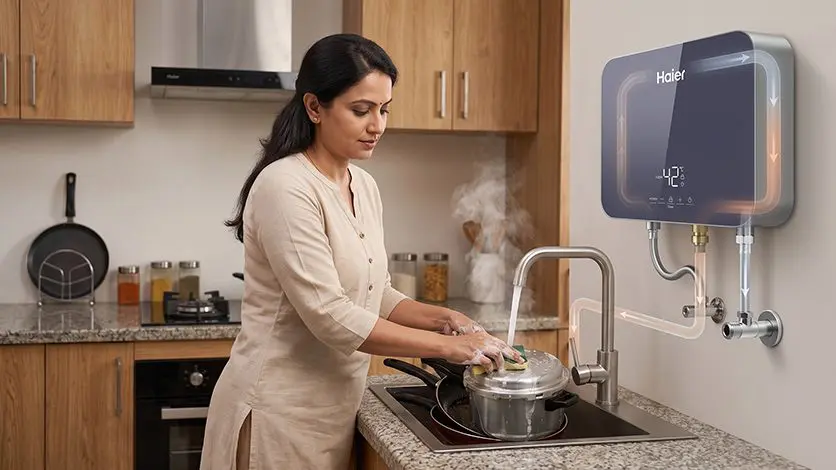
There are a few key components of a tankless water heater that help determine how well it performs in everyday use. Reviewing these basics can help you know what to expect from the system before you choose one for your kitchen:
- The heater starts up as soon as water flows. You turn on the hot-water tap and water runs through the unit, and the heating system is activated. That means the heater responds to real demand and doesn’t heat water all day long.
- Water is heated as it passes through the unit. Water is warmed as it travels through the heater, rather than sitting in a large storage tank. This is the basic principle of a continuous flow water heater.
- There is no large supply of hot water waiting. A tankless system doesn’t have a traditional storage tank, so it doesn’t have to keep a large volume of water hot between uses. This is an advantage of practical tankless water heaters, especially for kitchens that may need hot water only at certain times.
- The rate of flow is a major factor in performance. The warmth of the heater is determined by how much water is flowing through it. If you have a higher flow rate, you may need more heating power. If you have a lower flow, you have more time to heat up the water.
- The right power and installation still count. Tankless heaters may be small, but they still need to be matched to the expected water flow, incoming water temperature and electrical setup. Their capacity and installation conditions are selected correctly to provide hot water more comfortably and consistently.
(Want to know about the general selection criterea/s for a water heater?
Read through All You Need To Know Before Buying A Water Heater)
Where Tankless Water Heaters Make a Real Difference in the Kitchen
Kitchen routines vary from household to household, and their use of hot water is often variable. Once you get past the basic notion of quick heating, then it becomes easier to understand what really counts when shopping for a water heater for this part of the home:
- The heater can be selected according to the real water flow in the kitchen. With a tankless system, you don’t need to decide how many litres a tank should be; you size it based on the flow rate and temperature rise required at the kitchen tap.
- There is no time to recover between task and task. When the supply is exhausted, it may take a while for a storage heater to heat the next batch of water. A correctly sized tankless heater does not follow the same heat-store-use-reheat cycle that can be beneficial when a string of kitchen tasks occur in succession.
- A kitchen unit with its own tank can reduce dependence on a central hot-water supply. If plumbing and electrical conditions are suitable, the kitchen can be served directly by a point-of-use tankless heater. This can be handy in homes where the main water heater is a ways away, or is used mainly for the bathrooms.
- There is no tank for sediments to settle at the bottom of. Mineral sediment can build up over time inside the tank of storage water heaters, particularly in areas with hard water. Tankless heaters eliminate the storage tank altogether.
- It is ideal for kitchens where there’s a day-to-day change in the demand for hot water. Some days you will only need a few utensils, and some days you will have to do more cooking and wash more. Continuous flow water heaters heat the water on demand, not a pre-set amount that is stored.
Things to Consider Before Choosing a Tankless Water Heater
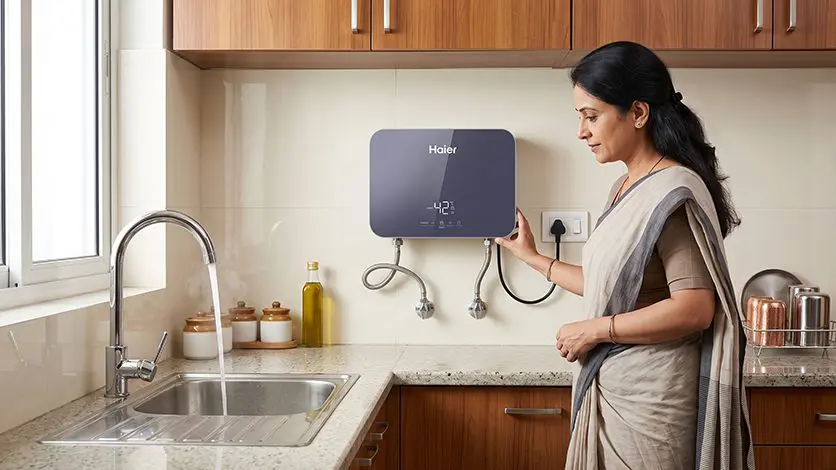
A tankless water heater can be a useful kitchen upgrade, but the right choice depends on how well it fits your everyday routine. Looking beyond just size or appearance can help you choose more wisely:
- See if the electrical setup will be able to handle it. Electric tankless heaters can draw a lot of power because the water is heated as it passes through the unit. Before you install the heater, check the heater’s power rating to make sure the kitchen’s wiring, circuit and electrical load are compatible.
- Think about how much water you really need. The rate of water flow is a direct factor in how well a tankless heater can increase the water temperature. The heater should be matched to its use; a kitchen sink used mainly for washing out utensils has very different requirements from a point serving a number of outlets.
- Consider the arrival water temperature. The water entering the heater can be significantly colder in some seasons or some regions. The higher the temperature needs to be raised, the more work the heater has to do.
- Check the available space and location for installation. A compact water heater can save valuable kitchen space, but it still needs to be located somewhere that can be connected to the plumbing and electrical systems.
- Don’t forget the safety features. Speed of heating shouldn’t be the only criterion. Seek protection against overheating, overpressure, electrical shock and voltage fluctuations.
Bring More Everyday Convenience to the Kitchen with Haier
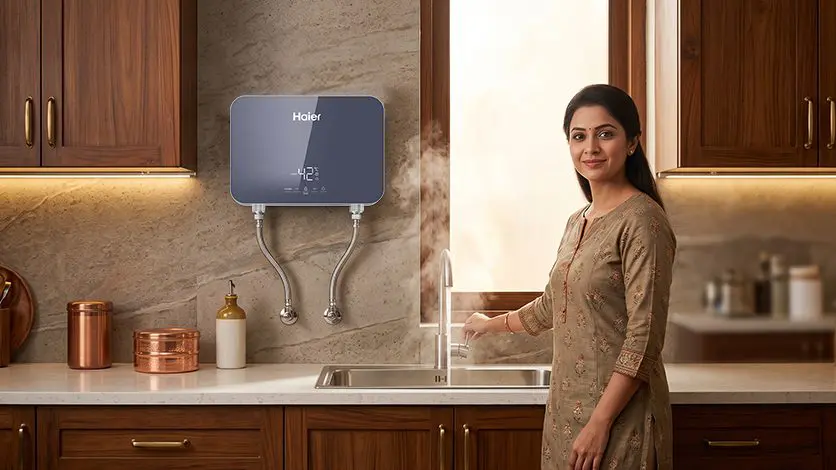
Haier’s tankless water heating range offers compact installation, on-demand heating and built-in protection features. These qualities can make everyday use feel more convenient for kitchens where space and quick access to hot water matter:
A wall-mounted design that takes up less room
The AQUANOVA Tankless Water Heater is designed for wall mounting, which can be useful in kitchens where cabinets, shelves and appliances already compete for space. Its tankless format also removes the need to accommodate a conventional storage tank.
Power designed around on-demand heating
The model has a rated power range of 3 to 5.5 kW. Since a tankless heater needs to warm water while it is flowing, the electrical setup should always be checked before installation to make sure it can support the unit properly.
Protection built into everyday use
Haier lists shock protection, over-heat protection, over-pressure protection and voltage fluctuation protection for the AQUANOVA Tankless model. These features are especially worth considering in an appliance that works closely with both water and electricity.
Useful details beyond quick heating
The water heater also comes with an LED display, while Haier currently lists a three-year warranty on the product and five years on the heating element. Together, these details give buyers a few more practical points to consider beyond heating speed and size alone.
Conclusion
If the power, flow capability, installation point and electrical requirements are a match for the home, a tankless heater can be a smart kitchen upgrade. A good-sized tankless system can offer convenience, a smaller footprint and on-demand heating without taking up valuable kitchen space, which is great for households that often need hot water in brief bursts.
Frequently Asked Questions
Why is an instant tankless water heater considered a must-have upgrade for modern kitchens?
An instant tankless water heater provides hot water when you need it without relying on a big storage tank. Its smaller size also occupies less space, which can be useful in kitchens where wall space is limited. Because the water is heated on demand, it also avoids the standby heat losses associated with maintaining stored water hot for long periods.
Are Haier instant water heaters built to handle high water pressure in modern multi-story high-rises?
Yes, some Haier instant water heaters are high-pressure models. The Haier EI3V-PRET 3.0KW instant water heater, for example, has an 8-bar pressure rating that Haier specifically calls out for high-rise buildings. Pressure ratings may differ between models, so it is always better to look at the specifications of the specific heater before choosing one.
How do instant water heaters perform during cold winter months?
Instant water heaters can work in winter, but colder incoming water means the heater has to heat it more. This can make the available hot-water flow or outlet temperature more dependent on the heater’s power and sizing during colder months.
How do instant tankless water heaters save energy compared to traditional storage geysers?
A storage geyser heats the water and maintains that stored water at a hot temperature until it is used. A tankless heater operates differently; it only heats water when there is demand. This helps cut down on standby heat losses that occur when hot water sits in a tank.