
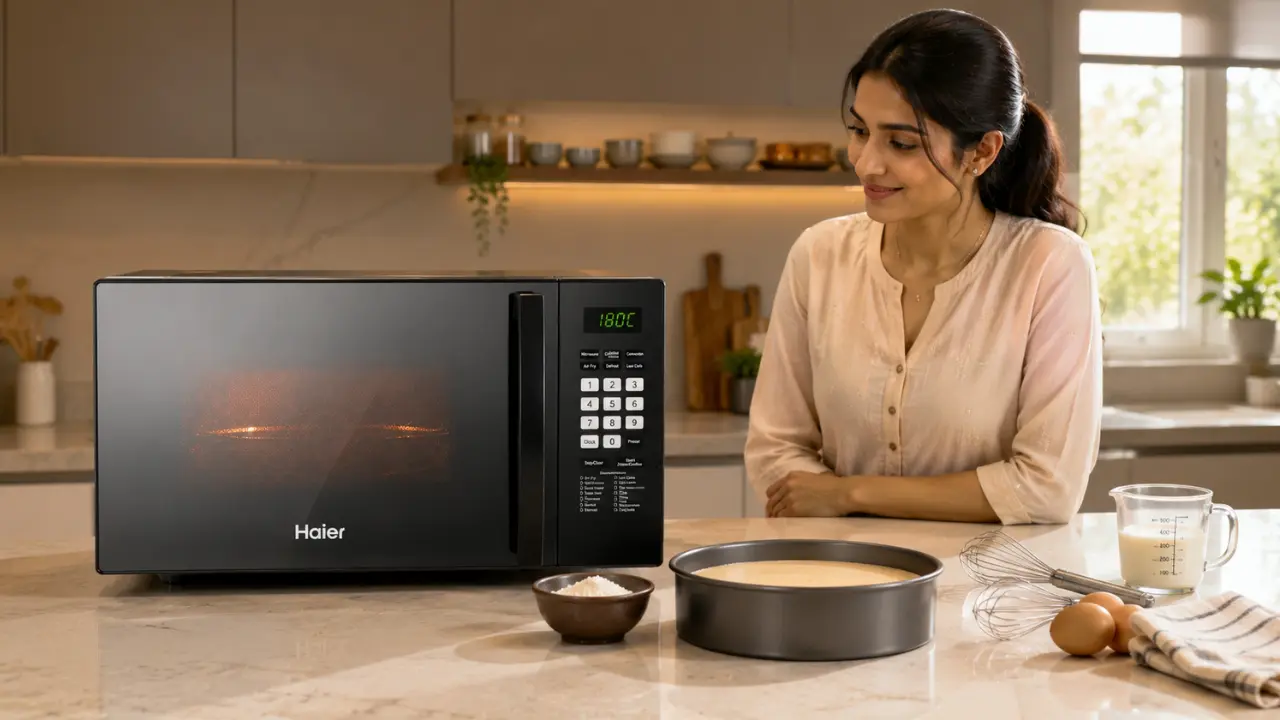

In the kitchen, there’s always a little thing that’s so easy to forget: waiting for the oven to preheat before putting the food in.
Meals can be a rush at times and it’s easy to rush, put the tray in and expect those few minutes to be unimportant. In some cases, they simply don’t. No ceremony is warranted for reheating yesterday’s dal, or warming a bowl of rice.
Baking a cake? Different story.
Some foods require just the correct initial temperature to begin cooking properly. Place them in a cold cooking cavity and the texture, rise, browning or crispness might be very different from the recipe. This is why it is better to know what foods to preheat than to think of preheating and its rules applying to everything.
If your household is using a convection microwave for baking, grilling and cooking daily, you will find that knowing about the preheat time will make your microwave much more versatile.
What Does Preheating Actually Do?
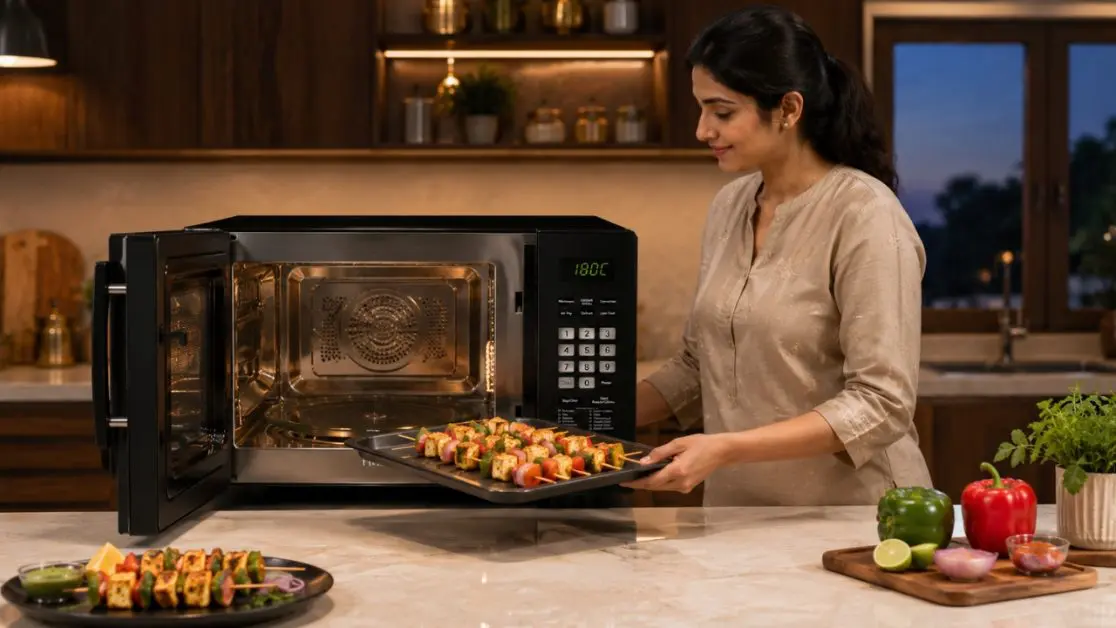
Preheating simply means bringing the cooking cavity to the required temperature before placing food inside.
Think about making rotis on a tawa. You would normally wait until the tawa is properly hot before placing the dough on it. Put the roti onto a cold surface and it begins warming gradually rather than cooking immediately.
A similar principle applies to convection cooking.
Starting at the required temperature can help:
- Begin baking reactions at the intended moment
- Develop better browning
- Give cakes and breads more predictable rise
- Create crispier outer surfaces
- Reduce the chances of dough becoming dense
- Keep recipe timings more consistent
The important distinction is this: preheating matters most when temperature is part of the cooking technique itself.
The Foods That Usually Benefit Most From Preheating
Cakes, Cupcakes and Muffins
This is probably the clearest example.
Cake batter contains ingredients that begin reacting as temperature rises. If the batter sits inside an oven that is slowly warming, the structure can start changing before sufficient heat is available to set it properly.
The result may be a cake that rises unevenly, stays dense in the centre or develops an unusual texture.
When baking cakes in a convection microwave, preheating the appliance to the temperature specified by the recipe before inserting the cake tin is generally the better approach.
The same thinking applies to:
- Cupcakes
- Muffins
- Sponge cakes
- Tea cakes
- Brownies, depending on the recipe
Haier’s own guidance for convection microwave baking recommends preheating before placing cake batter inside the appliance.
Cookies and Biscuits
Cookies often look forgiving. A little flour, butter, sugar, perhaps chocolate chips how complicated could they be?
Quite complicated, actually.
Temperature influences how quickly the fat melts in relation to how quickly the cookie structure sets. Starting in a properly heated cavity can therefore help cookies spread and brown more predictably.
Place the same tray into a cold oven and the dough begins warming gradually, potentially producing more spreading before the exterior sets.
For Indian home bakers experimenting with atta biscuits, nankhatai or chocolate cookies, preheating is a small step that can noticeably improve consistency.
Bread, Pizza and Anything That Depends on Dough
Dough-based foods generally appreciate immediate heat.
Bread
Bread needs heat to develop its final structure and crust. The early stage of baking contributes heavily to how the loaf expands.
This applies to:
- Bread loaves
- Dinner rolls
- Garlic bread
- Stuffed buns
- Homemade pav
- Pizza bases
Interestingly, the Haier 25L Convection Microwave Oven HIL2501CBSH includes a Bread Basket function designed for Indian and popular breads including naan, paratha, tandoori roti, kulcha and garlic bread. It also offers 305 auto cook menus, helping simplify power and time selection for supported preparations.
That kind of functionality makes a convection microwave more relevant to Indian kitchens where the appliance may be expected to do considerably more than reheat food.
Pizza
Pizza particularly benefits from a properly heated cooking environment.
Why? Because nobody wants a crisp topping sitting on a pale, soft base.
A hot cavity helps the base begin cooking quickly while toppings heat and cheese melts. Whether you are making a classic vegetable pizza, paneer tikka pizza or simply reheating something with a deliberately crisp base, adequate preheating can support better texture when the cooking method calls for it.
Foods Where Crispness Is the Whole Point
Some dishes are perfectly edible without a crisp exterior. Others lose half their personality.
Consider:
- Potato wedges
- French fries
- Samosas
- Spring rolls
- Cutlets
- Breaded snacks
- Certain kebabs
- Baked vegetables
For foods where the objective is browning or crispness rather than merely heating the centre, beginning with a hot cooking environment can help.
This is also where multifunction appliances become particularly interesting.
The Haier 30L Convection Microwave with In-Built Air Fryer HIL3001ARSB combines microwave, grill, convection, air fryer and rotisserie functionality. Its in-built air fryer includes 36 dedicated air-fryer menus, alongside 305 auto cook menus and five multi-power levels.
For households that enjoy both regular Indian meals and crisp snacks, having these cooking modes within one appliance can reduce the need to treat the microwave as a reheating-only machine.
Pastries and Foods Built Around Layers
Pastry is another category where starting temperature can influence the finished texture.
Puff pastry, for example, relies on layers separating as moisture converts to steam. A sufficiently hot cooking environment encourages that process quickly.
The same principle matters for:
- Puff pastries
- Khari-style preparations
- Baked savoury pockets
- Pie crusts
- Certain croissants and laminated dough products
A slow warm-up can leave pastry heavier or less crisp than expected.
In short, when the recipe promises “flaky”, preheating deserves attention.
What About Paneer Tikka, Kebabs and Grilled Foods?
This category is slightly different.
Preheating is not universally mandatory for every grilled preparation, but beginning with the grill or convection environment properly heated can help when the recipe requires immediate browning.
Paneer tikka is an obvious Indian example. The appeal lies in the contrast: soft paneer inside, lightly charred or browned edges outside.
The Haier 30L Convection Microwave Oven HIL3001CBSH supports convection, grill and microwave combination cooking and offers 400 auto cook menus. It also features Home Fry menus, Bread Basket functionality, low-temperature cooking and 2500W convection power.
The useful part is the range. Slow cooking has one temperature requirement; baking has another; grilling has another again. A capable convection microwave allows the cooking method to change with the food rather than forcing every dish through one setting.
Foods That Usually Do Not Need Preheating
This is where many people unnecessarily complicate microwave cooking.
Ordinary microwave heating generally does not require preheating.
You usually would not preheat simply to:
- Warm cooked rice
- Reheat dal or curry
- Heat milk
- Warm cooked vegetables
- Defrost suitable frozen food
- Reheat leftovers
- Melt ingredients using microwave mode
Microwave energy heats food differently from convection heat, so preheating the cavity is generally relevant when using functions such as convection baking or certain grill-based preparations, rather than everyday microwave reheating.
That distinction can save both time and confusion.
A Simple Rule: Look at the Result You Want
Instead of memorising an enormous list of foods, ask one question:
Does this dish depend on immediate high heat for rise, browning, crispness or structure?
If yes, preheating is likely important.
If the objective is simply to heat, soften, melt or reheat food using standard microwave functionality, it often is not.
Also follow the recipe and appliance instructions. Cooking temperatures, utensils and timings can differ between dishes and microwave models.
Making More of a Convection Microwave in an Indian Kitchen
The modern microwave has moved a long way beyond reheating yesterday’s dinner.
Haier’s current convection microwave options illustrate that shift particularly well. Depending on the model, available functions include hundreds of auto cook menus, Bread Basket programmes, Home Fry options, oil-free cooking, low-temperature cooking, combination cooking, air frying and rotisserie functionality.
That opens up a much wider cooking repertoire from cakes and garlic bread to grilled snacks and everyday family meals.
And sometimes the difference between an average result and the one you were hoping for comes down to something extremely basic.
Wait until the appliance is hot.
For the right food, those few minutes are worth it.
Frequently Asked Questions
1. Which foods need preheating in a convection microwave?
Foods that depend on immediate heat for proper rise, browning, crispness or structure generally benefit from preheating. Common examples include cakes, muffins, cookies, bread, pizza, pastries and certain grilled or baked snacks.
2. Is preheating necessary for baking a cake in a microwave?
Yes, when using convection mode, preheating is generally recommended before placing the cake batter inside. Haier’s product guidance for its convection microwave ovens also advises preheating before baking a cake.
3. Do I need to preheat a microwave for pizza?
If you are baking pizza in convection mode, preheating can help the base start cooking at the intended temperature and support better browning and texture. Always follow the temperature and timing recommended for the recipe and microwave model.
4. Do cookies and biscuits require preheating?
Usually, yes. Starting with a properly heated convection cavity can help cookies and biscuits bake more evenly, develop better colour and achieve a more predictable texture.
5. Is preheating required for reheating food?
No. Regular microwave reheating generally does not require preheating. Foods such as cooked rice, dal, curries and leftovers can normally be reheated directly using the appropriate microwave setting.
6. Can Haier convection microwaves be used for baking and grilling?
Yes. Haier convection microwave models such as the Haier HIL2501CBSH 25L Convection Microwave Oven and Haier HIL3001CBSH 30L Convection Microwave Oven support functions designed for baking, grilling and combination cooking. Features vary by model, so users should check the relevant product specifications and instructions before cooking.
7. Does the Haier 30L Convection Microwave with In-Built Air Fryer support crispy cooking?
Yes. The Haier HIL3001ARSB 30L Convection Microwave with In-Built Air Fryer includes an in-built air fryer with 36 dedicated air-fryer menus, along with grill, convection and rotisserie functionality.