
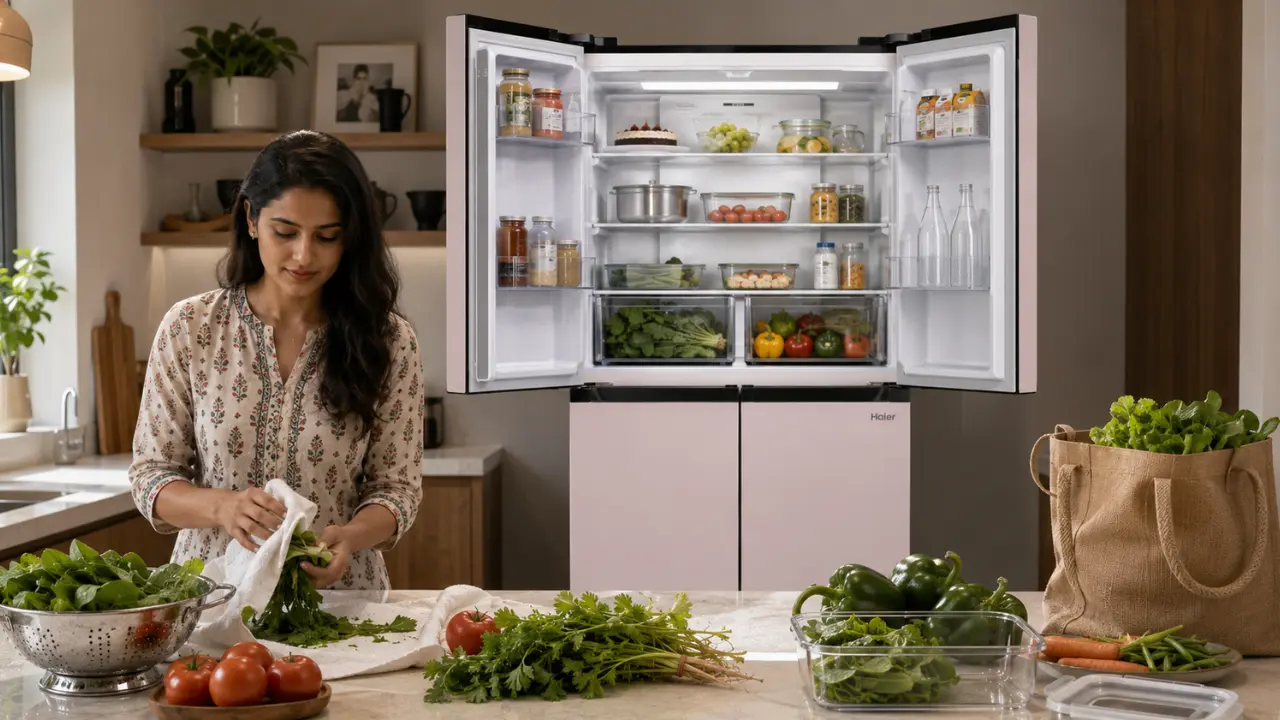

That’s a fresh package of coriander, and it has just a small bit of dirt on the roots. The tomatoes should be washed. It certainly looks like the spinach needs one.
So of course, all the stuff is rinsed before entering the fridge.
So, vegetables need to be kept fresh longer when they are cleaned, right?
Not necessarily.
In fact, some vegetables will even last longer if they are washed before being put in the refrigerator, especially if you refrigerate them while they are still wet. It’s not always washing itself. It is the water that is left behind.
The knowledge of this small difference can save many Indian homes from an unexpected drop in vegetables’ quality, and mean less mold, wastage and food spoilage over several days of vegetable purchases.
Wash Later, Unless You Can Dry Properly
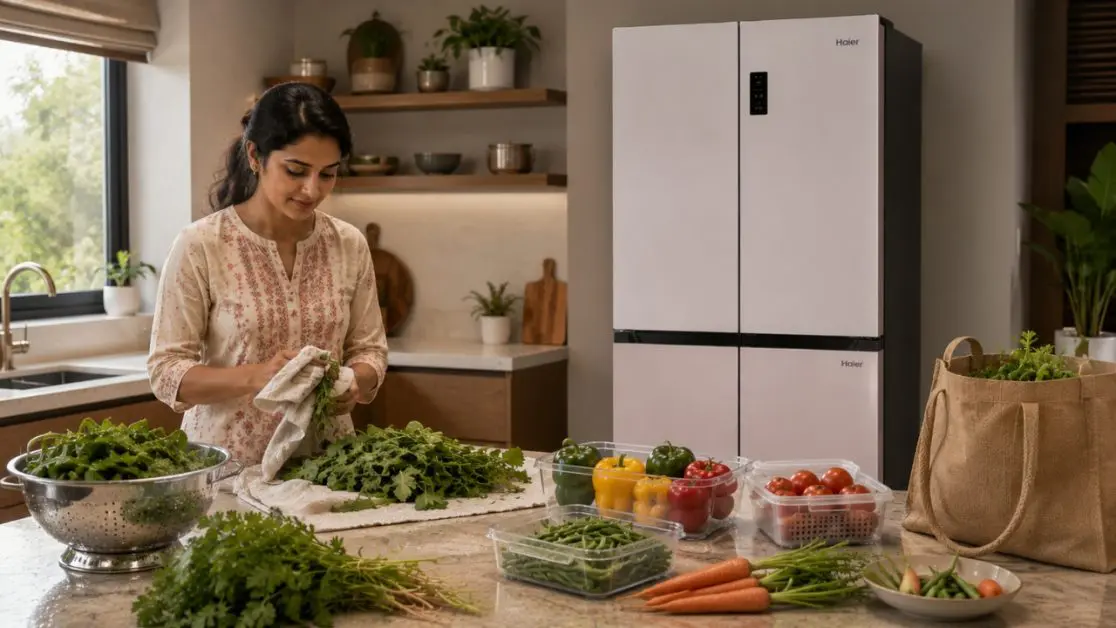
For many fresh vegetables, the safest storage habit is fairly simple: store them dry and wash them closer to the time of cooking or eating.
Why? Fresh produce naturally contains plenty of water already. Adding surface moisture creates a damp environment where deterioration can happen faster.
Think about a bunch of palak packed into a plastic bag immediately after washing. Water settles between the leaves, air movement becomes limited and the leaves may become slimy far sooner than expected.
If vegetables must be washed in advance, drying becomes just as important as washing.
A practical routine is:
- Remove visibly damaged or spoiled pieces first.
- Rinse vegetables only when required.
- Drain them properly.
- Pat or air-dry until excess surface moisture is gone.
- Store different types of produce separately where practical.
- Avoid sealing noticeably wet vegetables into tightly packed containers.
A refrigerator can support freshness, but storage habits still matter.
Why Does Extra Moisture Affect Vegetable Shelf Life?
Vegetables continue undergoing biological changes after harvesting. Refrigeration slows many of these processes, which is why chilled storage is so useful, but it does not stop them completely.
Excess surface water can complicate things.
Moisture Can Encourage Faster Spoilage
Water trapped on leaves, stems or vegetable surfaces can create conditions where microorganisms responsible for spoilage multiply more readily.
This is particularly noticeable with delicate greens.
Coriander stored damp may turn dark and soft. Spinach leaves can become slippery. Cut vegetables may deteriorate around exposed surfaces.
Essentially, the refrigerator is doing its job, but wet storage is giving spoilage an unnecessary head start.
Wet Produce Can Become Soft Rather Than Crisp
People often associate moisture with freshness. With vegetables, however, more moisture is not automatically better.
There is a difference between maintaining the right environment around produce and leaving droplets of water sitting directly on it.
That distinction matters.
Not Every Vegetable Should Be Treated the Same Way
One storage rule rarely works for an entire Indian vegetable basket.
Here is a more useful way to look at it.
| Vegetable Type | Before Refrigeration | Storage Approach |
| Leafy greens | Preferably store dry | Remove damaged leaves and keep excess moisture under control |
| Coriander and herbs | Avoid storing dripping wet | Dry carefully before refrigeration |
| Tomatoes | Wash closer to use | Store according to ripeness and household usage |
| Carrots and beans | Keep reasonably dry | Refrigerate in an organised vegetable section |
| Capsicum | Avoid unnecessary washing before storage | Wash before preparation |
| Cauliflower and cabbage | Store clean but dry | Keep away from excess surface moisture |
| Pre-cut vegetables | Handle carefully | Refrigerate promptly in suitable covered containers |
| Pre-washed packaged produce | Follow pack directions | Avoid unnecessary re-washing before storage |
There will always be exceptions, but one principle keeps returning: control unnecessary moisture.
What If You Prefer Washing the Entire Week’s Vegetables at Once?
Understandable.
Weekend vegetable shopping followed by washing, sorting and refrigerating everything can make weekday cooking much easier.
You do not necessarily have to abandon that routine. Just change the middle part.
After washing, give vegetables enough time to dry properly before packing them away. A clean kitchen towel or absorbent paper can help remove surface water from sturdier vegetables. Delicate greens need gentler handling.
Also, do not cram everything into one giant bag because it saves ten minutes on Sunday evening. It rarely saves trouble later.
Separate produce according to type and intended use.
For example:
- Keep leafy vegetables together rather than underneath heavy vegetables.
- Separate damaged produce immediately.
- Avoid placing wet greens beside vegetables that are already dry.
- Store frequently used items where they can be reached without repeatedly disturbing everything else.
Organisation sounds like a minor detail until you discover one forgotten, spoiled vegetable sitting beneath the rest.
Your Refrigerator Matters Too
Good food-storage habits work better when the refrigerator itself gives you the flexibility to organise produce properly.
This is where larger, well-planned refrigerators can make everyday storage considerably easier for families buying groceries in volume.
The Haier Lumiere 520L 3 Star French Door Refrigerator offers a total capacity of 520 litres, with up to 440 litres of fridge space when configured accordingly. Its 4-door format helps create more defined storage areas rather than forcing vegetables, dairy, bottles and prepared food into the same crowded compartment.
That matters in real kitchens.
After a large weekly vegetable run, the problem is rarely just, “Will everything fit?” The more useful question is, “Can everything be arranged so that it remains accessible and appropriately stored?”
A Closer Look at the Haier Lumiere Storage Experience
The Haier Lumiere has features designed around flexible food organisation.
90L Magic Convertible Zone
Its 90-litre Magic Convertible Zone offers adjustable temperature settings ranging from -20°C to 5°C, giving households the flexibility to adapt part of the refrigerator according to changing storage requirements.
So the same family may need additional fresh-food capacity after a large vegetable purchase one week and different storage the next. That adaptability is particularly useful in Indian homes where grocery patterns can change around festivals, family gatherings or monthly stocking.
Up to 440L Convertible Fridge Space
The Lumiere can provide up to 440 litres of refrigerator space, accounting for approximately 85% of its total capacity in the applicable configuration.
That gives households more room to avoid over-packing produce.
And space is not merely about fitting more food. Better separation can make it easier to identify vegetables that should be used first, maintain organisation and prevent delicate items from getting crushed beneath heavier containers.
Deo Fresh Technology
Another useful feature for mixed-food households is Deo Fresh Technology, which is designed to absorb odours and impurities while helping maintain freshness.
Indian refrigerators rarely contain one predictable category of food. There may be chopped onions, leftover curry, dairy products, fruits, vegetables, chutneys and beverages sharing the same appliance. Odour management therefore becomes a meaningful everyday consideration.
Storage Made for Real Indian Kitchens
The Lumiere also includes toughened glass shelves, movable storage elements and anti-tipping door-rack design. Depending on the model variant, its organised interior provides multiple storage zones that make separating groceries considerably easier.
The refrigerator is available in finishes including Rosetyte White, Mauve Pink and Pearl White, allowing the appliance to serve as both a functional food-storage solution and a prominent part of a contemporary kitchen.
Five Small Habits That Can Make Vegetables Last Better
The refrigerator can provide the environment. Daily habits complete the job.
- Do not refrigerate vegetables while they are dripping wet. Dry them first if washing cannot wait.
- Check produce before storing it. One spoiled tomato hiding underneath good ones is an easy problem to avoid.
- Give vegetables breathing room. Overstuffing drawers makes organisation harder and can damage delicate produce.
- Keep different foods organised. Vegetables, cooked food and strongly aromatic items should not become one chaotic shelf.
- Buy according to realistic consumption. Even the most advanced refrigerator cannot make forgotten vegetables last indefinitely.
Freshness Often Starts Before the Refrigerator Door Closes
So, does washing vegetables before refrigerating reduce shelf life?
It can, especially when vegetables are stored with excess surface moisture. Washing is not automatically harmful; putting produce away wet is usually the bigger mistake.
For most households, washing vegetables shortly before use remains the simpler approach. If advance washing suits your routine better, drying and organised storage deserve equal attention.
And when a household regularly stores several days’ worth of fresh produce, having enough flexible refrigeration space becomes genuinely useful. With its 520L capacity, convertible storage configuration, 90L Magic Convertible Zone, Deo Fresh Technology and thoughtfully divided interior, the Haier Lumiere 520L 3 Star French Door Refrigerator is designed for precisely that kind of evolving family storage.
Because keeping vegetables fresh is not about one clever trick.
It is about what happens from the vegetable market to the kitchen counter and, finally, where and how everything is stored once the refrigerator door closes.
Frequently Asked Questions
1. Should vegetables be washed before putting them in the refrigerator?
It is usually better to store most vegetables dry and wash them closer to the time of cooking or eating. If vegetables are washed before refrigeration, remove excess surface moisture thoroughly before storing them.
2. Why do washed vegetables spoil faster in the fridge?
The main issue is often leftover moisture rather than washing itself. Water trapped around leaves, stems or inside containers can create damp conditions that may speed up spoilage, especially for delicate greens.
3. How should leafy vegetables be stored after washing?
After washing leafy vegetables, drain them properly and allow excess moisture to dry before refrigeration. Avoid placing dripping-wet spinach, coriander or other greens directly into tightly closed storage containers.
4. Can storing wet vegetables cause mould?
Excess moisture can create conditions that favour faster deterioration and microbial growth. Keeping vegetables reasonably dry before refrigeration can therefore support better storage.
5. Which vegetables should generally be kept dry before refrigeration?
Leafy greens, coriander, beans, capsicum, carrots, cauliflower and cabbage are generally better stored without unnecessary surface moisture. Washing them shortly before use is often the simpler approach.
6. How can a convertible refrigerator help with vegetable storage?
A convertible refrigerator gives households more flexibility to adjust storage according to changing food requirements. The Haier Lumiere 520L 3 Star French Door Refrigerator offers up to 440L of fridge space in the applicable configuration and includes a 90L Magic Convertible Zone with adjustable temperature settings from -20°C to 5°C.