
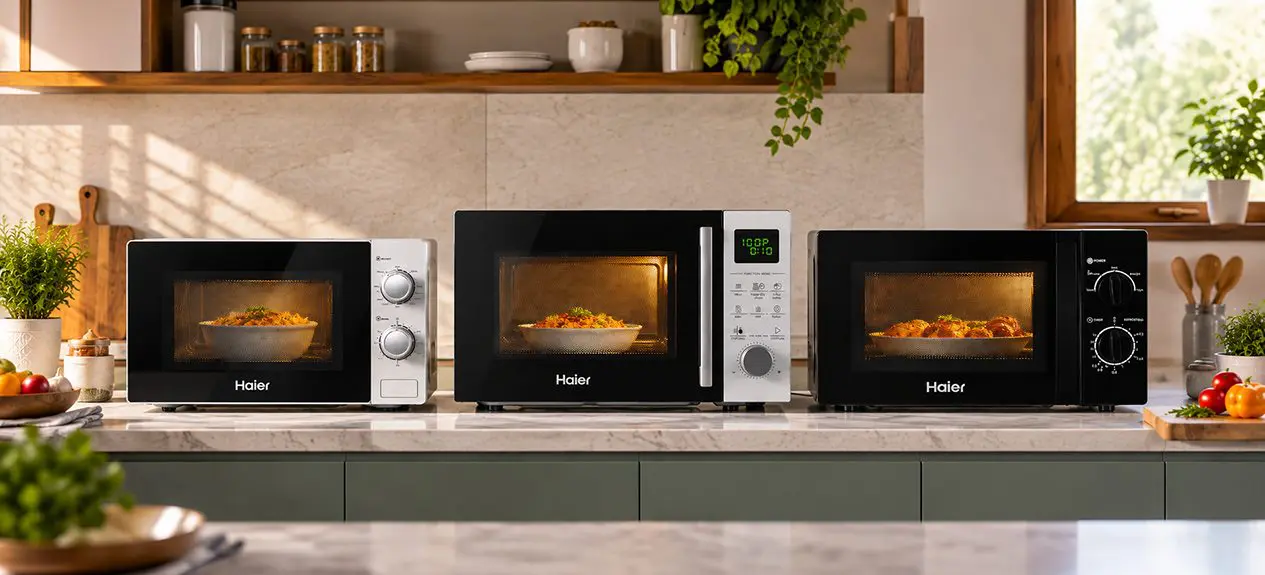

Kitchen appliance selection grows confusing quickly when a microwave, oven, and OTG appear to overlap in function. All three heat food, all three sit in most modern kitchens, and marketing language rarely draws a clean line between what each one actually does well. A quick look at a shopping page can leave a first-time buyer with three similar-looking boxes and no real sense of which one solves their actual cooking needs.
Their heating methods and intended purposes, however, differ substantially once examined closely. Understanding microwave vs oven distinctions simplifies the process of matching an appliance to actual cooking habits, whether reheating, everyday cooking, baking, or grilling takes priority. The right choice depends less on price or brand reputation and more on how each appliance generates heat, since that single factor determines what it can and cannot do well in daily use.
Microwave, Oven and OTG: The Quick Definitions
Electromagnetic waves heat food inside a microwave oven, a method particularly suited to reheating, defrosting, and quick cooking of certain foods.
An OTG, or Oven Toaster Griller, relies on heating elements to generate heat within the cooking chamber. Baking, grilling, roasting, and toasting represent its primary applications.
Heating elements also drive a conventional oven’s cooking process. A convection oven adds a fan that circulates hot air through the cavity, distributing heat more evenly and suiting it well to baking and roasting.
What Is a Microwave Oven and What It Does
Interaction between microwaves and food molecules generates the heat inside a microwave oven, a mechanism that proves particularly effective for reheating cooked food and defrosting frozen items.
Basic reheating no longer defines the ceiling for modern models. Cooking programmes, grilling, and convection cooking often feature as well, depending on the specific unit.
Answering what is a microwave oven, in practical terms, requires distinguishing between solo and combination models. Solo and combination models mark the real dividing line within microwave ovens. A solo unit sticks to the basics, reheating, defrosting, straightforward cooking, while a convection microwave takes on more, extending into baking and other oven-style tasks.
Haier’s 30L Convection Microwave with In-Built Air Fryer combines convection microwave cooking with an air-frying function for households that want several cooking methods covered by one appliance.
What Is an OTG (Oven Toaster Griller)?
Electric heating elements produce heat within an OTG. Depending on the mode selected, upper and lower elements activate individually to suit different cooking requirements.
Cakes, cookies, and bread bring most households to an OTG, alongside its strengths in grilling and roasting. Direct, dry heat also makes it useful wherever browning or crisping is the goal.
Heat-up time runs longer for an OTG than a microwave, since the cavity and heating elements both need to reach the required temperature before cooking can begin. This is important when comparing microwave vs OTG.
What Is a Conventional / Convection Oven?
A conventional oven works by warming the air trapped inside its cavity, using heating elements as the source. Convection models add one component to that process: a fan that keeps the heated air moving instead of letting it sit still.
Movement changes outcomes here. Heat reaches food more evenly when air circulates, which is exactly why baking and roasting recipes tend to turn out better in a convection setup. Anything sensitive to temperature swings, in particular, benefits from that added consistency.
Microwave vs Oven vs OTG: The Key Differences
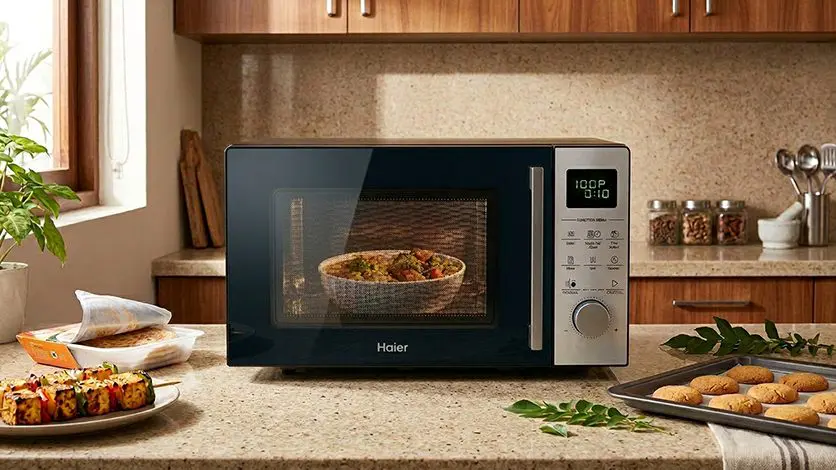
Heating method, cooking results, speed, and food type together define the core differences among these three appliances.
How They Heat (Microwaves vs Heating Elements)
Food heats differently depending on the appliance. Microwaves generate electromagnetic energy that acts directly on the food itself, while OTGs and conventional ovens instead warm the surrounding air using heating elements.
This single difference explains most of what follows. Quick tasks, reheating leftovers, defrosting a frozen item, play to a microwave’s strength. Slower, more deliberate cooking, the kind baking, roasting, or grilling requires, plays instead to heating-element appliances.
Convection ovens sit somewhere in between, technically. A fan joins the heating elements, circulating warm air so it reaches food from multiple directions rather than one.
Cooking, Baking, Grilling and Reheating
Where microwaves excel becomes clear quickly: reheating meals, defrosting frozen food, and handling certain everyday dishes without much fuss.
OTGs shift the focus elsewhere, toward baking, grilling, roasting, and toasting, tasks that depend on browning or crisping for good results. This gives it the edge for frequent bakers in the otg vs microwave debate.
Convection microwaves bridge these functions to some degree, combining microwave cooking with convection heating. Households wanting broader cooking functionality without multiple separate appliances often find this combination practical.
Depending on whether the appliance is solo or combination, microwave oven uses can therefore vary considerably.
Speed, Cost and Electricity
Direct food heating, rather than heating an entire cavity first, generally makes microwaves faster for reheating and many simple cooking tasks.
Preheating and longer cooking times typically apply to OTGs and conventional ovens, particularly for baking and roasting. Cooking duration, temperature, and appliance size all factor into their energy consumption as well.
Purchase price varies considerably across appliance types and capacities. Frequency of use and intended purpose, more than price alone, tend to determine the most economical option.
Which One Should a Beginner Buy?
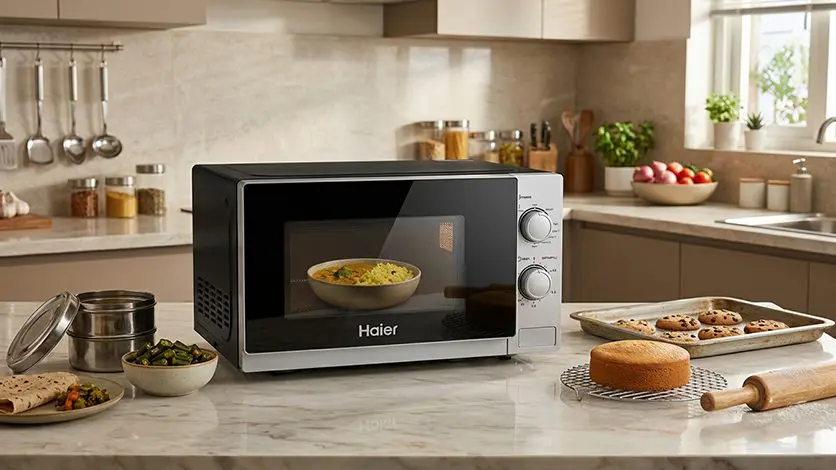
The type of food prepared most often should primarily guide this decision.
If You Mostly Reheat and Cook
Reheating meals, defrosting food, and handling quick everyday cooking point toward a microwave as the generally more practical choice.
Basic requirements rarely exceed what a solo microwave can handle, while a convection microwave adds flexibility for households that occasionally bake or grill as well.
If You Mainly Bake
Bread that rises properly, cookies that bake through evenly, cakes with a consistent crumb, these results come more reliably from an OTG or convection oven than from a microwave. Heating elements produce the controlled, dry heat that baking genuinely depends on.
A convection oven earns its keep specifically where heat distribution matters most, keeping temperature steady across every part of the cavity rather than concentrated in one spot.
Can One Replace the Other?
Not entirely. Rapid reheating and defrosting, tasks a microwave handles efficiently, fall outside what an OTG is designed to manage well. An OTG, in turn, remains better suited to baking, grilling, and producing browned or crisp surfaces.
A wider range of functions comes within reach of a convection microwave, though results and cooking process can still differ from a dedicated oven or OTG.
Quick Comparison Table
| Feature | Microwave | OTG | Convection Oven |
| Primary heating method | Microwaves | Heating elements | Heating elements + fan |
| Reheating | Excellent | Slow | Good |
| Defrosting | Excellent | Not suitable | Limited |
| Baking | Limited in solo models | Excellent | Excellent |
| Grilling | Limited or model-dependent | Excellent | Good |
| Roasting | Limited or model-dependent | Good | Excellent |
| Preheating | Usually not required for basic microwave cooking | Required | Required |
| Cooking speed | Generally fast | Generally slower | Moderate |
| Best suited for | Reheating and everyday cooking | Baking and grilling | Baking, roasting and even cooking |
Final Thoughts
The difference between microwave and oven, in the end, comes down to how each appliance generates heat and what that means for cooking performance. Quick reheating and everyday cooking needs generally point households toward a microwave. Regular baking, grilling, or roasting, by contrast, often makes an OTG or convection oven the more suitable option.
Buyers weighing microwave vs convection oven choices may find a convection microwave offers a useful middle ground, combining microwave cooking with oven-style convection functions. Rather than the appliance with the widest list of functions, the better choice ultimately matches the type of cooking performed most often.
FAQs
What is the difference between a microwave, an oven and an OTG?
Heating method sets them apart most: microwaves use electromagnetic energy, while ovens and OTGs rely on heating elements instead. That single difference explains why microwaves suit reheating and quick tasks, whereas OTGs and ovens handle baking, roasting, and grilling better.
Is a microwave oven the same as an oven?
No, the two work quite differently despite sharing part of a name. A microwave heats food directly through electromagnetic waves, while a conventional oven warms the air inside its cavity using heating elements.
Which is better to buy, an OTG or a microwave?
Neither wins outright, cooking habits decide this one. Frequent baking points toward an OTG, while reheating and quick everyday cooking favor a microwave instead.
Can I use an OTG instead of a microwave?
For baking, grilling, and roasting, yes, an OTG handles those well. Rapid reheating and defrosting, though, remain tasks a microwave manages far more efficiently.
What is a microwave oven used for?
Reheating cooked meals and defrosting frozen food make up its core use. Depending on the model, cooking programmes, grilling, or convection functions may extend that range further.
Is a microwave better than an oven for baking?
Generally, no. Solo microwaves lack the controlled, consistent heat baking requires, something OTGs and convection ovens provide far more reliably.
Do I need a microwave if I already have an OTG?
An OTG covers baking and grilling well but rarely matches a microwave’s speed for reheating or defrosting. Owning both often fills gaps neither appliance handles alone.
What is the difference between a microwave and a microwave oven?
Functionally, the two terms usually mean the same appliance. “Microwave” is simply the shorter, more common way of referring to a microwave oven.
What is the difference between a microwave oven and an induction oven?
The two heat completely differently at their core. A microwave acts on food directly through electromagnetic waves, whereas an induction oven heats the cookware itself using electromagnetic fields, with that heated cookware then cooking the food. Cooking style and intended use diverge considerably as a result of that mechanism.
Is a microwave better than an oven?
“Better” shifts depending on what needs cooking. Quick reheating and fast everyday meals favor a microwave, while an oven pulls ahead for baking, roasting, and getting that browned, crisped finish.
Which is best to buy, OTG or microwave?
Regular bakers tend to lean toward an OTG, while households focused on reheating and quick meals usually find a microwave more practical. The better choice really comes down to which task happens more often in that kitchen.
Is a microwave oven the same as an oven?
Not quite, despite the overlapping name. A microwave oven heats food directly through electromagnetic waves, while a conventional oven depends on heating elements to warm the air surrounding the food instead.