
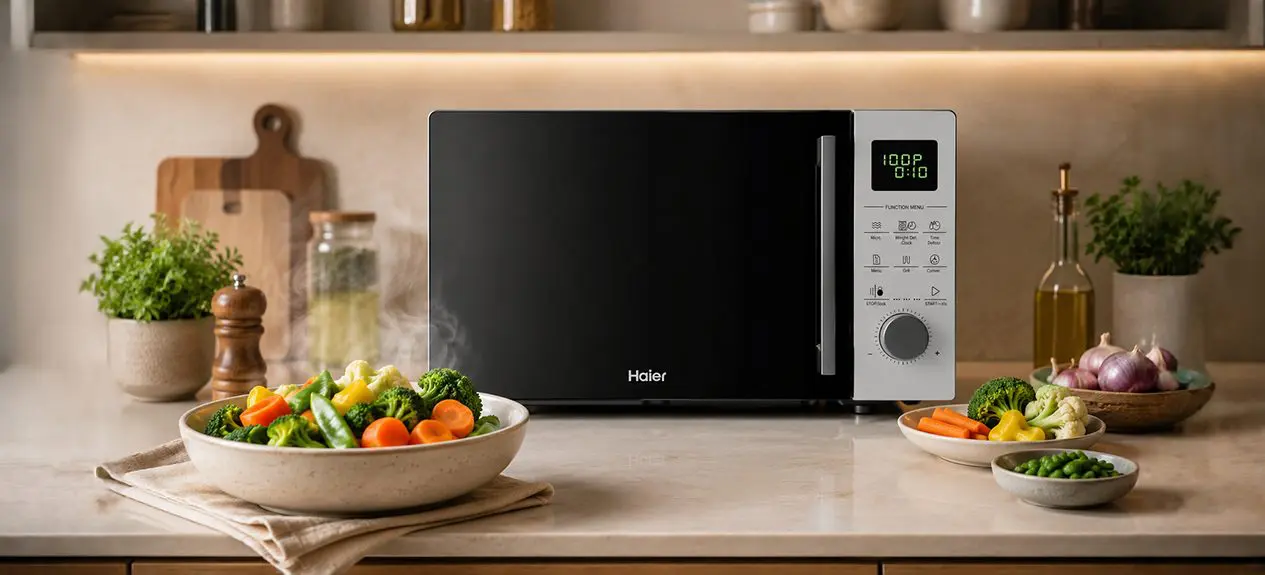

Microwave cooking gets a bad reputation. Mention those electromagnetic waves, and people instantly assume their food is losing its nutritional value. But that is a major misconception. In reality, microwaving is often one of the best ways to lock in vital nutrients simply because it cooks food fast and uses barely any water.
From steaming fresh broccoli to reviving last night’s leftovers, your microwave is a powerhouse for healthy, everyday meals. The secret has nothing to do with radiation and everything to do with managing heat, moisture, and time.
So, is microwaving healthy? Absolutely. If you use the right cookware and sensible timers, it is easily one of the most convenient ways to keep nutritious meals on your table.
How Does Microwave Cooking Affect Nutrients?
Every single cooking method alters food chemistry. High heat naturally degrades fragile, water-soluble vitamins like Vitamin C and the B complex group. How much nutrition you lose depends heavily on three variables: temperature, clock time, and water volume.
This is exactly where the microwave shines. It cuts down cooking times dramatically and eliminates the need for massive pots of water.
Think about traditional boiling. When you submerge vegetables in boiling water, vitamins leak out of the plant cells and into the liquid. If you pour that water down the kitchen sink, you dump the nutrition right along with it.
Microwaving bypasses this completely by utilizing the food’s natural moisture. Because the water stays inside the food, the vitamins stay there too. When looking at nutrient retention microwave vs boiling, the microwave wins for most everyday vegetables.
Does Microwave Destroy Nutrients?
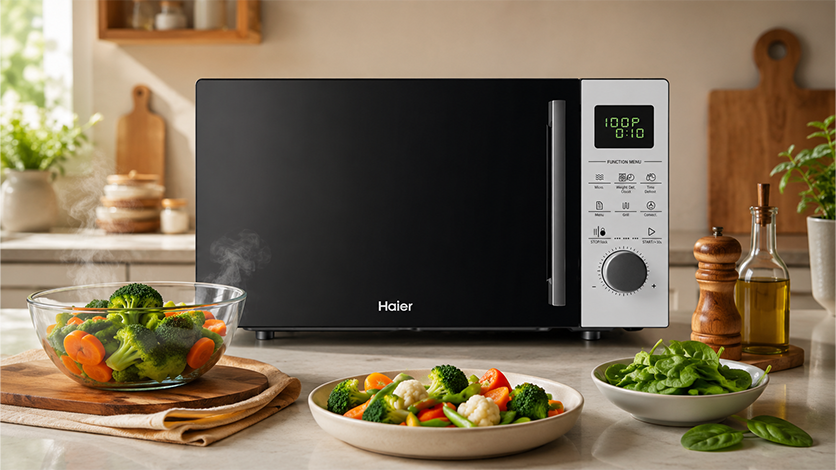
People ask this constantly: does microwave destroy nutrients? The real answer requires looking at the bigger picture.
Heat reduces certain vitamins whether you boil, steam, roast, grill, or stir-fry. The appliance itself isn’t the enemy; the total exposure time to high temperatures is what matters.
Microwaves do not target or destroy nutrients any more than a standard stovetop does. Because microwave cycles are short, they actually shield heat-sensitive vitamins from prolonged damage. Boiling spinach for ten minutes strips its nutritional value; zapping it for sixty seconds preserves it. Shorter cook times mean better nutrient protection, no matter what appliance you use.
Microwave Cooking vs Boiling
Both methods have a place in your kitchen routines, but they handle heat entirely differently.
| Factor | Microwave Cooking | Boiling |
| Speed | Fast and efficient | Takes time to heat up |
| Water Needed | Barely a splash | Food is fully submerged |
| Nutrient Loss | Minimal leaching | High risk of vitamin loss |
| Energy Footprint | Highly efficient for small plates | Consumes more energy |
| Best Choice For | Quick veggies, reheating | Pasta, grains, broths |
| Control | Precise power levels | Dependent on water temperature |
We cannot say microwaving is always superior to boiling across the board. Different ingredients react uniquely to heat. But if your main goal is preserving vitamins in fresh vegetables, turning to your microwave is a smart, scientifically sound choice.
Why Less Water Can Mean Better Nutrient Retention
Water is great for cooking, but it acts like a sponge for water-soluble nutrients.
Picture boiling a head of broccoli in a massive pot. The florets sit drowning in bubbling water under intense heat. Naturally, the vitamins bleed out into the liquid.
Now look at the microwave method. Those same veggies cook using just a tiny splash of water or the moisture already trapped inside their leaves. The process finishes before the nutrients have a chance to break down or escape. Some heat-sensitive elements will always decline slightly during cooking, but slashing the water and time keeps the vast majority intact.
Microwave Cooking Health Benefits
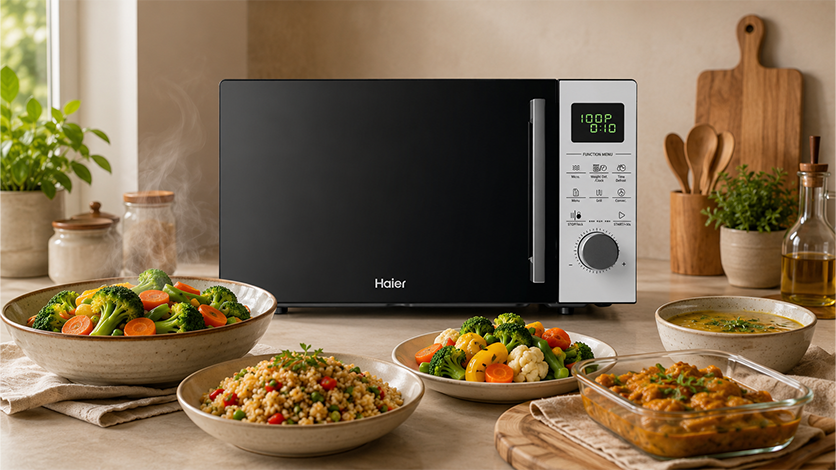
The core microwave cooking health benefits go far beyond just saving vitamins.
Convenience dictates what we eat. When healthy food is fast to make, we choose it more often. Your microwave eliminates the friction of healthy meal prep with a few distinct advantages:
- Speed: Whip up sides in minutes during chaotic weeknight rushes.
- Pure Flavors: No heavy boiling means foods retain their natural crunch and taste.
- Zero Added Fats: You do not need puddles of oil or butter just to keep things from sticking.
- Scale to Size: Cook a single, healthy portion instantly without preheating a massive oven.
- Smart Reheating: Give leftovers a second life without drying them out or frying them.
A microwave won’t turn junk food into a health trend, but it makes preparing whole, nutritious foods incredibly seamless.
Are Microwaved Vegetables Healthy?
Yes, they absolutely are.
Microwaving is a fantastic way to hit your daily vegetable targets without relying on extra sodium, butter, or heavy oils. Carrots, green beans, spinach, and peas cook beautifully in minutes while locking in brilliant colors and natural textures.
Do not worry about hunting for a single “perfect” cooking style. Focus instead on using tools that make eating a vibrant, nutrient-dense diet quick and sustainable.
How Haier Microwave Ovens Support Everyday Cooking
You don’t cook every meal the exact same way, so your microwave shouldn’t have just one setting. Haier builds versatility directly into its lineup, offering everything from straightforward Solo models to advanced Grill and Convection setups.
Instead of blasting every single plate with maximum heat, you get precise control through multiple power levels, automated Auto Cook menus, and smart combination cooking settings.
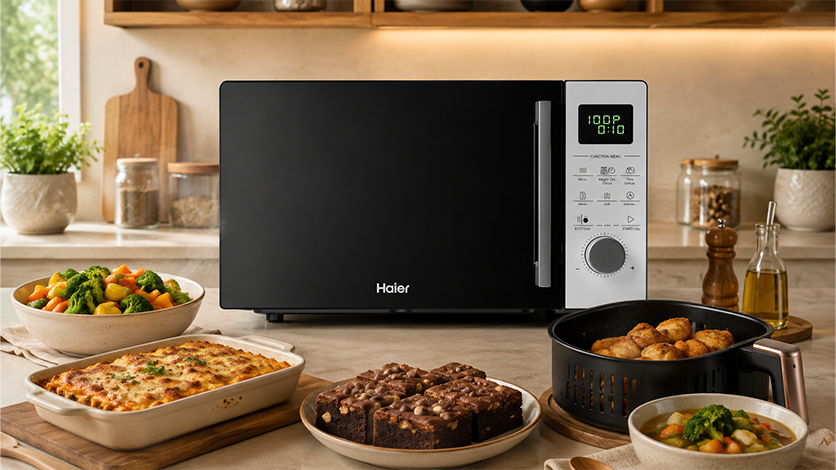
Matching the heat to the actual dish makes a massive difference. Reheating last night’s casserole requires a completely different approach than baking a quick dessert or steaming delicate greens.
If you love crispy textures but want to skip the heavy oil, select Haier convection microwaves that feature built-in Air Fryer capabilities and specialized Home Fry technology. It gives you that satisfying crunch without the grease or guilt of traditional deep frying.
At the end of the day, an appliance is just a tool. It won’t automatically make a meal healthy or unhealthy. True nutrition comes down to your fresh ingredients, portion sizes, and total cook times. A great microwave simply gives you a faster, smarter way to bring it all together.
Final Thoughts
So, is microwaving healthy? The short answer is yes. When you use it correctly, a microwave is a massive asset for a healthy, fast-paced lifestyle. It changes food chemistry just like a stovetop does, but it absolutely does not kill off your nutrition.
In fact, because it cuts down your wait time and eliminates the need to drown food in liquid, it often does a better job of protecting fragile vitamins. If you are comparing nutrient retention microwave vs boiling, the microwave is almost always the superior choice for everyday vegetable prep.
FAQs
Is microwave cooking actually healthy, or does it destroy food nutrients?
Microwave cooking is healthy and does not have an impact on your food nutrients.
How do Haier microwave ovens (such as Haier Convection and Solo models) support healthy cooking?
Haier microwave ovens support healthy cooking by cooking your food fast and not using any water.
Does the radiation from a microwave make food unsafe to eat?
No. Microwaves do not make your food unsafe to eat.
What features do Haier microwaves offer to make low-oil cooking easier?
Haier microwaves have a built-in air fryer feature, which can help to make low-oil cooking easier and more convenient.
Are plastic containers safe to use when heating food in a microwave?
Yes; however, only microwave-safe plastic containers are safe to use in a microwave.
How does cooking time affect nutrient retention in a microwave?
Certain vitamins in your food are susceptible to heat decay. Minimising the time spent cooking your food can help preserve nutrients in a microwave.