


A TV unit is often the visual anchor of a living room. It carries the TV, hides the wiring, holds the streaming devices, and shapes how the whole wall looks even when the screen is off.
Getting the TV unit design right takes more than just picking a piece of furniture. The wall, lighting, screen size, and finish all work together, and the choice you make now shapes the room for years.
This guide walks through the main types of units, how to pick the right wall, current design and panel trends, sizing rules, and a simple checklist for choosing a cabinet that fits your home.
Which Type of TV Unit Is Best for Your Home?
The best TV unit for your home depends on room size, how much storage you need, and whether you want the wall to feel open or grounded. Broadly, TV units fall into two structural styles and three cabinet styles.
Wall-Mounted vs Floor-Standing TV Units
A wall-mounted unit floats above the floor, keeps the room feeling airy, and makes cleaning easier. A floor-standing unit sits on legs or a plinth, offers more storage, and works better in rooms with children or pets who need a lower TV placement.
Here is a quick side-by-side view:
| Feature | Wall-Mounted Unit | Floor-Standing Unit |
| Look | Modern, airy | Classic, grounded |
| Storage | Limited | Larger |
| Installation | Needs a strong wall | Freestanding, easy to shift |
| Cleaning underneath | Easy | Requires moving the unit |
| Ideal room | Small to medium | Medium to large |
| Cable management | Cleaner, wall-routed | Runs behind the unit |
Open Shelf, Closed Cabinet and Panel-Style Units
- Open shelf: best for display-heavy setups with books, decor, and consoles
- Closed cabinet: hides clutter, protects electronics from dust, and keeps the wall tidy
- Panel-style (with back panel): creates a feature wall behind the TV and can integrate lighting
Most Indian homes today combine two of these: a closed cabinet at the bottom for storage, with an open shelf or a TV wall panel above.
Read More – How Wall Colours Affect TV Picture Quality
Which Wall Is Best for a TV Unit?
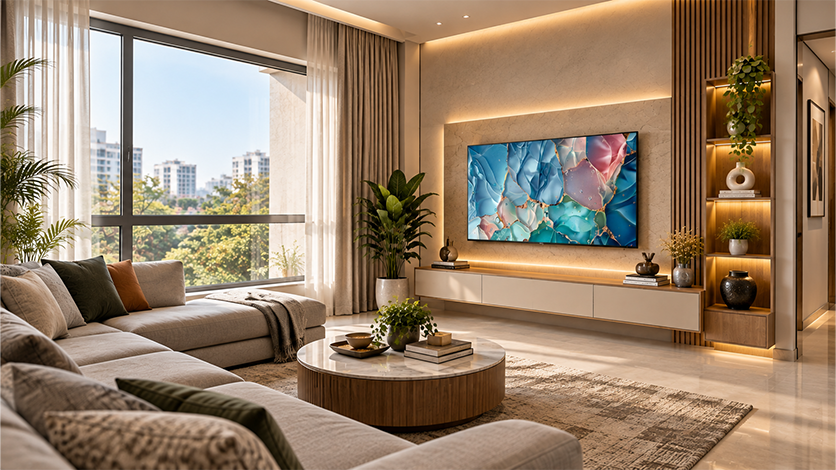
Choosing the right wall is one of the most overlooked parts of a TV setup. The question of which wall is best for a TV comes down to three things: lighting, structure, and viewing angles from your primary seating.
Avoiding Glare, Windows and Direct Sunlight
The TV should not sit directly opposite a window, since natural light causes glare and washes out the picture during daytime viewing. If the room has strong daylight, pick the wall next to the window rather than the one facing it, and add curtains or blinds you can close during matches or movies.
Wall Strength and Cable Routing
For wall-mounted setups, a solid brick or concrete wall is generally the safer choice, since drywall may need reinforcement or stud-mounted brackets. Also plan power points, HDMI runs, and network cabling before any panelling goes up, so you are not chasing cables through finished walls later.
Popular TV Unit and Wall Panel Design Ideas
Design trends in Indian homes have shifted toward cleaner, more integrated setups, with the TV panel design treated as a feature wall rather than a background. This section covers the two directions most homeowners are choosing today.
Modern, Minimal and Wooden Finishes
A modern TV unit typically leans on clean lines, matte finishes, and hidden storage. Popular combinations include:
- Matte laminate cabinets in graphite, ivory, or charcoal
- Fluted wooden panels in teak, walnut, or oak finish
- Ledge-style floating units with concealed LED strip lighting
- Marble or PVC textured back panels for a subtle stone look
Wooden finishes suit living rooms with warm tones; matte laminates work better with contemporary and minimal setups.
Latest TV Wall Panel Trends
The TV wall design market has moved toward feature walls that carry the TV as one element in a larger composition. Current trends include:
- Fluted PVC or MDF panels running floor to ceiling
- Contrast paint with a wooden trim frame
- Stone or brick veneer for a textured backdrop
- Backlit panels with warm cove lighting
For a compact TV unit for living room setups, pairing a slim wall panel with a low-profile floating cabinet keeps the wall visually light without losing storage.
Sizing the TV Unit to Your TV
The TV unit should be wider than the TV itself, both for visual balance and safety. A cabinet that is only as wide as the TV can look cramped, and a table-top TV placed on an undersized unit becomes a tipping risk.
What Size TV Unit for Each Screen Size
Rough sizing guide for common screen sizes:
- 32-inch TV: unit width 90 to 100 cm
- 43-inch TV: unit width 110 to 120 cm
- 55-inch TV: unit width 140 to 150 cm
- 65-inch TV: unit width 160 to 180 cm
- 75-inch TV: unit width 190 to 210 cm
The general rule is to allow at least 15 cm on either side of the TV. If you already know the screen size you want, Haier’s Google TV lineup in India lists official dimensions on each product page, which helps when finalising the unit width.
Are TV Units Worth Buying?
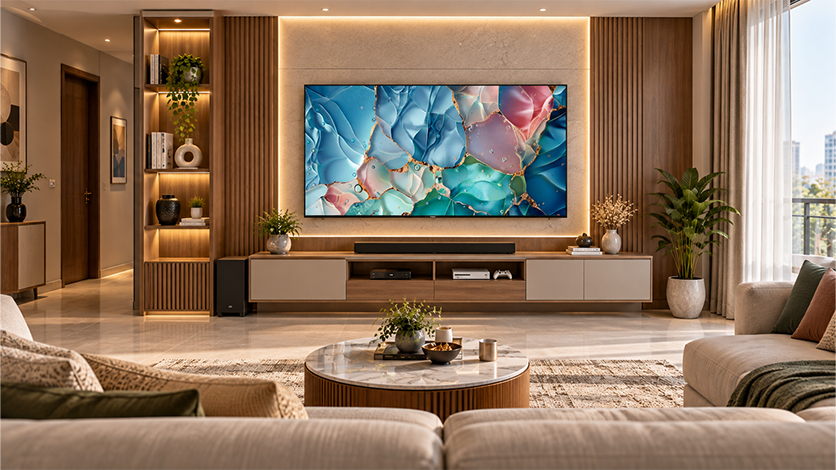
A dedicated TV unit is worth buying if you value cable management, storage, and a finished look for the room. It also protects the TV from dust and knocks and provides a natural place for the set-top box, gaming console, soundbar, and streaming devices.
For very compact rooms or minimal setups, a simple wall mount without a unit can work, but you lose storage, and the wall usually needs a decorative treatment to avoid looking bare. A well-chosen cabinet generally pays for itself over the years through daily convenience.
How to Choose the Right TV Cabinet
A good TV cabinet design balances aesthetics, storage, and long-term durability. Before you buy, run through this short checklist:
- Match the unit width to your current or planned TV screen size
- Confirm the wall type and mounting requirements
- Choose finishes that suit the room’s lighting and existing furniture
- Plan for cable routing, ventilation, and power point placement
- Check load capacity, especially for larger 55-inch or 65-inch panels
- Factor in future upgrades: buying a unit that can hold a larger TV later saves cost
Read More – Furniture Placement Tips Around Large TVs: Build the Room Around the Experience
Conclusion
A well-designed TV unit does more than hold a television. It anchors the room, hides the wiring, adds storage, and shapes how the wall looks whether the screen is on or off.
The right pick comes from matching the unit type, wall placement, size, and finish to how you actually live in the space. A little planning at the design stage almost always pays back in years of daily use, and you keep enjoying the wall.
FAQs
Which type of TV unit is best?
It depends on the room. Wall-mounted units suit small or modern rooms and offer a clean look. Floor-standing units work better in larger rooms where you need more storage.
Which wall is best for a TV unit?
The wall opposite your main seating, not directly facing a window. Solid brick or concrete walls are also better for supporting wall-mounted units and panels.
Are TV units worth buying?
Yes, for most homes. A good unit adds storage, hides cables, protects the TV from dust, and creates a finished look. Very compact setups can skip it, but the wall usually needs decorative treatment instead.
What size TV unit is best for a bedroom?
A 90-120 cm-wide unit generally works well, matching a 32-inch or 43-inch TV. Compact floating units suit smaller bedrooms and free up floor space.
What is the normal size of a TV unit?
Most living room units range from 140 to 180 cm wide, matching 55-inch and 65-inch TVs, which are the most popular sizes in Indian homes.
Can you put a TV unit on the wall?
Yes, wall-mounted TV units are common and free up floor space. Solid brick or concrete walls are safer; drywall may need reinforcement to hold the weight of the unit plus the TV.
What are the latest trends in TV wall panels?
Fluted PVC or MDF panels, backlit cove lighting, stone or brick veneer, and floor-to-ceiling wooden panelling with a contrast paint band are all popular right now.
How do I choose a TV cabinet?
Match the width to your TV size, confirm your wall type, plan cable routing, and pick finishes that suit the room’s lighting and furniture. Check load capacity for larger panels.