
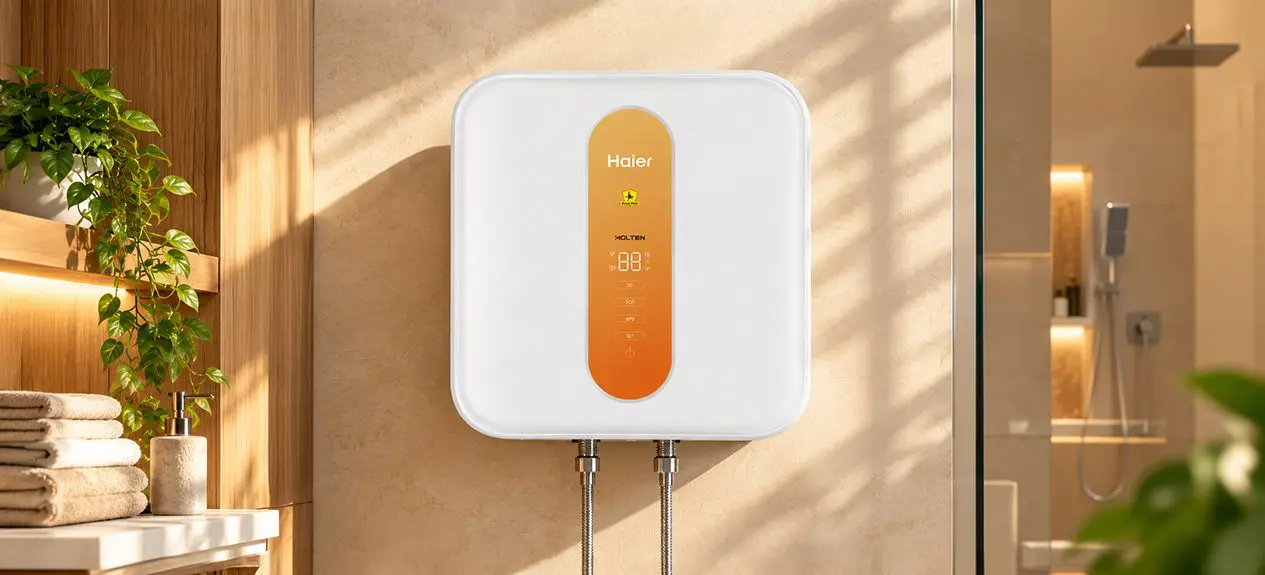

A geyser may continue to deliver hot water as expected, even while gradual changes are taking place inside the tank. Since these changes are not always visible, it is easy to overlook the internal parts that need attention during long-term use.
Good water heater maintenance involves more than checking heating performance alone. Looking at the condition of key internal components can help build a clearer picture of how the appliance is ageing and what may need attention over time.
To understand why this internal part is worthy of attention, it is useful to first look at what an anode rod is and why it is fitted inside the water heater.
What Is an Anode Rod and Why Is It Inside a Water Heater?
An anode rod is a metal rod that sits inside a water heater’s storage tank. Usually made of magnesium or some other reactive metal, it remains in contact with the water stored in the tank. In an anode rod water heater, this piece is supposed to erode slowly over time as part of its normal operation.
The metal tank within the tank is crucial because the tank is always exposed to water, minerals and varying water conditions. The anode rod offers the system an extra level of protection against internal corrosion, so it’s worth checking the condition of the rod during routine maintenance rather than treating it as a permanent fixture.
How Does a Geyser Anode Rod Protect the Water Tank?
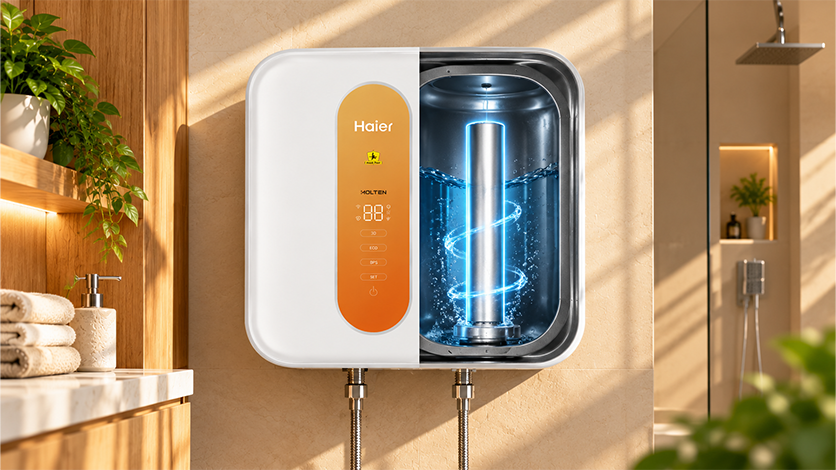
An anode rod in a geyser works by protecting the inner tank. It is the more reactive metal in the water heater. Instead, the rod is worn away over time (first, before the steel tank is attacked by corrosive reactions). This sacrificial action limits the amount of corrosion that the tank itself sees, and that is why the condition of the rod is important during routine maintenance.
Water quality might also be a factor in its effectiveness. In areas with hard or mineral-rich water, regular checks are even more important, as deposits and internal wear can place extra strain on the system. If there is still enough anode material left, it will still provide an extra layer of rust protection to the tank.
What Happens When Your Anode Rod Starts to Wear Away?
The rod tapers as it reaches the tank for protection. When a large proportion of the active material in the tank has been consumed, the tank becomes less protected against corrosion. This does not mean a leak will appear immediately, but leaving a heavily depleted rod in place can make the tank more vulnerable over time.
Anode rods do not wear at exactly the same rate in every home. Water chemistry, hardness, usage and operating conditions can all influence how quickly the material is consumed. That is why periodic inspection can be more useful than relying only on a fixed replacement date.
How Can You Tell When an Anode Rod Needs Attention?
You will not be able to see any obvious signs of wear on an anode rod from the outside. Therefore, changes in the water heater’s condition, as well as periodic inspection, can help to indicate when the rod needs attention.
- Inspection shows the rod to be heavily worn. If the anode rod is too thin, uneven or mostly consumed, it may not be providing the same level of protection to the tank anymore.
- Rust-coloured water is starting to show up. Sometimes discoloured water can be a sign of corrosion inside the system. It may be caused by something else, but it is worth having the anode rod and tank checked.
- You can see corrosion around the heater. Rust marks, corrosion near fittings or other unusual changes around the unit can indicate that the internal condition of the water heater warrants closer inspection.
- The rod hasn’t been looked at for a long time. An anode rod can wear down gradually over time, even without any visible symptoms. Adding it to your regular water heater maintenance routine will help to catch deterioration before it becomes a bigger problem.
How Often Should You Check or Replace a Geyser Anode Rod?
When to check or replace an anode rod can be different from one household to another. It’s better to look at the heater’s age, its replacement history, and the conditions it’s used in, rather than a hard and fast rule.
- Use the manufacturer’s maintenance guidelines as a starting point. The recommended intervals may differ between water-heater designs and therefore the product manual or guidance from an authorised service should be the first point of reference when planning an inspection.
- The first check is a baseline. An early inspection can show how quickly the rod is being consumed in a given home. This information allows for better scheduling of future checks.
- Keep track of the previous replacement dates. Noting the last time the rod was changed helps prevent the part from being forgotten over many years and makes long-term maintenance easier to manage.
- Alter the interval as the geyser ages. An ageing water heater may need more attention to internal components. Shorter inspection intervals can help ensure that anode rod replacement is done at the right time and not unnecessarily delayed.
How Does Anode Rod Maintenance Help Extend Geyser Life?
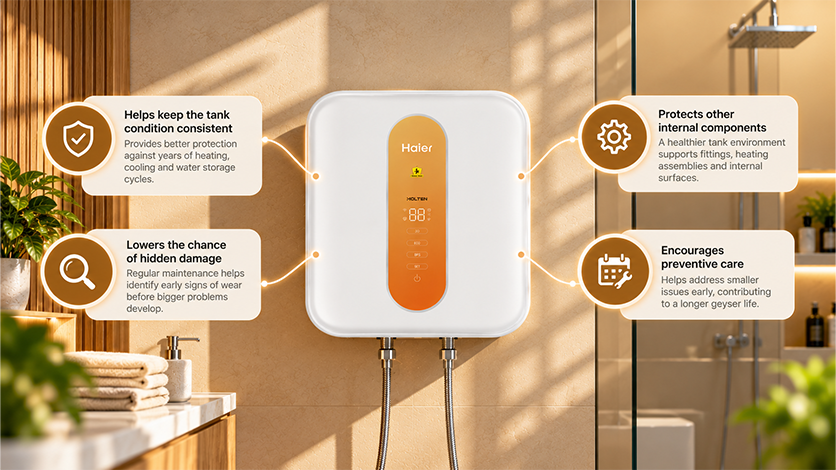
Aside from basic corrosion control, maintaining the anode rod in good shape can help the water heater in other ways. When used as part of long-term appliance care, it can help internal conditions stay more stable and reduce the chance of problems building up unnoticed.
- It helps keep the tank condition more consistent over time. A well-maintained internal protection system helps the tank better withstand years of normal heating, cooling and water storage cycles.
- It can lower the probability that unnoticed hidden deterioration will advance. Internal damage often accumulates over time. Servicing professionals have the opportunity to assess the tank’s condition before deterioration progresses through anode maintenance.
- It can contribute to protecting the value of other internal components. A healthier tank environment also helps adjacent parts such as fittings, heating assemblies and internal surfaces, all of which contribute to reliable operation.
- It pushes for more preventive care of the geysers. Regular maintenance can take care of smaller issues sooner, helping to extend the geyser life in the long run, instead of just reacting to a drop in performance or a leak.
Besides Regular Water Heater Maintenance, What Else is Involved?
When performing routine maintenance on your water heater, it’s a good idea to consider how the unit is being used and if the operating conditions are putting undue stress on the system. A few practical checks can go a long way to support steady performance.
- Make sure the thermostat is set. Excessively high temperatures can lead to higher energy consumption and more thermal stress on the system. A proper setting is a good compromise between comfort, efficiency and daily operation.
- Observe the change in heating time. A geyser taking longer than normal to heat the same amount of water can be an early sign that something in the system needs attention.
- Make sure the unit is not overloaded. If you continually demand more hot water than the heater is designed to supply, you can prolong its working life for longer cycles. Using the correct size for the job reduces strain.
- Open the surrounding area to access. The water heater shall be accessible for service and inspection. Easy access allows the unit to be inspected properly and maintained without disturbing nearby plumbing fixtures.
Not sure about how to maintain a water heater’s life?
Read through Easy Maintenance Tips for Your Haier Water Heater to Ensure Longer Life
How Haier Water Heaters Approach Tank and Corrosion Protection
We do not rely on a single feature for tank protection. Across Haier water heaters, we combine magnesium anode protection, corrosion-resistant tank construction and durable heating components, so each part contributes to the long-term condition of the appliance in a different way.
- Our magnesium rods help protect the inner tank
We use magnesium rods in water heaters as sacrificial components inside the tank. Since magnesium is more reactive than the tank material, the rod gradually wears down while helping reduce direct corrosion on the inner tank. This is also why we recommend checking its condition during periodic servicing.
- Our Corrosion Proof UMC Tank adds another layer of protection
We also use Corrosion Proof UMC Tank construction in models to strengthen resistance against internal corrosion. This gives the tank its own protective support while the magnesium rod continues to take on part of the corrosive activity inside the system.
- We use Incoloy 800SS for added heating-element durability
The heating element is exposed to repeated heating cycles and changing water conditions, so material choice matters. In Haier water heaters, we use Incoloy 800SS heating elements to support durability under high-temperature operation and regular everyday use.
- Our Haier 25L Square 5 Star Water Heater – Molten brings these features together
Our Haier 25L Square 5 Star Water Heater – Molten combines a magnesium rod, corrosion-proof UMC Tank and Incoloy 800SS heating element in one unit. We also pair these with an 8-bar rated working pressure and over-pressure protection, showing how we approach tank protection through several supporting features rather than depending on one component alone.
Conclusion
The anode rod is a small part of the water heater, but it is an important component for protecting the inner tank from corrosion. It deteriorates with time, so checking its condition during routine servicing can help avoid rust becoming a bigger problem.
Regular maintenance of the water heater, timely replacement of the anode rod, cleaning of the tank and control of scale can achieve better water heater rust protection. By taking care of these areas, you can help keep the geyser in good shape, and the appliance will work more dependably over the years.
Frequently Asked Questions
What is an anode rod in a water heater?
An anode rod is a metal rod that is installed inside the water heater tank to help prevent corrosion. It’s usually made of magnesium or some other reactive metal and is supposed to rust away instead of the steel tank. This is why the rod is often called a sacrificial component.
What does the anode rod do in a geyser?
The geyser’s anode rod helps to reduce corrosion inside the storage tank. The rod is more reactive than the steel tank and therefore is more likely to be subject to corrosive reactions. As long as the rod has sufficient material on it, it will continue to protect the tank from rust.
How often should the anode rod be replaced?
There is no standard replacement interval for all water heaters. How fast it wears down can be affected by water quality, hardness, and the use and condition of the rod. In hard-water areas, the rod may need to be checked more often and, at times, replaced every one to two years.
How do I know if my anode rod needs replacing?
The only way to be certain is to physically inspect it during routine servicing. A technician can either pull the rod or simply look at it to see how much material is left. If anode rod is badly corroded, thinned or covered in deposits, anode rod replacement may be recommended.
What is a reversible-door refrigerator?
Yes, a water heater will continue to heat water even if the anode rod is badly corroded. However, the inner tank may not have the same corrosion protection. This can increase the risk of rust , tank damage and leaks over time , which is why the rod should not be ignored just because the geyser is still functional .
Can you change the door-opening side of a refrigerator?
Yes. Minerals in hard water can lead to scale build-up and poor tank conditions. Depending on the local water quality, the anode rod might wear down differently and will need closer inspection. Regular maintenance of your water heater is especially important in hard water areas.
Which side should a fridge door open?
Yes, timely replacement can help extend a service life by restoring a key layer of water heater rust protection. However, it is most effective when used as part of a comprehensive maintenance routine that includes tank cleaning, scale control and periodic inspection of other internal components.