
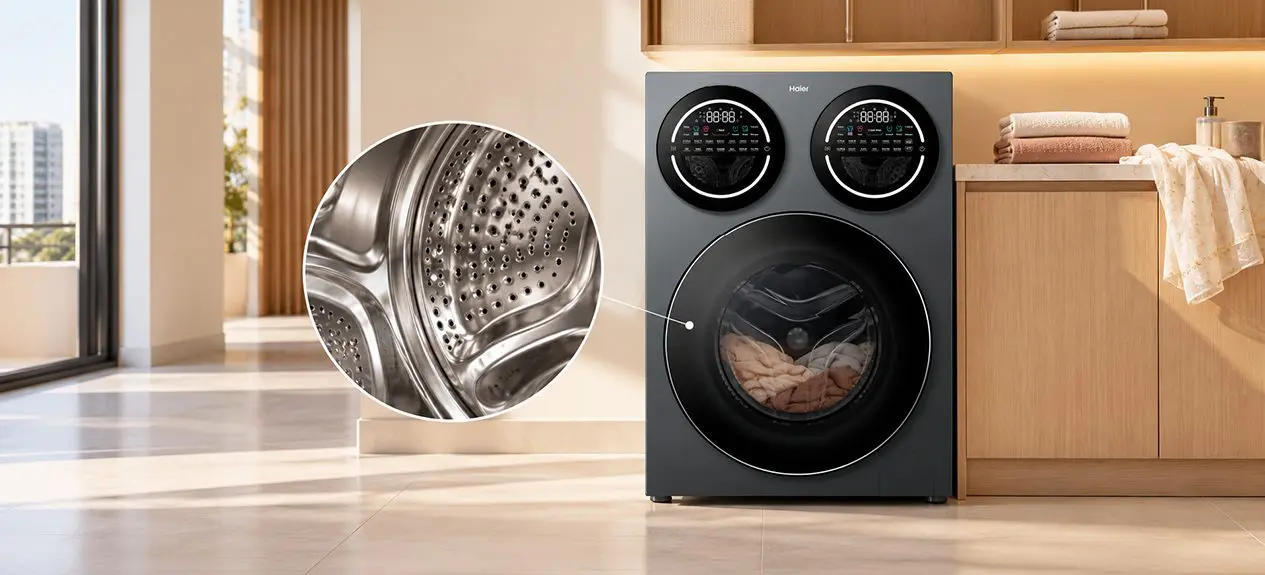

Two washing machines with the same capacity can handle clothes quite differently, largely because of their drum design. The drum’s shape, surface pattern and size influence how clothes tumble, how evenly water reaches the fabric and how much friction garments experience during a wash. Understanding washing machine drum design can help you choose a machine that suits your laundry needs, whether you regularly wash delicate fabrics, everyday clothing or heavier items.
Why Washing Machine Drum Design Matters
Every wash is a long series of lifts, drops and slides inside a rotating drum, and the inner wall controls each of those movements. A plain wall with large holes lets fabric press into the openings. A textured wall with smaller holes keeps cloth gliding over the surface.
The kg rating is only half the story, the drum decides how freely that load can move. Most buyers compare kg first and glance at the drum later, but anyone who washes delicate or favourite clothes may want to reverse that order.
Common Drum Designs Explained
Washing machine drums generally fall into a few main types, each designed to handle clothes differently during the wash cycle.
- Diamond Drum Washing Machine
A diamond drum washing machine has a wall embossed with small raised diamond-shaped facets. Clothes glide over this textured surface, and the perforations are usually smaller than in a plain drum. Less fabric pressing into the holes means fewer pulled threads, so this style suits everyday cotton, uniforms and mixed family loads.
- Honeycomb Drum
A honeycomb drum uses a fine hexagonal pattern with very small holes across the wall. The pattern lets a thin layer of water form between fabric and metal, which cushions clothes as they move. Many people pick it for woollens and baby clothes.
- Wave / Standard Drums
A standard drum has a plain perforated wall with lifters, the raised ribs that carry clothes upward before they drop back into the water. Pillow and wave drums add curves to the same idea. A pillow drum has rounded, cushioned contours along the wall, and a wave drum rolls clothes through the water in a wave pattern. Both guide clothes along the surface without sharp edges.
How Drum Design Affects Wash Quality
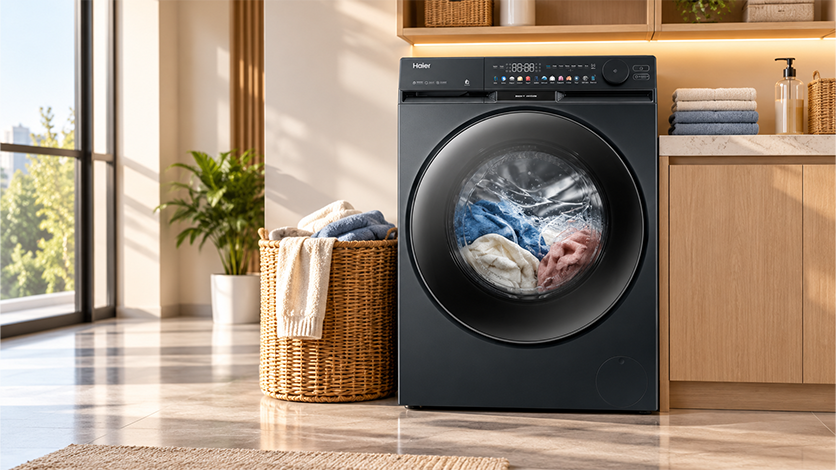
Wash quality depends on how well water, detergent and movement reach every garment, and drum design touches all three. Raised textures and rounded patterns lift clothes gently and drop them back into the water, so detergent spreads through the fabric more evenly. Rinsing improves too when clothes have space to open up. Choosing the right washing machine drum type therefore decides how evenly a load gets cleaned and how it feels afterwards.
How Drum Design Affects Fabric Care
Fabric care comes down to friction. Each rub against a rough edge loosens a few fibres, and over months that shows up as pilling and faded colour.
Gentler on Clothes, Fewer Snags
Textured and rounded walls reduce direct contact between fabric and hard edges. Smaller perforations lower the chance of a thread or a bra hook catching in a hole, so sarees and knitwear keep their finish for longer. A mesh bag for delicates adds one more layer of protection on any drum.
Drum Size vs kg Capacity
The kg rating tells you how much dry laundry the drum can wash in one cycle, while drum size decides how freely that laundry moves. A larger drum gives clothes more room to tumble and open up, which helps both washing and rinsing. As a handy rule, fill the drum to about three-quarters so water and detergent can pass through.
| Capacity | Suits | Haier example |
| 6.5 to 7 kg | One to three people | Haier 7 Kg Top Load |
| 8 to 9 kg | Three to five people | Haier F3 8 Kg and Haier F9 9 Kg |
| 10 kg | Five to seven people | Haier F5 10 Kg |
| 12 kg | Large families, blankets and curtains | Haier F9 12 Kg and Haier F11 12 Kg |
Want to know how much laundry your drum can take?
Read this blog: How Much Laundry Is 7kg, 9kg or 10kg? A Practical Guide to Estimating Your Wash Load?
How Haier Designs Its Drums
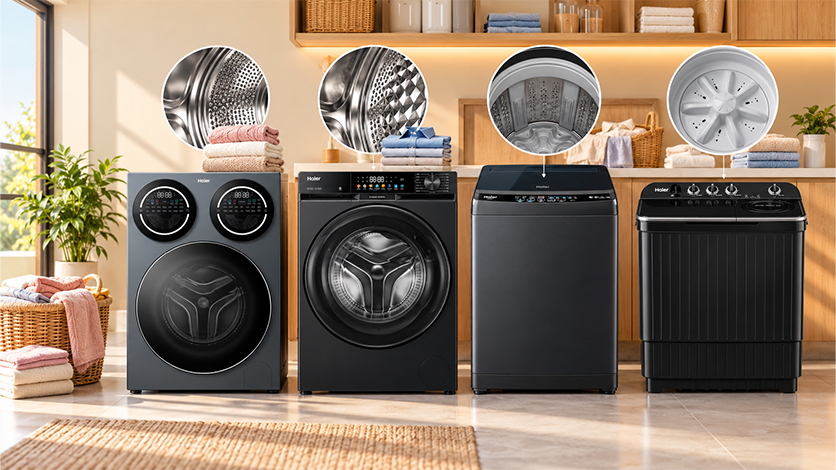
At Haier, we treat washing machine drum design as a core part of fabric care. Our front-load washing machines, such as the F9 and F5, use a pillow-shaped drum. The Haier F5 10 Kg adds a 525 mm Super Drum so clothes move freely, and the Haier F11 12 Kg pairs a laser seamless welded pillow drum with a Direct Motion motor.
Our top load washing machines feature the Oceanus Wave Drum, inspired by the natural motion of ocean waves for thorough yet gentle washing. The Haier 8 Kg Oceanus Wave Drum Top Load is a good place to start, and the Haier 11 Kg HWM110-H688BK brings the same drum to larger loads.
If you prefer twin-tub washing, our semi-automatic washing machines, such as the Haier 12 Kg 196BK, use a Thunder Pulsator for strong multi-directional water flow. For sorted loads, the Haier Triple Drum runs three drums together with a combined capacity of 12 kg.
Which Washing Machine Drum Type Should You Choose?
Start with the fabrics you wash most often, then match the drum to them.
- For delicates, woollens and baby clothes, a honeycomb drum or a rounded pillow drum keeps contact gentle.
- For everyday cotton and mixed family loads, a diamond drum washing machine or a standard drum with generous space works well.
- For bedsheets, blankets and bigger families, look at 10 to 12 kg capacity with a larger drum.
- For top-load convenience, a wave drum such as the Oceanus Wave Drum washes thoroughly yet gently.
- For simple twin-tub washing, a semi-automatic machine with a pulsator covers daily needs.
Conclusion
Drum design shapes how gently and how thoroughly every wash goes. Surface texture, drum shape and drum size work together, so read them alongside the kg rating instead of capacity alone. Whichever washing machine drum type you pick, match it to the fabrics you wash most often. Browse our front load, top load and semi-automatic ranges to find the drum that suits your home.
FAQs
Which drum is best in a washing machine?
The best drum depends on what you wash. Textured diamond or honeycomb walls suit delicates and mixed loads, pillow and wave drums guide clothes smoothly, and a larger drum helps with bulky items.
What is a diamond drum?
A diamond drum has a wall embossed with small raised diamond-shaped facets and smaller holes. The textured surface lets clothes glide during the wash, which lowers the chance of threads catching in the perforations.
What are the benefits of a diamond drum?
A diamond drum offers a smooth glide for clothes, gentler contact with fabric and fewer snags from perforations. These traits suit everyday cotton, uniforms and delicate pieces, helping garments keep their shape and finish across many washes.
Which is better, diamond drum or ecobubble?
They work on different parts of the wash. A diamond drum is a surface design that handles clothes gently, while ecobubble is a bubble-based wash method that helps detergent reach fibres. The better choice depends on the model’s features.
Does drum design affect wash quality?
Yes, drum design shapes how clothes move, how water and detergent spread and how much friction fabric faces. Surface texture, hole size, drum shape and drum size all influence cleaning, rinsing and fabric care across a cycle.
Does a bigger drum wash better?
A bigger drum gives clothes more room to tumble, which supports even cleaning and rinsing, especially with bulky items. Wash quality also depends on load size, wash program and drum design, so a well-filled drum works best.