
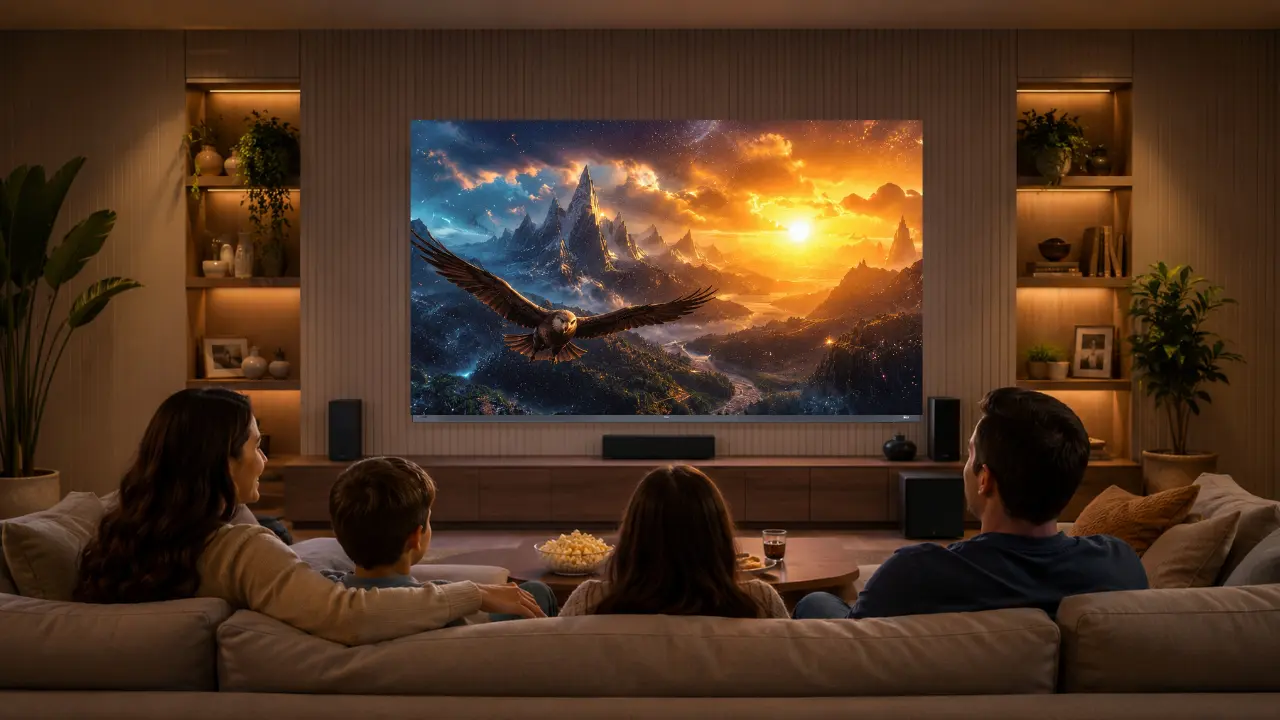

There was a time when television had one job.
Switch it on. Browse channels. Watch whatever happens to be playing.
Simple.
Today? Not even close.
Once the centerpiece of a household, today’s television is quietly becoming the busiest screen in the home. Streaming movies and television shows, hosting family cricket watch parties, fueling gaming sessions, helping kids learn through educational videos, mirroring your smartphone screen or remote-controlling smart home appliances and surprisingly finding time to keep families connected after a hectic day.
What’s fueling all of this?
Artificial Intelligence.
Yep, you read that right. And no, we’re not referring to buzzword-smashing tech magic. We mean real, helpful intelligence that enhances the ways families consume entertainment every day.
Whether it’s tailoring content recommendations to each individual’s tastes, optimising picture quality in real time or creating immersive audio to make sure you hear every blast, boom and ringing whistle, AI-powered TVs are transforming how Indian consumers engage with content.
They’re also transforming home entertainment habits in a lot of ways you might not realise.
Content Viewing Is More Personal Than Ever Before
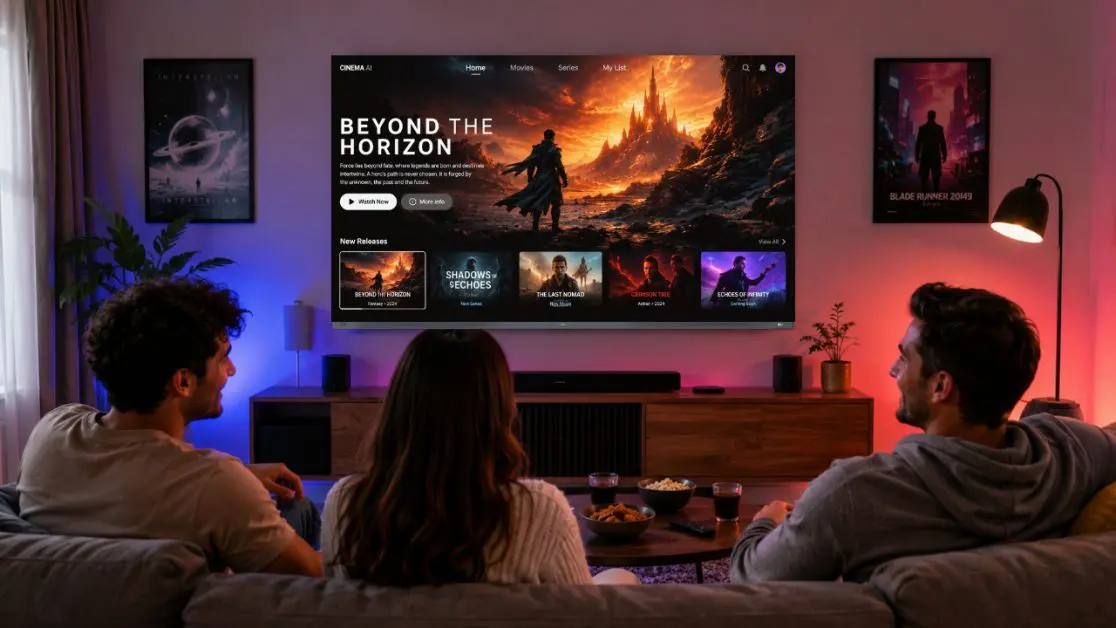
Step into any Indian household these days.
Dad might be watching cricket highlights.
Mom is following her favourite web series.
A teenager is gaming online.
A younger child is watching educational videos.
The challenge isn’t finding content anymore.
The challenge is finding the right content quickly.
Think about how you find what you want to watch.
AI Televisions take the guesswork out of entertainment.
Rather than scrolling through apps and menus searching for your favourites, smart TVs will learn what you like to watch and curate recommendations for you.
No fuss.
More time watching what you love.
And who doesn’t want that for their home?
Personalised recommendations that understand your habits, thanks to Google TV and AI-powered content discovery.
Why Families No Longer Watch TV the Same Way
The biggest shift isn’t technology.
It’s behaviour.
Television has evolved from a passive screen into an active participant in household entertainment.
Today’s families expect their TV to:
- Recognise viewing preferences
- Adapt picture settings automatically
- Improve audio quality in real time
- Support gaming without lag
- Connect seamlessly with smartphones
- Integrate with smart home ecosystems
A few years ago, these expectations would have sounded futuristic.
Now they’re becoming standard.
And AI sits at the centre of all of it.
The Hidden Role of AI Behind Better Picture Quality
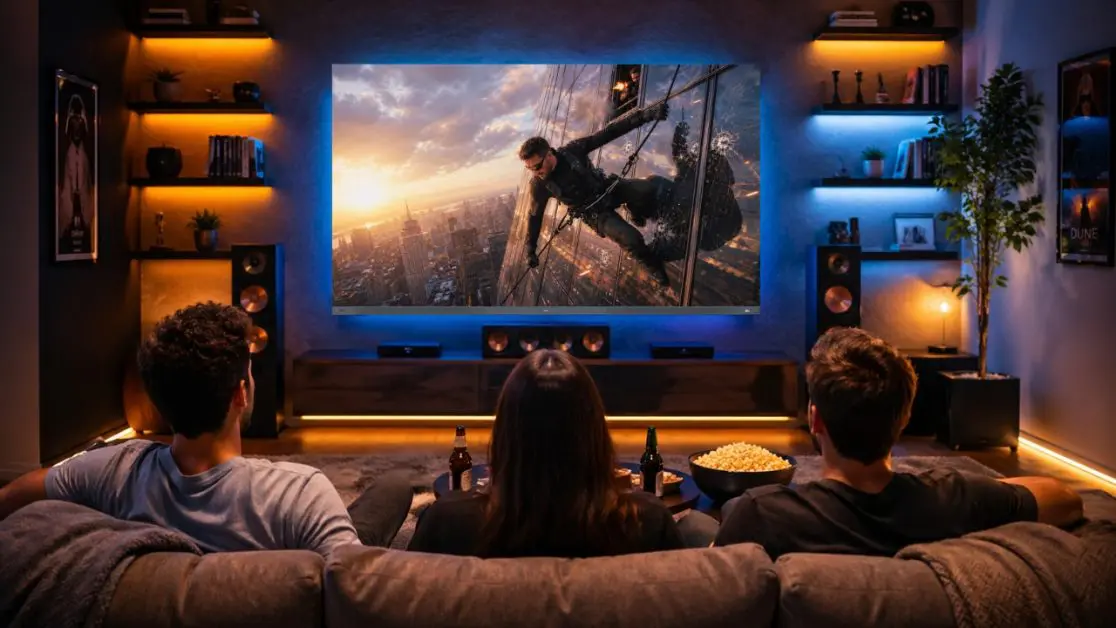
Here’s something most viewers never notice.
A good AI TV is constantly working behind the scenes.
Every scene.
Every frame.
Every second.
Whether you’re watching a dark thriller, a brightly lit cricket match or a hyper-active action flick, AI algorithms understand the picture and auto optimise settings.
Brightness isn’t the goal. Natural-looking is.
Haier’s AI Ultra Sense Processor intelligently recognises scenes as they happen and fine tunes colour, contrast, depth and motion clarity.
What AI Picture Processing Improves
| Viewing Challenge | AI Enhancement |
| Fast-moving sports | Motion smoothing and clarity |
| Dark movie scenes | Better contrast and shadow details |
| Bright daylight viewing | Adaptive brightness adjustment |
| Low-quality content | AI upscaling and refinement |
| Colour accuracy | Intelligent colour optimisation |
The difference feels subtle at first.
Then you watch an older television again.
That’s when it becomes obvious.
Sports Nights Feel More Like Stadium Experiences
Let’s be honest.
India watches sports differently.
Whether it’s IPL, international cricket, football leagues, or Formula One races, sports are emotional events.
Nobody wants motion blur when a six sails into the crowd.
Nobody wants ghosting during a crucial replay.
Modern AI TVs address this challenge through intelligent motion handling.
The Haier M92 and M96 QD Mini LED series feature a 144Hz refresh rate, helping reduce blur and maintain smoother motion during fast-paced content.
For families who gather around the TV during major tournaments, that improvement isn’t a technical specification.
It’s a better viewing experience.
Sound Has Become Just As Important As Picture
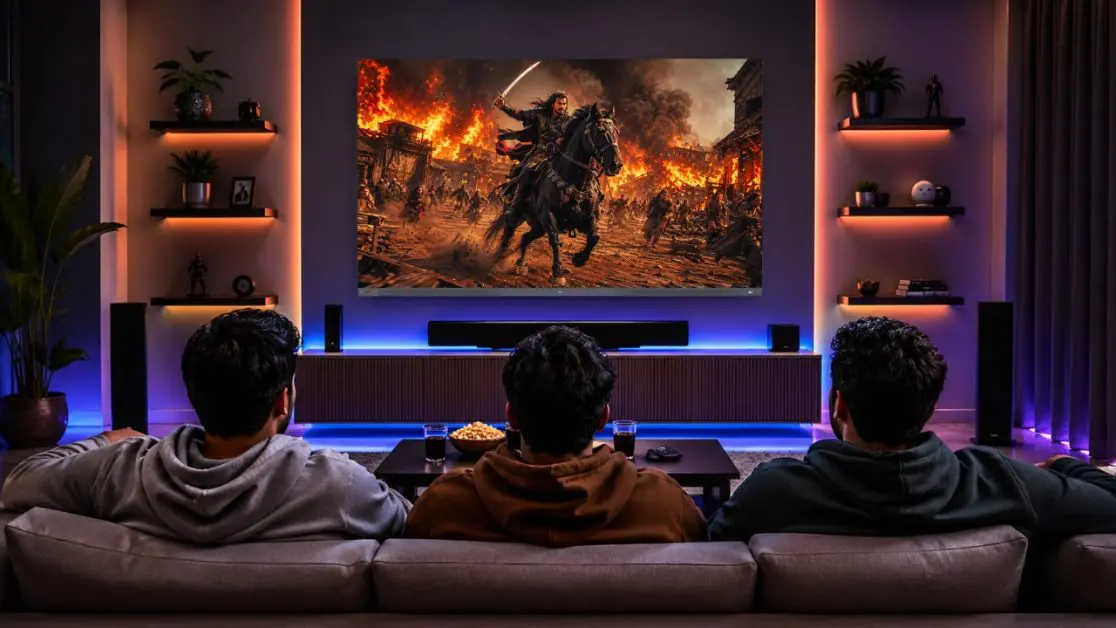
Interestingly, AI isn’t only transforming visuals.
Audio has undergone a similar evolution.
Think about how people watch content today.
Action films.
Sports.
Concerts.
Gaming.
OTT content.
Every format demands different sound characteristics.
Instead of forcing viewers to manually adjust settings, AI-powered televisions optimize audio output based on the content being played.
That means:
- Dialogue remains clearer
- Background music feels balanced
- Action sequences gain impact
- Sports commentary stays intelligible
The Haier M92 Series incorporates Sound by KEF technology along with Dolby Atmos support and a 2.1-channel speaker system designed to create a richer and more immersive audio experience.
And yes, people notice.
Especially during movie nights.
AI Is Making Family Movie Nights Easier
Ever spent twenty minutes deciding what to watch?
Most families have.
Actually, probably longer.
One person wants comedy.
Another wants action.
Someone else wants a documentary.
By the time everyone agrees, half the evening is gone.
AI recommendation engines help reduce that friction.
Instead of showing endless content libraries, they prioritise relevant suggestions based on household viewing patterns.
It’s not magic.
It’s simply a smarter organisation.
And surprisingly effective.
Gaming Is No Longer Limited To Dedicated Monitors
Gaming has become a mainstream family activity.
Teenagers play online.
Parents occasionally join.
Friends gather on weekends.
Televisions now need to handle gaming demands that once belonged exclusively to gaming monitors.
That includes:
Modern Gaming Expectations
- High refresh rates
- Low input lag
- Smooth frame synchronisation
- Fast response times
- Enhanced visual detail
Haier’s QD Mini LED AI TVs support gaming-focused technologies such as VRR, ALLM, AMD FreeSync Premium Pro, HDMI 2.1 connectivity, and game optimisation features that help create smoother gameplay experiences.
The TV has become the entertainment hub.
Gaming included.
Smart Homes Need Smarter Screens
Something else is happening.
The television is becoming the control centre of connected homes.
Not just a screen.
A hub.
Modern AI-powered televisions can interact with compatible smart devices and simplify everyday digital interactions.
Through HaiSmart integration and voice-enabled controls, users can manage entertainment and connected experiences more conveniently.
This matters because smart homes are becoming increasingly common across urban India.
People expect devices to communicate with one another.
AI makes that possible.
A Look At How AI Is Influencing Family Entertainment Habits
Before AI TVs
- Families manually adjusted settings
- Content discovery took longer
- Sound remained generic
- Motion blur affected sports viewing
- Gaming performance varied significantly
After AI TVs
- Automatic scene optimisation
- Personalised recommendations
- Intelligent sound tuning
- Improved motion handling
- Enhanced gaming responsiveness
The shift isn’t dramatic overnight.
It’s cumulative.
Hundreds of small improvements adding up to a significantly better experience.
Why Haier’s AI TV Line-Up Reflects Modern Entertainment Needs
Technology should solve problems.
That’s really the benchmark.
Not marketing.
Not specifications.
Actual usefulness.
Haier’s latest QD Mini LED AI Smart Google TV portfolio has been developed around how people consume entertainment today.
Whether it’s the Haier New M92 Series 164cm (65) QD-Mini LED AI Smart Google TV (H65M92FUX), the Haier New M92 Series 189cm (75) QD-Mini LED Smart AI Google TV (H75M92FUX), or the flagship Haier New M96 Series 254cm (100) QD-Mini LED AI Smart Google TV (H100M96FUX), the focus remains consistent:
- AI-driven picture optimisation
- QD Mini LED display technology
- Dolby Vision IQ and HDR10+
- Google TV ecosystem
- Hands-free voice control
- Dolby Atmos support
- KEF-engineered audio
- Advanced gaming capabilities
- Smart home connectivity
These features are designed to enhance how modern Indian families watch, listen, play, and interact with content.
The Future Living Room Is Already Here
Funny thing about technology.
The most impactful innovations rarely feel revolutionary when they arrive.
They simply make life easier.
AI televisions are doing exactly that.
They reduce decision fatigue.
Improve picture quality.
Enhance sound.
Simplify content discovery.
And perhaps most importantly, they help families spend less time managing technology and more time enjoying entertainment together.
For Indian households where one screen often serves multiple generations, multiple interests, and multiple lifestyles, that matters.
A lot.
And as AI continues evolving, the television will likely become even more intuitive.
Not louder.
Not more complicated.
Just smarter.
Exactly the way family entertainment should be.
Frequently Asked Questions
How do AI TVs know what I want to watch?
AI TVs analyze your viewing habits, watch history, preferred genres, and content interactions to recommend shows, movies, sports, and videos that match your interests.
Why does my AI TV recommend different content than my family members see?
Many AI-powered platforms create personalized recommendations based on individual viewing behavior, making content discovery more relevant for each user.
Can AI TVs help me spend less time searching for something to watch?
Yes. AI recommendation engines surface relevant content faster, reducing endless scrolling through apps and menus.
Do AI TVs work well for households with different viewing preferences?
Absolutely. They are designed to serve multiple users with different interests, from sports and movies to gaming and educational content.
How are AI TVs changing family entertainment habits?
AI TVs make content discovery easier, optimize viewing experiences automatically, and support multiple forms of entertainment including streaming, gaming, sports, and educational content.