
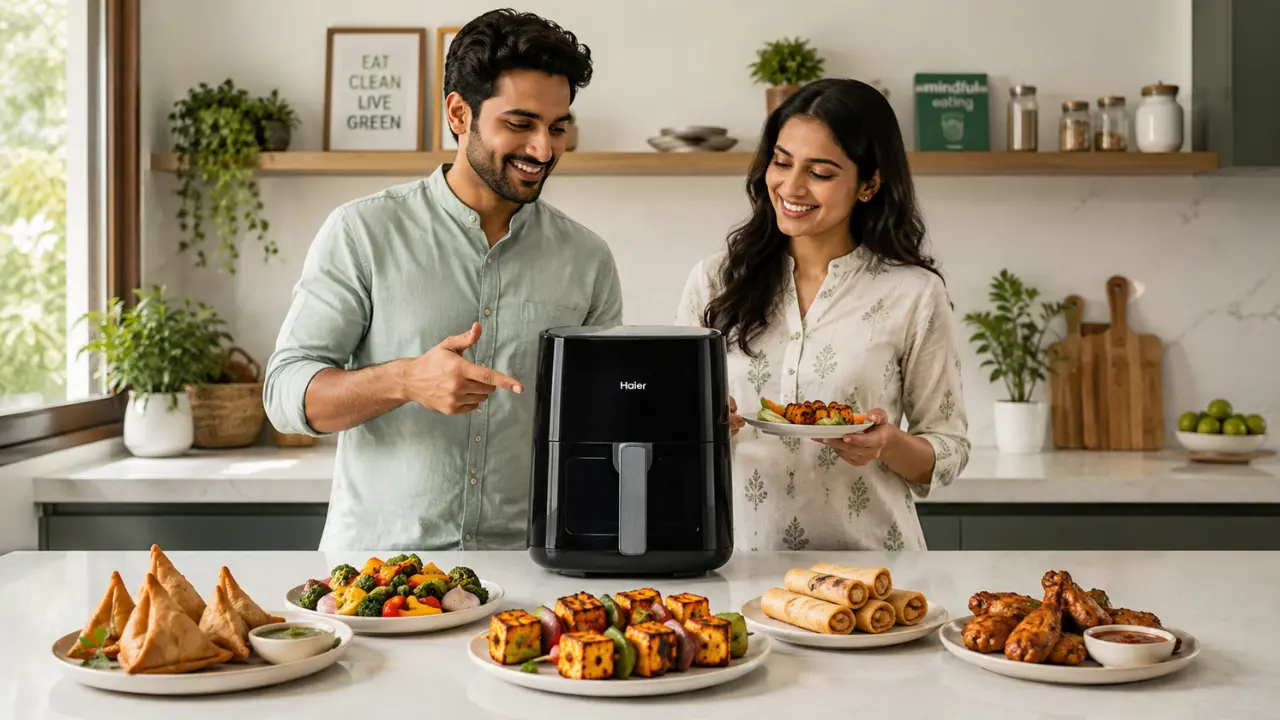

The real reason air fryers matter in modern Indian kitchens
Weight management rarely fails because people lack motivation.
It fails because daily systems break.
Long office hours. Evening cravings. Oil-heavy comfort food. Weekend takeaways that quietly become weekday habits. The problem is rarely one meal. The problem is friction. Healthy cooking often feels slower, messier, and less satisfying.
That is where air fryers change the equation.
They reduce oil without reducing familiarity. They make everyday Indian snacks feel lighter without making them feel like punishment. And in many homes, that single shift changes how people eat across an entire week.
A healthier lifestyle does not begin with discipline. It begins with convenience designed properly.
Why weight management is more about habits than diets
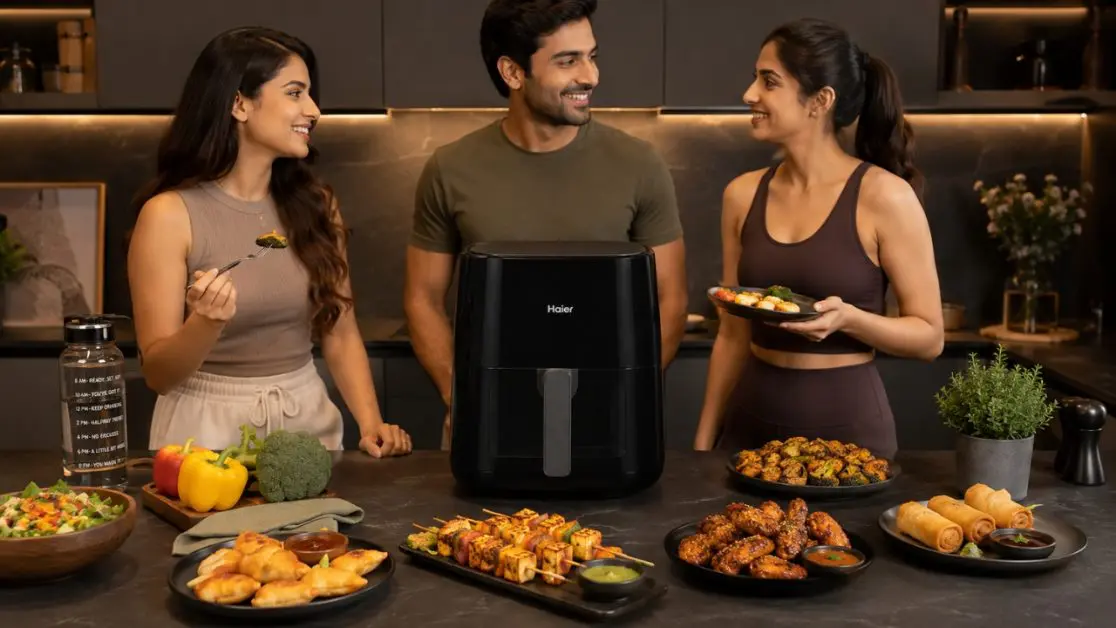
Most people already know what healthy eating looks like.
More home-cooked food. Less deep frying. Better portion control. More protein. Fewer late-night processed snacks.
The gap is not knowledge. The gap is execution.
Think about a weekday evening in an Indian home.
You come back tired. Someone wants samosas. Someone else wants fries. The easiest option becomes ordering food or deep frying snacks quickly. Oil becomes the default because speed wins.
Air fryers quietly interrupt this pattern.
Instead of submerging food in oil, they circulate hot air around it. The result feels familiar. Crispy outside. Soft inside. But with significantly less oil usage.
And that matters because calories hide in cooking methods more than people realise.
A small oil change creates a large calorie difference
One tablespoon of oil contains roughly 120 calories.
Now multiply that across:
- Evening snacks
- Weekend treats
- Frozen foods
- Kids’ after-school meals
- Fried breakfast items
The numbers add up quickly.
Weight gain often happens silently. So does weight management.
Air fryers reduce dependence on deep frying
Deep frying changes more than calories. It changes behaviour.
Once oil is heated, people tend to fry more items together. Portion sizes increase. Refrying leftovers becomes common. Kitchens feel greasy. Cleanup becomes exhausting.
Air fryers create a different system.
One where:
- Smaller portions feel sufficient
- Cooking becomes faster
- Oil usage becomes intentional
- Cleanup feels manageable
- Home cooking happens more often
That last point matters most.
People who cook more at home generally gain more control over ingredients, sodium, and portion sizes.
Not perfectly. But consistently.
And consistency beats intensity every time.
The psychology of crispy food matters

Here is something nutrition conversations often ignore.
Texture matters emotionally.
People crave crunch.
There is a reason chips, pakoras, fries, and nuggets become comfort food during stressful weeks. Crispy food feels satisfying. It creates sensory fullness.
Traditional dieting often removes this entirely. That is why many diets collapse after two weeks.
Air fryers solve a psychological problem, not just a cooking problem.
They allow people to recreate textures they love with less oil dependency.
Foods people commonly switch to air frying
- Aloo tikki
- Paneer bites
- Chicken wings
- French fries
- Sweet potato wedges
- Frozen snacks
- Samosas
- Spring rolls
- Cutlets
The important shift is not perfection.
The important shift is frequency.
When lighter cooking becomes easier than deep frying, habits begin changing automatically.
Weight management is really energy management
Most conversations about weight become emotional very quickly.
But the body works through systems.
Calories consumed versus calories used. Sleep quality. Movement. Stress. Food quality. Meal timing.
Cooking methods influence this system more than people assume.
Heavy oily meals often create:
- Midday sluggishness
- Post-lunch fatigue
- Low evening energy
- Excess snacking
- Poor digestion
Lighter meals tend to support steadier energy levels.
That does not mean air-fried food is magically healthy. It simply changes the baseline.
And baseline behaviours shape long-term outcomes.
One option is restriction. Another is redesign.
Most people approach weight management through restriction.
No snacks. No fried food. No desserts. No comfort meals.
The problem? Restriction creates rebound behaviour.
The second option is redesign.
Keep the foods people enjoy. Change how they are prepared. Reduce friction around healthier routines.
That approach lasts longer because it respects human behaviour instead of fighting it.
Modern kitchens are becoming behaviour systems
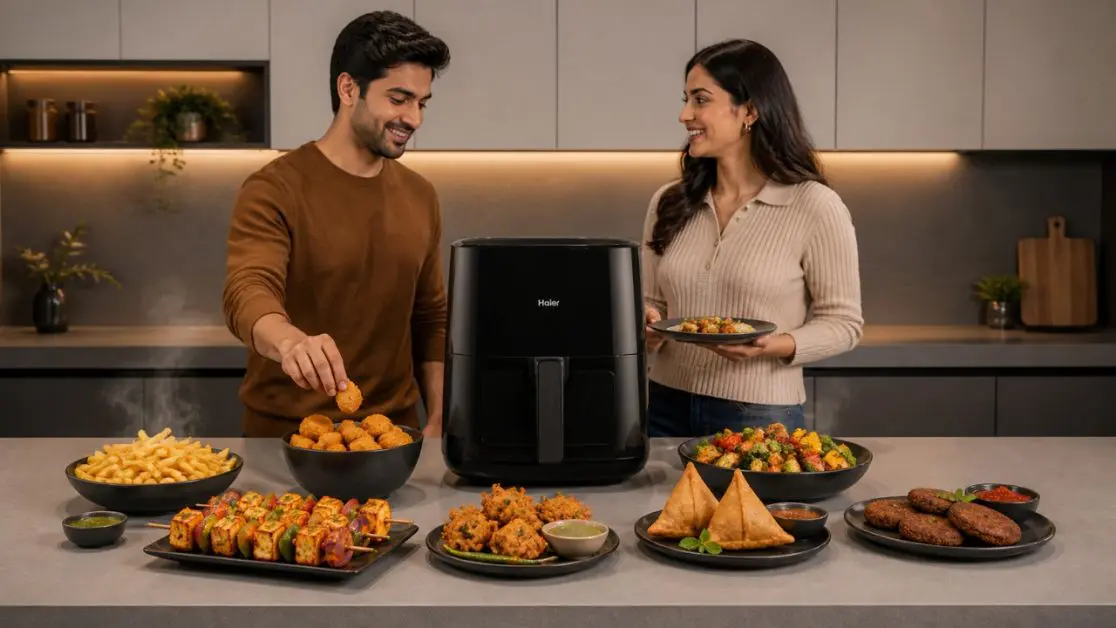
The Indian kitchen is changing.
Not dramatically. Quietly.
Earlier, appliances solved singular problems.
A mixer mixed. A microwave reheated. An oven baked occasionally during birthdays.
Now appliances influence lifestyle patterns.
Smart refrigerators organise food better. AI-powered ACs improve sleep comfort. Dishwashers reduce mental load. Air fryers reduce dependence on excessive oil.
These shifts look small individually.
Together, they redefine how households function.
A good appliance does not just save time. It changes decisions people make repeatedly.
That is why many young professionals and first-time homeowners now see kitchen appliances differently. Not as luxury purchases. As lifestyle infrastructure.
Why air fryers work particularly well for Indian households
Indian cooking is deeply flavour-driven.
People often assume healthy eating means abandoning flavour. That assumption fails because Indian food culture is built around texture, aroma, spice layering, and warmth.
Air fryers work because they adapt well to familiar foods.
Practical ways Indian households use air fryers
For busy professionals
- Quick evening snacks without reheating oil
- Faster weekday meal prep
- Healthier late-night cravings
For parents
- Lighter versions of kids’ favourite snacks
- Easier tiffin preparation
- Faster cooking with less supervision
For couples setting up new homes
- Compact cooking support
- Multi-purpose usage
- Less kitchen mess in smaller apartments
For older family members
- Reduced greasy food intake
- Simpler cooking workflows
- Easier digestion for some meals
Technology succeeds when it adapts to culture. Not when it fights it.
The hidden benefit people rarely talk about: consistency
Most healthy habits fail because they demand too much energy.
Meal prepping for three hours every Sunday sounds productive. Until real life interrupts.
Air fryers succeed because they reduce activation energy.
Less oil.
Less cleanup.
Less waiting.
Less guilt around everyday indulgences.
That combination creates repeatability.
And repeatability is the real engine behind weight management.
Healthy systems are usually boring
That sounds disappointing. But it is true.
Long-term health rarely comes from extreme transformations.
It comes from ordinary decisions repeated quietly:
- Cooking at home more often
- Eating fewer heavily fried meals
- Managing portions naturally
- Reducing unnecessary calories
- Making better defaults easier
Air fryers fit into this system because they reduce resistance.
How Haier air fryers fit into modern lifestyles
A kitchen appliance only works when people actually use it regularly.
That is where thoughtful design matters.
Haier’s 5L Air Fryer range reflects how Indian households actually cook. Large enough for family snacking. Compact enough for urban kitchens. Simple enough for daily use.
The Haier Ivory Air Fryer 5L Capacity and Haier Black Air Fryer 5L Capacity focus on practical cooking rhythms rather than complexity.
Features like:
- Large cooking capacity
- Rapid hot air circulation
- Adjustable temperature controls
- Timer functionality
- Modern compact design
make everyday usage feel approachable instead of intimidating.
And that matters more than people think.
Because the best kitchen appliance is not the most advanced one.
It is the one that quietly becomes part of your weekly routine.
Air fryers also change the economics of eating well
Healthy eating is often framed as expensive.
But there is another side to the story.
Frequent ordering costs more.
Excess oil usage costs more.
Wasted leftovers cost more.
Home cooking becomes more sustainable when it feels fast and manageable.
That is one reason air fryers have become increasingly popular among younger urban households in India. They align with how modern schedules actually work.
Quick meals.
Smaller kitchens.
Flexible routines.
Late dinners.
Multi-tasking lifestyles.
Convenience is not laziness. It is infrastructure for consistency.
What people misunderstand about weight management appliances
No appliance creates health automatically.
That expectation is unfair.
An air fryer cannot replace movement, sleep, hydration, or balanced eating. But it can reduce friction around better choices.
That distinction matters.
The goal is not to build a perfect lifestyle overnight.
The goal is to make healthier defaults feel normal enough that people stop thinking about them constantly.
And often, that starts with something as simple as cooking fries with less oil on a Wednesday evening after work.
Small systems.
Repeated daily.
Quietly changing outcomes.
The future of healthy cooking looks less restrictive
The old model of wellness focused on denial.
The newer model focuses on sustainability.
People do not want kitchens that feel clinical. They want kitchens that support real life. Real cravings. Real schedules. Real families.
That is why appliances like air fryers resonate so strongly today.
They acknowledge something important:
Health improves faster when people feel supported, not controlled.
And maybe that is the bigger shift happening in modern Indian homes.
Technology is no longer just about speed.
It is about reducing the invisible stress attached to everyday living.
Because sometimes the smartest lifestyle change is not dramatic at all.
Sometimes it is simply making the better choice easier to repeat tomorrow.
Frequently Asked Questions
Can an air fryer actually help me lose weight?
An air fryer does not directly cause weight loss, but it can support weight management by reducing the amount of oil used in everyday cooking. When healthier cooking becomes easier and more convenient, people are often able to maintain better eating habits consistently.
How does using an air fryer reduce calorie intake?
Most of the calorie reduction comes from using less oil. Since one tablespoon of oil contains roughly 120 calories, reducing oil across snacks, meals, and side dishes can create a meaningful calorie difference over time.
Is air-fried food healthier than deep-fried food?
In many cases, yes. Air-fried food typically contains less added oil while still delivering a crispy texture. However, the overall healthiness of a meal still depends on ingredients, portion size, and overall diet quality.
Why do healthy eating plans fail even when I know what to eat?
Many people struggle with consistency rather than knowledge. Long workdays, cravings, convenience, and lack of time often make unhealthy choices easier. Appliances like air fryers help reduce the effort required to prepare lighter meals at home.
Can switching to an air fryer improve my eating habits over time?
For many households, yes. When healthier cooking becomes quicker and less messy, people are more likely to cook at home regularly, which can improve portion control and ingredient awareness.