
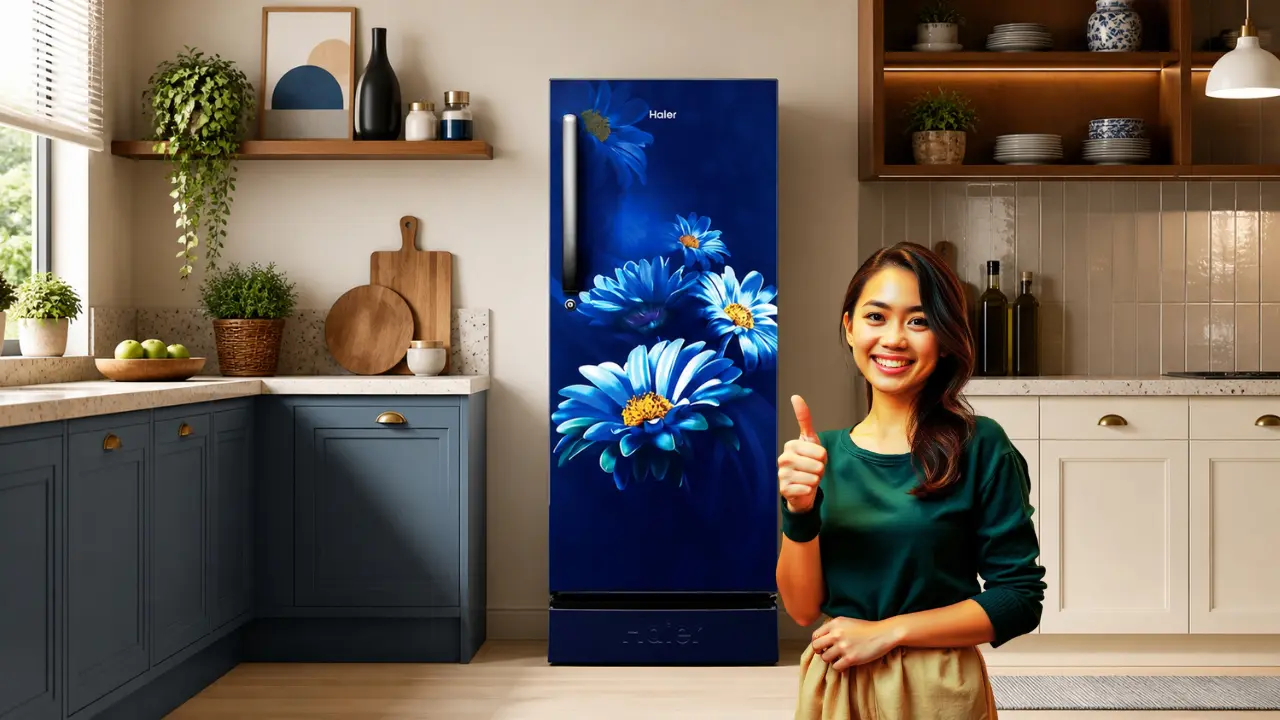

Energy efficiency shapes appliance buying decisions by reducing long term electricity costs, improving performance consistency, and aligning with modern lifestyle priorities like sustainability and reliability.
In real Indian homes, it is not just about saving power. It is about saving time, effort, and future stress.
Why does the electricity bill reveal more than the appliance price?
It is the end of the month.
You open your electricity bill. It feels higher than expected. Again.
Nothing “new” was bought recently. No major changes in usage. But something is quietly adding up.
This is where most appliance decisions get misunderstood.
We focus on price at purchase.
But what actually matters is cost over time.
An appliance is not a one-time purchase. It is a daily commitment.
And energy efficiency decides how expensive that commitment becomes.
What does energy efficiency actually mean in real homes?
Energy efficiency is often reduced to a sticker. A star rating. A number.
But inside a home, it behaves differently.
It shows up as:
- Lower electricity bills every month
- Faster performance with less energy waste
- Reduced dependency on stabilizers and external systems
- Longer appliance lifespan due to optimized operation
Take something as simple as a refrigerator.
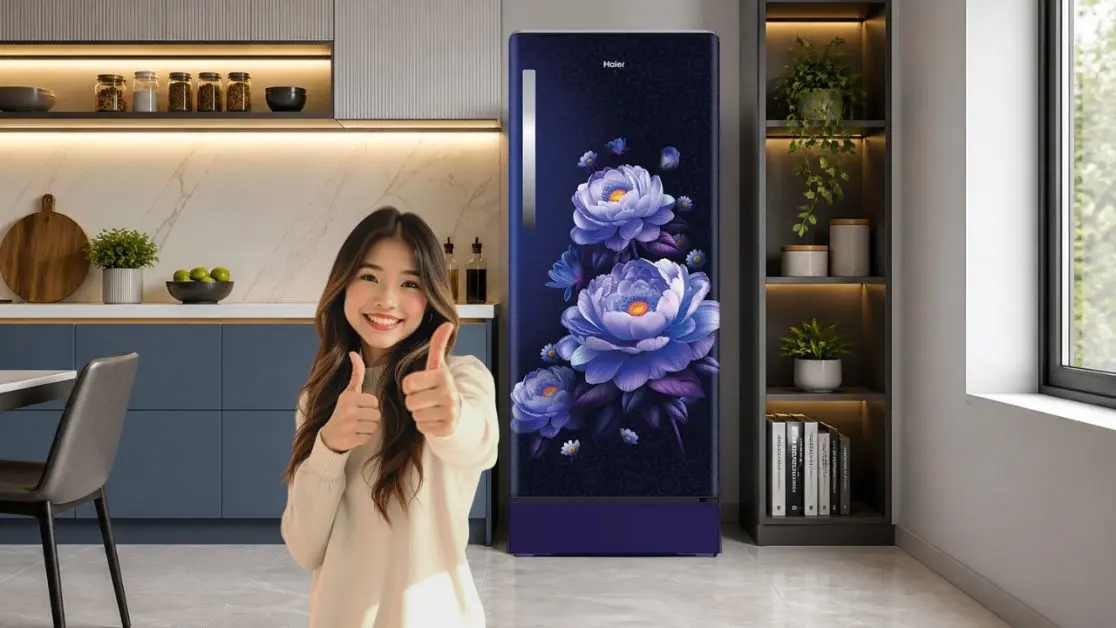
A 5-star refrigerator like the Haier 190 L 5 Star Marine Blossom Single Door Refrigerator (HRD-2105PMBA-P) consumes around 120 units annually .
A 3-star option like the Haier 190L 3 Star Marine Hilton Single Door Refrigerator (HRD-2103PMHA-P) uses about 155 units .
A 2-star model like the Haier 190L 2 Star Red Animone Single Door Refrigerator (HRD-2101SRAA-P) can go up to 194 units .
The difference looks small on paper.
But multiply that across 5 to 10 years.
Efficiency compounds. Inefficiency does too.
The hidden system behind every appliance decision
Most people think appliance buying is about features.
It is not.
It is about trade-offs.
Every appliance sits at the intersection of three forces:
- Upfront Cost
- Running Cost
- Performance Stability
Energy efficiency quietly connects all three.
Let’s break it down.
One option is: Lower upfront cost, higher long-term expense
You choose a cheaper appliance.
- Lower initial investment
- Higher electricity consumption
- More strain during voltage fluctuations
This works in the short term.
But over time, the savings disappear into monthly bills.
The second option is: Balanced cost and efficiency
You choose a mid-range appliance like the Haier 190L 3 Star Marine Hilton Single Door Refrigerator (HRD-2103PMHA-P).
- Moderate upfront cost
- Controlled electricity usage
- Stable performance
This feels safe. Predictable.
The third option is: Higher upfront cost, lower long-term burden
You invest in a high-efficiency appliance like the Haier 190 L 5 Star Marine Blossom Single Door Refrigerator (HRD-2105PMBA-P).
- Slightly higher purchase price
- Lower electricity bills
- Better performance consistency
This is not a cost decision.
It is a system decision.
Why modern Indian homes are shifting towards efficiency
Walk into a home today at 8:30 pm.
An AC is running. The refrigerator is cooling. A washing machine might be mid-cycle. Someone is charging devices.
Electricity is no longer occasional. It is continuous.
And that changes everything.
Three shifts are happening at once
- Usage is increasing
More appliances. More usage hours. More dependency. - Energy costs are rising
Tariffs fluctuate. Bills become unpredictable. - Expectations are higher
People want quiet appliances, faster cooling, and consistent performance.
Energy efficiency sits right at the center of this shift.
The more you depend on an appliance, the more efficiency matters.
How energy efficiency improves everyday life, not just bills
We often reduce efficiency to savings.
But its real impact is broader.
1. Consistency in performance
Efficient appliances optimize how they use power.
For example, the Haier 190 L 5 Star Marine Blossom Single Door Refrigerator (HRD-2105PMBA-P) uses an inverter compressor that maintains stable cooling while consuming less energy .
This means:
- Faster cooling
- Consistent temperature
- Less energy fluctuation
Efficiency is not just about using less power. It is about using power intelligently.
2. Reduced dependency on external systems
Many efficient appliances come with stabilizer-free operation.
Models like the Haier 190L 3 Star Marine Hilton Single Door Refrigerator (HRD-2103PMHA-P) are designed to handle voltage fluctuations without external stabilizers .
- No additional setup cost
- Less maintenance
- Simpler home setup
3. Better integration with real Indian conditions
Power cuts are still part of daily life in many homes.
Appliances like the Haier 190L 3 Star Marine Hilton Single Door Refrigerator (HRD-2103PMHA-P) automatically connect to home inverters to maintain cooling during outages .
That means:
- Food stays fresh
- Cooling continues uninterrupted
- Daily routines remain stable
Efficiency adapts to reality. Not the other way around.
The real cost breakdown of an appliance

Let’s simplify how energy efficiency impacts cost over time.
Upfront vs Running Cost Comparison
| Factor | Low Efficiency Appliance | High Efficiency Appliance |
| Purchase Price | Lower | Slightly higher |
| Monthly Electricity Bill | Higher | Lower |
| Maintenance | Moderate to High | Lower |
| Lifespan | Shorter | Longer |
| Total Cost (5-7 years) | Higher | Lower |
This is the part most people miss.
The cheapest appliance is rarely the most affordable one.
Why star ratings matter more than we think
Star ratings are not marketing labels.
They are signals.
They tell you how efficiently an appliance converts electricity into performance.
How to read them correctly
- More stars = better efficiency
- Same capacity, different stars = different running cost
- Higher stars = better long-term value
But here is the nuance.
Star ratings are a starting point. Not the full story.
You also need to consider:
- Compressor type
- Usage patterns
- Environmental conditions
A practical way to choose energy-efficient appliances
Let’s move from theory to action.
Step 1: Define your usage pattern
- Daily heavy usage
- Occasional usage
- Seasonal usage
The more you use it, the more efficiency matters.
Step 2: Compare beyond price
Look at:
- Energy consumption numbers
- Annual unit usage
- Features like inverter technology
Step 3: Think in years, not months
Ask one question:
What will this appliance cost me over 5 years?
That reframes the decision.
Step 4: Choose systems, not features
Do not just ask:
“What can this appliance do?”
Ask:
“How does this appliance behave daily?”
Where brands like Haier fit into this shift
Modern appliances are no longer standalone machines.
They are systems designed for real-life usage.
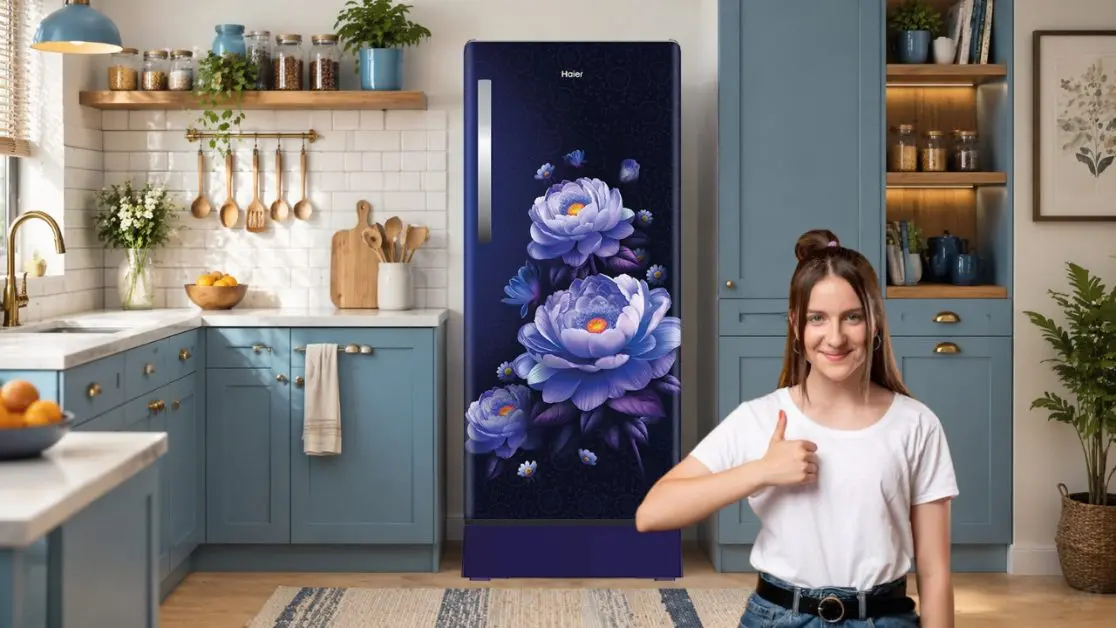
Take three refrigerators with the same capacity:
- Haier 190 L 5 Star Marine Blossom Single Door Refrigerator (HRD-2105PMBA-P)
- Haier 190L 3 Star Marine Hilton Single Door Refrigerator (HRD-2103PMHA-P)
- Haier 190L 2 Star Red Animone Single Door Refrigerator (HRD-2101SRAA-P)
They look similar on the outside.
But inside, they behave very differently.
Different energy consumption. Different long-term cost. Different user experience.
Same capacity. Different outcomes.
The bigger shift: From buying products to building systems
Here is what is changing.
People are no longer buying appliances.
They are building ecosystems.
A refrigerator. An AC. A washing machine. A microwave.
Each one consumes energy. Each one affects cost. Each one impacts comfort.
Individually, they seem small.
Together, they define how a home functions.
Energy efficiency is what makes that system sustainable.
The insight most people miss
Efficiency is invisible.
You do not see it every day.
You feel it over time.
In lower bills. In consistent performance. In fewer breakdowns.
In a kitchen that runs smoothly. In a home that feels predictable.
So what does this mean for your next purchase?
It means one thing.
Do not ask:
“What is the price of this appliance?”
Ask:
“What is the cost of living with this appliance?”
Because in the end, that is what you are choosing.
Not just a product.
A pattern.
A system.
A future that either compounds savings.
Or compounds cost.
Final thought
A good appliance works.
A great appliance works efficiently.
But the best appliance?
It disappears into your life.
Quietly saving time. Quietly saving energy. Quietly making everything feel easier.
That is what energy efficiency really does.
Not just for your bill.
But for your everyday life.
Frequently Asked Questions
Why does doing laundry feel mentally exhausting even though it’s a simple chore?
Because the real effort isn’t washing, it’s deciding. Choosing fabric type, cycle, water level, and timing creates friction. Traditional machines demand multiple decisions every time, which leads to fatigue.
I always second-guess my wash settings. Am I doing something wrong?
Not really. Most machines aren’t designed to guide you clearly. Without feedback, you’re forced to guess, which leads to uncertainty and inconsistent results.
I left my clothes in the washing machine overnight. Do I need to rewash them?
If your machine doesn’t have airflow or freshness systems, yes because trapped moisture leads to odor and bacteria. Modern systems with air circulation can keep clothes fresh for hours after the cycle ends.
Why does my washing machine smell even though I use it regularly?
Because it cleans clothes, not itself. Moisture, detergent residue, and dirt create a perfect environment for bacteria and mold buildup.
Are AI washing machines actually useful or just marketing hype?
They’re practical. AI reduces manual errors, saves water and energy, and improves fabric care by making real-time decisions based on load conditions.
Why are modern washing machines becoming more like smartphones?
Because interfaces (like colorful touch panels) use visuals, automation, and AI to simplify interaction and reduce decision-making.