
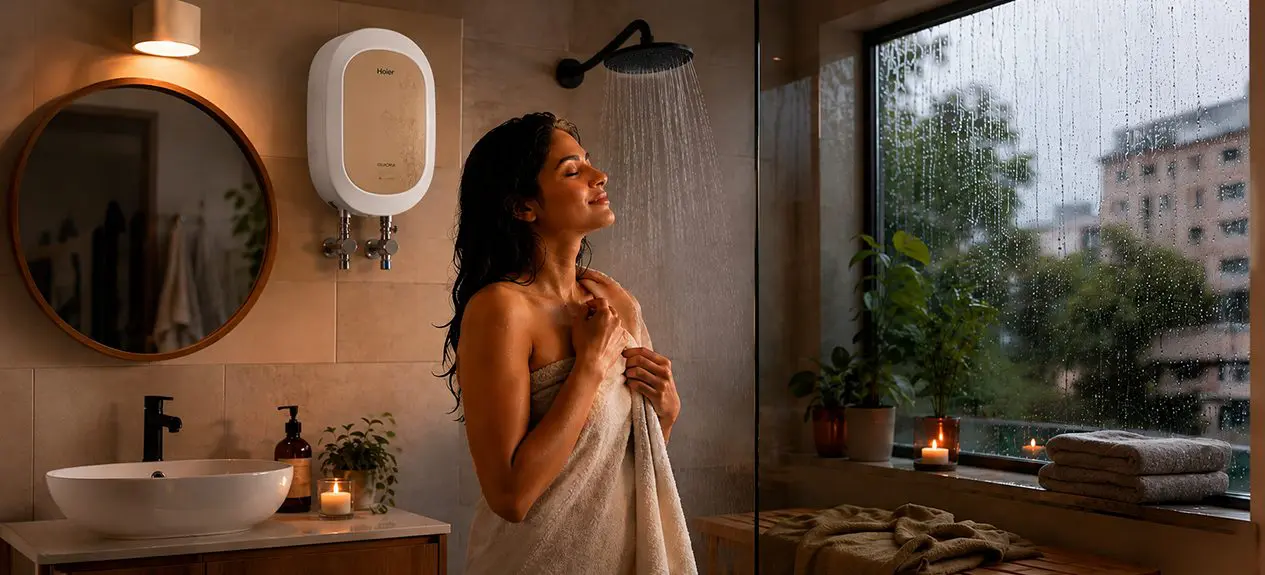

For most households, the geyser gets the most attention during winter. As soon as the weather starts warming up, its use often drops, and it may stay switched off for weeks at a time.
Then the monsoon arrives with sudden showers, cloudy mornings, and a noticeable change in how the home feels. Daily routines around bathing, washing, and cleaning can shift along with the weather, even if the temperature is nowhere close to winter levels.
Now, let us understand multiple meaning/reasons behind as to why the need for hot water doesn’t just vanish with the end with end of winter.
Why the Need for Hot Water Doesn’t End with Winter
Hot water often becomes useful in ways that are easy to overlook when winter is over. It may not be needed as often, but a little warm water can still make some daily routines feel easier, especially if the weather remains wet and unsettled:
- On cooler mornings, cold-water baths are an uncomfortable thing. In the morning, the temperature can fall with the continuous rain and cloudy weather. Warm water will make your regular bathing experience more comfortable.
- If you come home wet, you often get a hot shower. During the monsoon, it is common to get drenched in the rain. It feels much nicer to step into a warm shower after you have changed out of wet clothes than it does to step under cold water.
- Warm water is also useful in everyday cleaning in the kitchen. Greasy utensils, oily pans and food residue take a little extra elbow grease to clean up. Warm water can help these everyday kitchen chores go down easier.
- Frequent monsoon cleaning can increase the requirement for hot water. Rainy season means muddy shoes, wet floors, and outdoor dirt often come inside. Warm water is good for some washable surfaces and for regular cleaning jobs.
- Demand for hot water is not constant throughout the year. You may not need as much hot water as you did at the height of winter, but there are still smaller, more occasional demands. That’s why your geyser usage can change with the seasons and not stop altogether.
How an Instant Geyser Can Make Rainy-Day Tasks Easier
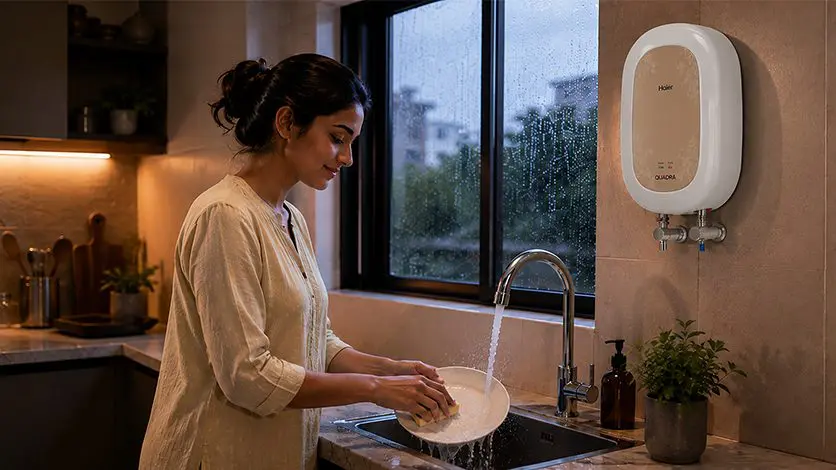
Monsoon routines are a mix of quick showers, extra cleaning and frequent trips in and out of the rain. In situations like these, an instant geyser can make access to warm water feel simpler and more convenient.
- No waiting for the hot water to arrive. One of the biggest advantages of an instant geyser is that you get hot water faster. This could be useful on a rainy morning if you want hot water for a quick shower, handwash or a small bucket without waiting for the larger tank to get hot.
- Make the kitchen a bit easier to clean. Warm water is usually easier to deal with greasy kadais, oily plates and cooking utensils. For smaller washing requirements, an instant geyser around the kitchen sink can be used, making the use of a kitchen geyser in monsoon more practical for everyday cooking and cleaning.
- Use hot water only when you need it. Instant geysers are useful for short, occasional needs as you don’t have to heat and store a large volume of water every time. This can make everyday use feel more purposeful for households needing smaller amounts of hot water.
- Hot water for smaller spaces. In kitchens, laundry rooms, and small wash areas, there may not be room for a large storage water heater. But a smaller instant unit can be easier to fit into such spaces and still give you hot water near where it is needed.
- Make small rainy-day chores easier to handle. From washing muddy hands after stepping indoors, to cleaning a few utensils, or using warm water for a quick rinse, an instant geyser can help with several small tasks that crop up more frequently during wet weather.
Make Better Use of Your Geyser Throughout the Monsoon
During the rainy season, it is not necessary to keep the geyser on for long hours or use hot water for all purposes. There are a few simple habits that you can use to use it more sensibly:
- Turn it on only when you need hot water. Don’t switch the geyser on without a good reason. You can also turn it on closer to your bathing or washing time to avoid unnecessary heating.
- Water temperature should be comfortable, not hot. Monsoon weather is generally not very cold, and cooler, so very high water temperatures may not always be needed. Most everyday needs can be met in a comfortable setting.
- Use the right amount of hot water for the job. A quick hand wash, utensil clean or short shower may use much less hot water than a full bath. It also helps to match the amount of hot water to the job, so you don’t waste it.
- Check the geyser and electrical fittings when damp. Monsoons bring in more moisture; thus, it is important to maintain the water heater as well as the switchboard and the electrical area around it in good condition. Any loose wiring, leakage or unusual behaviour should be checked by a qualified electrical professional.
- Schedule servicing instead of waiting for winter. If the geyser has been in use for a long time, get it checked during monsoon when it has not been used for a long time. Routine inspections can pick up problems with heating, scaling, valves or electrical parts before use increases later in the year.
(Read through Why Haier Water Heaters Are the Best Choice for Winters to know why we stand strong in the business!)
Why Buying a Water Heater Doesn’t Have to Be a Winter Decision
Most people start thinking about a new water heater only when winter is close, but your actual need for one may come up much earlier. A renovation, a new bathroom, a kitchen upgrade or an ageing geyser can all make the monsoon a practical time to compare options. Buying outside the usual winter rush also gives you more breathing room to look at the things that matter, such as capacity, heating type, pressure compatibility, safety features and the space available for installation.
The real off-season geyser benefits come from choosing without rushing into a seasonal purchase. Instead of asking only which model will get you through winter, you can think about how often you need hot water through the rest of the year as well. In that sense, the best time to buy water heater options is when you can match the appliance to your household routine.
How Haier Water Heaters Fit Into Everyday, Year-Round Use
Hot-water needs can change from one part of the home to another and from one season to the next. Haier’s range covers compact instant heaters as well as larger storage and Wi-Fi-enabled options. You can look at what fits your actual routine instead of choosing only with winter in mind:
Fast and convenient hot water for smaller needs
The Haier 3L ZYON Instant Water Heater can be a practical option for kitchens, wash areas or places where you only need a small amount of hot water at a time. Its compact 3L capacity is perfect for shorter, more frequent needs, while features such as Dual Thermal Proof protection, an MUV valve, IPX4 water resistance and an 8-bar pressure rating contribute to everyday usability.
Choose storage capacity according to your household routine
The storage model is generally needed for larger or more regular hot-water needs. For example, the Haier 10L PRECIS PRO ABS 5 Star Cylindrical Water Heater provides 10L capacity that can work well for smaller households or more targeted bathroom use. The Shock Proof and Dual Thermal Proof protection features also add an extra layer of safety during everyday operation.
Don’t just look at how quickly the heater heats up
A water heater may be used less in summer or monsoon than in winter but safe operation is equally important. Depending on the model, Haier water heaters can be equipped with features like Shock Proof, Dual Thermal Proof and pressure-management systems. If you are comparing models for regular use throughout the year, rather than just looking at the heating performance, it is worth looking at these.
Consider durability if the geyser will be used over seasons
The internal components are constantly in contact with water so in the long run the construction of the tank and heating element is important. Some Haier models include materials such as glass-lined tanks, stainless-steel tanks and corrosion-resistant heating elements. For example, the Haier 3L ZYON Instant Water Heater has 304 stainless steel tank and copper heating element options.
Smart controls to fit hot water into your routine
For homes that want more control over when the geyser operates, Wi-Fi-enabled models can add another level of convenience. For example, the Haier 25L ES25V-SD WIFI Water Heater offers a bigger storage capacity and connected controls. This can be handy if you’re trying to control heating with bathing schedules or changing routines rather than leaving the heater running for no reason.
Conclusion
Winter doesn’t have to be the end of your water heater’s role in your routine. You might just use it differently depending on the weather.
Monsoons make a geyser useful even for small requirements of hot water in the bathroom, kitchen or elsewhere in the house. Pick the correct style and size and use it only when you need it, and you can make your air conditioner a valuable year-round appliance, rather than something you think about only when the temperature drops.
Frequently Asked Questions
Is a geyser useful even when it’s not winter?
Yes. Geysers are still useful when it’s cooler or rainy, and you want warm water for bathing or everyday washing. It can also come in handy in the kitchen and wash areas where small amounts of warm water are needed.
Is warm water better than cold water during monsoon?
Not for everyone tho. Depends on the weather and how you feel comfortable. On cool, damp days, a warm shower may be more comfortable and can help to relax tight muscles. Do not use very hot water, as this can dry or irritate the skin.
Can a geyser help after getting drenched?
Yes, mostly it lets you get to warm water so you can take a relaxing shower after you get out of wet clothes. You can also relax your body more in a warm shower. But catching a cold is not caused by getting wet. Colds are caused by viruses.
Should you bathe with warm water during rainy season?
You can, particularly if the weather feels cold or you are uncomfortable with cold water. Generally, lukewarm water is better than very hot water, especially if your skin is prone to dryness or irritation.
What are the benefits of using hot water during monsoon?
Warm water makes bathing more comfortable on cooler rainy days, helps to relax tense muscles and can be useful for everyday washing and cleaning. The water heater’s main benefits during the monsoon are convenience and comfort.