
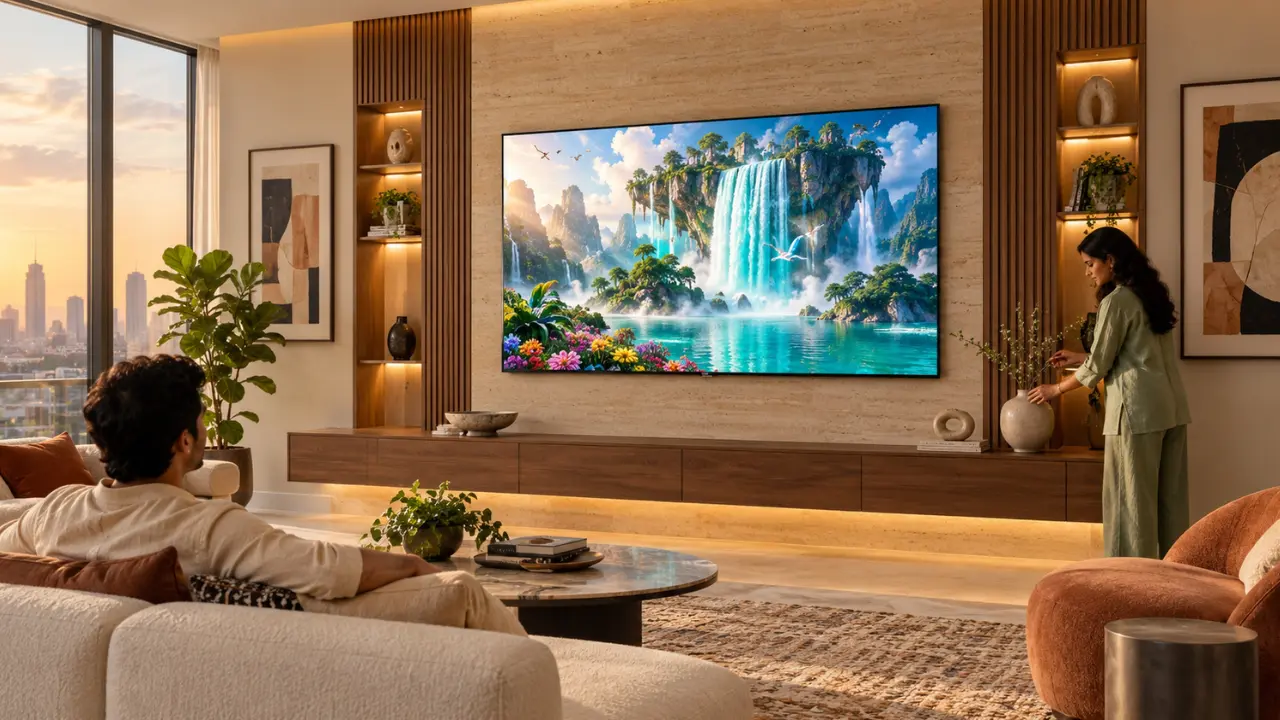

There is a lot of confusion about TV resolutions, so let’s dissect them.TV resolutions are rather confusing, so let’s take a look at them.
Picture this. You are watching an IPL game of IPL, and you see a batsman preparing to hit the last ball. One TV appears to have a fairly decent picture on it. On another, the texture of the pitch can be seen, as well as the stitching on the jersey and even the expressions from the crowd.
Two televisions are broadcasting the same game. Then why does one look noticeably sharper?
One part of the solution is the resolution of the TV.
Walk into an electronics showroom in India, and you’ll come across labels such as HD Ready, Full HD, 4K Ultra HD and 8K. They sound excellent, quite definitely. However, a higher number does not necessarily mean that you are purchasing the right television for your home.
The size of the screen, distance from the screen, processing of images and the subjects you watch all affect what you see.
Having an understanding of these differences will help you to select a television which provides you with the viewing experience you desire without overspending.
What is TV resolution and why is it important?
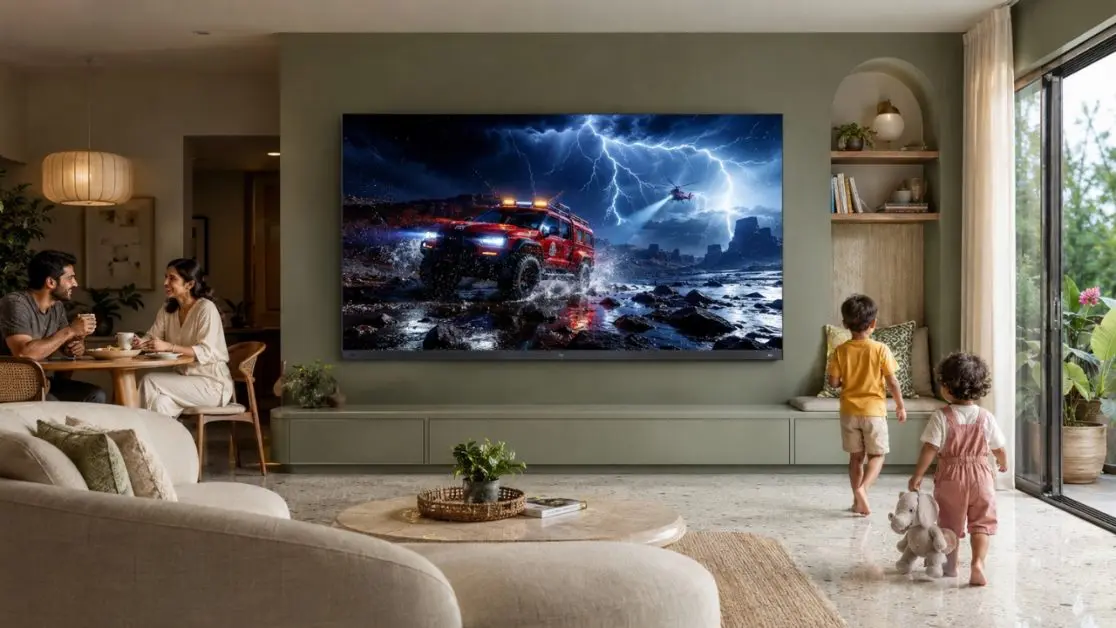
The resolution of a television is the number of pixels that are presented on the television. Whether a cricket ball is moving towards the boundary or the subtitles are rolling under the movie, pixels are the tiny picture elements responsible for all that you see on screen.
In general, the finer the details a screen will show, the more pixels it will contain.
Resolution is not the only factor that contributes to a good picture, however.
Sometimes a higher contrast, colour rendition and brightness TV, can appear more attractive than the higher resolution TV with a weaker display.
The four popular resolution types are compared here:
| TV Resolution | Pixel Count | Total Pixels | Common Usage |
| HD Ready | 1366 × 768 (commonly) | Approximately 1.05 million | The compact TVs and the regular entertainment. |
| Full HD | 1920 × 1080 | Approximately 2.07 million | The film was released for regular streaming, movies and television. |
| 4K Ultra HD | 3840 × 2160 | Approximately 8.29 million | Detailed movies, sports and gaming |
| 8K Ultra HD | 7680 × 4320 | Approximately 33.18 million | High-resolution viewing and targeted material. |
This jump from Full HD to 4K is noticable. You’re receiving 4 times the number of pixels.
These differences are not all necessarily obvious, however.
Should you buy HD Ready Still in 2026?
Yes, if you’re purchasing for the correct reason.
HD Ready televisions are generally available in either 1366 x 768-pixel or 1280 x 720-pixel formats.
With this resolution, this small screen can provide a comfortable daily viewing experience.
Consider a TV in your parents’ room. They mostly watch news and serials as well as highlights of the cricket match and sometimes watch YouTube videos. It is likely not necessary to have a large 4K screen.
When and where to use HD Ready?
Consider HD Ready televisions if you are looking for:
- Small rooms or bedrooms.
- Rooms for cartoons and education programmes for children.
- Smaller apartments, where viewers are not far from the TV.
- Households with a demand for secondary entertainment screens.
Haier A7, the compact entertainment with helpful features.
For those looking for a smaller HD ready TV, the Haier A7 HDR10 80cm (32) Linux Smart TV (LE32A7) is available.
It offers a resolution of 1366 × 768, but also has capabilities that go beyond just showing images.
Key highlights include:
- HDR10 support: Allows the TV to handle content that is compatible with high-dynamic-range.
- Anti-glare display: This is a show that is developed to reduce any distracting reflections from the screen.
- 60Hz refresh rate: Ideal for general TV shows and streaming.
- Dolby Digital audio: Enhanced audio experience with its 16W speaker system.
- Screen mirroring: Enables compatible Smartphone content to be displayed on the television.
The smart platform is also Linux-based, so it’s appropriate for consumers who want easy access to entertainment.
The Haier A7 is a practical choice for a smaller room, with its HD Ready resolution and convenience features.
What is the difference between Full HD and HD Ready?
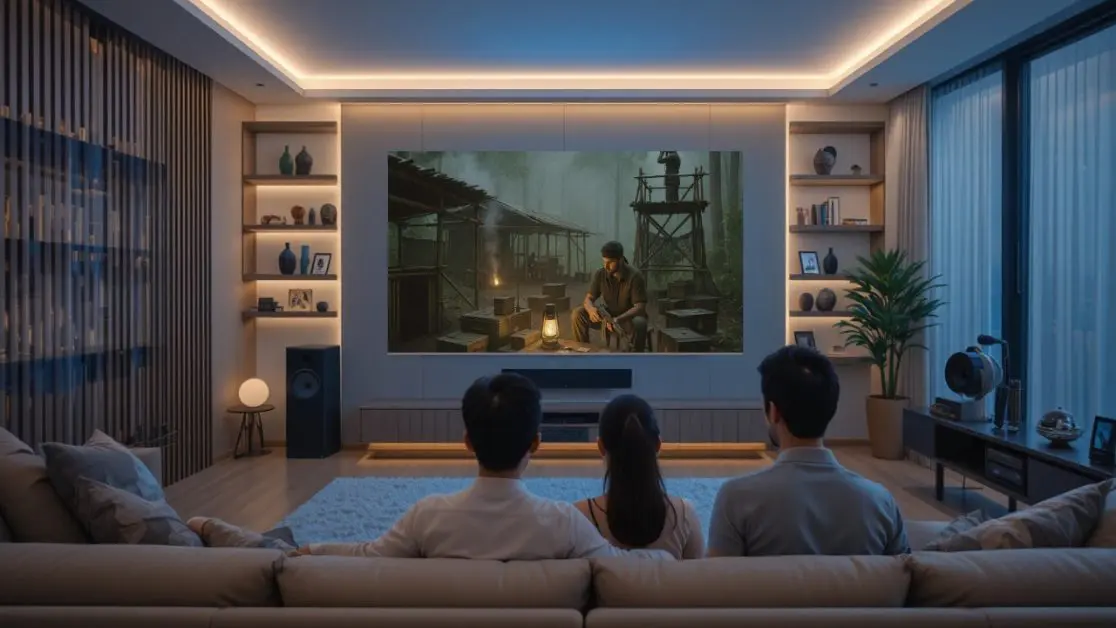
Full HD extends the quality of the pictures to 1920 x 1080 pixels.
This translates to about twice the number of pixels of an average 1366 × 768 HD Ready screen.
The enhancement is especially apparent when viewing in close-up or when watched up close on a large screen.
Think of a nature documentary which features the forest at Kaziranga. The nuances of the image can show up better, such as grass, branches of trees and markings on animals, on a Full HD display compared to an otherwise similar HD Ready TV.
When to opt for Full HD?
Full HD is a good choice in the following situations:
- You regularly view 1080p videos.
- The length of your television is about 40-43 inches.
- You just want better pictures and don’t necessarily need to switch to 4K.
- The extra information is prominent when viewed from your distance.
However, there is one big difference.
Not all TVs with Full HD video capability have Full HD panels. It can receive a 1080p signal and downscale to its native resolution.
Verify the real resolution on the display in the product’s specification.
What is the reason for 4K TV resolution becoming so popular?
A total of 4 times the pixels of Full HD. That’s the headline.
A 4K Ultra HD TV has a resolution of 3840 x 2160 pixels, which offers much higher resolution than the standard 1080p or 60 fps.
If you’re a homeowner putting a bigger TV in your living room in India, then 4K is a smart decision.
Think about having a weekend movie night. People perch on the sofa, the lights dim and a sweeping mountain landscape fills the screen.
High quality 4K video on a quality 4K TV can look slightly sharper in the distance with higher detail in the textures.
The original video should include enough detail to make full use of the screen of course.
What else should you consider when looking for a 4K television?
These features can have as big an impact as resolution:
- Helps to reproduce a broader range of brightness and colour information in content that supports HDR.
- Dolby Vision: Makes use of dynamic metadata to enhance suitable HDR content.
- Motion processing: May help to enhance the look of action scenes.
- Refresh rate: How often the picture is drawn on the screen.
- Smart TV platform: impacts the ease with which you can find and access entertainment.
It’s not about a single technology per se, but about how they work together, and the extent to which they form a good 4K experience.
Haier P7GT: Take 4K Entertainment to Your Home.
The Haier P7GT 4K Ultra HD 108cm (43) Google TV (43P7GT) combines entertainment and smart features to be an attractive choice for entertainment upgrade.
It has 4 times the resolution of Full HD with its native resolution of 3840 x 2160.
However, the appeal does not end when the resolution is made.
The P7GT also has built-in:
- Dolby Vision and HDR10: Support for better colour and contrasts with compatible content.
- Dolby Atmos: This is the one that has been created, for the most part, to create a more immersive sound experience.
- MEMC technology: Enhances the perceived smoothness of motion in fast scenes.
- Google TV: Enhances content discovery and personalised recommendations in one place.
- Voice control: Can use voice control commands without having to press each menu.
- Game Mode with VRR and ALLM: Allows smoother and quicker game play with VRR/ALLM compatible devices.
The screen size of 43 inches is a good choice for Indian living rooms, where space and viewing comfort are priorities.
From streaming an excellent High-resolution 4K movie, to playing games at the weekend, to linking your gaming console to the P7GT, the P7GT is offering far more than a resolution upgrade.
Combines entertainment technologies into a single television.
But is 8K resolution really higher than 4K?

Technically, yes. Practically, it depends.
The resolution of an 8K television is 7680 × 4320, which is around 4 times of 4K and 16 times of Full HD.
This is a lot of picture data.
However, there’s a problem.
Availability of native 8K content is far behind HD, Full HD and 4K entertainment. There are lots of TV shows on TV or streaming that are made or sent out at a lower resolution.
The 8K TV can upscale lower resolution content, but not all the details that may have been missing from the original recording.
Who is the audience for 8K?
The reasons to consider 8K are mainly:
- You’re considering an exceptionally large television.
- You are positioned close enough to enjoy more detail in the picture.
- You can view appropriate high quality material.
- You have the means to spend a little more on a somewhat more niche experience.
Many people in India still prefer to invest in a 4K TV.
Does a larger TV have to be higher resolution?
No, but the higher the pixel density the better!
A 32-inch HD Ready (HDR) TV mounted at an appropriate viewing distance will be acceptable.
The same resolution on a much larger screen, however, and you’ll start seeing individual pixels.
This is because resolution is not to be overlooked when taking into account viewing distance.
A Guide for a Practical Room by Room.
A smaller room used for a bedroom or study.
For everyday TV shows or casual viewing, a 32-inch HD Ready TV might be enough.
Medium-sized bedroom
Depending on screen size, viewing distance and budget, a Full HD or 4K might be considered.
Family living room
If many people are watching movies, sports and streaming, it is better to have a 4K television.
Dedicated entertainment room
People who want a more specialized experience may find a bigger 4K television or an 8K television if available to be the ideal choice.
Don’t always opt for the highest resolution; compare the display to the type of TV at home.
Before purchasing a new TV, what should you look for?
Many people are unaware of this, but the resolution of a TV does not indicate everything about the enjoyment it will provide.
Here are five questions to ask before buying.
- What is your favourite TV show? Different demands are put on a display whether it’s for regular television, OTT shows, sports or console gaming.
- How far from the group will you be seated? The more distance you have, the more difficult it will be to see the extra pixels.
- What is the brightness of your room? In sunny rooms, it may be more important to consider screen brightness and reflection management than screen resolution.
- What are your uses for the smart features? Availability of apps, voice controls and screen casting may impact daily convenience.
- What is your budget? It might not be best to pay more for resolution alone.
Also, keep in mind that there’s a difference between HDR and resolution. An HD Ready panel does not necessarily mean a television can support HDR.
It’s better to check both to avoid any confusion.
What Haier TVs to Investigate for Your House?
Haier India has solutions to cater to various entertainment requirements of the house.
The Haier K85 HDR 80cm (32) Google TV (H32K85FX) features HD Ready resolution, Google TV, Google Assistant, Chromecast built-in, HDR10 support and Dolby Audio.
Consider when you wish to have a compact television that has a smart experience with Google technology.
The Haier A7, on the other hand, has a Linux smart TV with HDR10, Dolby Digital audio and screen mirroring.
If you’re looking for a finer picture, the Haier P7GT steps up to the 4K level, with Dolby Visual, Dolby Atmos and entertainment mode smart functions.
It’s easier if you look at what each TV set has to offer rather than just its resolution tag.
From the Haier India TV range, you can find a TV that fits the size of your room, your viewing likes and dislikes and what you want to watch on a daily basis.
Determine the resolution you need for your daily entertainment.
A TV is a tool for making your favorite things even more fun, and not a way to make TV-buying a competition about specs.
HD Ready is suitable for smaller, everyday use. It provides extra detail with Full HD. On content that’s compatible with 4K, that’s a worthwhile improvement, especially with bigger displays. And 8K is for those who are not satisfied with traditional home entertainment needs.
Haier India offers buyers a choice of models with different features to strike a balance between resolution and smart features and viewing comfort with Haier A7, K85, and P7GT models.
Discover Haier India’s smart TV’s and make the right selection for your home.
Frequently Asked Questions
1. Which TV resolution is best for Indian homes?
For many living rooms, 4K Ultra HD offers a practical balance of sharpness and content compatibility. HD Ready can still work well on smaller televisions, particularly for bedrooms.
2. Is HD Ready enough for a 32-inch TV?
Yes. HD Ready resolution can provide satisfactory picture clarity on a 32-inch television when viewed from an appropriate distance. Other display features also influence the experience.
3. Can I watch 4K content on a Full HD television?
A Full HD television may be able to play or accept certain 4K sources, depending on its hardware and apps, but it cannot display native 4K detail. The image must be converted to its supported resolution.
4. Does 4K look better than Full HD on a 43-inch TV?
It can, particularly with native 4K content and closer viewing distances. The difference may be less obvious when watching lower-resolution broadcasts from farther away.
5. Is 8K worth buying in India?
8K can appeal to buyers seeking very large premium displays, but limited native 8K content means 4K is generally more practical for everyday home entertainment.
6. What is the difference between HDR and 4K?
4K describes the number of pixels on a screen, while HDR relates to how compatible content represents brightness, contrast and colour. A television can support one without necessarily offering the other.