
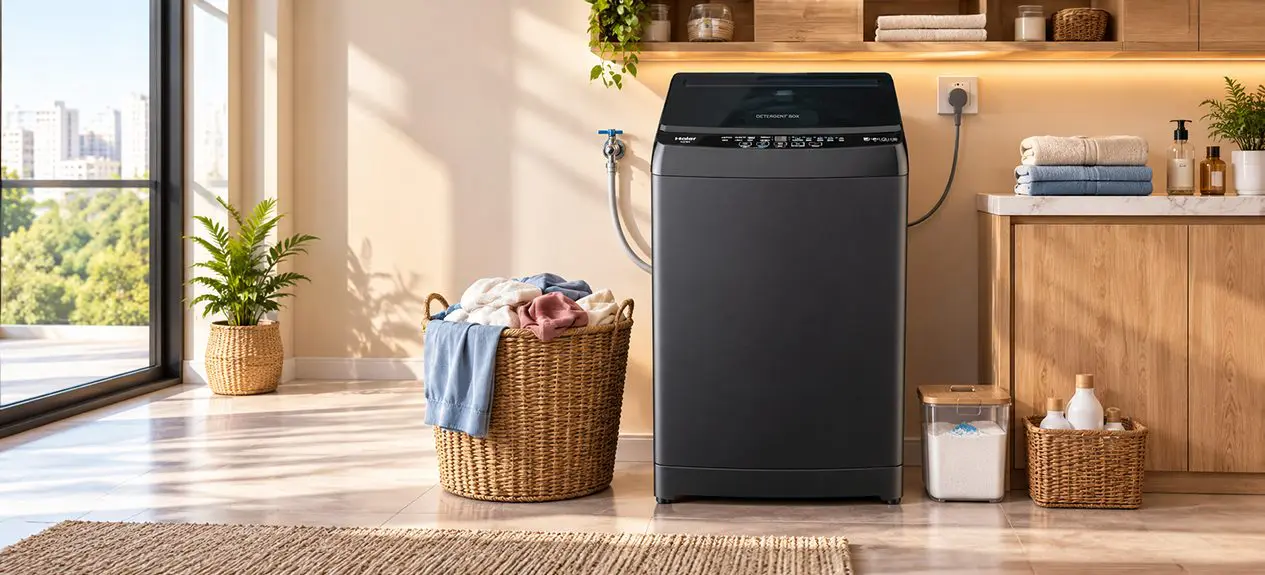

The cost to run a washing machine depends on how much water and electricity it uses, which varies with the machine type, load size and wash temperature. A front-load and a top-load model, for instance, may have different running costs because their water and energy consumption can vary. Larger loads and hotter wash cycles can also increase the cost of each wash. Looking at these factors together gives you a more realistic estimate of your monthly laundry expenses, helps you compare different washing machine types and shows where small changes to your washing routine could reduce ongoing costs.
How Much Water Does a Washing Machine Use per Wash?
Washing machine water usage varies considerably with the drum design and how water enters the machine. A front-load model typically uses 40 to 65 litres per wash, compared with 80 to 120 litres for a semi-automatic machine and around 100 to 150 litres for a fully automatic top-load. At 20 washes a month, that works out to 800 to 1,300 litres for a front-load and 2,000 to 3,000 litres for a top-load. The annual difference can approach 17,000 litres. Haier’s test figures reflect this gap: the F5 front-load uses 4.17 litres per kg per cycle, while its 10 kg top-load uses 11.72 litres.
What Is a Water-Saving Washing Machine?
A water-saving washing machine cleans the same laundry with less water per kilo. A sensor reads the load weight and sets the water level, so a half-full drum does not get a full-drum fill. Tumble action and eco programs add to the savings.
How Much Electricity Does a Washing Machine Use?
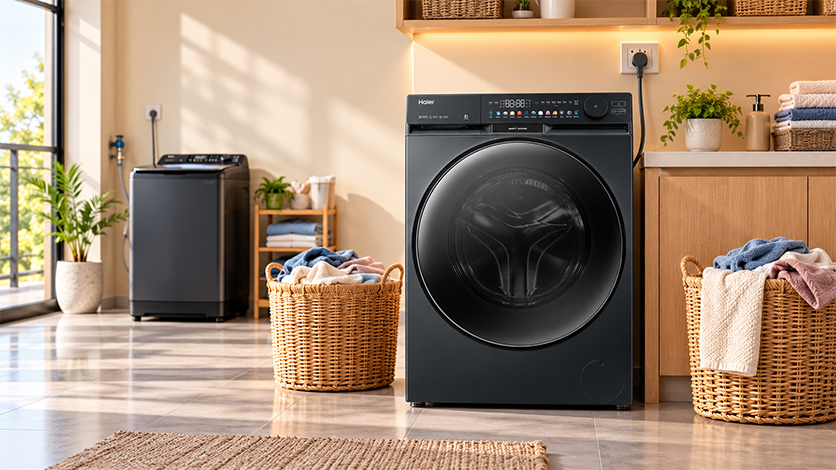
The motor and drum draw little. Heating the water draws most, which makes washing machine electricity consumption harder to guess than water. On a cold or normal cycle, most automatic machines use roughly 0.3 to 0.8 kWh per wash and a semi-automatic about 0.15 to 0.3 kWh. A built-in heater, typically 1,500 to 2,500 watts, can add close to one more unit for half an hour of heating.
- Per Wash and per Month
Take 20 washes a month at ₹7 a unit. That tariff is an assumption, so swap in your own. An automatic machine then uses about 6 to 16 units, which is ₹40 to ₹110 a month, and a semi-automatic about 3 to 6 units, or ₹20 to ₹40. Your washing machine running cost stays at the low end with cold water and full loads.
- Do Portable Washing Machines Use a Lot of Electricity?
Compact twin-tub models are usually light on power. Listings show around 200 to 330 watts for washing and 110 to 140 for spinning, so a short wash comes to about 0.1 unit. They hold only a few kilos, though, so households run more loads, and that is where washing machine electricity consumption adds up over a month.
What Drives the Running Cost
- Load Size, Temperature and Spin
Load size comes first, since a light load uses nearly the same water and power as a full one. Aim for a drum about three-quarters full, and this guide to estimating your wash load helps. Temperature comes next. When a wash is heated, most of its energy goes into warming the water, in some cycles close to 90%.
- Star Rating and Inverter Motors
The BEE star label rates energy use per cycle for each kilo of laundry. In Haier’s published comparison, a typical 3-star machine uses around 190 kWh a year and a 5-star near 150 kWh. That 40 kWh gap is about ₹280 a year at ₹7 a unit. Direct-drive and inverter motors also adjust drum speed to the load, and our guide on belt drive vs direct drive explains how.
Front Load vs Top Load: Water & Energy Compared
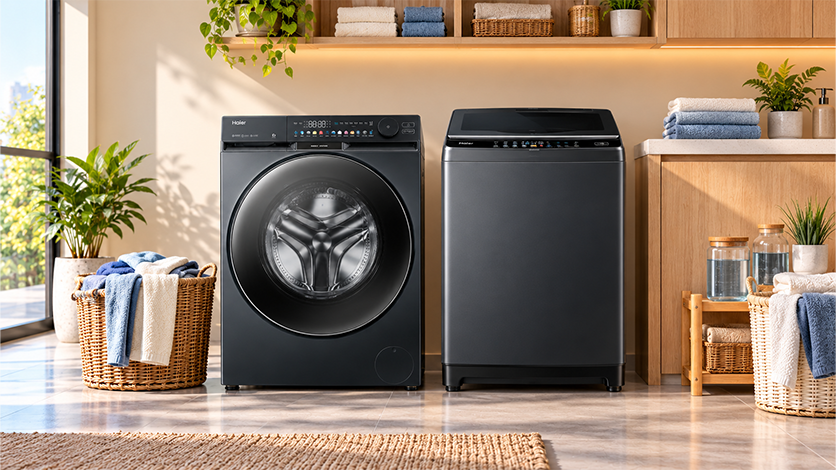
Front load vs top load water use shows the clearest gap, with front-loaders at 40 to 65 litres and top-loaders at 100 to 150. Electricity depends more on the cycle than on the drum. Front-load cycles often run an hour or more, top-load cycles usually finish in 30 to 45 minutes, so star rating and wash temperature matter more than drum format. Semi-automatics let you decide how much water goes in.
Tips to Cut Your Laundry Running Cost
Small habits trim the cost to run a washing machine without changing how clean the clothes come out.
- Wash full loads, about three-quarters of the drum, so you run fewer loads in a week.
- Pick cold or 30°C cycles for everyday clothes and keep the heater for towels and bedsheets.
- Measure detergent carefully, since extra suds mean extra rinses and push washing machine water usage up.
- Clean the drum and filter every month or two. Our guide on how to clean a washing machine at home shows how.
Running Cost Quick Reference
Typical ranges for 20 washes a month at ₹7 a unit, to read front load vs top load water use side by side. Your model, cycle and tariff will move them.
| Machine type | Water per wash | Electricity per wash | Water per month | Electricity cost per month |
| Semi-automatic | 80-120 L | 0.15-0.3 kWh | 1,600-2,400 L | ₹20-40 |
| Top load | 100-150 L | 0.3-0.8 kWh | 2,000-3,000 L | ₹40-110 |
| Front load | 40-65 L | 0.3-0.8 kWh | 800-1,300 L | ₹40-110 |
How Haier Washing Machines Help Keep Running Costs Low
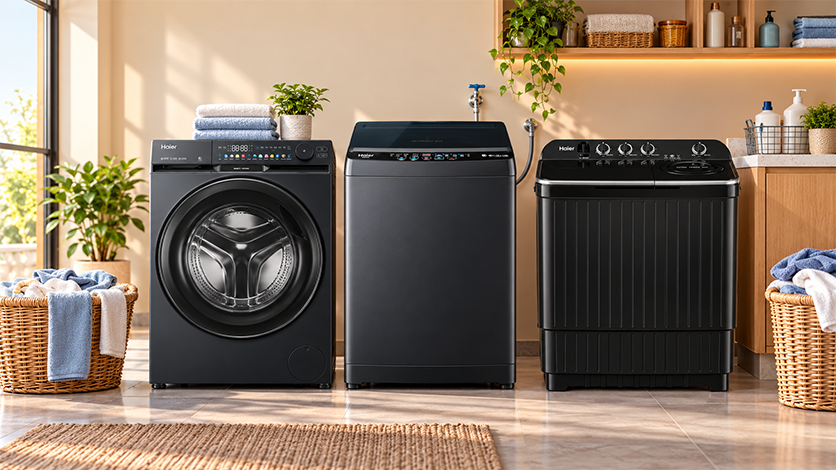
Our front-load, top-load and semi-automatic ranges each help keep water and power in check. The F9 9 kg front load has a 5-star rating, a Direct Motion Motor and One-Touch AI Wash, which reads fabric type, load and dirt level before it picks the settings. The 9 kg Anti Scaling top load is 5-star as well, with an Oceanus Wave Drum and a dual Magic Filter, and selected top-loaders add AI Wash, which detects the load weight, plus an in-built heater for warm washes. If you prefer the twin-tub way, our semi-automatic machines, such as the 10 kg 196BK, run from 8 kg to 14 kg and let you control the water yourself.
Want to see how a 5-star rating changes your yearly electricity bill?
Read this blog: 5-Star Washing Machines Explained: Are They Worth the Extra Cost?
Conclusion
Front-load machines use the least water, top-loaders finish quickly, and semi-automatics give you control, while wash temperature and star rating shape the electricity bill most. Run full loads, wash cold when you can, and your washing machine running cost stays easy to predict.
FAQs
How much water does a washing machine use?
A front-load machine uses about 40 to 65 litres per wash, a semi-automatic around 80 to 120, and a top-load roughly 100 to 150. Load size, wash program and the machine’s sensors change the final figure.
How much electricity does a washing machine use per wash?
Most automatic machines use roughly 0.3 to 0.8 kWh per wash on a cold or normal cycle, and semi-automatics about 0.15 to 0.3 kWh. A heated cycle can add roughly one more unit.
How much does it cost to run a washing machine per month?
At 20 washes a month and ₹7 per unit, an automatic machine typically costs about ₹40 to ₹110 in electricity, and a semi-automatic about ₹20 to ₹40. Your local tariff and wash temperature shift this.
Do front-load washing machines use less water?
Front-load machines tumble clothes through a small amount of water rather than submerging them, so they typically use 40 to 65 litres per wash, roughly half of what a typical top-load needs.
Do portable washing machines use a lot of electricity?
Portable twin-tub machines draw little power, usually listed around 200 to 330 watts for washing and 110 to 140 for spinning, so one short wash uses about 0.1 unit. Frequent small loads can still add up.
Which uses less power, top load or front load?
It depends on the model and the cycle. Drum format matters less than star rating, wash temperature and load size, since front-loaders run longer cycles while top-loaders finish sooner. Check the energy label of the exact machine.