
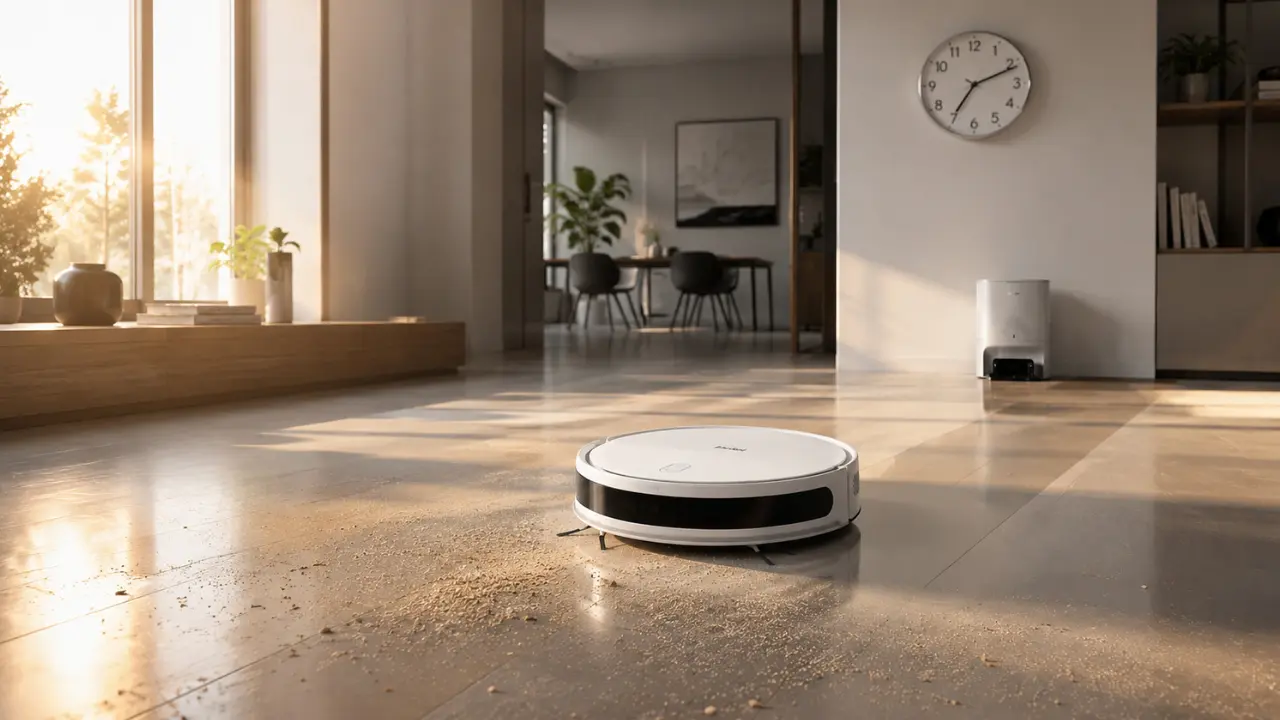

Scheduled cleaning keeps homes cleaner because it removes decision fatigue, prevents dirt buildup, and turns cleaning into a background system instead of a weekend crisis.
A clean home is rarely the result of one massive cleaning session. It is usually the outcome of small, repeated actions happening consistently. The real shift is not effort. It is a rhythm.
Why does cleaning feel exhausting in modern homes?
It usually starts the same way.
Monday gets busy. Tuesday stretches longer than expected. By Thursday, crumbs collect near the sofa, dust settles quietly near the TV unit, and someone says, “We’ll clean properly this weekend.”
But weekends were never designed to become recovery zones and deep-cleaning marathons.
That is the hidden problem in most Indian homes today.
The issue is not cleaning itself.
It is an accumulation.
A little dust every day becomes overwhelming by Sunday. A few toys left around become visual clutter. Kitchen corners slowly collect oil particles you stop noticing until guests arrive.
Mess compounds quietly.
Just like unpaid interest.
The hidden system behind cleaner homes
Most people think cleanliness comes from effort.
It does not.
It comes from systems.
Think about brushing your teeth. Nobody waits 12 days and brushes aggressively for two hours. Daily maintenance works because consistency beats intensity.
Homes work the same way.
Scheduled cleaning changes the equation from:
- “When will we find time to clean?”
to
- “The cleaning already happened.”
That mental shift matters more than most appliances people buy.
Because stress is often delayed decision-making wearing a different outfit.
Why scheduled cleaning works better than reactive cleaning
Reactive cleaning happens after discomfort.
Scheduled cleaning prevents discomfort from happening in the first place.
There is a massive difference.
Reactive cleaning creates emotional friction
Examples feel familiar:
- Cleaning only when guests are coming
- Vacuuming after visible dust appears
- Mopping after someone complains about sticky floors
- Decluttering only before festivals
This creates pressure-based cleaning.
And pressure always feels heavier than routine.
Scheduled cleaning creates invisible maintenance
Now compare that with automated or scheduled systems:
- Floors cleaned every morning at 9 AM
- Kitchen corners maintained daily
- Pet hair removed before it spreads
- Dust managed before it becomes visible
The house feels lighter because problems never fully form.
That is how good systems work.
They solve things early enough that nobody notices the crisis was avoided.
The real benefit is not cleanliness. It is a mental space.
People underestimate how much visual clutter affects emotional energy.
A chair filled with unfolded clothes does not just occupy space. It occupies attention.
Psychologists at Princeton University found that visual clutter competes for attention and reduces focus. Clean environments improve mental clarity and reduce cognitive overload.
That explains why clean homes feel calmer after long workdays.
Not because the floor is shining.
Because the brain stops processing unfinished signals.
A cleaner home quietly changes everyday behaviour
You notice patterns:
| Without Scheduled Cleaning | With Scheduled Cleaning |
| Weekend deep-clean stress | Small automatic maintenance |
| Dust buildup | Consistent freshness |
| Visible clutter accumulation | Stable organization |
| Emotional resistance to cleaning | Reduced decision fatigue |
| Reactive household habits | Predictable household rhythm |
A clean home is not only aesthetic.
It changes how mornings begin.
How evenings feel.
How quickly families settle into rest mode.
Why robot vacuums changed the conversation
Traditional cleaning depends on available energy.
Robot vacuums depend on schedules.
That difference matters in modern Indian households where both adults often work, children create constant movement, and daily routines rarely stay predictable.
The rise of scheduled cleaning systems is really the rise of background maintenance.
And background maintenance always wins long term.
What scheduled robot cleaning actually solves
One option is manual cleaning every evening.
It requires discipline and energy.
The second option is weekend cleaning.
It saves weekday effort but creates buildup.
The third option is scheduled automated cleaning.
Small cleaning cycles happen daily before dirt compounds.
The third system usually creates the most stable home environment.
Not because it cleans harder.
Because it cleans earlier.
How modern Indian homes create dust faster than before
There is another reason scheduled cleaning matters now more than it did ten years ago.
Modern homes generate micro-mess constantly.
Consider the patterns:
- Open balconies bring dust inside
- Urban pollution settles quickly on floors
- Pet ownership is increasing in Indian cities
- Hybrid work means homes stay occupied longer
- Children move between rooms all day
- Food delivery culture increases crumbs and packaging waste
Homes are no longer static spaces.
They are active ecosystems.
And active ecosystems need continuous maintenance.
Small dirt compounds into large effort
A single day of dust looks harmless.
Five days changes corners, edges, under-furniture spaces, and air freshness.
That is why scheduled cleaning matters most in invisible areas:
- Under beds
- Sofa edges
- Dining table corners
- Balcony transitions
- Pet zones
- Entryways
The dirt you notice is rarely the real problem.
The dirt you stop seeing usually is.
Scheduled cleaning works because habits fail under stress
This is the uncomfortable truth most productivity systems ignore.
Humans are inconsistent.
Especially after exhausting workdays.
Nobody returns home after traffic, meetings, cooking, parenting, and thinks, “Perfect time to vacuum.”
Systems succeed where motivation fails.
That is why automation matters.
Not because people are lazy.
Because modern life already consumes attention from too many directions.
Smart appliances reduce repeated decisions
The Haier CIVIC X11 Robot Vacuum Cleaner and Haier CIVIC X11 PRO Robot Vacuum Cleaner are built around this exact principle. Features like scheduled cleaning, laser navigation, multi-map memory, and voice control allow cleaning to happen quietly in the background instead of demanding constant supervision.
That matters more than suction power alone.
Because the smartest appliance is often the one you stop needing to think about.
Why consistency beats intensity in home maintenance
People admire deep cleaning.
But homes survive on maintenance.
Restaurants understand this well. The best kitchens are not cleaned aggressively once a month. They are maintained constantly in small cycles.
Homes follow the same rule.
Daily maintenance creates invisible stability
Here is what happens when scheduled cleaning becomes routine:
- Dust levels stay lower
- Allergens reduce over time
- Floors feel consistently fresh
- Cleaning sessions become shorter
- Guests feel less stressful
- Festive preparation becomes easier
The house never fully collapses into disorder.
That is the real win.
Not perfection.
Stability.
The psychology of waking up to a clean floor
This sounds small until you experience it.
Morning shapes emotional momentum.
A clean living room at 7 AM changes how the entire house feels. The brain interprets order as control. Control reduces stress.
That is why hotels feel calming.
Not because they are luxurious.
Because maintenance happens before discomfort appears.
Modern homes increasingly borrow this principle.
Scheduled cleaning creates hospitality energy at home
A surprising shift happens over time:
- Parents feel less overwhelmed
- Couples argue less about chores
- Solo professionals feel more settled
- Children adapt to cleaner spaces naturally
The environment shapes behaviour quietly.
A home is not just where people live.
It is where the emotional tone gets set daily.
What people misunderstand about smart cleaning
Most conversations focus on technology.
That misses the point entirely.
The real innovation is not automation.
It is predictability.
Scheduled cleaning creates reliable order in unpredictable lives.
And predictable systems create calmer homes.
Features only matter when they reduce friction
For example:
| Feature | Real-Life Benefit |
| Scheduled cleaning | Cleaning happens automatically |
| Laser navigation | Better coverage with less missed dust |
| Multi-map memory | Useful for duplexes or multi-room layouts |
| Voice control | Hands-free operation during busy routines |
| Auto-empty dust box | Less manual maintenance |
| Wet and dry cleaning | Simplified floor care |
The Haier CIVIC X11 PRO also includes an auto-empty dust box system designed to reduce frequent manual disposal.
The technology matters because it reduces interruptions.
And interruptions are what make homes feel mentally noisy.
A cleaner home is really a better energy system
People think cleaning is about hygiene.
Partly true.
But deeper than that, cleaning is energy management.
Mess slows movement.
Clutter drains attention.
Visual noise increases stress.
A cleaner home creates smoother living.
That is why scheduled cleaning feels disproportionately powerful compared to the effort involved.
Because tiny maintenance systems quietly influence everything else.
Sleep.
Mood.
Focus.
Relationships.
Even how welcoming a home feels after a difficult day.
The future of home care is invisible
The best home systems rarely announce themselves.
They operate quietly.
The refrigerator maintains freshness before food spoils.
The AC adjusts cooling before discomfort rises.
The robot vacuum cleans before dust becomes visible.
That is where modern homes are heading.
Not toward more effort.
Toward fewer avoidable problems.
And that shift changes daily life more than people expect.
Because the cleanest homes are not maintained by constant hard work.
They are maintained by systems that run before chaos gets the chance to settle in.
Frequently Asked Questions
Why does my house feel messy again so quickly even after cleaning?
Because most homes are cleaned reactively instead of continuously. Small messes compound quietly throughout the week dust, crumbs, pet hair, packaging waste, and clutter build layer by layer until the house suddenly feels overwhelming.
Scheduled cleaning interrupts buildup before it becomes visible.
Why do I feel mentally lighter in a clean home?
Visual clutter constantly competes for your attention. Even small unfinished signals, unfolded clothes, dusty corners, and cluttered tables create low-level cognitive stress.
Cleaner spaces reduce mental overload and help the brain relax faster after work.
I work full-time. How do people actually keep homes consistently clean?
Usually through systems, not motivation.
Most consistently clean homes rely on:
Small daily maintenance
Predictable cleaning routines
Automated cleaning support
Reduced accumulation instead of occasional deep cleaning
Consistency matters more than intensity.
Why does weekend deep cleaning feel exhausting?
Because the effort is compressed into one large recovery session after days of buildup.
Weekend cleaning often combines:
Physical effort
Delayed guilt
Visual overwhelm
Decision fatigue
Time pressure
Scheduled cleaning spreads the workload across the week so the mess never reaches crisis level.
Is scheduled cleaning really better than “cleaning when needed”?
Yes, because preventive maintenance is easier than recovery cleaning.
Reactive cleaning starts after discomfort appears.
Scheduled cleaning prevents discomfort from forming in the first place.
I don’t see dust every day. Does daily cleaning still matter?
Yes. By the time dust becomes visible, buildup has already spread across multiple surfaces.
Scheduled maintenance removes particles early before they settle deeply into corners, rugs, and under furniture.