


Tadka is sizzling, roti is puffing and someone has opened the spice cabinet and their fingers are oily. When lunch arrives at the table, the kitchen is absorbing much more than the smell of fresh food.
Smoke is low to the ceiling. The fine grease accumulates on cabinets. The back surface of the hob is slightly sticky. This is not a worrying thing on day one. Wait, however, a few weeks, and the normal cooking routine starts to leave its mark.
Kitchen hygiene, in fact, doesn’t stop after dinner. This is dependent on the ability to manage smoke, airborne oil, spills and food residue during cooking. Here, it’s important for thoughtful habits to combine with modern kitchen appliances.
Begin Hygiene before the First Burner is On

The clean kitchen routine should start during meal preparation, and not afterwards.
In Indian kitchens, raw vegetables, dairy products and spice boxes are very commonly found on the same limited counter space along with used utensils. It is harder to manage spills and cross contact when everything is managed in one hectic location.
Before cooking:
- Empty trash bins from counter tops.
- Use separate boards or preparation work areas for foods.
- Wash and dry vegetables before chopping them.
- Keep a small bowl nearby to put peels and packages.
- Store well-used spices within easy reach to minimise repeated handling.
- Remove old grease from the hob and its surrounding.
This only takes a few minutes, but avoids getting into the kitchen chaos that can occur during the cooking process.
Address Smoke and Grease as Hygiene Issues and Not Odour Issues.
Smoke is readily visible. Airborne grease is not a.
Tiny particles of oil rise with steam and smoke when it is heated for frying, tempering. Some may escape from windows, others may settle on shelves, tiles, appliances and overhead cabinets. These deposits tend to collect dust with time and can become hard to get rid of.
A kitchen chimney can also be a solution to the issue as it can remove cooking fumes away from the hob before they pervade the room.
Why Suction Matters in Indian Cooking, it is because of them that Indian cuisine is so delicious.
In Indian cooking, several methods of cooking are usually used in one cooking session. A pressure cooker can be steaming while food is being fried on another stove top and a masala is roasting in it.
The appliance above the hob must respond to changing levels of smoke and heat.
Haier’s BLDC filterless chimney range offers suction power of up to 1650 m³/h, developed to support smoke extraction during different forms of Indian cooking. The range also provides eight speed settings with a Boost mode, allowing users to adjust airflow according to cooking intensity.
A lower setting may be suitable when simmering dal. Deep-frying pakoras or preparing a smoky tadka may require stronger extraction. Using the appropriate speed is more effective than leaving the chimney at one fixed level for every recipe.
Use Gesture Control When Your Hands Are Busy
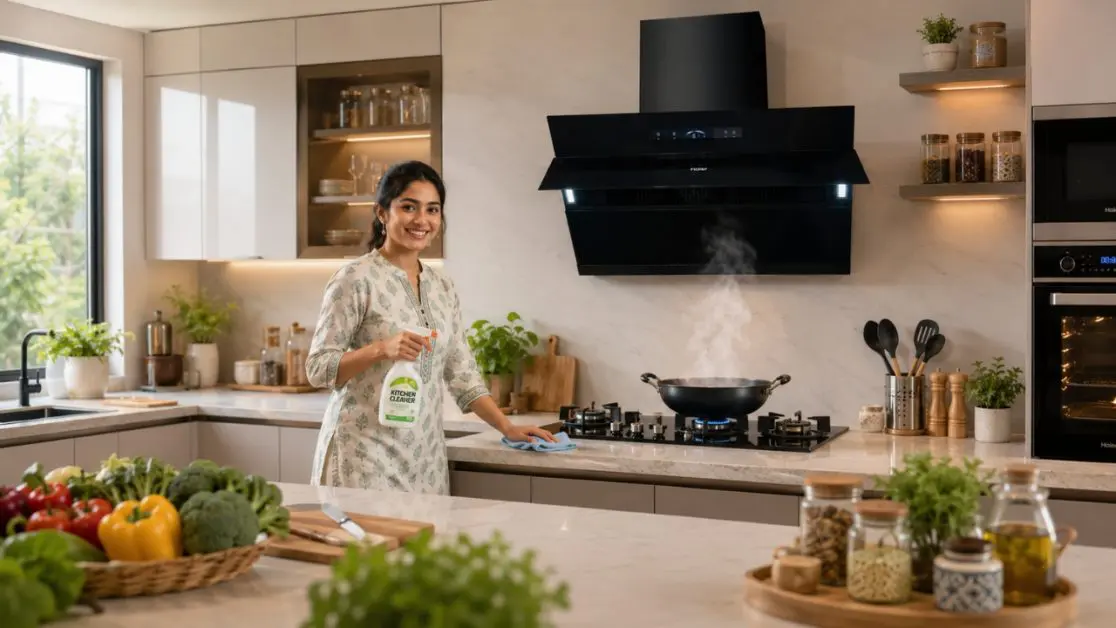
Anyone who cooks regularly knows the moment: one hand is covered in atta, the other is holding a ladle, and the chimney speed suddenly needs adjustment.
Touching an appliance panel with oily or wet fingers creates another surface that must be cleaned later. Haier chimney models such as the HIH-C1600-BLDC-IN, HIH-C1750-BLDC-IN and HIH-C1900-BLDC-IN feature touch and gesture control. A simple hand movement can help operate the chimney without repeatedly touching the panel.
It may sound like a convenience feature, and it is. But it also supports a more hygienic workflow by reducing unnecessary contact during food preparation.
Small improvement? Certainly. Useful every day? Very much so.
Do Not Allow Hidden Grease to Build Up
The outer surface of a chimney may appear spotless while oil continues collecting inside. That hidden build-up is where maintenance often gets delayed.
Haier’s filterless chimney design removes the need for conventional filters that require frequent manual washing. The range also includes Heat Auto Clean technology, which helps melt accumulated oil and directs it towards the oil collector.
This does not mean the appliance should be ignored indefinitely. The oil collector must still be checked and cleaned as needed. The advantage is that grease management becomes more organised and less cumbersome.
The selected Haier models also include a cleaning reminder after 30 cumulative operating hours. Rather than relying entirely on memory, users receive a timely prompt to attend to appliance care.
A Practical Chimney-Care Routine
For better upkeep:
- Wipe the exterior only after the appliance has cooled.
- Use a soft cloth suitable for the surface.
- Empty and clean the oil collector periodically.
- Respond to the cleaning reminder instead of postponing it.
- Keep the duct outlet unobstructed.
- Follow the appliance manual for cleaning and operating guidance.
Strong suction is valuable, but consistent performance also depends on sensible maintenance.
Match the Chimney Size to the Cooking Zone

A chimney should fit the kitchen layout rather than simply occupy the available wall space.
Haier offers the featured BLDC filterless chimney configuration in three sizes:
The appropriate size depends on the width of the hob and the installation arrangement. Adequate coverage above the cooking area helps capture fumes more effectively. Buyers should verify hob dimensions, cabinet clearance, ducting requirements and installation conditions before choosing a model.
Professional installation matters as well. Incorrect placement can reduce extraction effectiveness even when the chimney itself offers high suction.
Clean as Cooking Progresses – Not After Everything Piles Up
Waiting until the entire meal is finished usually means facing a sink full of utensils and a countertop covered with dried stains.
Instead, use pauses in cooking productively:
- Return spice jars after use.
- Wipe fresh spills before they harden.
- Transfer used utensils to one designated area.
- Keep wet and dry waste separate.
- Rinse tools used for sticky batters or dough promptly.
- Cover prepared food while the remaining dishes are being cooked.
The chimney can manage smoke and airborne oil, but it cannot pick up spilled curry or rescue a forgotten chopping board. Appliances reduce effort; they do not replace good habits.
Pay Attention to the Areas People Commonly Miss
Visible surfaces receive most of the cleaning. The neglected spots usually create the real hygiene problem.
Check these areas regularly:
- Hob knobs and burner surrounds
- Cabinet handles
- Chimney edges and control panels
- The wall below overhead cabinets
- Gaps between the hob and countertop
- Refrigerator and microwave handles
- Sink corners and drain covers
- Reusable cleaning cloths
Kitchen clothes deserve particular attention. A damp cloth repeatedly used across the hob, sink and dining counter can spread residue rather than remove it. Wash reusable cloths frequently and allow them to dry properly between uses.
Let Appliance Design Support Daily Comfort
Kitchen hygiene is easier to maintain when an appliance fits naturally into everyday life. Excessive noise, complicated controls or difficult maintenance may discourage regular use.
The featured Haier chimney range uses a 130 W BLDC motor and is listed with a noise level below 52 dB. It also includes a one-minute Delay Off function, which allows extraction to continue briefly after cooking has ended.
Two lamps help illuminate the hob, making spills and cooking activity easier to see. A large oil collector supports oil management, while the filterless configuration reduces the burden associated with washing traditional filters.
These details matter because a chimney delivers the most value when it is used consistently not only when the kitchen becomes visibly smoky.
A Cleaner Kitchen Is Built During Cooking
The most effective kitchen hygiene routine is not an exhausting weekend scrub. It is a system that prevents smoke, oil and residue from spreading in the first place.
Prepare the counter before cooking. Adjust ventilation according to the recipe. Deal with spills immediately. Clean the oil collector regularly. Most importantly, choose appliances designed around the realities of Indian cooking.
With 1650 m³/h suction, a filterless design. Heat Auto Clean, eight speeds plus Boost, touch and gesture control, a BLDC motor and multiple size options, Haier’s modern chimney range can become a practical part of that system.
A spotless kitchen every minute may be unrealistic. A kitchen that stays fresher, feels easier to manage and demands less corrective cleaning? That is a far more achievable standard and the right appliance can help make it routine.
Frequently Asked Questions
How can modern appliances improve kitchen hygiene?
Modern appliances can help control smoke, airborne grease, heat and cooking residue before these spread across the kitchen. A chimney, for instance, draws fumes away from the hob, while features such as Heat Auto Clean and an oil collector can make grease management more organised.
Why is a kitchen chimney important for Indian cooking?
Indian cooking often involves frying, tadka, roasting spices and preparing several dishes at once. These methods can produce smoke, steam and oily vapours. A chimney with suitable suction helps capture these fumes near the cooking area and reduces their spread across cabinets, walls and nearby surfaces.
What suction power do the featured Haier chimneys provide?
The Haier HIH-C1600-BLDC-IN, HIH-C1750-BLDC-IN and HIH-C1900-BLDC-IN chimney models provide suction power of up to 1650 m³/h. They also include eight speed settings and a Boost mode for adjusting airflow according to cooking intensity.
What does Heat Auto Clean do in a kitchen chimney?
Heat Auto Clean technology helps melt accumulated oil and directs it towards the oil collector. This supports easier maintenance, although the collector still needs to be checked and cleaned periodically.
Are filterless chimneys completely maintenance-free?
No. A filterless design removes the need to wash conventional filters, but the chimney still requires regular exterior cleaning, oil collector care and timely use of the cleaning function. The featured Haier models also provide a cleaning reminder after 30 cumulative operating hours.
How does gesture control support better hygiene?
Gesture control allows users to operate the chimney with a hand movement instead of repeatedly touching the control panel. This is particularly useful when hands are wet, oily or covered in flour, and it can reduce smudges and unnecessary contact while cooking.