

Buying an AC goes wrong when decisions are made on price, not patterns
Most people ignore room size, energy efficiency, usage habits, and installation realities. The result is higher bills, uneven cooling, and long-term frustration.
The right AC is not the most powerful one. It is the one that fits your life.
The 8:45 PM summer moment that explains everything.
It is peak summer.
Dinner is done. The ceiling fan is running at full speed. The air feels thick. Someone says, “Let’s finally get an AC.”
A quick search. A quick decision. A quick purchase.
Two weeks later, the room still feels uneven. Electricity bills spike. The AC struggles during afternoon heat.
This is not bad luck.
It is a system failure.
AC buying is not about a product. It is about alignment.
Mistake 1: Choosing the Wrong AC Capacity
Cooling is not about power. It is about proportion.
Most people either undersize or oversize their AC. Both feel logical. Both fail in practice.
What actually happens:
- A small AC in a large room runs constantly, struggles to cool, and wears out faster
- A large AC in a small room cools too quickly, shuts off often, and wastes energy
A simple rule most people ignore:
| Room Size | Ideal AC Capacity |
| Up to 120 sq ft | 1 Ton |
| 120–180 sq ft | 1.5 Ton |
| 180–250 sq ft | 2 Ton |
But here is the hidden layer.
Room size is not the only variable.
- Top floor? Add heat load
- West-facing room? More sunlight
- More people? More body heat
The right AC is not chosen by square feet alone. It is chosen by how heat behaves in your room.
Mistake 2: Ignoring Energy Efficiency Ratings
The cheapest AC is often the most expensive decision.
A 3-star AC costs less upfront. A 5-star AC costs more.
Most buyers stop here.
What actually matters:
- Electricity consumption varies dramatically across ratings
- A 5-star AC can reduce energy usage significantly over time
- Advanced inverter systems can save up to 65 percent energy in optimized conditions
The real cost breakdown:
| Factor | Low Star AC | High Star AC |
| Purchase Price | Lower | Higher |
| Monthly Bills | Higher | Lower |
| Long-term Cost | Higher | Lower |
Buying an AC is not a one-time expense. It is a 5 to 10-year commitment.
Mistake 3: Overlooking Inverter Technology
Traditional ACs react. Inverter ACs adapt.
This difference changes everything.
A non-inverter AC works like a switch. On. Off. On. Off.
An inverter AC works like a dimmer. Adjusts continuously.
What that means in real life:
- Stable temperature instead of sudden chills
- Lower power spikes
- Reduced noise
Modern systems like Hexa Inverter technology adjust cooling dynamically and optimize power usage continuously
Comfort is not about maximum cooling. It is about consistent cooling.
Mistake 4: Ignoring Climate Reality
India is not one climate. It is many climates in one day.
Morning humidity. Afternoon heat. Night cooling.
Most AC decisions ignore this variability.
What happens then:
- AC struggles in peak afternoon heat
- Cooling feels inconsistent
- Efficiency drops during extreme temperatures
Some advanced ACs are built to handle up to 60°C ambient temperatures
That is not a feature. That is survival.
Your AC must handle your worst day, not your average day.
Mistake 5: Forgetting Airflow and Distribution
Cooling is not about temperature. It is about reach.
You have seen this.
One corner feels cold. Another feels untouched.
That is airflow failure.
What defines good airflow:
- Air throw distance
- Fan design
- Room layout compatibility
Some systems offer up to 20-meter air throw, ensuring better coverage across larger spaces
An AC that cools unevenly is half an AC.
Mistake 6: Ignoring Smart Features That Actually Matter
Not all smart features are gimmicks. Some fix real problems.
The mistake is not ignoring smart features. The mistake is misunderstanding them.
Three types of smart features:
1. Cosmetic smartness
Apps that you use once and forget
2. Convenience smartness
Remote control, scheduling, voice commands
3. System-level intelligence
AC that learns, adapts, and optimizes automatically
Advanced AI-based systems analyze usage patterns, adjust cooling modes, and optimize energy consumption in real time
They can even shift to energy-saving modes when consumption spikes.
The best technology is the one you stop noticing.
Mistake 7: Ignoring Maintenance and Self-Cleaning
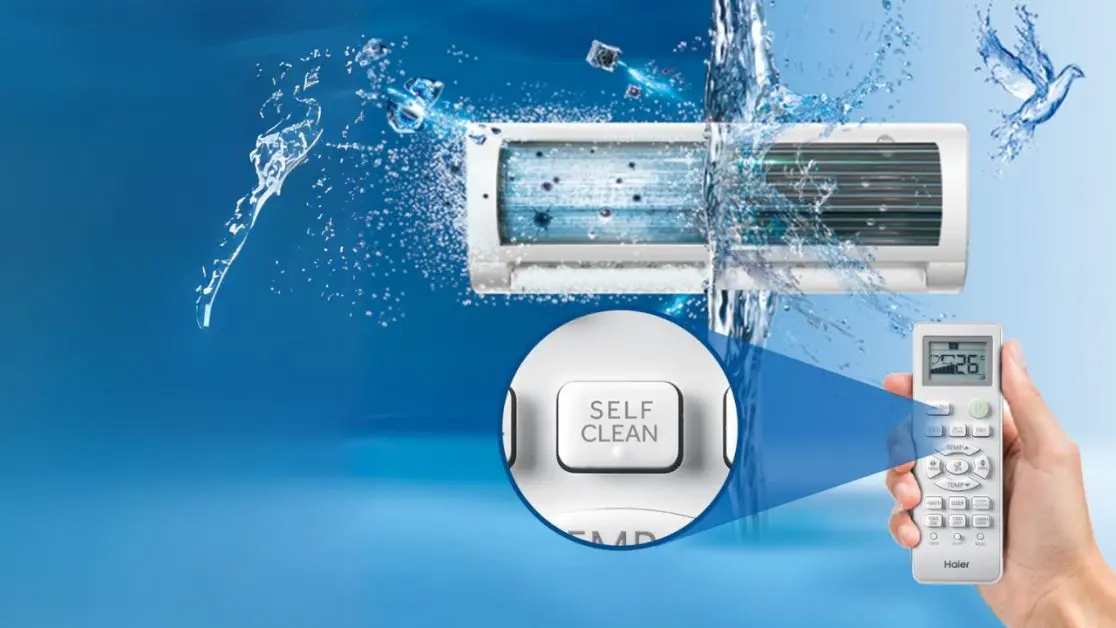
Most AC problems are not performance issues. They are maintenance issues.
Dust builds up. Filters clog. Air quality drops.
And slowly, the AC stops working like it should.
What most people forget:
- ACs need regular cleaning
- Internal moisture can lead to odor and bacteria
- Dirty coils reduce efficiency
Some ACs now offer automatic cleaning cycles that remove dirt buildup and maintain airflow quality
An AC that cleans itself is not a luxury. It is consistency.
Mistake 8: Treating Installation as an Afterthought
An AC is only as good as its installation.
This is where most decisions collapse.
Common installation mistakes:
- Poor outdoor unit placement
- Incorrect piping length
- Improper insulation
- Weak wall support
Even a high-end AC performs poorly if installed badly.
What good installation ensures:
- Efficient cooling
- Lower energy consumption
- Longer lifespan
Buying right but installing wrong is still wrong.
Mistake 9: Not Thinking About Flexibility
Your usage will change. Your AC should adapt.
Some days you need full cooling. Some days you need less.
Most ACs operate in fixed modes.
That creates waste.
The better approach:
Look for convertible capacity systems.
For example:
- 40 percent capacity for mild weather
- 100 percent for peak heat
- 110 percent boost for extreme conditions
Some systems offer 7-in-1 convertible modes that adapt cooling based on need
Flexibility is efficiency in disguise.
Mistake 10: Buying Based on Today, Not Tomorrow
An AC is not a seasonal purchase. It is a lifestyle decision.
Most people buy for immediate relief.
Few think about:
- Rising electricity costs
- Changing weather patterns
- Increasing indoor usage
- Work-from-home shifts
The long-term view:
- Choose energy-efficient systems
- Prioritize adaptive cooling
- Invest in durability
Short-term relief often creates long-term regret.
So What Actually Matters When Buying an AC?
Let’s simplify the decision.
One option is budget-first thinking
- Lower upfront cost
- Higher long-term expenses
- Limited features
The second option is spec-first thinking
- Focus on tonnage, star ratings
- Miss real-life usage patterns
- Partial alignment
The third option is system-first thinking
- Understand room, usage, climate
- Choose features that solve real problems
- Optimize for long-term comfort and cost
The third option feels slower. It works better.
The Real Insight Most Buyers Miss
People think they are buying cooling.
They are not.
They are buying predictability.
- Predictable comfort
- Predictable bills
- Predictable performance
An AC that adapts, learns, and maintains itself quietly removes decisions from your day.
That is what modern systems are moving toward.
That is what smart living looks like.
A Final Thought Worth Remembering
You do not notice a good AC.
You only notice a bad one.
The right AC fades into the background. The room feels right. Sleep feels deeper. Evenings feel calmer.
That is the goal.
Not just cooling.
But effortless comfort that works without asking for attention.
Frequently Asked Questions
How do I know which AC is actually right for my room?
The right AC depends on room size, sunlight exposure, floor level, number of people, insulation, and usage hours not just price or brand popularity.
Is buying a bigger AC always better?
No. An oversized AC cools too quickly, shuts off repeatedly, wastes electricity, and may leave humidity behind.
Why does my AC still struggle even after buying a high-tonnage model?
Cooling problems often come from poor room alignment, heat load, airflow issues, or bad installation rather than low tonnage alone.
Should I buy based on today’s heat or long-term usage?
Long-term usage matters more. Electricity costs, work-from-home routines, and hotter summers make efficiency and adaptability more important over time.
Why do AC purchases feel overwhelming?
Because most buyers compare specs instead of matching cooling behavior to real-life habits and room conditions.
Are smart AC features useful or gimmicks?
Some are gimmicks, but adaptive cooling, scheduling, and energy optimization features solve real problems.
What smart features are genuinely helpful?
AI cooling optimization, usage learning, scheduling, voice control, and energy-saving automation.
Can smart ACs reduce electricity usage automatically?
Some systems optimize cooling modes dynamically based on usage patterns and energy demand.