
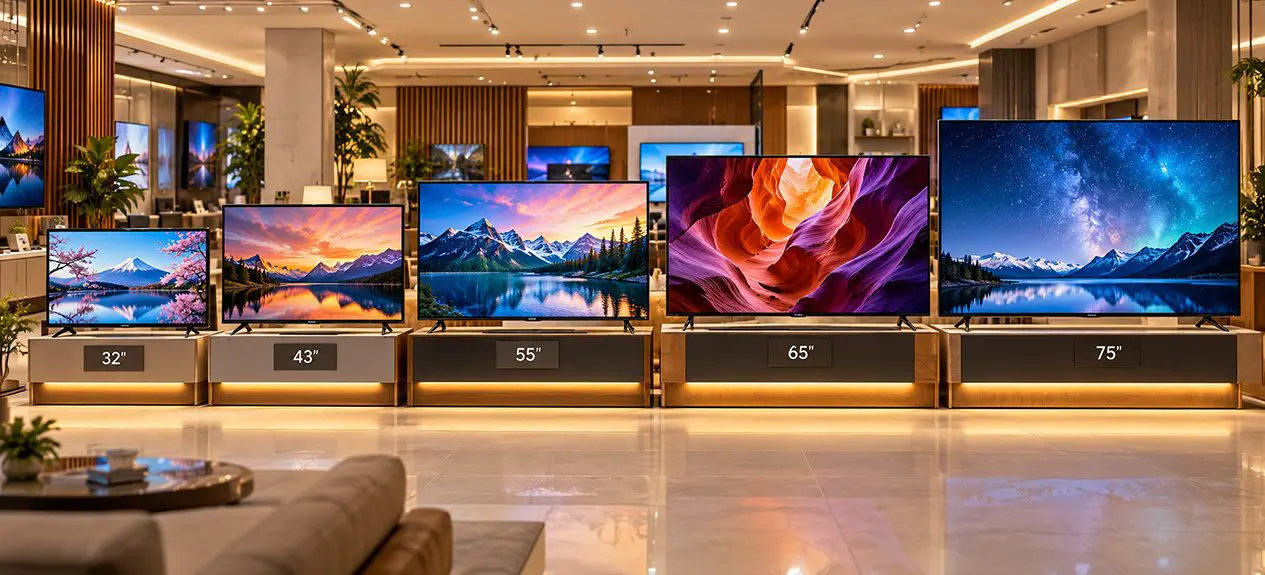

Buying a new TV in 2026 is both easier and more confusing than it used to be. Panels are sharper, smart platforms are richer, and prices have dropped enough to make even 55-inch and 65-inch screens feel like realistic upgrades for most households.
The trade-off is that the market is now crowded with dozens of variants at every screen size. The new TV price you actually pay depends on more moving parts than ever: panel type, refresh rate, HDR support, smart platform, and even the audio brand tuning the speakers.
This guide breaks down what you’re really paying for when you buy an LED TV in India, walks through current 2026 price bands, and helps you figure out where the value sits at your budget.
TV Prices in India 2026: Quick Overview
Here’s a rough map of what LED TV prices in India look like across the most popular screen sizes in early 2026:
- 32-inch smart TVs: ₹9,000 to ₹25,000
- 43-inch smart TVs: ₹22,000 to ₹65,000
- 55-inch smart TVs: ₹28,000 to ₹1,50,000
- 65-inch smart TVs: ₹45,000 to ₹2,50,000
- 75-inch smart TVs: ₹75,000 to ₹2,50,000+
These bands include LED, QLED, Mini-LED, and OLED panels. Festive offers, exchange discounts, and no-cost EMI plans can further reduce the effective cost, especially in the mid-range and premium segments.
What Is an LED TV? (And What LED Actually Means)
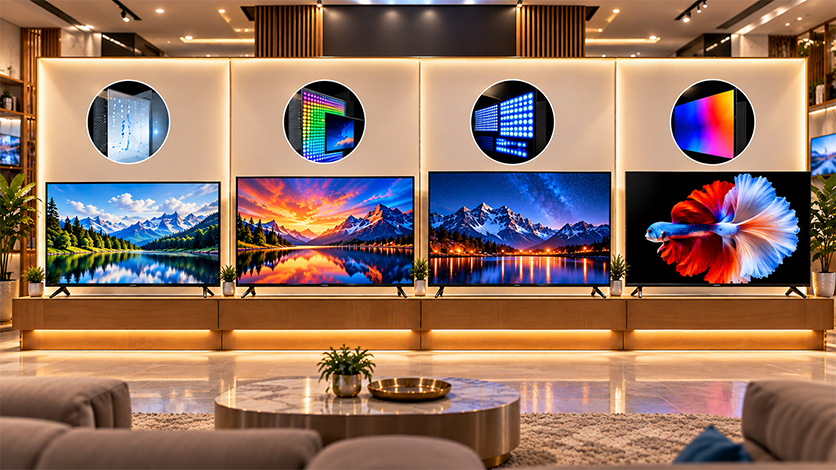
The LED TV meaning is often misunderstood. LED doesn’t describe the screen itself it describes the backlight behind it. Under the hood, an LED TV is really an LCD panel that’s lit by rows of light-emitting diodes.
That distinction matters because it shapes how the picture looks:
- LED-lit LCD panels are the most common and affordable TV type sold today
- QLED adds a quantum-dot layer for richer colour and higher peak brightness
- Mini-LED uses far more, and smaller, backlight zones for improved contrast
- OLED skips the backlight entirely, with each pixel emitting its own light
For most Indian buyers, “LED TV” in 2026 still means an LCD panel with LED backlighting, and it remains the most common way to enter the smart TV market at any screen size.
What Determines the Price of a TV?
Two TVs of the same screen size can differ by ₹40,000 or more without either being unreasonable. The TV’s cost is determined less by the panel size and more by what’s inside it, on it, and behind it.
Screen Size and Resolution
Screen size is the most obvious price driver, but resolution matters just as much. A 43-inch Full HD panel and a 43-inch 4K panel can sit two price bands apart, even from the same brand.
- HD Ready (1366 x 768): only sensible on 32-inch panels today
- Full HD (1920 x 1080): standard on 32-inch, borderline on 43-inch
- 4K UHD (3840 x 2160): default from 43-inch upwards
- 8K: rare in India, content library still very limited
For any screen size above 43 inches, paying for 4K is usually worth it; sub-4K panels start to look soft at that size.
Panel and Backlight (LED, QLED, OLED)
Panel and backlight technology is the biggest single reason two TVs at the same size can cost so differently. A basic LED panel sits at one end of the range; a Mini-LED or OLED panel sits at the other. QLED lands in the middle, offering stronger colour and brightness than plain LED without OLED’s premium.
Smart Platform, Processor and RAM
The smart TV price is also shaped by what runs underneath. Google TV, Android TV, WebOS, and Fire TV all bring their own strengths, and the picture-processing chip inside the TV can lift or drag the final image regardless of the panel.
Worth checking:
- At least 2 GB RAM and 16 GB storage on 43-inch and above
- HDMI 2.1 support if you plan to add a PS5 or Xbox Series X
- Voice assistant support (Google Assistant, Alexa, or both)
- Dolby Vision or HDR10+ for HDR content
Brand, Warranty and After-Sales
Price also includes what happens after the TV is delivered. A three-year comprehensive warranty, a well-covered service network, and easy installation support usually cost slightly more upfront but tend to pay back over the life of the panel.
TV Price Ranges Explained
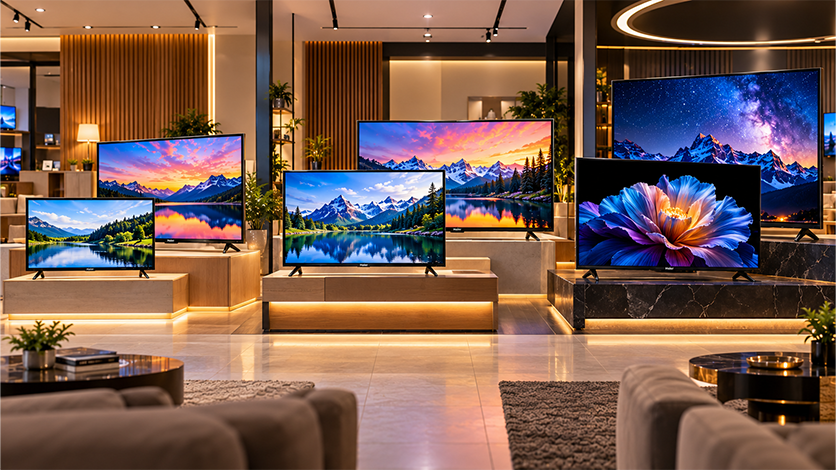
Here’s what buyers can reasonably expect at each price band in 2026.
Entry-Level / Budget TVs
₹9,000 to ₹35,000. This band covers 32-inch HD or Full HD models, basic 43-inch 4K LED panels, and 50-inch entry-level 4K models. Expect standard Google TV or a proprietary smart platform, HDR10, and 20W to 30W of built-in audio. Fine for bedrooms, kitchens, and casual living-room use.
Mid-Range TVs
₹35,000 to ₹90,000. This is where most Indian households actually shop. QLED 43-inch and 55-inch panels, Mini-LED 55-inch and 65-inch models, and richer audio (often 40W to 50W with subwoofers) show up here. Dolby Vision, HDR10+, and Google TV with Gemini are common at the upper end.
Premium and Flagship TVs
₹90,000 and above. OLED, high-end Mini-LED, and 75-inch-and-larger panels sit here. Expect 120Hz or 144Hz refresh rates, AMD FreeSync for gaming, tuned audio from names like Harman Kardon or KEF, and cinema-grade HDR formats like Dolby Vision IQ.
Is a More Expensive TV Worth the Extra Cost?
Not always. A premium OLED in the wrong room can look worse than a well-chosen mid-range QLED. Room lighting, seating distance, and the type of content you actually watch matter more than the sticker price.
Broadly:
- For bright living rooms, a mid-range QLED often beats a premium OLED
- For dedicated movie viewing in a dim room, OLED and Mini-LED earn their premium
- For competitive gaming, a 120Hz panel and HDMI 2.1 matter more than the panel category
- For casual daily viewing, a strong mid-range model is usually the sweet spot
You can compare Haier’s current 2026 lineup of 4K UHD, QLED, Mini-LED, and OLED models in the Haier Google TV range in India to see how features shift with price at each screen size.
How to Choose the Right TV for Your Budget
The new LED TV price 2026 you should target depends on how you actually watch, not just how much you can spend. A short checklist worth running through before you commit:
- Measure the seating distance and pick the right screen size first
- Match the panel to your room lighting (QLED for bright rooms, OLED for dim ones)
- Confirm the smart platform runs all the apps you use
- Check for HDMI 2.1 if a gaming console is part of the plan
- Prioritise sound output and Dolby Atmos support if you skip a soundbar
- Confirm the warranty terms, especially on the panel itself
Conclusion
The TV price in India in 2026 is more spread out than it’s ever been. A 43-inch 4K smart TV can be had for ₹25,000, and a 75-inch flagship can cross ₹2,50,000. Both are legitimate buys for very different homes.
The trick isn’t chasing the highest-priced model your budget can stretch to. It’s matching the panel, size, and smart platform to how you actually watch, and buying the model that fits your room rather than the one that fits your maximum budget.
FAQs
What is the price of a new LED TV in India?
Prices in 2026 start at around ₹9,000 for a 32-inch HD model and go up to ₹2,50,000 or more for a premium 75-inch Mini-LED or OLED. Most mid-range 43-inch and 55-inch smart TVs sit between ₹25,000 and ₹80,000.
What does LED TV mean?
LED refers to the backlight, not the screen. An LED TV is really an LCD panel lit by light-emitting diodes. QLED, Mini-LED, and OLED are variations that change how the panel is lit or how pixels emit light.
What determines the price of a TV?
Screen size, resolution, panel type (LED, QLED, Mini-LED, OLED), refresh rate, HDR support, smart platform, built-in audio, HDMI 2.1 availability, brand, and warranty all shape the final price.
Why are some TVs so expensive?
Premium TVs use OLED or advanced Mini-LED panels, higher refresh rates, tuned audio from names like Harman Kardon or KEF, and cinema-grade HDR formats. Each of these components carries a real engineering cost.
How much does a good smart TV cost?
For most homes, a well-specced 43-inch or 55-inch smart TV falls between ₹30,000 and ₹80,000 in 2026. That range covers strong QLED and Mini-LED options with Google TV and modern HDR support.
Is a smart TV better than an LED TV?
The two aren’t opposites. A smart TV is any TV with an integrated OS and app support, while LED describes the backlight. Most smart TVs sold today are also LED (or QLED, Mini-LED, OLED); the labels describe different things.
What is the difference between an LED and a QLED TV?
An LED TV uses an LCD panel with LED backlighting. A QLED TV adds a quantum-dot layer that produces richer, more accurate colour and higher peak brightness, though it still uses an LED backlight underneath.