
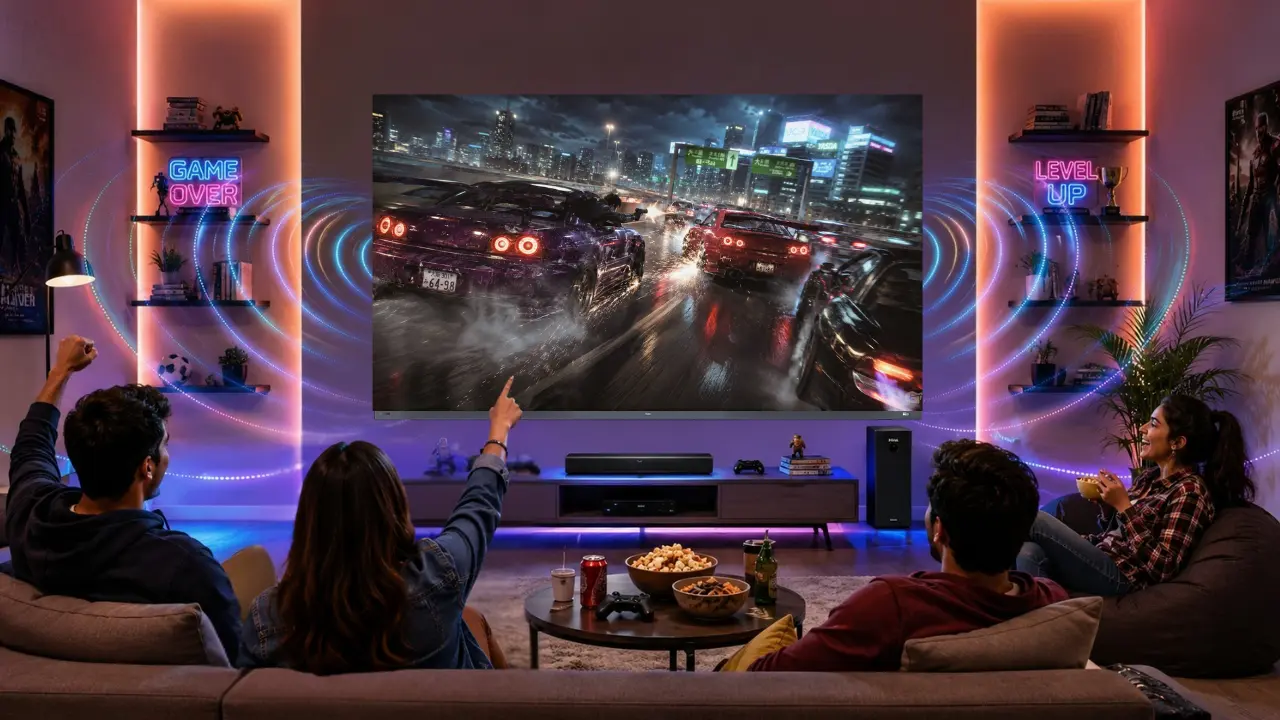

Good sound changes the way a room feels
A television is no longer just a screen. In most Indian homes, it has quietly become the stadium, the cinema hall, the music room, and sometimes even the background companion during dinner prep. That shift changes one thing immediately: sound matters more than people think.
Not a louder sound. Better sound.
That is where modern audio technology starts becoming less about specifications and more about experience. And increasingly, that experience is becoming central to how people evaluate premium televisions like the Haier M96 Series 254 cm (100) QD Mini LED AI Smart Google TV and the Haier M80F Mini LED 215 cm (85) Google TV Sound by KEF.
Most people don’t buy TVs for audio. They regret it later.
Walk into a typical electronics store and the conversation often revolves around display quality.
Mini LED. AI processing. Refresh rate. Brightness.
All important.
But the real emotional memory of a cricket match or late-night movie usually comes from audio. The roar of a stadium. A whisper during a thriller. The bass drops in a concert sequence. Sound creates immersion. Picture completes it.
A screen shows the moment.
Audio makes you feel it.
That is why audio technology in premium smart TVs like the Haier M92 Series 189 cm (75) QD Mini LED Smart AI Google TV has evolved aggressively over the last few years.
The shift from “TV speakers” to cinematic sound
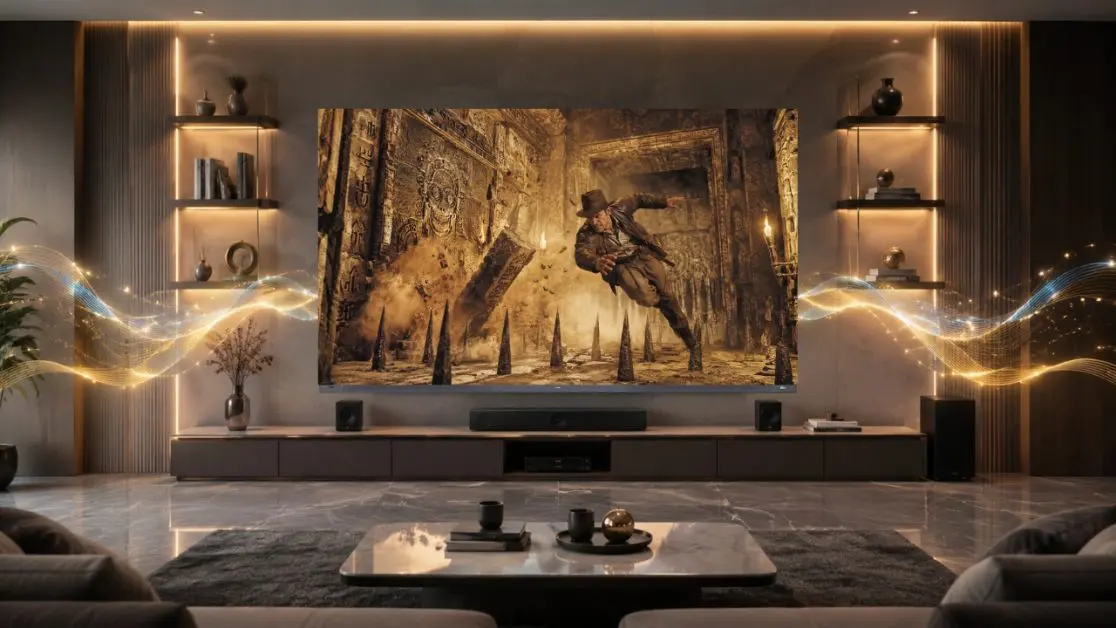
There was a time when TV speakers existed only to “get the job done.”
Thin panels forced compromised audio systems. Most televisions sounded flat. Dialogue disappeared during action scenes. Music lacked depth.
That system broke once streaming changed viewing habits.
Today, Indian households binge-watch web series, stream live sports, use YouTube as a music platform, and connect gaming consoles directly to televisions. TV is no longer occasional entertainment. It is a daily ecosystem.
And ecosystems need layered sound.
One major shift: multi-directional audio
Older televisions projected sound in a very linear way. Audio moved forward and dispersed quickly.
Modern Haier Mini LED TVs increasingly focus on creating a wider soundstage. That matters because Indian living rooms are rarely designed like dedicated theatre rooms.
People sit diagonally. Families spread across sofas and floor cushions. Someone walks in from the kitchen halfway through the IPL match.
A wider audio field keeps clarity intact across the room.
That small design decision changes usability dramatically.
Sound by KEF changes the conversation
Some technologies become meaningful because of the partnership behind them.
One example is the “Sound by KEF” integration seen in premium models like the Haier M80F Mini LED 189 cm (75) Google TV Sound by KEF and the Haier M80F Mini LED 165 cm (65) Google TV Sound by KEF.
KEF is globally recognised for premium acoustic engineering. And when audio tuning comes from specialists who understand sound architecture deeply, viewers notice the difference immediately.
Not because the TV becomes louder.
Because it becomes cleaner.
What does cleaner sound actually mean?
It means:
- Dialogue stays understandable even during heavy background music
- Action scenes feel fuller without distortion
- Vocals sound more natural
- Instruments separate more clearly
- Bass feels controlled instead of muddy
In practical Indian home scenarios, this matters more than people realise.
Ceiling fans are running. Pressure cookers whistle. Traffic exists outside. Families talk during shows.
Clear audio survives real homes.
Weak audio collapses inside them.
That distinction matters.
AI-powered sound optimisation is solving a real problem
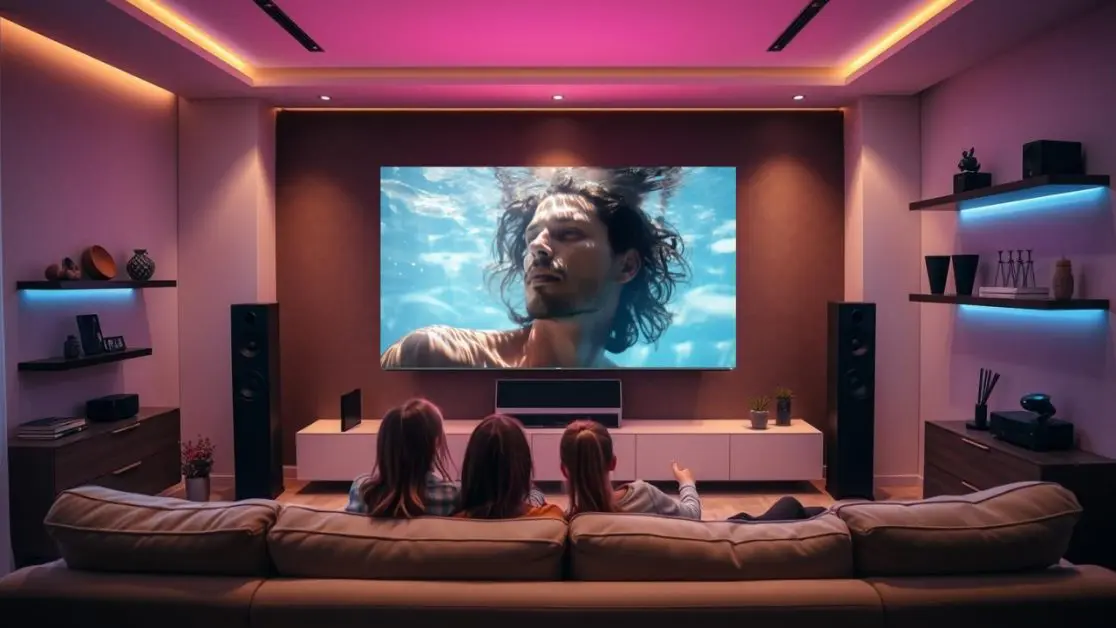
Most people never adjust audio settings manually.
That is the truth manufacturers had to accept.
The average viewer switches on the TV and expects things to work. Nobody wants to constantly tweak bass, treble, dialogue enhancement, and volume balancing between OTT apps.
So the system itself had to become smarter.
Modern AI audio systems adapt dynamically
AI-powered audio optimisation in televisions like the Haier M92 Series 164 cm (65) QD Mini LED AI Smart Google TV attempts to analyse content in real time.
Sports require crowd balance.
Movies require cinematic depth.
News requires vocal clarity.
Music videos need richer frequency separation.
Gaming benefits from spatial precision.
One audio setting cannot serve all of them equally well.
That is where adaptive sound systems become useful instead of gimmicky.
The best technology feels invisible.
You notice the experience, not the feature.
Why Dolby Atmos matters more in apartments than theatres
There is an interesting contradiction in Indian entertainment habits.
People increasingly consume cinematic content inside compact spaces.
Which means immersive audio has to work without massive speaker systems.
That explains why technologies like Dolby Atmos have become important in premium smart TV categories like the Haier M96 Series 254 cm (100) QD Mini LED AI Smart Google TV.
What immersive sound actually changes
Immersive audio creates directional depth.
Instead of sound feeling flat, it creates spatial layering.
A rain scene feels wider. Stadium commentary feels larger. Aircraft sequences feel elevated. Background scores gain atmosphere.
Even in smaller apartments, this creates psychological scale.
And psychological scale matters because entertainment today competes against distraction.
Phones vibrate. Notifications interrupt. Attention spans fragment.
Immersive sound pulls people back into the moment.
That is the hidden job of modern audio systems.
The smartest audio systems reduce fatigue
This is rarely discussed.
Bad audio is exhausting.
Sharp highs. Inconsistent volume. Poor dialogue clarity. Sudden spikes during advertisements.
These things create cognitive fatigue over time.
People often blame “screen time” when the actual issue is sensory imbalance.
Balanced audio changes long viewing sessions
Consider a Sunday scenario:
- Parents watching a movie
- Children streaming cartoons later
- Music running during dinner prep
- News channels in the morning
The television operates for hours.
Audio quality then becomes less about excitement and more about comfort.
Balanced sound reduces listening strain.
And increasingly, premium televisions like the Haier M80F Mini LED 140 cm (55) Google TV Sound by KEF are engineered for exactly that.
Gaming changed TV audio expectations forever
Gaming accelerated audio innovation faster than many people realise.
Gamers expect:
- Positional sound cues
- Low audio lag
- Dynamic range
- Environmental immersion
Once televisions adapted to gaming needs, everyone benefited.
Now even casual viewers experience richer sound separation during films and sports because the hardware evolved for more demanding use cases.
That is how technology usually works.
The niche pushes innovation.
The mainstream inherits the benefit later.
Large screens demand proportionally better sound
Here is a pattern most buyers overlook.
As screen sizes increase, weak audio becomes more noticeable.
A massive display paired with average sound creates imbalance. The eyes expect immersion. The ears reject it.
That is why audio architecture matters significantly in large-screen Mini LED televisions like the Haier M96 Series 254 cm (100) QD Mini LED AI Smart Google TV.
The modern living room behaves differently
Large televisions now dominate open living spaces.
And open spaces absorb sound differently.
Curtains, marble flooring, wooden cabinets, glass surfaces, ceiling height, sofa placement, and wall distance all affect audio reflection.
Good television audio systems account for these realities through tuning and processing.
Not perfection.
Adaptability.
That distinction matters.
Connectivity is now part of audio technology
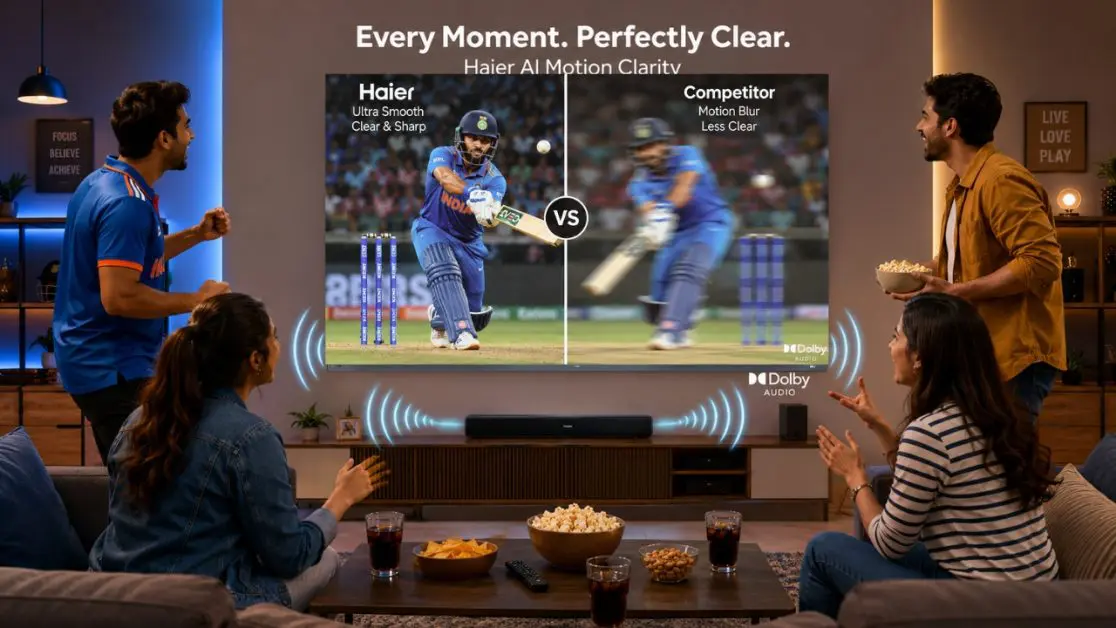
Audio quality no longer depends only on internal speakers.
The ecosystem matters too.
Modern users connect:
- Bluetooth speakers
- Soundbars
- Gaming consoles
- Wireless headphones
- Smart home systems
Seamless connectivity becomes part of the audio experience itself.
Because friction kills usage.
A feature people struggle to connect eventually becomes a feature they stop using.
The best smart ecosystems remove that friction quietly.
People remember emotional moments, not specifications
Nobody remembers the exact brightness of their TV three years later.
But they remember:
- Watching India win a tense cricket match
- A family movie night during monsoon season
- Music playing during Diwali prep
- Late-night concerts streamed after work
- Children dancing in front of YouTube videos
Technology succeeds when it disappears into life.
That is the real benchmark.
And increasingly, audio technology is becoming central to that emotional equation.
What should buyers actually look for in TV audio technology?
One option is focusing only on wattage.
That approach usually disappoints.
The second option is understanding how sound behaves in real homes.
That leads to smarter decisions.
Here are the features that genuinely matter:
Look for these audio-focused features
- AI-powered adaptive sound optimisation
- Dolby Atmos or immersive audio support
- Professionally tuned sound systems
- Dialogue clarity enhancement
- Multi-directional speaker architecture
- Low distortion at higher volumes
- Strong Bluetooth and wireless compatibility
- Balanced bass instead of exaggerated bass
Questions worth asking before buying
- Does dialogue stay clear during action scenes?
- Does the sound feel balanced at low volume?
- Can older family members hear vocals comfortably?
- Does music sound layered or compressed?
- Does the TV support future audio ecosystem upgrades?
Good buying decisions often come from better questions.
Not bigger specifications.
The future of television audio is contextual
The next phase of audio technology is not about making televisions louder.
It is about making them more aware.
Aware of room acoustics.
Aware of content type.
Aware of user behaviour.
Aware of time-of-day listening patterns.
Smart homes are not becoming smarter because of complexity.
They are becoming smarter because devices increasingly remove small daily irritations.
That is the hidden system shaping modern consumer technology.
And audio sits right at the centre of it.
Because people forgive average visuals faster than they forgive bad sound.
The picture captures attention.
Sound sustains emotion.
That difference explains why audio technology is no longer a side feature in modern televisions. It is becoming one of the defining experiences of the connected Indian home.
Frequently Asked Questions
Why is TV audio becoming more important than before?
Modern TVs are used for movies, sports, gaming, music streaming, and daily entertainment. While picture quality attracts attention, sound creates immersion and emotional engagement, making audio a critical part of the viewing experience.
Should I prioritize sound quality or screen size when buying a TV?
Ideally, both should be balanced. A larger screen creates higher expectations for immersion, and weak audio can make even a premium display feel incomplete.
Is higher speaker wattage always better?
No. Sound quality depends on tuning, clarity, distortion control, speaker placement, and processing technologies, not just wattage.
What audio features should I look for in a premium smart TV?
Key features include:
Dolby Atmos support
AI-powered adaptive sound optimization
Professionally tuned speakers
Clear dialogue enhancement
Multi-directional audio
Bluetooth and wireless connectivity
Balanced bass response
Why do dialogue and voices sometimes sound unclear on TVs?
Many TVs struggle to separate speech from background effects and music. Advanced audio tuning helps keep dialogue clear even during action-heavy scenes.
How does better audio improve movie nights?
Enhanced audio creates depth, realism, and immersion. Viewers can hear subtle details, clearer dialogue, and richer background scores that make movies more engaging.