
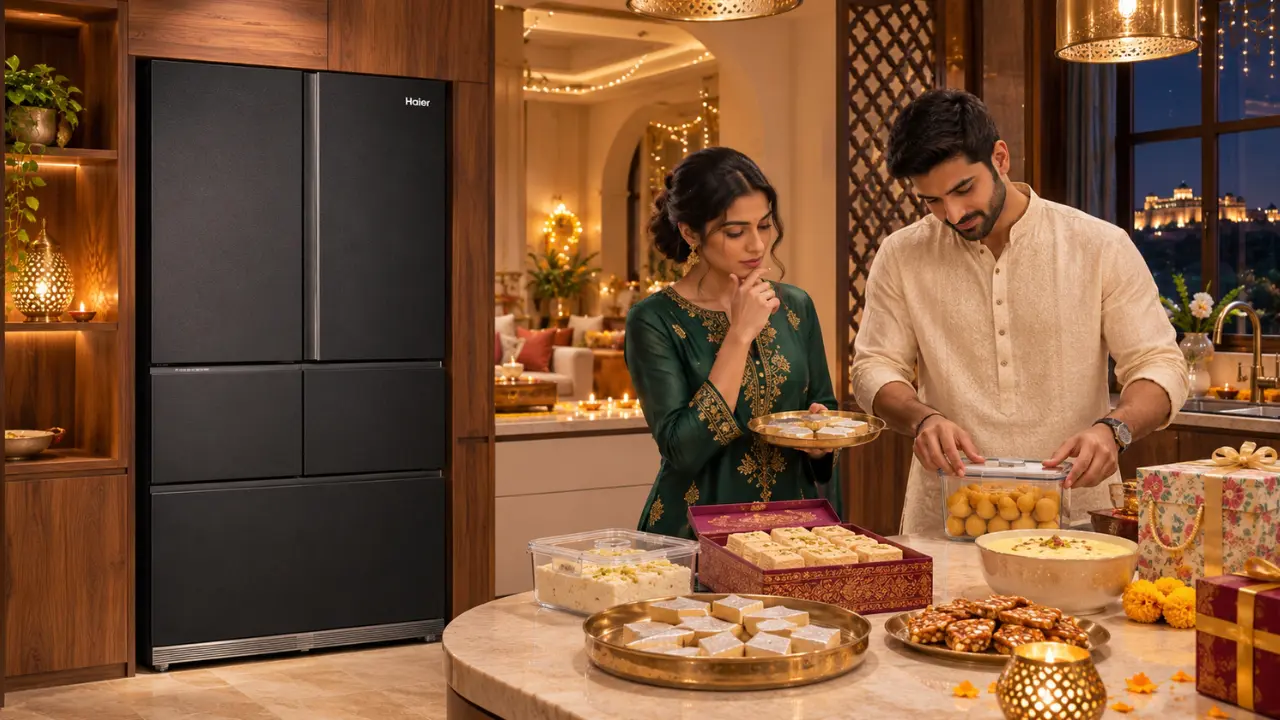

The Diwali celebrations have ended, the guests have returned home and in the kitchen one can still find boxes of kaju katli, laddoos, soan papdi and other mithais. The obvious first thing that springs to mind is to store all the sweets in the refrigerator before they go bad.
However, does that always make sense?
Not quite. Certain diwali sweets would have a better texture and flavor if they are kept in a cool, dry place. However, some, especially those made with fresh milk and cream or moist khoya, require refrigeration to avoid spoiling.
What matters is a knowledge of where the sweets are to be placed. After all, no one wants their crispy soan papdi getting sticky and their favourite barfi getting unnecessarily hard.
So Which Diwali Sweets Can Be Kept Outside the Refrigerator?
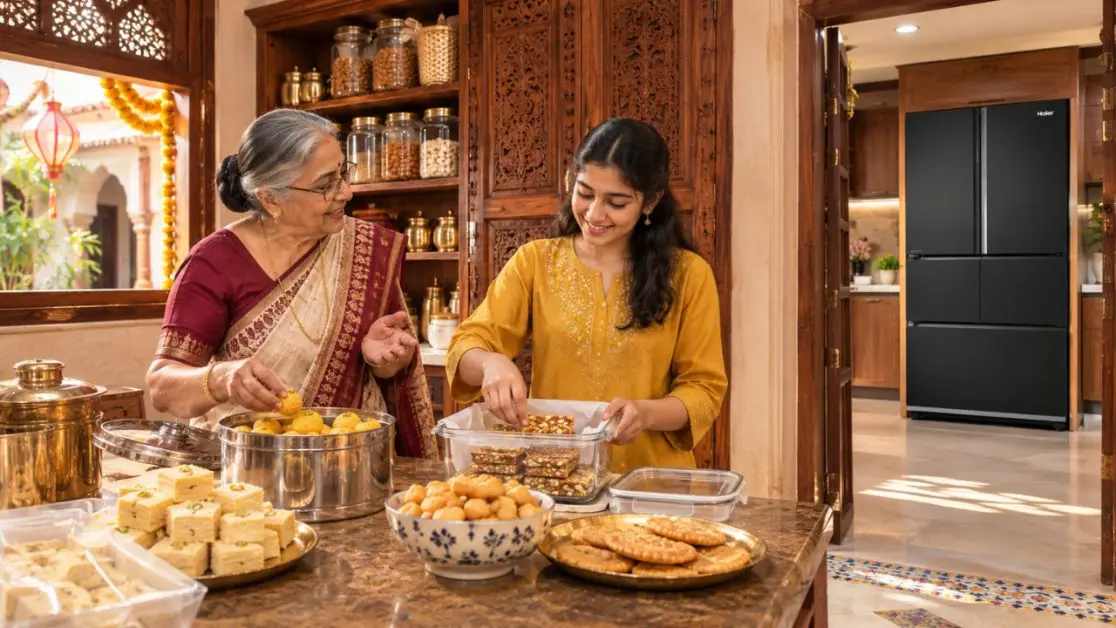
Some of the traditional Indian sweets can be cooked in a way that will allow short term storage at room temperature under cool, dry and hygienic environments.
But, room temperature doesn’t mean sweets are left uncovered for days at a time. Ingredients, moisture level, package and home temperatures are what affect their safety in storage.
Here are some popular diwali sweet things that you can consider not placing in your refrigerator.
1. Soan Papdi: Keep Its Delicate Layers Crisp
One of the sweets which does not particularly like moisture is Soan papdi.
The flaky layers that create its melt in the mouth sensation are what makes it so delicate. It can also be exposed to condensation if the container is not properly protected and is frequently removed and opened when kept refrigerated.
This can cause the layers to stick together and lose their lightness.
For better storage:
- Store soan papdi in its sealed packaging or in a container that does not have any opening.
- Keep out of direct sunlight and cooking steam.
- Do not repeatedly open the container in humid conditions.
- Store in alignment with manufacturer’s directions and best-before date.
For soan papdi which are commercially packaged, shelf-stable, a cool kitchen cupboard is generally preferred.
2. Besan Laddoo: Preserve Its Rich and Crumbly Texture
A good besan laddoo tastes roasted and has a slight grainy texture and is rich with ghee.
Completely filling the laddoo with ghee can make it hard, if the ghee is refrigerated before use. This does not necessarily mean that the sweet has gone bad, but it might alter the way it tastes when you eat it.
Properly roasted besan can be used to make besan laddoos, which can be stored for a short time in a cool and dry area.
Some precautions:
- Use a clean, air-tight steel or food grade container.
- Avoid heat and moisture.
- Use clean and dry hands to handle laddoos.
- Keep refrigerated if the recipe specifies perishable fillings or if the maker suggests it.
If it’s really hot or humid, it’s probably better to refrigerate even though the texture changes a little.
3. Dry Fruit Chikki: Maintain the Crispness of the Fruit Chikki
The crunch, whether in peanut chikki, almond chikki or a combination of dry fruits, is what makes this sweet so delicious.
Chikki prepared from roasted nuts and an appropriately cooked jaggery/sugar syrup usually comes in for dry storage.
It has a major enemy moisture.
If exposed to a moist environment, the sugar is brittle and may melt and turn sticky. However, improper sealing of the package can also allow condensation to enter as a result of refrigeration.
- Keep chikki in a tightly closed container, preferably with food-safe paper between the pieces.
- Do not store in areas of changing humidity (stove, sink etc).
What About Kaju Katli, Coconut Laddoo and Other Popular Mithai?
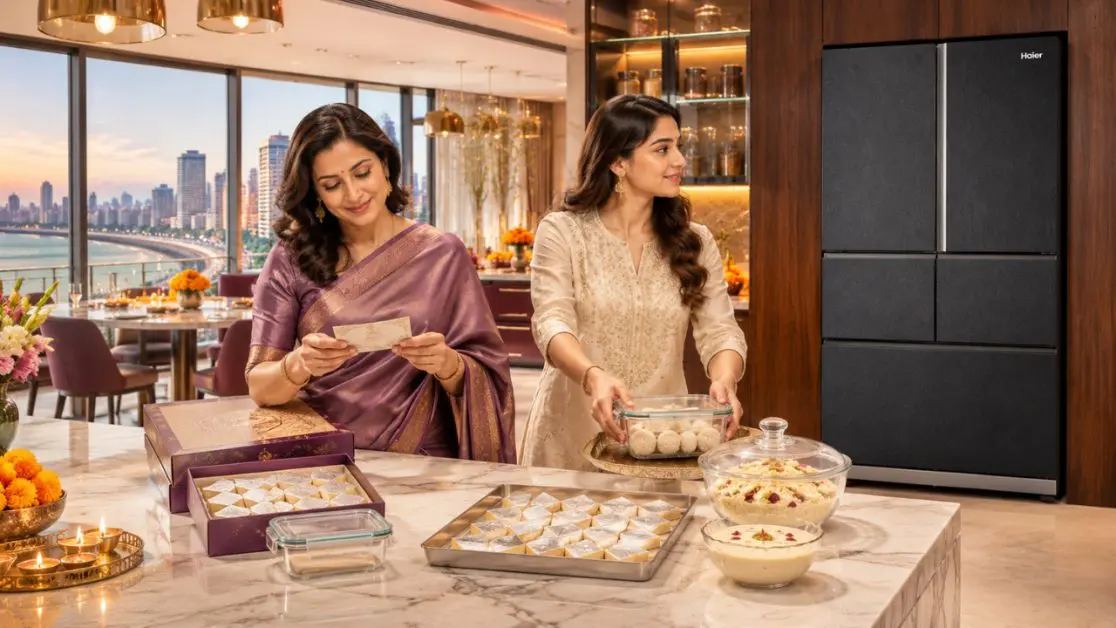
It’s here where things get a little trickier.
Not all sweets are created equal, and sometimes it’s not just its name that defines it. Two boxes of kaju katli might appear the same, but they have different amounts of moisture, ingredients and even storage needs.
Kaju Katli: It Depends on How It’s Prepared
Kaju katli is a popular variety of katli that’s prepared with cashews and sugar. Some recipes also contain milk, additional moisture or other ingredients.
If the manufacturer has stated that the product should be stored outside the refrigerator, a commercially prepared shelf-stable product may be used.
However, freshly prepared kaju katli should be handled as per the instructions of the sweet maker.
Kaju katli sometimes hardens and changes the softness as a result of refrigeration.
The best way to do this is to read the packaging instead of taking it as a given that all kaju katli will have the same shelf life.
Coconut Laddoo – Read the Ingredients First
A Diwali favourite, coconut laddoos require very different storage conditions.
A dry coconut preparation might not turn out exactly as one made with fresh grated coconut, condensed milk or khoya.
Sweets made from fresh coconut are more likely to go bad due to their high water content.
In case there are fresh coconut or milk based materials in your coconut laddoos then it’s best to refrigerate them immediately instead of assuming that they are shelf-stable sweets.
Dry Foods, Shankarpali and Sweet Mathri Normally Work Best
The above story is good for dry foods only.
These holiday treats are made by deep frying dough to crispiness.
They are usually suitable for airtight storage in a cool, dry place after being cooked and when fully cooled.
Refrigerating them can lead to moisture and may impact on crunch.
When making homemade snacks, ensure they have cooled down before the container is closed. Even if they are just fresh snacks, trapped steam can cause them to end up soggy.
Which Diwali Sweets Need to Be Chilled Always?
Some sweets are better stored in dry conditions while others are more sensitive to temperature.
The use of milk based sweets is important as moisture and perishable dairy ingredients can lead to microorganism growth at room temperature.
Generally, sweets that need to be refrigerated:
- Rasmalai: Patties of milk that are dipped in sweetened milk.
- Rabri: A thickened milk dessert that should be kept cold and is called rabri.
- Sandesh: It is very important to refrigerate fresh chhena sweets.
- Fresh cream sweets: Cream filled mithai and desserts should be refrigerated; these are fresh cream sweets.
- Kalakand: Refrigeration is essential as it is moist and made of milk.
- Fresh khoya barfi: When fresh khoya barfi is made without any validations on shelf-stable processing.
Gulab jamun needs some attention as well as rasgulla. Fresh or home made items are usually refrigerated after preparation or serving while unopened commercially processed products may have different storage requirements.
A good guideline to follow: If a sweet is made with fresh dairy products and you’re unclear on its storage needs, then refrigerate it immediately and verify with the seller.
If perishable sweets, such as candies, are left at room temperature, avoid keeping them more than two hours, or one hour above 32°C.
In What Ways Does Your Refrigerator Help During the Diwali Celebrations?
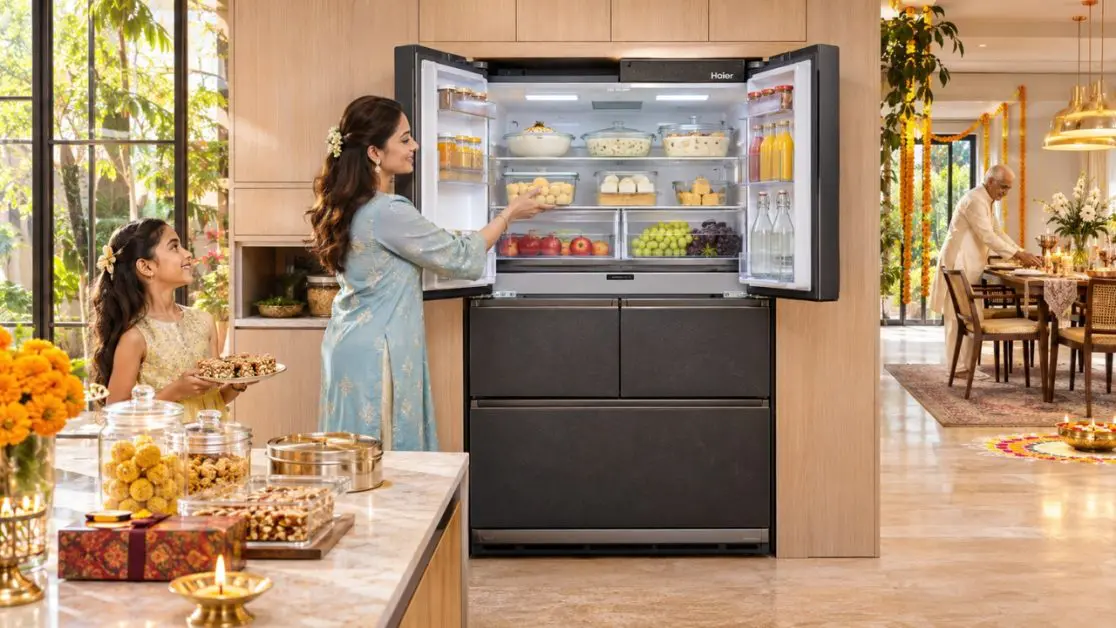
Diwali can sometimes present an odd storage problem.
There are boxes of sweets for the kin, homemade desserts for the visitors, fresh fruits for puja, drinks and ingredients for the next family gathering.
All of a sudden the refrigerator that fits everyday needs becomes somewhat cramped.
Here’s where planning is important in terms of storage organization.
While it’s okay to put all of the sweets together, families can also divide refrigerated desserts from dry sweets and arrange the other festive food according to temperature.
The Haier 552L In-Vista 5 Door Free Built-In Side By Side Refrigerator (HRM-800P2OBU1) is a great choice for those seeking a spacious refrigerator with flexible storage options.
Haier 552L In-Vista Refrigerator: Organised Festive Storage
Haier 552L In-Vista Refrigerator also comes with Organised Festive Storage, which is designed for it.
Haier 552L In-Vista 5 Door Free Built-In Side By Side Refrigerator (HRM-800P2OBU1) is of special interest for families planning to store different kinds of food in the fridge during festivals, and features a 5 door design and separate storage compartments.
It has a layout called Family Care Storage, which includes five zones, 12 storage sections and makes organisation of fruits, vegetables, beverages, frozen foods and other groceries easier for families.
Easy to Store With the 66L Magic Convertible Zone
The 66L Magic Convertible Zone is a very helpful feature.
This compartment is designed to be able to run as a refrigerator or freezer with an adjustable temperature range of -20°C to +5°C.
Families might need extra refrigeration for dairy sweets and ready to eat foods during Diwali. Other times, however, they might opt for additional freezer space.
That flexibility is offered by the convertible zone.
But, it is essential to choose the right temperature of the food to be stored. Perishable sweets are to be stored at 4°C or lower, and the convertible compartment needs to be set accordingly.
Five Doors for Better Food Organisation
Haier In-Vista refrigerator comes with a number of food storage zones which make it easier to categorize different food groups.
Families can arrange for example:
- Sweets in clean, covered milk containers.
- Fresh fruits and vegetables in their appropriate compartments.
- Frequently used items such as beverages in easy to reach areas.
- Specialized freezer storage for frozen ingredients.
The refrigerator also has ABT Pro Sterilisation technology, and automated sterilisation cycles are engineered to help create a more sanitary refrigerator and freezer.
However, hygienic storage relies on sound food handling and food storage temperatures and prompt consumption.
The Premium Addition to Modern Indian Kitchens
The Premium Addition to Modern Indian Kitchens A modern kitchen is truly something that is a huge addition for every household.
In addition to food storage, the Haier In-Vista refrigerator is designed with a sensor light function that illuminates the interior by 270° and an Ornate Black Stone Finish.
Seamless built-in design fits flush with compatible kitchen cabinetry with Bottom Heat Exchange Technology.
This design might be a great choice for families looking for a modern modular kitchen that offers efficient storage and a sleek, polished look.
The Best Way to Keep Those Diwali Sweets Fresh
The right way to store Diwali sweets so they still taste good.
No matter how sophisticated the refrigerator is, it can’t do everything if it’s used incorrectly.
There are a few simple tips that can help keep some festive sweet treats of a good quality.
Divide Dry and Moist Sweets
Do not mix crispy sweets with soft desserts of dairy origin.
The storage requirements for soan papdi, chikki and dry laddoos are very different from those of rasmalai or kalakand.
Always Use a Proper Food-Grade Container
Closed containers prevent moisture, outside smells and contamination of sweets.
If it’s a sweet that is supposed to be refrigerated, put it in clean, covered containers, instead of in open plates inside the refrigerator.
Keep the Proper Refrigerator Temperature
Refrigerated foods (perishable) should be kept at 4°C or lower and frozen foods at about -18°C or lower.
Do not over-stock compartments as good ventilation is essential for uniform cooling.
Avoid Using the Sense of Smell or Sight Alone
Even a good looking sweet can be bad for you.
Take into account its preparation date, ingredients, and the storage history as well as manufacturer’s instructions.
Refrigerating a sweet that was Not refrigerated for an extended period of time will not make it safe to eat again
Prepare for the Cold Sweets That Need Cooling
Diwali sweets have to be served much better than stuffing them haphazardly into any empty space in the refrigerator.
Dry sweet foods like soan papdi, chikki, and traditional besan laddoos could maintain their texture better in cool and dry conditions as long as there is no moisture getting into the ingredients or the packaging. Desserts that are moist and made with dairy products should be refrigerated.
The key is to get to know the differences between each sweet.
When the holiday preparations require a more systematic cold storage solution, the Haier 552L In-Vista 5 Door Free Built-In Side By Side Refrigerator (HRM-800P2OBU1) combines flexible compartments, ample space and top-notch kitchen style.
Learn about the Haier In-Vista range of refrigerators and find out how to make everyday meals and festive favourites easy to organise.
The best Diwali memories should be made by sharing sweets, not worrying about whether they’ve been stored properly.
Frequently Asked Questions
Which Diwali sweets should not be kept in the refrigerator?
Soan papdi, dry fruit chikki, traditional besan laddoos, shankarpali and sweet mathri may be better stored in a cool, dry place, provided their ingredients and packaging allow room-temperature storage.
Why should soan papdi not be refrigerated?
Refrigeration can introduce condensation, which may make the delicate layers of soan papdi sticky and affect their flaky texture.
Can besan laddoo be stored at room temperature?
Yes, traditional besan laddoos made with properly roasted besan, sugar and ghee can generally be stored for a short period in an airtight container in a cool, dry place.
Should kaju katli be refrigerated?
It depends on its ingredients and preparation. Commercially prepared, shelf-stable kaju katli may be stored according to the manufacturer’s instructions, while freshly prepared varieties may require refrigeration.
Which Diwali sweets should always be refrigerated?
Milk-based sweets such as rasmalai, rabri, fresh sandesh, kalakand, fresh cream sweets and moist khoya barfi generally require refrigeration to maintain freshness and prevent spoilage.