
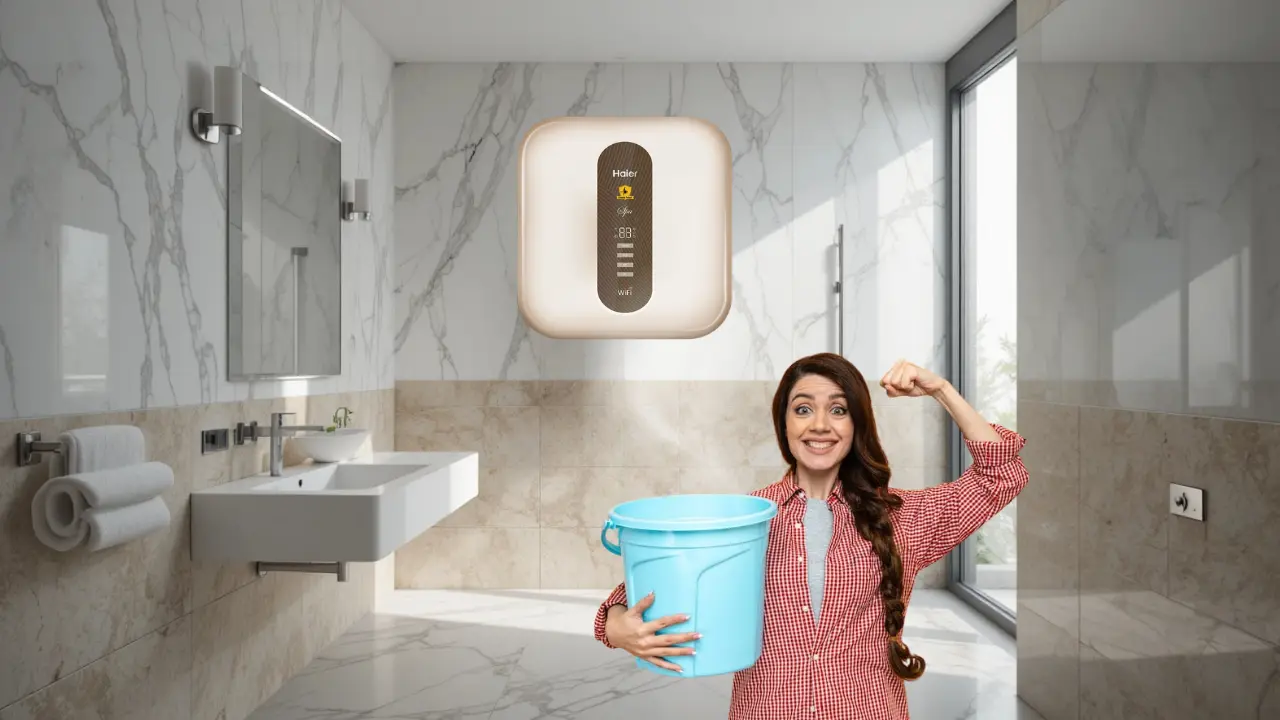

Clean hot water is not a luxury. It is a daily health decision.
Clean hot water supports healthier bathing by reducing bacteria, maintaining stable temperature, and protecting your skin from harsh shocks or pressure changes. In modern Indian homes, the right water heater does more than heat water. It manages hygiene, safety, and energy use quietly in the background.
That shift changes everything.
Because bathing is not just routine. It is recovery.
The morning shower is a health ritual.
Picture a weekday morning.
School uniforms ironed. Office laptop charging. Pressure building.
Someone steps into the shower expecting relief. Warmth. Reset.
But what actually touches the skin?
Water that has been sitting overnight in a tank. Pipes that may have fluctuated in pressure. Heating systems that overshoot temperature. Tiny inconsistencies we ignore because they feel normal.
According to the World Health Organization, contaminated water contributes to multiple skin and gastrointestinal issues globally. Even in urban India, hard water and inconsistent heating remain common household concerns.
Heat alone does not guarantee hygiene.
Clean hot water requires three systems working together:
- Controlled temperature
- Active water circulation
- Protection against bacterial growth
When these align, bathing becomes restorative. When they do not, the body absorbs stress instead of releasing it.
Why Clean Hot Water Matters for Skin and Health
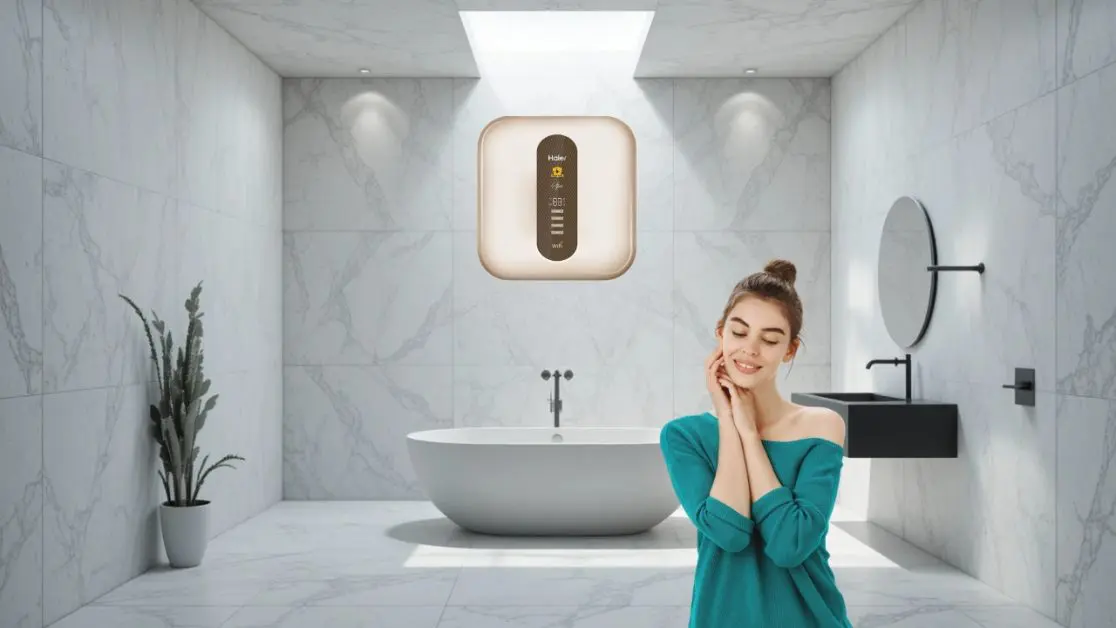
1. Temperature Consistency Protects Skin
Dermatologists often recommend bathing water between 37°C and 40°C for skin comfort. Water above 45°C strips natural oils. Sudden temperature spikes cause dryness and irritation.
Dual thermal safety systems prevent overheating. For example, the bi-capillary thermostat used in advanced storage heaters ensures cut-off if water crosses safe thresholds. This reduces scald risk and protects sensitive skin.
The hidden system here is simple.
Stable heat equals stable skin.
2. Bacterial Control Is Not Optional
Stored water can develop bacterial growth, especially when temperatures remain between 25°C and 50°C. Studies on water storage tanks show stagnation increases microbial activity significantly.
This is why some modern water heaters include anti-bacterial heating modes that raise water temperature to around 80°C periodically to deactivate bacteria.
The Haier 15L Square 5 Star Water Heater ES15V-SD WIFI, the Bacteria Proof System shows water heated to 80°C to reduce bacterial presence.
That single feature shifts bathing from warm to hygienic.
3. Circulation Prevents Stagnation
Water that flows stays fresher.
Technologies that encourage circulation inside the tank prevent stagnant deposits. The product sheet highlights RSC Technology designed to activate water circulation and reduce stagnant water.
It is the difference between fresh chai and tea that sat too long.
Same ingredients. Different experiences.
Three Types of Bathing Systems in Indian Homes
Let us be practical.
Every home falls into one of these three patterns.
One option is basic heating.
- Simple heating element
- No anti-bacterial mode
- No pressure protection
- Lower upfront cost
Cost: Affordable.
Benefit: Immediate warmth.
Limitation: Limited hygiene control and safety layers.
The second option is mid-range storage heating.
- Standard thermostat
- Basic insulation
- Some pressure tolerance
Cost: Moderate.
Benefit: Better heat retention.
Limitation: Minimal bacterial or shock protection.
The third option is smart, safety-focused heating.
- Shock proof protection
- Dual thermal safety cut-off
- Anti-bacterial mode
- High-pressure tolerance
- Strong insulation for energy savings
Cost: Higher upfront.
Benefit: Long-term safety, hygiene, and lower reheating energy.
Limitation: Requires thoughtful installation.
Clean hot water is not about price alone. It is about what risks you are quietly managing.
Safety Is the Invisible Foundation of Healthy Bathing

Shock Protection Changes Bathroom Safety
Bathrooms mix water and electricity.
That combination demands serious safeguards.
Shock Proof protection converts rated voltage to safe levels in case of leakage, protecting users.
In Indian households where voltage fluctuation is common, this layer matters. Especially in older buildings.
Peace of mind is a health feature.
8 Bar Pressure for High-Rise Living
Urban India grows upward.
High-rise apartments require heaters that withstand high water pressure. The ES15V-SD WIFI model is rated for 8 bars, suitable for tall buildings.
Without adequate pressure tolerance, tanks strain. Seals weaken.
Healthy bathing begins with durable infrastructure.
Durability Means Clean Water Over Time
Corrosion leads to contamination.
Glass-lined tanks reduce corrosion risk. This illustrates enamel layers enhancing durability.
An Incoloy 800 stainless steel heating element increases lifespan and resists scaling.
Longer service life reduces internal degradation.
Durability is hygiene stretched across years.
Energy Efficiency Is Also a Health Choice
Hot water should not create electricity anxiety.
A 5-star rated heater retains heat longer and reduces reheating cycles. PUF insulation retains temperature
The logic is straightforward:
- Better insulation
- Less reheating
- Lower electricity use
- Reduced carbon footprint
The Bureau of Energy Efficiency in India consistently notes that high star ratings improve household efficiency significantly.
Clean hot water should not cost emotional stress at the end of the month.
Clean Hot Water and Family Dynamics
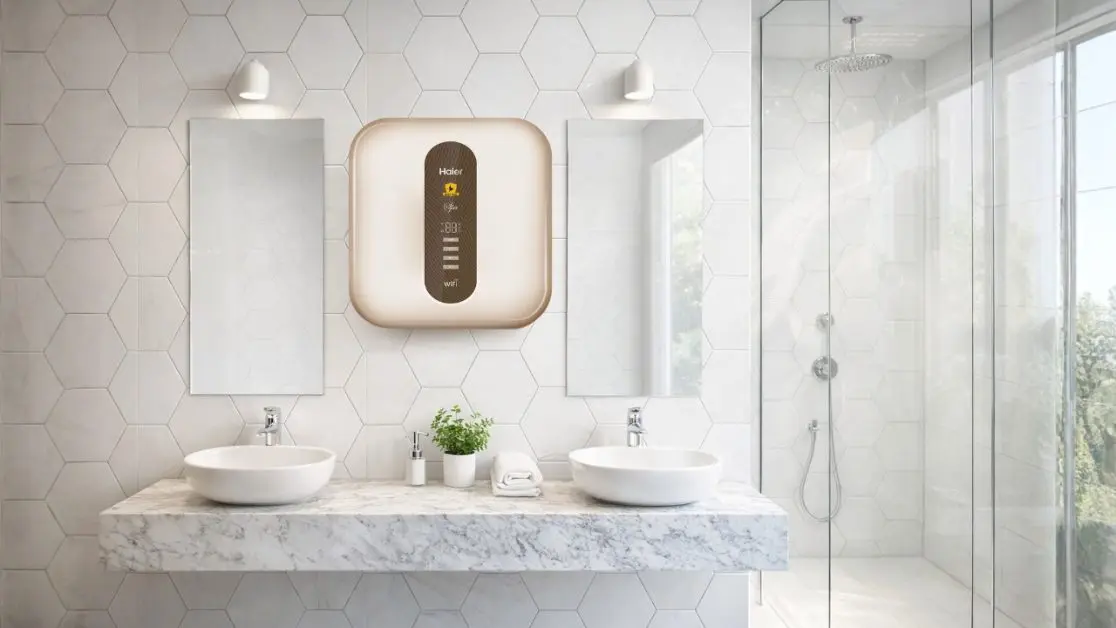
Consider three scenarios.
Parents with Young Children
Children have sensitive skin. Overheated water irritates faster. Bacterial control becomes critical.
Safety layers reduce worry.
Working Professionals Living Solo
Late evenings. Irregular routines.
Smart timers and memory functions ensure hot water is ready without repeated heating cycles. According to the product specification, Smart Timer and Smart Memory features support usage predictability.
Predictability reduces friction.
Couples Setting Up a New Home
New homes are built around systems.
Wall-mounted design. Compact dimensions. The 15L capacity fits urban bathrooms efficiently.
When appliances feel thoughtful, homes feel sorted.
What to Look for in a Water Heater for Healthier Bathing
Here is a quick framework.
| Feature | Why It Matters | Health Impact |
| Dual Thermostat | Prevents overheating | Protects skin |
| Anti-Bacterial Mode | Heats to 80°C | Reduces microbial growth |
| Shock Proof | Voltage safety | Prevents electrical risk |
| 8 Bar Pressure | High-rise compatibility | Prevents tank stress |
| Glass-Lined Tank | Corrosion resistance | Cleaner stored water |
| PUF Insulation | Heat retention | Energy savings |
Healthy bathing is not about hotter water.
It is about smarter water.
A Quiet Upgrade That Changes Daily Life
Haier’s 15L Square 5 Star Water Heater ES15V-SD WIFI blends these systems into one compact appliance. It includes Shock Proof protection, Dual Thermal Safety, Anti-Bacterial Function, RSC circulation technology, Incoloy 800 heating element, glass-lined tank, 8 bar pressure rating, and 5-star efficiency.
The point is not the feature list.
The point is the feeling.
When the shower turns on and nothing unexpected happens.
No sudden spike.
No lukewarm inconsistency.
No lingering doubt.
Just clean, stable warmth.
The Bigger Picture: Clean Water Reflects Clean Systems
Organizations succeed when invisible systems work.
Homes do too.
We rarely talk about the infrastructure behind daily comfort. But that is where quality lives.
Clean hot water for healthier bathing is not a headline-grabbing upgrade.
It is a quiet decision that improves mornings, protects families, and reduces energy waste.
The memorable insight is simple.
What touches your skin every day deserves better systems.
In modern Indian homes, smarter appliances are not about showing off technology. They are about reducing friction. Managing risk. Creating space.
And sometimes, that space begins with something as basic as a shower.
Clean hot water is not dramatic.
It is foundational.
And foundations decide everything.
Frequently Asked Questions
I just want hot water. Am I overcomplicating this by worrying about hygiene features?
Not necessarily. Basic heating gives warmth, but hygiene-focused systems reduce bacterial growth, overheating, and electrical risks. If your household includes children, elderly members, or sensitive skin concerns, those added layers matter daily.
Is paying more upfront actually worth it for my long-term health and peace of mind?
Higher-end models with insulation, dual thermostats, and anti-bacterial modes reduce reheating cycles, prevent scalding, and limit microbial growth. Over time, that can mean lower electricity bills and fewer safety concerns.
How do I decide between basic, mid-range, and smart water heaters for my apartment?
Basic → Budget-friendly, minimal hygiene layers
Mid-range → Better insulation, moderate safety
Smart/safety-focused → Dual cut-off, anti-bacterial heating, shock protection, high-pressure tolerance
If you live in a high-rise or face voltage fluctuation, advanced safety systems are strongly recommended.
I’m setting up my first home. What’s the one feature I shouldn’t compromise on?
Dual thermal safety cut-off. Stable temperature directly protects skin and reduces scald risk.
I heat my water daily. Isn’t that enough to kill bacteria?
Not always. Bacteria grow between 25°C–50°C. Anti-bacterial modes that periodically heat water to ~80°C are more effective at reducing microbial presence.
I leave water in my storage heater overnight. Is that unsafe?
Stored stagnant water can increase microbial growth. Systems with circulation technology reduce stagnation and maintain fresher stored water.
Why does my skin feel dry after bathing even though I use warm water?
Water above 45°C strips natural oils. Dermatologists recommend 37°C–40°C. Sudden temperature spikes worsen dryness.
Does hard water affect hygiene even if it’s hot?
Yes. Heat does not neutralize mineral hardness. Scaling can reduce heating efficiency and potentially impact internal tank cleanliness over time.
I like very hot showers. Is that bad for my skin long term?
Consistently bathing above 45°C can damage the skin barrier, leading to dryness and irritation. Controlled temperature systems prevent accidental overheating.
Sometimes my shower suddenly turns too hot. Why does that happen?
It may be due to inconsistent thermostats or pressure fluctuations. Dual thermal safety systems stabilize heat and automatically cut off overheating.
Is faster heating better, or is steady heating healthier?
Steady, controlled heating is healthier. Rapid overshoot temperatures can cause scalding and oil stripping.