
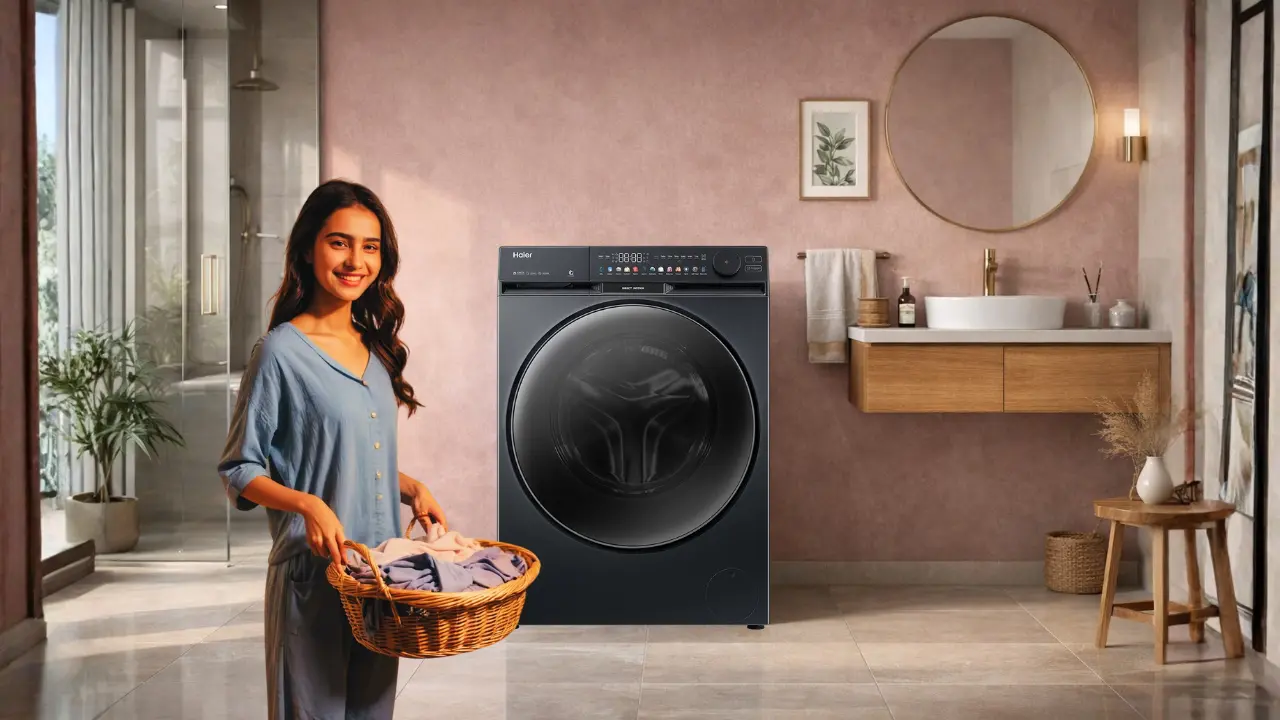

What does it mean for a washing machine to adapt to your routine?
It means your washing machine adjusts itself to your load size, fabric type, time constraints, and even your daily schedule.
It senses, learns, and responds. Instead of you planning your day around laundry, the machine quietly plans the wash around you.
That shift changes everything.
The 8:45 PM Laundry Reality Most Homes Know
Dinner is done.
The sink is full. The next day’s clothes are laid out. A pile of gym wear sits in the corner. School uniforms need to be ready by morning.
This is when laundry decisions happen.
Not at leisure. Not on a Sunday afternoon.
But in between WhatsApp messages, office emails, and half-watched cricket highlights.
Modern Indian households are busier than ever. According to industry energy reports, urban Indian homes now run appliances for over six hours daily on average. Washing machines are no longer weekend machines. They are mid-week problem solvers.
The real question is simple.
Does your washing machine understand this rhythm?
Or does it demand your attention like an old desktop computer?
Laundry Has Changed. Machines Must Too.
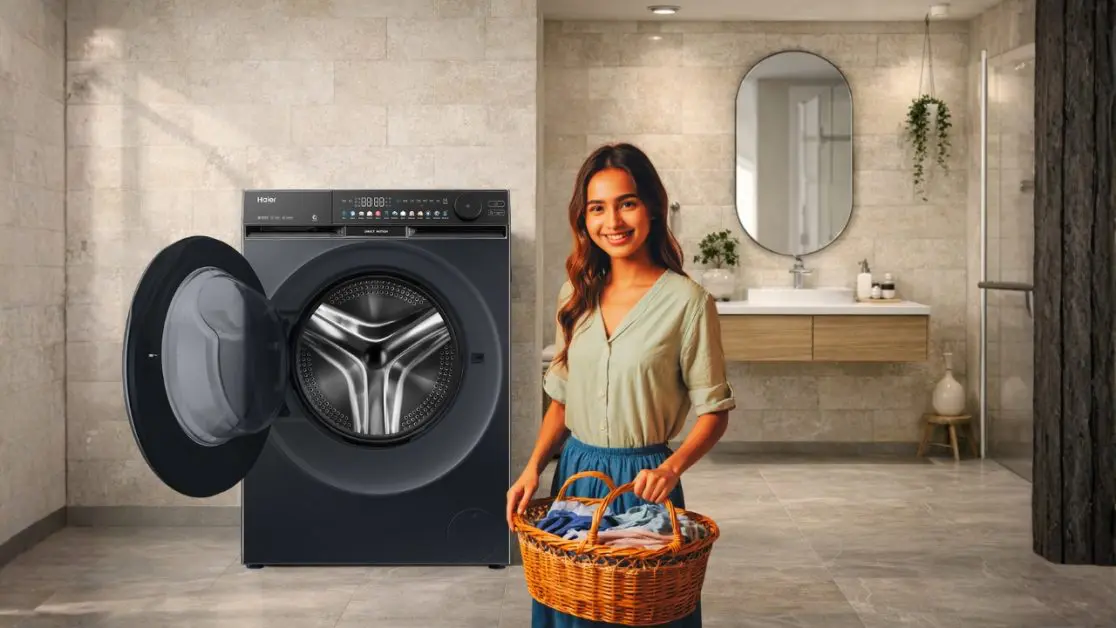
Ten years ago, washing machines were about capacity and spin speed.
Today, they are about adaptability.
Families are smaller. Apartments are tighter. Schedules are unpredictable. Some loads are heavy bedding. Others are just two shirts before a meeting.
One-size-fits-all cycles no longer work.
That is why adaptive washing machines matter.
They use sensors to detect fabric weight. They auto-adjust water levels. They optimize wash time. They reduce excess rinsing.
In short, they respond instead of rigidly repeating.
Efficiency is not about speed. It is about alignment.
Three Ways Washing Machines Adapt to Real Routines
Let us break this down clearly.
One option is Sensor-Based Smart Wash
Modern machines now auto-detect load size and dirt level.
For example, the Haier 10 Kg Fully Automatic Front Load Washing Machine HW100-DM14F9BKU1 features One-Touch AI Wash that senses fabric type, load, and soil intensity before choosing the wash parameters.
What does that mean in daily life?
- You throw in mixed clothes.
- You press one button.
- The machine decides water level, temperature, and spin speed.
Cost: Slightly higher upfront price.
Benefit: Saves water, electricity, and time daily.
And when you multiply small savings over 300 washes a year, the math becomes obvious.
The second option is Time-Adaptive Cycles
Sometimes you need a 15-minute refresh.
Sometimes you need a deep hygienic wash.
Adaptive machines include express cycles and flexible timing.
The Haier 12 Kg F9 pro Front Load Washing Machine HW120-DM14F9BKU1 includes Quick 15, Baby Care, Bedding, and Allergy Care programs.
This is not just feature stacking.
It is context awareness.
- Baby spills? Use Baby Care.
- Sudden meeting? Use Quick 15.
- Weekend bedsheets? Use Bedding.
Cost: Learning curve of programs.
Benefit: Precision without manual trial and error.
The system thinks in scenarios.
That is the difference.
The third option is Schedule Adaptation
Indian homes do not sleep at the same time.
Some families run appliances after 10 PM to reduce disturbance. Some prefer early mornings before school rush.
Adaptive machines include Night Wash modes for silent cycles.
And with WiFi connectivity, you can start, pause, or monitor cycles remotely.
Laundry becomes asynchronous.
You do not have to stand next to the machine.
You integrate it into your day.
Freedom is not automation. It is flexible.
Energy Efficiency Is Not Just a Rating. It Is Behavioral Design.
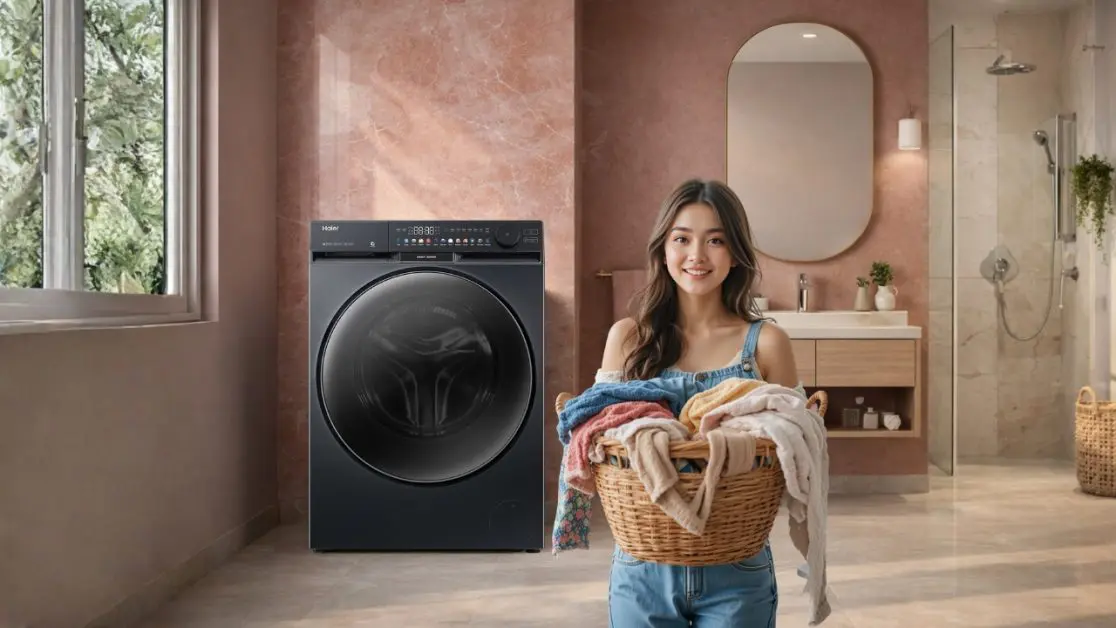
India’s Bureau of Energy Efficiency highlights that 5-star rated appliances significantly reduce long-term electricity consumption.
Adaptive washing machines go further.
They weigh loads automatically. They reduce excess water. They optimize motor performance.
For instance:
- 5 Star energy rating models consume less power per cycle.
- Direct Motion Motors reduce vibration and improve efficiency.
- Smart wash algorithms cut unnecessary spin cycles.
Here is what that looks like in practice:
| Routine Type | Traditional Machine Reaction | Adaptive Machine Reaction |
| Small 3-shirt load | Fixed water usage | Reduced water + time |
| Heavy bedding | Same standard cycle | Auto-adjusted duration |
| Late-night wash | Standard noise | Silent Night Wash mode |
| Mixed fabrics | Manual setting required | Auto fabric sensing |
The machine stops being mechanical.
It becomes responsive.
The Hidden System: Why Adaptability Matters in the Long Run
Most households underestimate friction.
The 30 seconds you spend adjusting temperature.
The extra rinse you accidentally add.
The water wasted on half-loads.
Individually small. Collectively massive.
Adaptive washing machines remove friction.
And friction removal scales.
If your machine saves 10 minutes per wash, that is 50 hours a year.
If it saves 5 litres per wash, that is over 1500 litres annually.
Multiply that across millions of homes.
That is behavioural design at scale.
This is not about convenience alone.
It is about sustainability embedded into daily life.
When Routine Changes, The Machine Should Too
Life stages change laundry needs.
- A bachelor does small loads.
- A new couple experiments with delicate fabrics.
- A family with kids runs daily cycles.
- Parents caring for elders prioritize hygiene programs.
The Haier F9 pro series supports multiple wash programs including Baby Care, Self Clean, Allergy Care, and Refresh.
That is not feature inflation.
That is lifecycle alignment.
The best appliances do not lock you into today’s habits. They grow with tomorrow’s needs.
Capacity Is Not About Size. It Is About Breathing Space.
Capacity often gets misunderstood.
10 Kg and 12 Kg machines are not just for larger families.
They offer drum space for:
- Comforters.
- Festival sarees.
- Bulk towels.
- Winter bedding.
The Haier Super Drum design maximizes drum diameter for better wash quality.
More room means less tangling.
Less tangling means fewer re-washes.
Which means lower water use.
Systems thinking again.
Direct Motion Motors – Silence Is Strategy

Noise matters in apartments.
Especially when work-from-home calls overlap with wash cycles.
Direct Motion Motor technology connects directly to the drum, reducing belt friction and vibration.
Lower vibration.
Lower noise.
Better longevity.
Warranty details show extended motor coverage, reinforcing durability.
Silence is not luxury.
It is a design respecting shared spaces.
So What Should You Actually Look For?
If you are choosing a washing machine that adapts to your routine, use this simple framework:
- Load Sensing Capability
Does it auto-adjust water and time? - Program Diversity
Are there specific cycles for baby clothes, quick wash, bedding? - Energy Rating
Is it 5 Star rated? - Motor Technology
Does it reduce noise and vibration? - Connectivity
Can you manage it remotely?
Each element removes friction from a different part of your week.
Together, they create alignment.
The Bigger Pattern: Smart Homes Are About Rhythm, Not Gadgets
We often think smart homes mean flashy screens and voice assistants.
But real intelligence is quieter.
A refrigerator that maintains freshness automatically.
An AC that balances temperature across seating positions.
A washing machine that senses load and adjusts silently.
Smart homes are systems that respect routine.
They adapt without demanding attention.
And in uncertain times, adaptability defines resilience.
In households.
In organizations.
In life.
The Insight That Stays
A washing machine that adapts to your routine is not about technology.
It is about reclaiming mental space.
It is about trusting that small daily tasks will not consume disproportionate energy.
And when appliances align with human rhythm, homes feel lighter.
Sorted.
Calm.
That is the future of everyday living.
Not louder machines.
Smarter systems.
Quietly working in your favour.
Frequently Asked Questions
I’m overwhelmed by washing machine features. How do I know which ones actually matter for my daily routine?
Focus on four essentials: load sensing, flexible programs, energy efficiency, and quiet motor technology. These directly affect how much time, water, and effort your machine saves every week.
If my family size changes in a few years, will my washing machine still make sense?
Adaptive machines with multiple programs and larger drum capacity can handle evolving needs from small bachelor loads to bedding and baby clothes.
Do I really need a 10 kg or 12 kg washing machine if my daily laundry is small?
Larger capacity is not only for big families. It provides drum space for bulky items like blankets, sarees, and comforters while reducing tangling and re-washing.
Is buying a smart washing machine worth the higher upfront cost for my household?
In most cases, yes. Sensor-based washing saves water, electricity, and time. Over hundreds of washes per year, these small savings add up significantly.
I left my laundry inside the washing machine overnight. Do I need to wash it again?
Usually yes. Damp clothes can develop odor and bacteria after several hours. Running a quick refresh cycle or a short wash is recommended.
My baby’s clothes need extra hygiene. Are special wash programs actually useful?
Yes. Baby care programs typically use higher temperatures and extra rinsing to remove detergent residue and allergens.
I wash gym clothes frequently. Can adaptive machines handle sweaty synthetic fabrics properly?
Modern machines detect fabric type and soil level, adjusting water and wash duration to clean sportswear without damaging fibers.
Why do some clothes come out tangled or twisted after washing?
Overloaded or small drums cause tangling. Larger drums and balanced spin cycles reduce friction and twisting.