
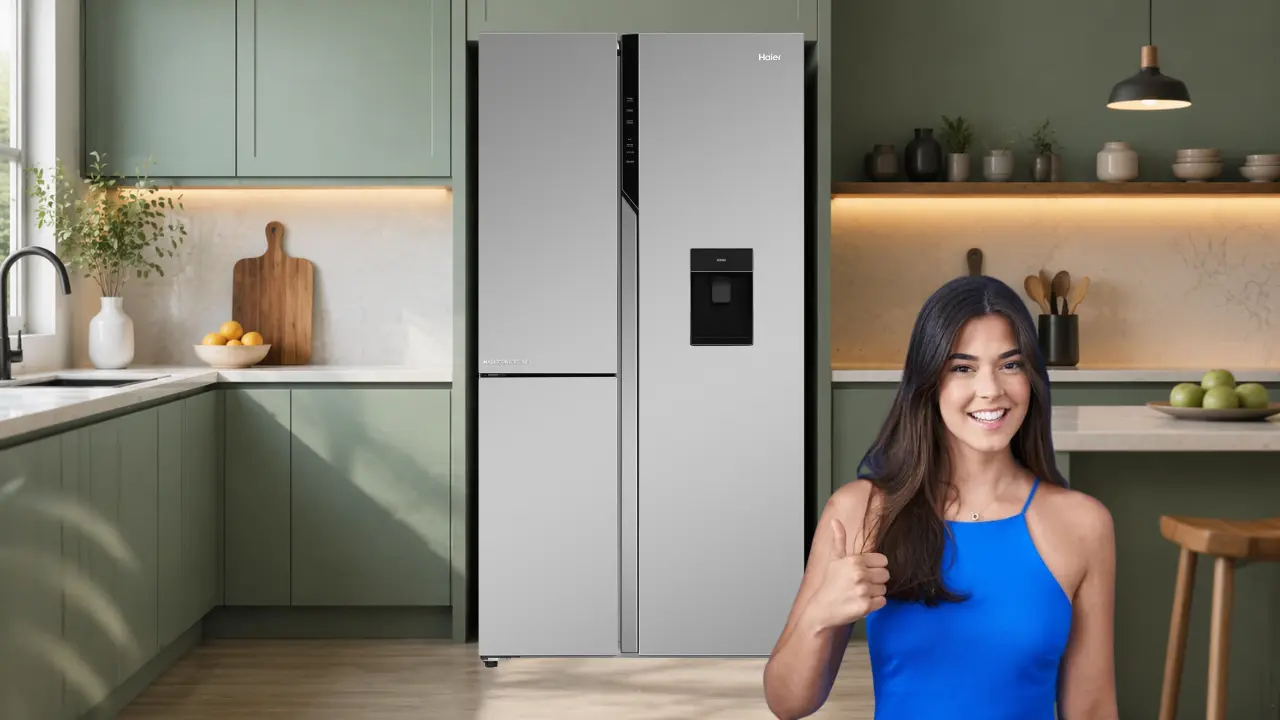

Yes, a Haier 3 door water dispenser refrigerator is worth it for most modern Indian homes.
It combines everyday convenience, smart connectivity, and space efficiency into one system.
If your routine involves frequent water use, shared living, or busy schedules, it quietly removes friction you didn’t realise existed.
The moment you notice the difference.
It usually happens on a hot afternoon.
Someone walks into the kitchen. Open the fridge. Take out a bottle. Close it. Someone else repeats the same process five minutes later.
By evening, the fridge door has opened 20 times.
Not because people are hungry.
Because people are thirsty.
That’s the hidden system most homes ignore.
Water access drives refrigerator usage more than food does.
And that is exactly where a 3 door refrigerator with a built-in water dispenser changes the experience.
What exactly is a Haier 3 door water dispenser refrigerator
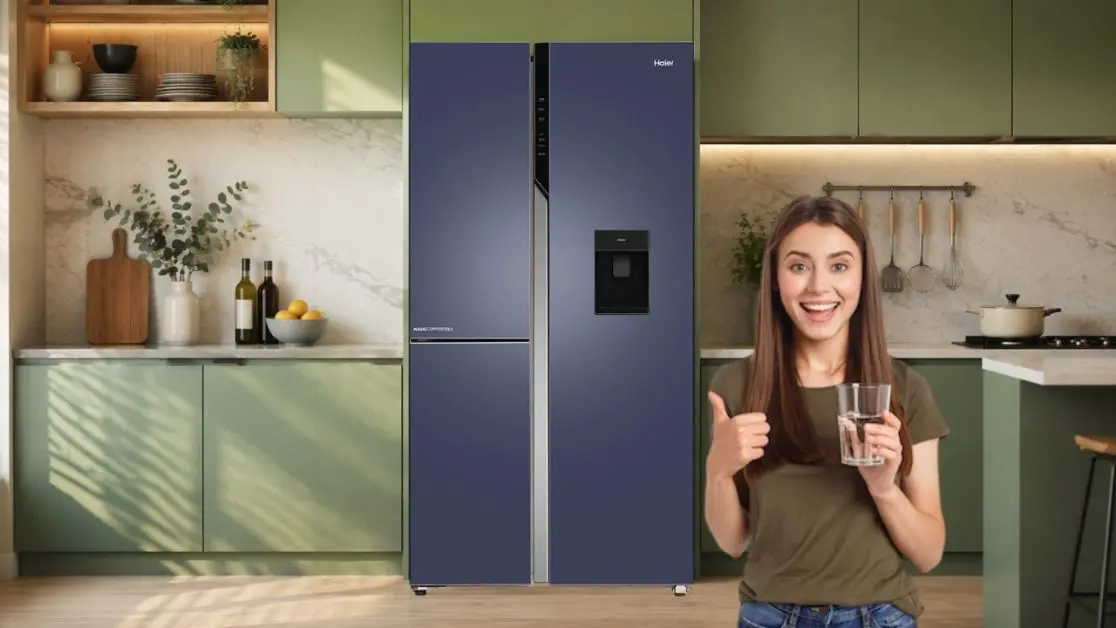
A Haier 3 door water dispenser refrigerator is not just about cooling.
It is about separating functions inside your kitchen system.
Take models like the Haier 592L Graphite Black 3 Door Smart Convertible Refrigerator (HRT-683WGKU1) or the Haier 598L Black White Glass 3 Door Smart Convertible SBS (HRT-683WISU1).
Here is what they do differently:
- Provide direct access to drinking water without opening the fridge
- Offer up to 83% fridge space with convertible storage
- Enable WiFi connectivity for remote control and monitoring
- Use inverter compressors for energy efficiency and durability
This is not a feature list.
It is a redesign of how your kitchen behaves.
Why the built-in water dispenser matters more than you think
Most people assume it’s just a convenience feature.
It isn’t.
It’s a behaviour change.
The real problem it solves
Think about a typical Indian household:
- Kids opening the fridge every hour for water
- Guests during festivals needing quick access
- Someone working from home grabbing cold water repeatedly
- Summers pushing water consumption up by 30 to 50 percent
Every fridge opening releases cool air.
Every closing forces the compressor to work harder.
Now connect the dots.
More water access equals more energy loss.
What the dispenser changes
With an in-built dispenser:
- You reduce door openings significantly
- You maintain stable internal temperature
- You improve energy efficiency indirectly
Convenience is not a luxury. It is efficient in disguise.
A quick feature snaps hot that actually matters
| Feature | What it does in real life |
| In-built water dispenser | Access water without opening fridge |
| Convertible fridge space | Adjust storage during festivals or bulk shopping |
| Smart connectivity | Control settings from phone |
| Deo Fresh technology | Reduces odour and keeps food fresh longer |
| Jumbo ice maker | Handles high demand during gatherings |
These are not isolated features.
They work together as a system.
The hidden advantage of three doors
Three doors are not about design.
They are about separation of intent.
One option is traditional two-door thinking
- Fridge and freezer combined
- Frequent door opening
- Mixed storage usage
Cost:
Lower upfront price
Higher long-term inefficiency
The second option is 3 door smart convertible
- Separate zones for fridge, freezer, and convertible space
- Better organization
- Less temperature fluctuation
Cost:
Slightly higher upfront investment
Significantly better usability
The third option is lifestyle optimisation
- Water access independent of cooling
- Smart storage adapts to your habits
- Reduced daily friction
Cost:
You stop noticing your appliance
Because it simply works
How it fits into real Indian homes
This is where most reviews stop.
This is where things get interesting.
Case 1: Working professionals living solo
Late-night water runs.
Frequent fridge access.
A dispenser removes interruption.
Result: smoother routine.
Case 2: Families with kids
Children don’t wait.
They open the fridge repeatedly.
A dispenser reduces chaos.
Result: less energy loss and fewer spills.
Case 3: Festival-heavy households
Think Diwali. Eid. Weddings.
Storage demand spikes.
Water consumption doubles.
Convertible space helps you expand fridge capacity up to 83%
Result: one appliance adapts to changing needs.
Smart connectivity is not about control. It’s about awareness
The phrase sounds technical.
But the impact is simple.
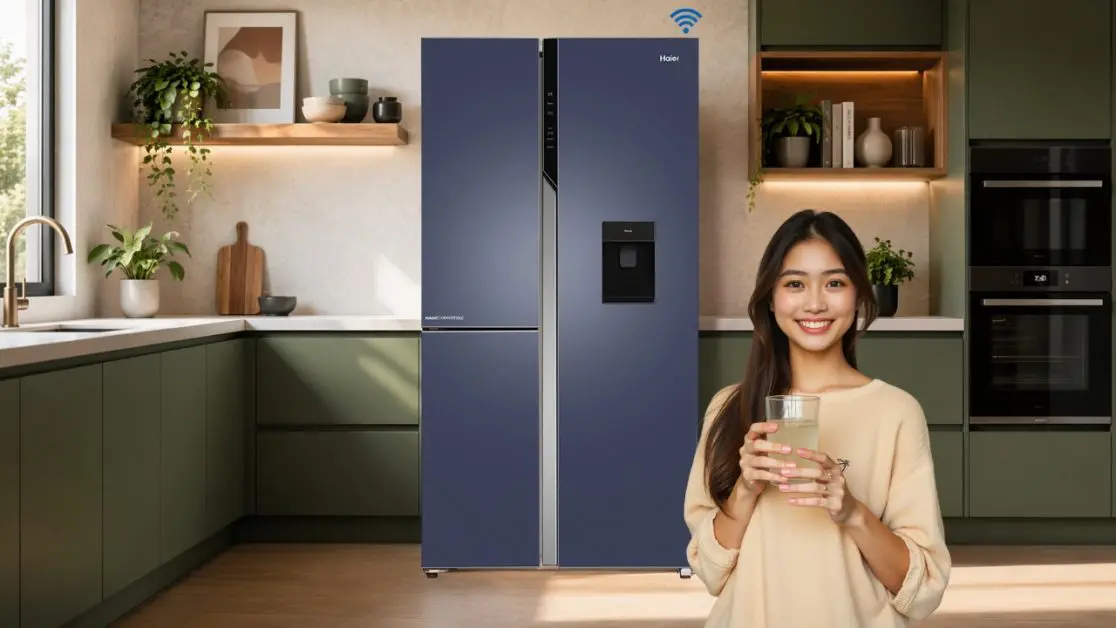
With WiFi-enabled control:
- You monitor temperature remotely
- You adjust settings without opening the door
- You track food storage patterns
This is what Haier calls smart food management
And it reveals a bigger idea.
The future of appliances is not controlled. It is context.
Energy efficiency is no longer a feature. It is a baseline
Let’s talk numbers.
- Inverter compressors reduce energy consumption by adjusting cooling cycles
- Stabiliser-free operation protects against voltage fluctuations
- Annual energy consumption stays controlled even with large capacity
In India, voltage fluctuation is not rare.
It is routine.
Which means durability matters as much as efficiency.
What most people get wrong about buying appliances
They compare features.
They miss systems.
Here’s the truth:
- A refrigerator is not just storage
- A water dispenser is not just convenience
- Smart connectivity is not just control
Together, they create time savings, energy savings, and behavioural ease.
And those compounds daily.
Pros and cons you should actually consider
Pros
- Reduces unnecessary fridge openings
- Improves energy efficiency indirectly
- Makes water access seamless
- Flexible storage with convertible space
- Smart features that adapt to usage
Cons
- Higher upfront cost compared to basic models
- Requires proper installation space
- Smart features need initial setup
How it compares to a standard 2 door refrigerator
Take a typical 2 door smart convertible model.
It still offers:
- In-built water dispenser
- Convertible storage
- Smart connectivity
But here’s the difference:
| Factor | 2 Door | 3 Door |
| Storage flexibility | Moderate | High |
| Temperature stability | Lower | Better |
| Usage segmentation | Limited | Strong |
| Convenience level | Good | Excellent |
The shift is subtle.
But over time, it becomes obvious.
So, is it worth it
Yes. But not for everyone.
It is worth it if:
- Your home sees high daily water usage
- You host frequently or have a large family
- You value convenience that saves time
- You want adaptable storage for changing needs
It is not necessary if:
- You live alone with minimal usage
- You rarely store large quantities of food
- You prefer basic functionality over smart features
The bigger insight most people miss
A refrigerator used to be about cooling.
Today, it is about reducing decisions.
You don’t think before taking water.
You don’t rearrange shelves every week.
You don’t worry about storage during festivals.
The system handles it.
And that’s the shift.
Good appliances don’t demand attention. They remove it.
Final thought: convenience is a long-term investment
When you evaluate something like a Haier 3 door water dispenser refrigerator, don’t ask:
“What does it do?”
Ask:
“What does it remove from my day?”
Because the real value is not in features.
It is in friction you no longer experience.
And once that friction disappears, going back feels impossible.
Frequently Asked Questions
I’m confused. Do I really need a 3-door fridge or is it just hype?
If your fridge is opened frequently (especially for water), a 3-door model isn’t hype it’s a workflow upgrade. It reduces repetitive actions and improves efficiency. If your usage is minimal, it may feel unnecessary.
Is the Haier 3-door water dispenser fridge worth the extra money for my lifestyle?
Yes, if your day involves frequent water access, shared usage, or hosting. The value compounds daily through saved time, reduced effort, and better organization not just features.
I didn’t think water access mattered this much. Does it really affect fridge usage?
Yes. In most Indian homes, water access drives more fridge openings than food. A dispenser separates this behavior, reducing cooling loss and compressor strain.
I have kids constantly opening the fridge. Will this actually help?
Significantly. Kids can access water externally, reducing door openings, spills, and temperature fluctuations.
Does a water dispenser actually save electricity or is that a myth?
Indirectly, yes. Fewer door openings = less cold air loss = less compressor work. Combined with inverter technology, this improves efficiency over time.
Will a bigger 3-door fridge consume more power?
Not necessarily. Modern inverter compressors adjust cooling dynamically, so real-world consumption stays controlled despite larger capacity.
Will I actually use these smart features daily?
Not actively. The benefit is passive: you interact less with the appliance while it adapts to your habits.
Is setup complicated for someone not tech-savvy?
Initial setup takes a few minutes, but after that, it runs quietly in the background without much intervention.