
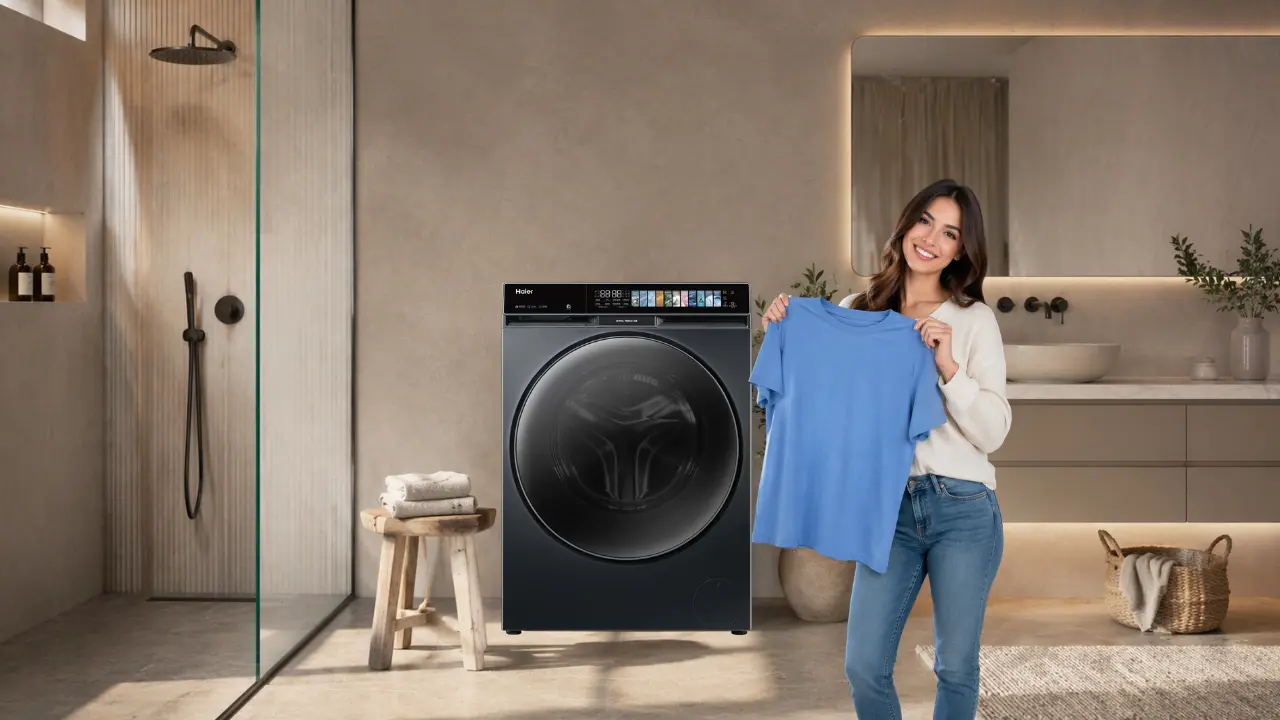

AI improves fabric care by understanding what your clothes actually need. It detects fabric type, load size, and dirt level, then adjusts water, time, and motion automatically.
The result is better cleaning, less damage, and lower energy use without constant manual decisions.
The laundry moment every Indian home recognises.
It is Sunday afternoon.
The washing machine is full. Mixed load. Jeans, shirts, a sari, maybe gym wear.
Someone pauses.
“Should this be a delicate wash? Or normal?”
That hesitation tells you everything.
Laundry has always been guesswork.
Too harsh, and fabrics fade.
Too gentle, and stains stay.
Too long, and energy gets wasted.
Fabric care is not about washing. It is about decision-making.
And most of us were never trained for it.
Why traditional washing systems fail fabrics
Traditional machines follow instructions.
They do not understand context.
You choose a mode. The machine executes it. No questions asked.
But real life is messy.
The hidden mismatch problem
- A cotton shirt with oil stains behaves differently than a lightly worn kurta
- A heavy load absorbs water differently than a small one
- Synthetic fabrics react differently to heat compared to wool
Yet most machines treat them the same.
One setting. Many variables. That is where damage begins.
What AI actually changes in fabric care
AI does not make washing machines smarter in a flashy way.
It makes them aware.
It observes.
It calculates.
It adjusts.
The three decisions AI makes automatically
- Fabric detection
AI identifies whether the load is cotton, denim, silk, or mixed. - Load sensing
It measures how heavy or light the drum is. - Dirt level analysis
It estimates how much cleaning is required.
Machines like the Haier 12 Kg F9 Pro Front Load Washing Machine (HW120-DM14F9PBKU1) use One-Touch AI Wash to handle all three in a single step.
You press once. The system decides the rest.
This is not automation. This is judgement.
The shift from control to trust
Earlier, better laundry meant more involvement.
Now, better laundry means better systems.
Three ways people approach laundry today
One option is manual control
You choose everything. Water level, cycle, time.
- Cost: Time and inconsistency
- Benefit: Full control
The second option is preset programs
Cotton. Delicate. Quick wash.
- Cost: Limited flexibility
- Benefit: Convenience
The third option is AI-driven washing
The machine adapts in real time.
- Cost: Initial learning curve
- Benefit: Precision and fabric longevity
The future belongs to systems that reduce decisions, not increase them.
How AI improves fabric life, not just cleaning
Cleaning is visible.
Damage is slow.
You do not notice fabric wear immediately. But it builds over time.
AI reduces three types of fabric stress
| Fabric Stress Type | Traditional Impact | AI Impact |
| Overwashing | Fading, thinning | Optimized wash time |
| Excess friction | Fiber damage | Controlled drum motion |
| Heat exposure | Shrinkage | Temperature adjustment |
Machines like the Haier 10 Kg Fully Automatic Front Load Washing Machine (HW100-DM14F9BKU1) include features like iRefresh steam care, which reduces wrinkles and odours without aggressive washing.
Less washing. More preservation.
That is the real upgrade.
Why Indian households benefit more from AI fabric care
Laundry in India is different.
It is not just shirts and jeans.
It is:
- Heavy sarees during festivals
- Delicate fabrics like silk and chiffon
- Daily wear mixed with gym clothes
- Seasonal loads during monsoon
AI solves the “mixed load” problem
Most households do not separate laundry perfectly.
AI adapts to mixed fabrics.
Instead of forcing you to change behaviour, it adjusts to your reality.
Good technology fits into life. It does not demand life to change.
The invisible system behind smarter washing
AI washing machines work like a quiet manager.
They coordinate multiple variables at once:
- Water level
- Spin speed
- Wash duration
- Detergent efficiency
What happens during an AI wash cycle
- Sensors detect load weight
- Algorithms estimate optimal water usage
- Motor adjusts movement for fabric type
- Cycle time changes dynamically
The Direct Motion Motor in Haier machines reduces vibration and noise while improving efficiency.
This is not just about comfort.
It ensures:
- Less mechanical stress on clothes
- Longer machine life
- Lower electricity consumption
When systems align, outcomes improve quietly.
Energy, water, and time: the triple advantage
Most people think AI is about convenience.
It is actually about efficiency.
Measured benefits of AI washing systems
- Up to 20 to 30 percent water savings through load-based adjustments
- Reduced electricity usage via optimized cycles
- Shorter wash times for lightly soiled clothes
Features like Eco Wash automatically match water level and washing time to conserve resources.
Why this matters in real life
Think about summer months.
Water supply fluctuates. Electricity bills rise.
AI systems reduce both pressures.
Efficiency is not a feature. It is a daily cost decision.
Fabric care is becoming predictive, not reactive
Earlier, washing machines reacted to inputs.
Now, they anticipate needs.
What predictive fabric care looks like
- Suggesting cycles based on past usage
- Adjusting settings for recurring patterns
- Notifying completion through smart connectivity
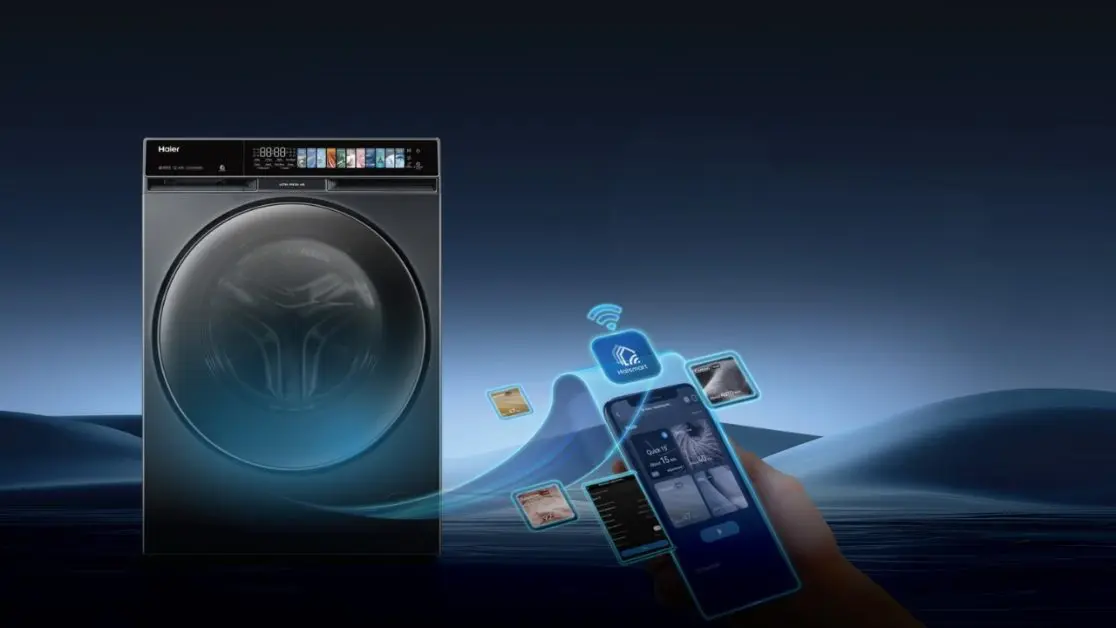
With WiFi-enabled systems, you can start or monitor a wash cycle remotely.
This changes something subtle.
Laundry stops being a chore you manage.
It becomes a process that runs in the background.
The emotional side of fabric care
Clothes are not just fabric.
They carry moments.
- A kurta worn during Diwali
- A shirt from your first job
- Baby clothes that need extra care
AI does something interesting here.
It reduces the risk of mistakes.
Because the real cost of laundry is not detergent. It is a regret.
What to look for in an AI-powered washing machine
Not all AI is equal.
Some features matter more than others.
Key features that actually improve fabric care
- One-touch AI wash with fabric detection
- Steam care for odour and wrinkle reduction
- Low-noise motors for smooth operation
- Smart water and energy optimization
- Dedicated programs for Indian fabrics
Haier’s AI Color Panel also simplifies interaction with intuitive controls and fabric-specific programs.
Good AI simplifies decisions. Bad AI adds more buttons.
The larger shift: from machines to systems
This is not just about washing machines.
It is about how homes are evolving.
From:
- Manual control
- To assisted systems
- To intelligent environments
The same shift is happening across appliances.
Refrigerators that adjust cooling.
ACs that learn room patterns.
Washing machines that understand fabrics.
Homes are becoming systems that think.
What this means for everyday living
The real benefit is not cleaner clothes.
It is clear.
Less thinking.
Fewer mistakes.
More consistency.
Laundry becomes predictable.
And predictability is underrated.
The one idea worth remembering
The best fabric care is not about washing harder. It is about washing smarter.
AI does not replace effort.
It replaces uncertainty.
And once uncertainty disappears, everything else feels easier.
Final thought: when systems understand, life simplifies
Look around your home.
Every appliance asks for decisions.
What if fewer of them did?
AI in fabric care is not a luxury upgrade.
It is a shift in how everyday systems behave.
Quietly. Consistently. Reliably.
And that is how modern homes become effortless.
Not by adding more features.
But by removing friction.
Frequently Asked Questions
I always get confused choosing wash modes. Is it just me?
Not at all. Traditional machines expect you to understand fabric science most people don’t. AI removes that burden by automatically selecting the right settings based on your load.
I just throw everything together. Am I ruining my clothes?
Sometimes, yes. Mixed fabrics react differently. AI-powered machines detect this mix and adjust wash intensity, reducing damage even when you don’t separate perfectly.
Why does laundry feel like a decision-heavy chore?
Because every load involves multiple variables: fabric, dirt, weight. AI simplifies this into a single decision (press start) instead of five.
Quick wash saves time, but is it bad for clothes?
It depends. Quick wash may underclean heavy dirt. AI decides when a shorter cycle is safe balancing speed and effectiveness.
Why do my clothes fade so quickly?
Likely overwashing, high friction, or excess heat. AI reduces all three by adjusting motion, duration, and temperature.
Is gentle wash always better?
Not always. Too gentle means poor cleaning. AI finds the right balance, not just the safest setting.
I wash sarees, gym wear, and daily clothes together. Can AI handle that?
Yes, that’s exactly where AI helps most. It adapts to mixed loads instead of forcing perfect sorting.
Is AI useful during monsoon or heavy laundry days?
Definitely. It optimizes water usage and adjusts cycles based on load size and dirt important when conditions vary.
Do I still need to separate delicate clothes?
For very delicate items (like silk), separation is still safer. But AI reduces the risk even if you don’t.