
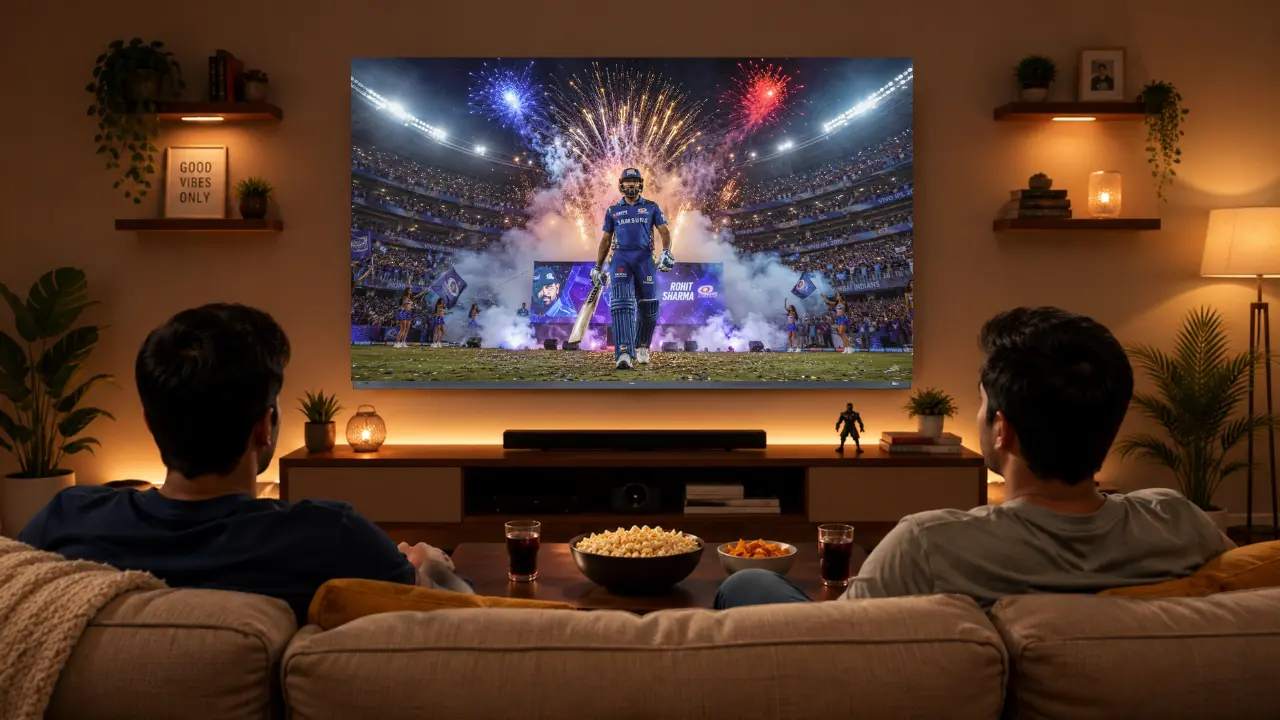

Haier TVs deliver stadium-like sound by combining multi channel speaker systems, Dolby Atmos spatial audio, and KEF tuned acoustics, creating layered sound that surrounds you instead of just reaching you.
The result is simple. You don’t just hear the match. You feel the crowd, the tension, and the moment.
Why does “stadium like sound” even matter at home?
Picture this.
It’s an IPL night. The last over. Six needed off three balls.
Everyone in the room leans forward.
But the sound?
Flat. Compressed. Almost distant.
The moment breaks.
Sound isn’t background. It’s the experience itself.
In a real stadium, sound comes from everywhere.
- The roar behind you
- The chants beside you
- The crack of the bat in front
That multi-directional immersion is what your brain registers as real.
And that’s the gap most TVs fail to bridge.
The hidden system behind immersive sound
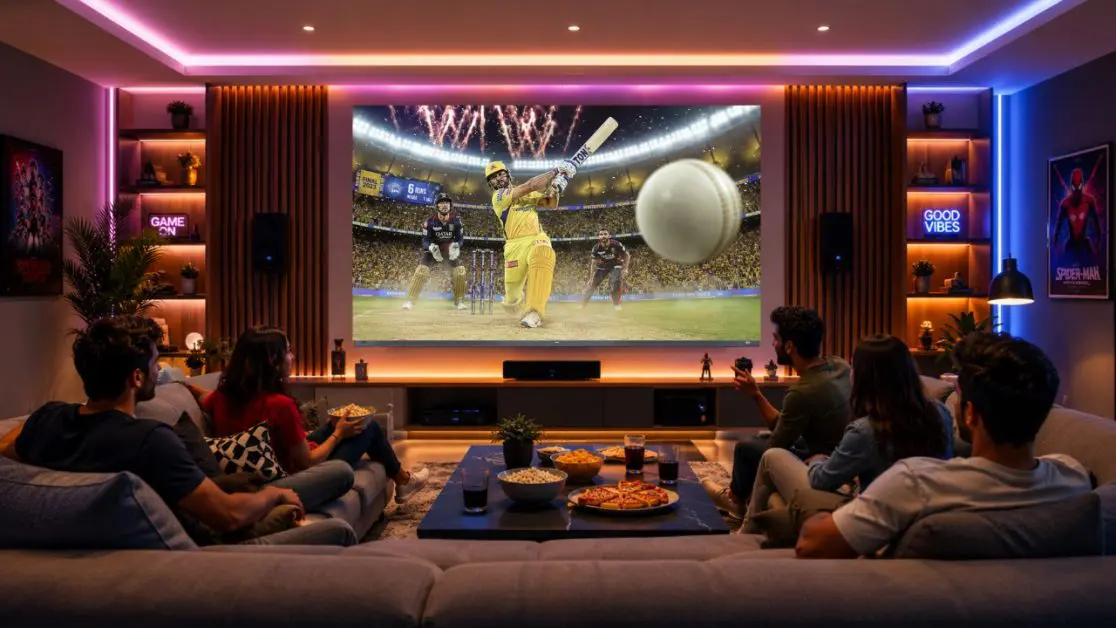
Most people think better sound means louder sound.
That’s incomplete.
Better sound is about placement, depth, and timing.
Let’s break it down.
Three layers define stadium-like sound
- Direction
Sound should move. From left to right. From behind to front. - Depth
Crowd noise, commentary, and gameplay should exist at different levels. - Precision
You should hear details. Not just noise.
Haier TVs approach sound like a system, not a feature.
And that changes everything.
How Haier builds a “stadium” inside your living room
1. Multi-channel speaker architecture creates layers
A stadium does not rely on one speaker.
Neither should your TV.
Haier’s premium models use advanced setups like:
- 6.2.2 channel speakers for layered audio output
- 2.1 channel systems with subwoofers for deep bass and clarity
What does that mean in real life?
- Commentary stays crisp and centered
- Crowd noise surrounds you
- Bass hits during key moments feel physical
Insight:
Single speakers deliver sound. Multi-channel systems deliver space.
2. Dolby Atmos turns sound into movement
You don’t just want sound.
You want motion.
That’s where Dolby Atmos changes the game.
- It places sound in a 3D space around you
- It creates the illusion of sound coming from above, behind, and beside
So when a ball flies into the stands, your ears follow it.
Not because it’s louder.
Because it’s placed correctly.
One line takeaway:
Immersion is not about volume. It’s about direction.
3. KEF tuned audio adds precision
Here’s something most buyers overlook.
The hardware matters. But tuning matters more.
Haier integrates Sound by KEF, a brand with decades of acoustic research
That translates into:
- Balanced highs and lows
- Clear vocals even during noisy scenes
- Controlled bass that doesn’t overpower
Think of it like cooking.
Good ingredients help.
But technique defines the dish.
4. AI driven sound optimization adapts in real time
Now comes the part most people don’t see.
But always feel.
Haier’s Ultrasense AI integrates sound with visuals and context
That means:
- Dialogue is enhanced during conversations
- Crowd noise expands during sports
- Background music softens when needed
It adjusts automatically.
No manual tuning. No guessing.
Insight:
Smart sound doesn’t just play. It reacts.
What does this mean for real Indian homes?
Let’s bring this out of the spec sheet.
Scenario 1: Family cricket night
- Parents want clarity
- Kids want excitement
- Everyone wants volume without distortion
Result with Haier:
- Clear commentary
- Expansive crowd sound
- No shouting needed
Scenario 2: Late night OTT binge
You lower the volume to avoid disturbing others.
Most TVs lose detail here.
But with layered sound:
- Dialogue remains audible
- Background music stays subtle
- No need for subtitles
Scenario 3: Gaming after work
Modern games demand precision.
Haier TVs support:
- Low latency audio sync
- Smooth transitions with high refresh rates
- Immersive spatial cues
So you don’t just see movement.
You hear it coming.
Breaking the myth: Do you still need a soundbar?
Let’s be honest.
External sound systems have been the default upgrade.
But the gap is shrinking.
Three choices most buyers consider
One option is:
Basic TV speakers
- Low cost
- Flat sound
- Minimal immersion
The second option:
TV + soundbar
- Better output
- Extra setup and space
- Additional cost
The third option:
Advanced TVs with built-in systems
- Integrated multi-channel audio
- Clean setup
- Balanced performance
Haier’s approach leans toward the third.
Especially in models like:
- New M96 Series 254cm(100) QD Mini LED AI Smart Google TV (H100M96FUX)
- New M92 Series 164cm(65) and 189cm(75) variants (H65M92FUX, H75M92FUX)
Cost-benefit insight:
- You save space
- You reduce wiring clutter
- You still get immersive sound
Sound and screen work together. Always.
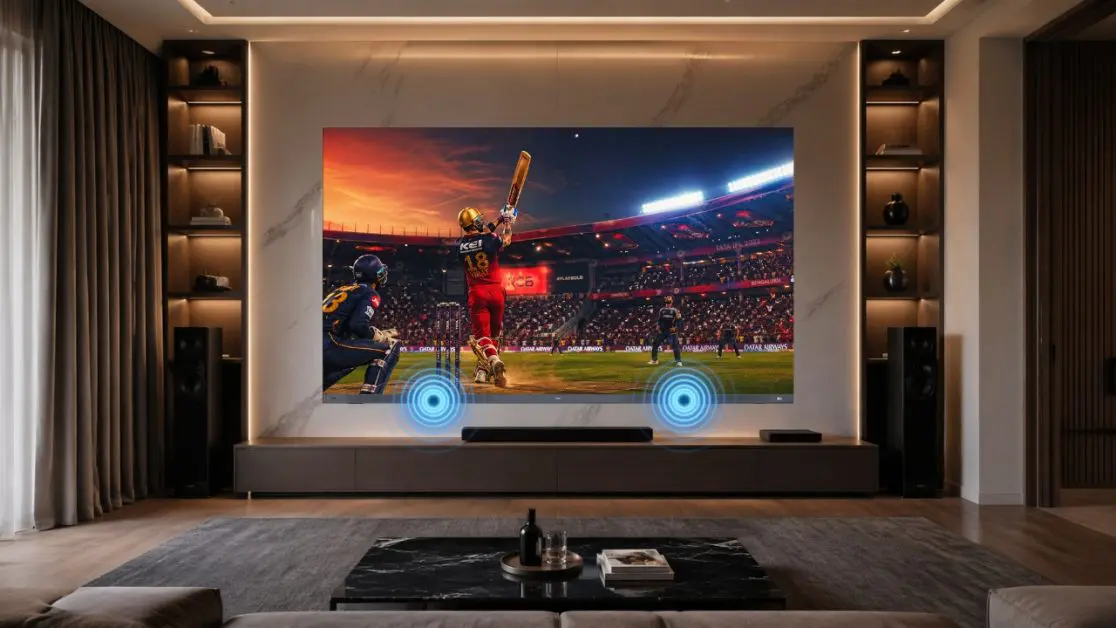
Here’s a subtle truth.
Sound feels better when visuals support it.
Haier TVs combine:
- High refresh rates for smoother motion
- HDR formats like Dolby Vision IQ for depth
- AI processors for real time scene detection
Why does this matter?
Because your brain processes audio and visuals together.
When both align, immersion feels natural.
Not forced.
What most buyers get wrong about TV audio
Let’s challenge a common assumption.
“TV speakers are always weak.”
That was true.
It’s not always true now.
Three outdated beliefs
- Bigger screens mean weaker sound
- Built-in speakers can’t match external systems
- Audio quality only depends on wattage
All three ignore one thing.
System design.
Haier’s approach proves:
- Speaker placement matters
- Channel distribution matters
- Software tuning matters
Aphorism:
Sound is not a feature. It’s architecture.
A simple checklist before you choose your next TV
If stadium like sound matters to you, ask these:
- Does it support Dolby Atmos?
- Is there a multi-channel speaker setup?
- Is the audio tuned by an expert brand?
- Does it adapt based on content?
If the answer is yes across the board, you’re not buying a TV.
You’re building an experience.
The bigger shift happening in Indian homes
Living rooms are changing.
- Work happens here
- Entertainment happens here
- Family time happens here
Which means expectations are rising.
A TV is no longer just a screen.
It’s the center of shared moments.
And sound plays a quiet but powerful role in that shift.
Conclusion: The moment you stop noticing the technology
The best sound systems don’t draw attention to themselves.
They disappear.
You stop thinking about speakers.
You stop adjusting volume.
You just experience it.
That’s the real goal.
Haier TVs move in that direction by combining hardware, software, and acoustic expertise into one seamless system.
So the next time the crowd roars on your screen, it won’t feel like it’s coming from a box.
It will feel like it’s happening around you.
And that changes everything.
Explore the experience
If you’re building a living room that feels alive, not just functional, it’s worth experiencing how modern TVs handle sound today.
Start with models designed for both scale and immersion, like the Haier M96 and M92 series.
Because once you hear the difference, you won’t go back to a flat sound again.
Frequently Asked Questions
Why does my current TV sound flat during live sports?
Most standard TVs use basic downward-firing speakers with limited channel separation. That means crowd noise, commentary, and gameplay all blend together into a single layer of sound. Haier TVs use multi-channel audio systems and Dolby Atmos to create depth, direction, and movement closer to how sound behaves in a real stadium.
What actually makes a TV sound “stadium-like”?
Three things:
Multi-directional sound placement
Layered audio depth
Clear separation between effects, voices, and ambient sound
Haier combines Dolby Atmos, KEF-tuned acoustics, and multi-channel speaker systems to recreate that immersive environment at home.
Will I really notice the difference during cricket matches or football games?
Yes, especially during live sports.
You’ll hear:
Crowd chants surrounding you
Commentary staying crisp even during loud moments
Bass impact during wickets, goals, or celebrations
More realistic movement of sound across the room
Instead of “watching” the match, you feel inside it.
Why do stadium crowds sound more realistic on Haier TVs?
Because the sound is distributed across multiple channels instead of being pushed from one speaker source. Haier TVs simulate spatial movement, so crowd noise feels wider and more natural rather than compressed.
What does Dolby Atmos actually do on a TV?
Dolby Atmos creates 3D spatial sound. Instead of audio feeling flat, sounds can appear:
Above you
Beside you
Behind you
That makes sports, movies, and gaming feel far more immersive.
Is Dolby Atmos just a louder sound?
No.
Atmos is about sound positioning, not volume. The goal is realism where audio moves naturally through space.
What does a 6.2.2 channel speaker setup mean?
It refers to how sound is distributed:
Multiple main audio channels
Dedicated bass/subwoofer channels
Height channels for overhead sound effects
This creates layered, cinematic sound rather than a single audio stream.
Is a multi-channel TV speaker system better than standard stereo?
For immersion, yes.
Stereo gives left-right separation. Multi-channel systems add:
Depth
Height
Surround effects
Better dialogue clarity
How does AI improve TV sound quality?
Haier TVs use AI-driven sound optimization to adjust audio dynamically based on what’s playing. For example:
Sports = wider crowd sound
Movies = cinematic depth
Dialogue scenes = clearer vocals
Music = balanced frequency enhancement
Do I need to manually adjust sound modes all the time?
No.
Modern Haier TVs automatically optimize sound in real time, reducing the need for constant tweaking.
Why do some TVs lose dialogue clarity at low volume?
Basic audio systems compress detail at lower volumes. Layered sound processing helps preserve:
Speech clarity
Ambient detail
Balance between effects and voices
That’s especially useful for late-night viewing.