
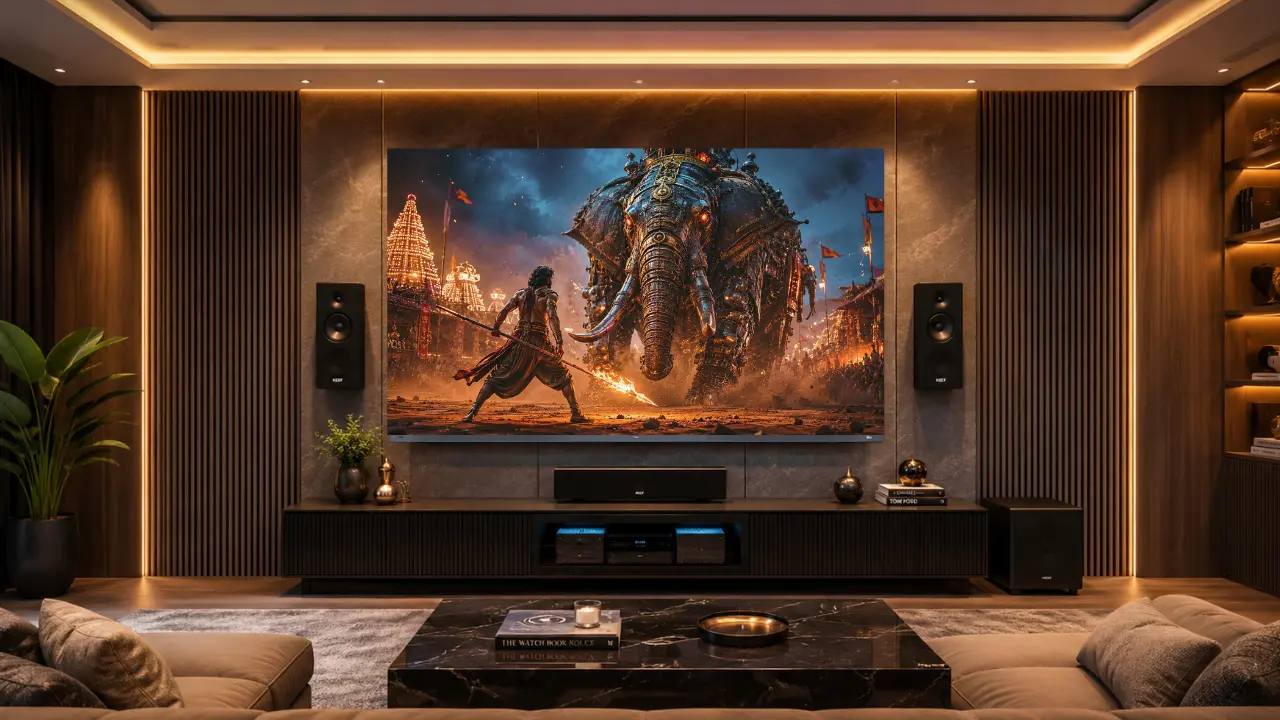

Big screen TVs transform everyday watching into a shared experience
A large television does more than increase screen size. It changes how people feel inside a room. Cricket matches become more intense.
Weekend movie nights feel cinematic. Gaming becomes immersive. Even quiet evenings after work feel more engaging when visuals, sound, and scale come together naturally.
There was a time when televisions existed quietly in the background.
One corner of the living room. One remote. One predictable routine.
That version of television is disappearing.
Today, the screen often becomes the emotional centre of the home.
Not because families suddenly have more free time. Because the way people consume entertainment has changed completely.
Streaming platforms brought cinematic storytelling home. Sports broadcasts became sharper and faster. Gaming evolved into a social activity. Workdays became mentally exhausting. Homes started carrying the weight of both productivity and recovery.
And in the middle of all this, the television changed roles.
It stopped being just a device.
It became an atmosphere.
Why does a bigger screen feel dramatically different?
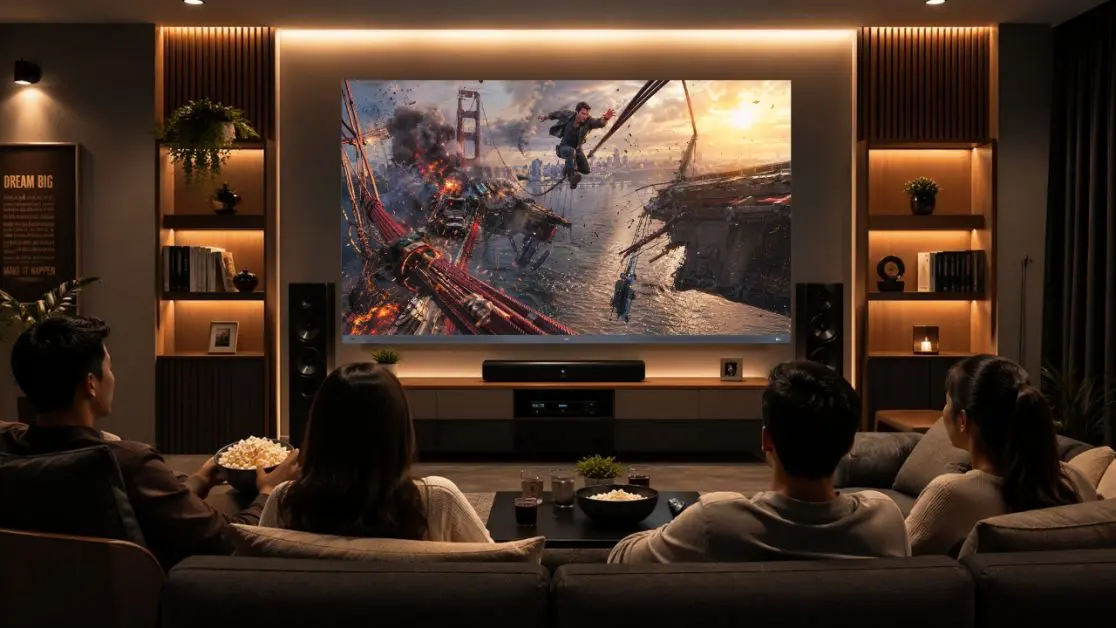
Because scale changes attention.
A mobile screen competes for focus.
A laptop delivers convenience.
A large TV creates immersion.
That difference matters more than people expect.
When visuals stretch across a 189cm (75), 215cm (85), or even 254cm (100) display, peripheral vision becomes involved. The room fades into the background. Motion feels larger. Landscapes feel cinematic. Stadium crowds feel alive.
The brain stops observing from a distance.
It starts participating.
That is why sports fans often say watching a final on a big screen “feels different.” They are not talking about pixels alone. They are describing emotional intensity.
A close cricket finish feels heavier.
An action sequence feels faster.
A concert film feels louder.
Scale changes emotional memory.
Picture quality is no longer just about resolution
Most buyers still focus only on 4K.
But resolution alone does not create immersion.
Viewing experience is actually built through multiple systems working together:
- Screen size
- Contrast depth
- Motion clarity
- Brightness control
- Audio performance
- Colour accuracy
- Viewing angles
Weakness in one area affects the whole experience.
That is why premium large-screen TVs now combine technologies like Mini LED, Dolby Vision, HDR10+, MEMC, and AI-powered optimization.
For example, the Haier M80F Mini LED 189cm (75) Google TV Sound By KEF (H75M80FUX) combines Mini LED technology with Dolby Vision, Dolby Atmos, KEF-tuned audio, MEMC motion handling, and Google TV integration.
The important thing is not the terminology.
It is what those technologies quietly improve inside everyday life.
Mini LED deepens blacks during darker scenes.
Dolby Vision enhances realism and contrast.
MEMC smoothens fast sports sequences.
Suddenly, football looks cleaner. Animated films feel richer. Racing games feel more fluid.
Good technology disappears into the experience.
That is its real job.
Large TVs are reshaping family time in Indian homes
Every appliance changes behaviour in subtle ways.
Air conditioners influence sleep.
Refrigerators shape eating habits.
Televisions shape gathering habits.
Modern Indian homes reveal an interesting pattern.
The television remains one of the few shared experiences across generations.
Parents watch highlights after dinner.
Children stream animated content on weekends.
Young professionals binge-watch thrillers late at night.
Grandparents revisit classic cinema and devotional programming.
The living room still matters.
And bigger screens reduce friction inside that shared space.
Nobody struggles to read subtitles from across the room.
Viewing angles improve during family gatherings.
Festival movie nights feel collective again.
A large screen does not just increase visibility.
It increases participation.
Sports reveal the true quality of a television
Sports are unforgiving.
Weak motion handling becomes obvious immediately.
Fast camera pans blur.
Crowd details disappear.
Player movement starts looking artificial.
That is why refresh rate and motion processing matter so much for big-screen viewing.
The Haier M80F Mini LED 215cm (85) Google TV Sound By KEF (H85M80FUX) includes DLG 120Hz support, Dolby Vision, MEMC motion enhancement, and KEF-powered audio for smoother and more immersive sports viewing.
Meanwhile, the Haier New M96 Series 254cm (100) QD-Mini LED AI Smart Google TV (H100M96FUX) pushes the experience further with a 144Hz refresh rate, AMD FreeSync Premium Pro, VRR, ALLM, and AI-powered scene optimisation.
On paper, those features sound technical.
Inside a real living room, they create smoother motion, lower blur, faster gaming response, and cleaner sports playback.
That matters during IPL nights.
That matters during console gaming sessions.
That matters when a screen becomes the centre of attention for hours.
Sound is the invisible half of immersion
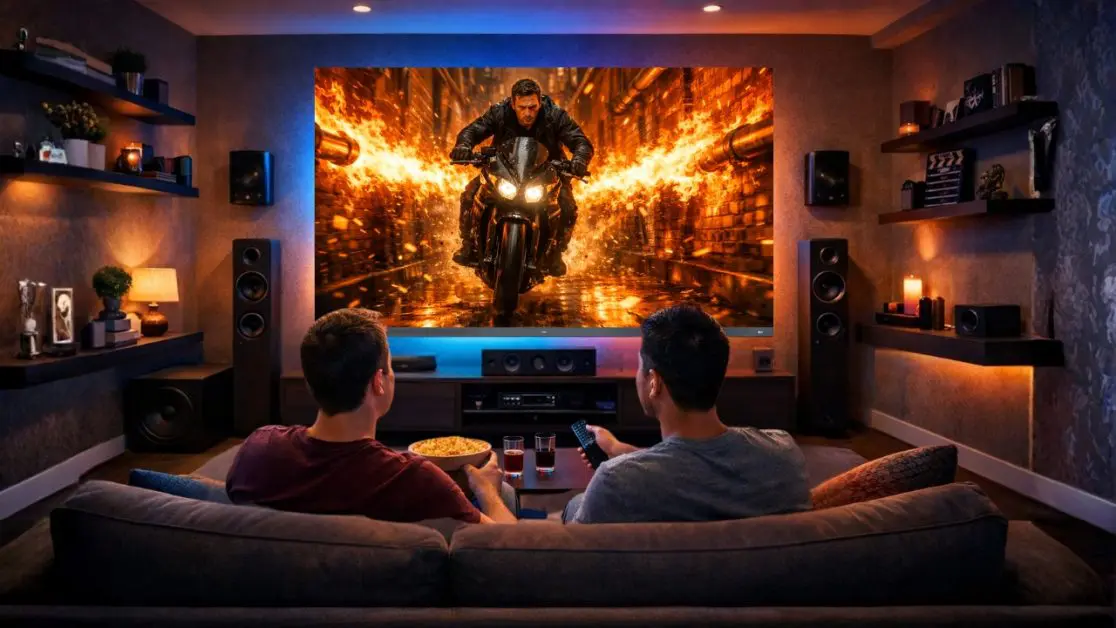
People often underestimate audio.
Until they experience good sound.
Then everything changes.
Sound creates physical presence.
You hear the crowd ‘s atmosphere.
You feel low bass during action scenes.
You notice directional movement inside games and films.
That spatial awareness creates realism.
The Haier M80F Mini LED 189cm (75) Google TV Sound By KEF (H75M80FUX) features a 2.1-channel speaker setup with 50W output, Dolby Atmos, and KEF-tuned sound engineering.
The Haier New M96 Series 254cm (100) QD-Mini LED AI Smart Google TV (H100M96FUX) elevates this further with a 6.2.2 channel audio system, Total Sonic sound enhancement, and Sound by KEF integration.
People remember how spaces feel.
Not just how they look.
Good sound changes memory.
Three ways people actually use big-screen TVs today
The traditional idea of television is outdated.
Modern TVs are now entertainment ecosystems.
One option is cinematic relaxation
This is for people who want:
- Theatre-like visuals
- Deep contrast
- Rich audio
- Comfortable late-night viewing
Large Mini LED displays create immersion without requiring people to leave home after exhausting workweeks.
The second option is social entertainment
This includes:
- IPL watch parties
- Family movie marathons
- Console gaming nights
- Festival gatherings
Large displays improve group visibility and shared engagement.
Nobody fights for the “good angle.”
The third option is connected smart living
Modern televisions increasingly function as:
- Smart home control centres
- Voice-enabled assistants
- Wireless casting hubs
- Personalised entertainment systems
Google TV integration and hands-free voice control simplify navigation and reduce unnecessary friction.
Convenience matters because modern attention spans are fragmented.
The easier technology feels, the more naturally people use it.
Large TVs are influencing interior design too
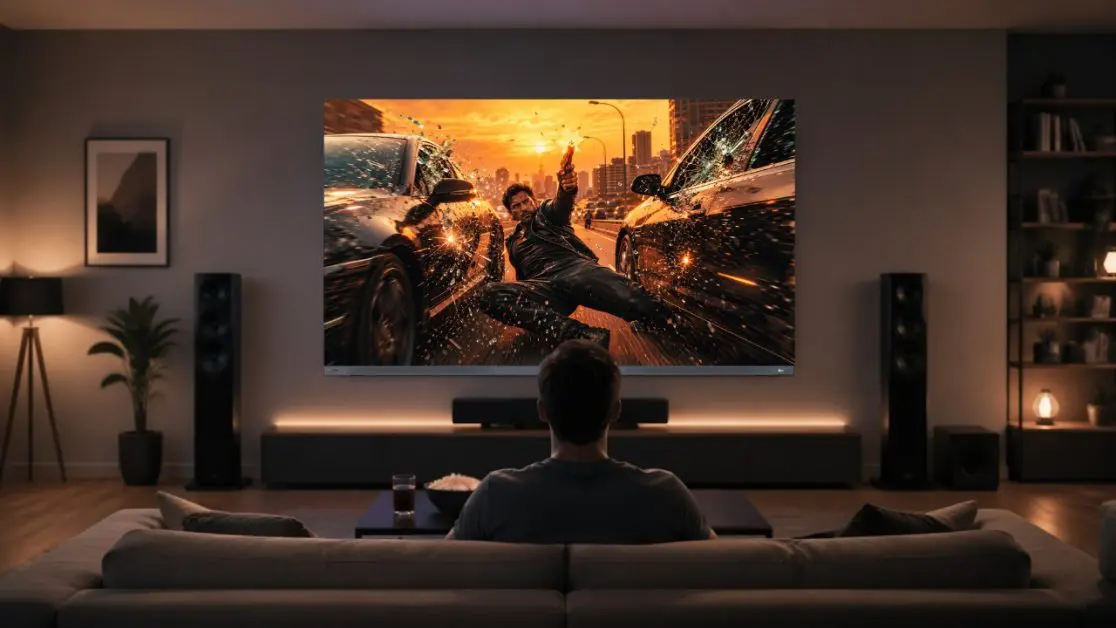
This shift is easy to miss.
But it is happening everywhere.
Minimal bezels. Slim wall-mounted designs. Cleaner entertainment units. Hidden wiring.
Televisions are increasingly becoming part of room aesthetics.
The Haier New M96 Series 254cm (100) QD-Mini LED AI Smart Google TV (H100M96FUX) features an ultra-slim profile with near zero-gap wall design for a cleaner visual appearance inside modern homes.
That matters because Indian homes are evolving visually.
People increasingly prefer:
- clutter-free layouts
- elegant wall setups
- minimal furniture bulk
- cleaner design language
Technology is no longer hidden.
It participates in interior identity.
The smartest televisions reduce effort
Feature overload creates fatigue.
Too many menus.
Too many buttons.
Too many settings.
Good design removes cognitive effort.
That is why AI-powered optimization matters more than people realise.
The Haier New M96 Series 254cm (100) QD-Mini LED AI Smart Google TV (H100M96FUX) includes the AI Ultra Sense Processor, co-developed with MediaTek, to optimise colour, motion, contrast, and depth automatically based on scene recognition.
Most users will never think about the processor itself.
And that is the point.
The best technology works quietly.
Like lighting in a premium restaurant. You notice comfort more than the system behind it.
People adapt to bigger screens faster than expected
Many buyers still worry:
“Will this TV feel too large for my room?”
Usually, the opposite happens.
After a few weeks, smaller screens start feeling restrictive.
Because immersion changes expectations.
The real decision is not simply about inches.
It is about:
- viewing distance
- lighting conditions
- content habits
- audio quality
- seating layout
A thoughtfully designed big-screen TV does not overwhelm a room.
It anchors it.
The future of television is about experience, not passive watching
Televisions are becoming:
- gaming hubs
- smart home interfaces
- cinematic displays
- wellness-focused screens
- AI-powered entertainment systems
The Haier New M96 Series 254cm (100) QD-Mini LED AI Smart Google TV (H100M96FUX) also includes features like Flicker Free technology, ambient light adaptation, and low blue light certification for more comfortable long-duration viewing.
That signals something important.
The future of screens is not just sharper visuals.
It is more human-centred comfort.
Because people no longer occasionally gather around screens.
They increasingly build everyday routines around them.
A television now shapes the feeling of a home
It becomes the backdrop for family dinners.
The reason friends stay longer after match nights.
The screen children associate with summer holidays and tournaments.
The quiet companion after difficult workdays.
Technology succeeds when it becomes emotionally invisible.
And big-screen TVs work best not when they impress for five minutes, but when they quietly improve thousands of ordinary evenings.
That is the real enhancement.
Not just bigger visuals.
But a deeper presence.
Frequently Asked Questions
Will a big screen TV feel too large in my living room?
Usually, it feels large only at first. Once your eyes adjust, the bigger screen often feels more immersive and comfortable than a smaller one.
Is 4K enough, or should I care about Mini LED, Dolby Vision, and HDR too?
4K is only one part of picture quality. Contrast, brightness, motion clarity, colour accuracy, and sound matter just as much for a premium viewing experience.
I mostly watch OTT shows after work. Do I really need a large TV?
A large TV can make evening watching feel more relaxing and cinematic, especially when paired with strong contrast, good sound, and smart content discovery.
Why does watching cricket on a big TV feel more exciting?
A larger screen fills more of your vision, making motion, crowds, and close finishes feel more intense and emotionally engaging.
I watch TV with my parents, kids, and grandparents. Will a big screen help?
Yes. Bigger screens improve visibility, subtitle readability, and group comfort, especially during family movie nights or sports matches.