
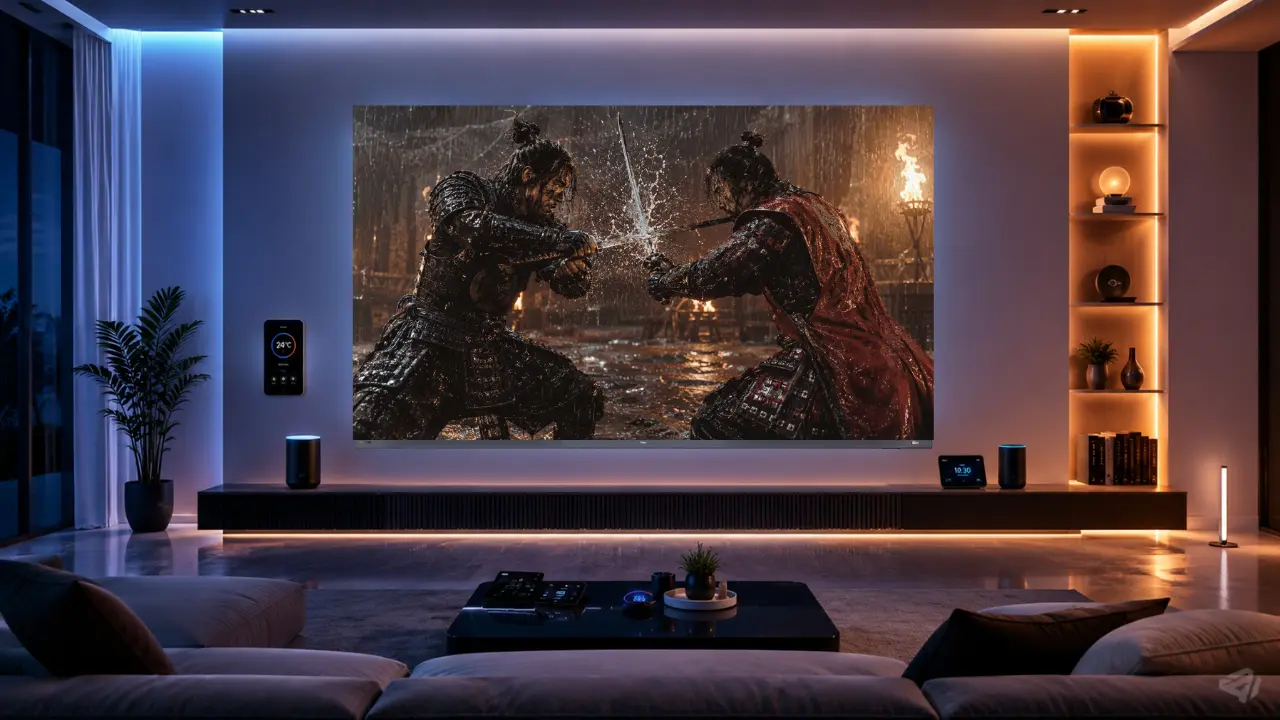

AI in smart TVs improves far more than picture quality. It changes how televisions understand people, rooms, sound, gaming behaviour, streaming habits, and even energy usage. The best AI-powered TVs quietly remove friction from everyday entertainment. They make sports smoother, movies brighter, recommendations smarter, gaming faster, and homes more connected without demanding constant manual adjustments.
A television used to be a screen.
Now it behaves more like a living system.
It studies light in the room.
It understands motion.
It recognises content patterns.
It improves sound positioning.
It even learns how families consume entertainment across the day.
That shift matters because modern homes no longer “watch TV” the same way.
A single smart TV in an Indian household now handles IPL nights, PS5 gaming, YouTube learning, work presentations, devotional music, and late-night scrolling after exhausting workdays.
One screen. Multiple identities.
And AI is the invisible layer making all of it feel effortless.
AI Is Solving Problems Most People Never Realised Existed
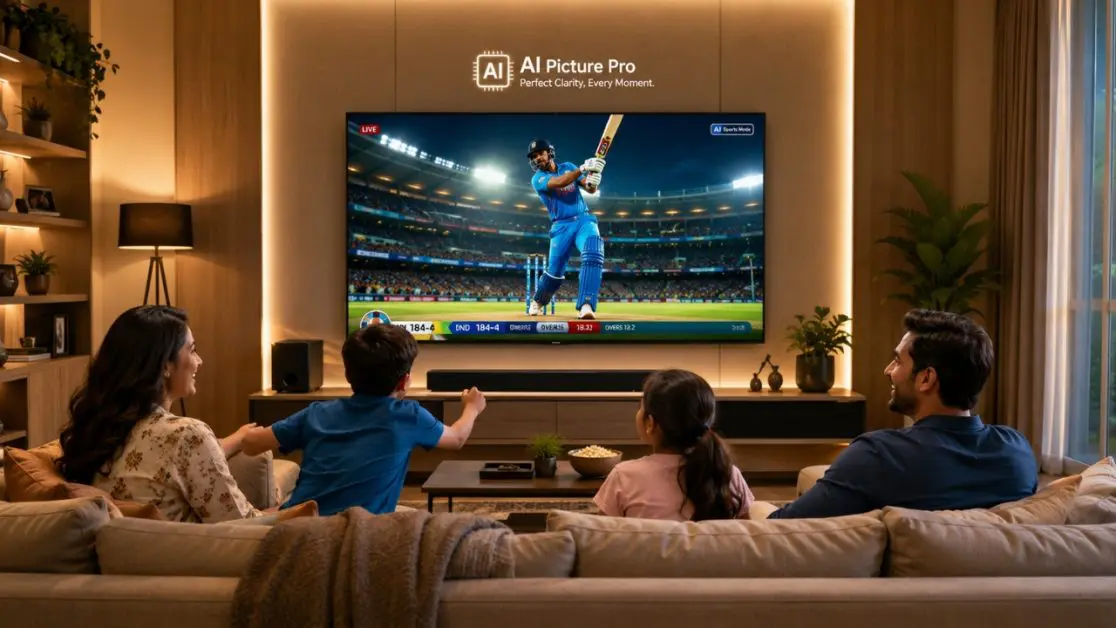
The interesting thing about artificial intelligence in televisions is this:
The best features rarely feel like “technology.”
They feel relieved.
Relief from blurry motion during cricket matches.
Relief from endlessly scrolling OTT apps.
Relief from adjusting brightness every evening.
Relief from constantly tweaking audio settings.
The smartest appliances disappear into behaviour.
That is where AI-powered smart TVs are heading.
AI-Powered Picture Optimisation Changes Everything
Most people think better TVs simply mean brighter screens.
That is outdated thinking.
The real breakthrough is real-time adaptation.
Modern AI-powered televisions now analyse scenes frame by frame and automatically optimise:
- Contrast
- Motion
- Colour depth
- Sharpness
- Brightness
- Black levels
The Haier New M92 Series 164cm (65) QD-Mini LED AI Smart Google TV (H65M92FUX) and Haier New M92 Series 189cm (75) QD-Mini LED Smart AI Google TV (H75M92FUX) use the AI Ultra Sense Processor for intelligent scene recognition and real-time tuning for sharper motion, colour, contrast, and depth.
Why This Matters Inside Real Homes
Indian living rooms are unpredictable.
Morning sunlight floods the room.
Evenings become dim.
Kids watch cartoons in bright conditions.
Parents watch movies at night.
Traditional TVs treat every environment the same.
AI TVs adapt dynamically.
Features like Dolby Vision IQ automatically optimize visuals based on ambient room lighting for more balanced viewing. The Haier New M92 Series TVs combine Dolby Vision IQ with HDR10+ for scene-by-scene adjustments that improve brightness, colour, and contrast automatically.
That changes the experience dramatically.
A good screen shows content.
An intelligent screen understands context.
Sports Viewing Is One of AI’s Biggest Use Cases
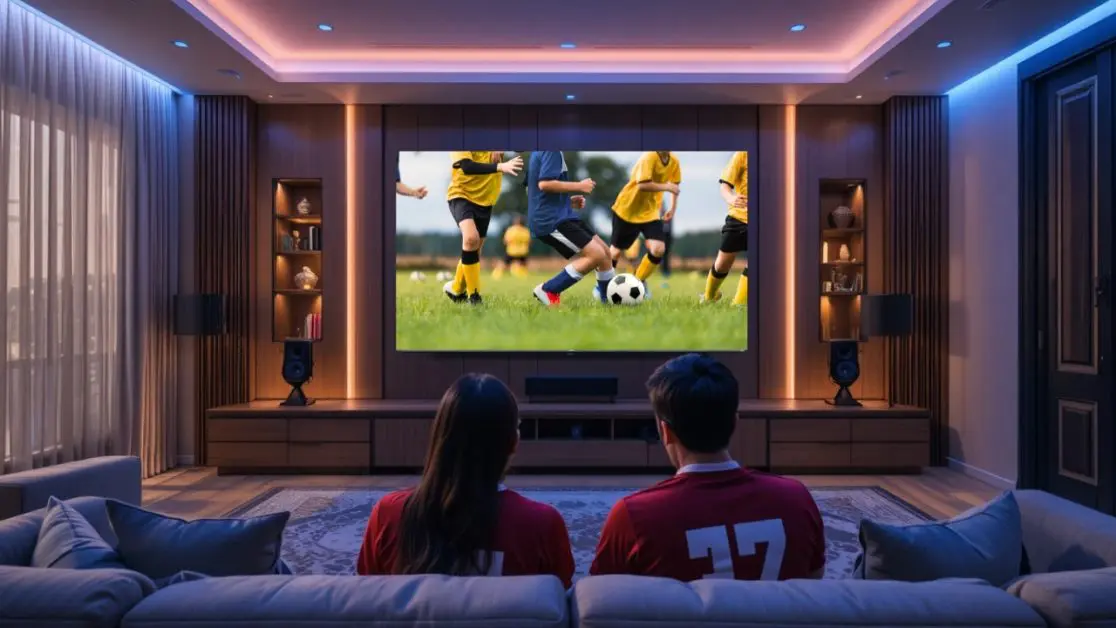
No category exposes weak televisions faster than sports.
Especially cricket.
Fast camera pans.
Rapid ball movement.
Crowd transitions.
Score overlays.
Poor motion handling creates blur almost instantly.
This is where AI motion enhancement becomes essential.
Modern AI TVs combine:
- MEMC motion technology
- High refresh rates
- AI motion prediction
- Frame interpolation
- Scene optimisation
The Haier New M96 Series 254cm (100) QD-Mini LED AI Smart Google TV (H100M96FUX) supports a 144Hz refresh rate with MEMC motion technology for smoother sports visuals and fast-moving action sequences.
The difference becomes obvious during IPL matches or Formula 1 races where every frame matters.
Motion quality is invisible when done well.
Painfully obvious when ignored.
AI Gaming Modes Are Quietly Replacing Dedicated Gaming Monitors
Gaming behaviour changed.
Earlier, gaming happened inside bedrooms on monitors.
Now gaming happens in living rooms on giant smart TVs.
That shift forced televisions to evolve faster.
AI gaming systems now optimise:
- Input lag
- Refresh rate
- Shadow visibility
- Motion smoothness
- Response timing
- Screen tearing
The Haier New M92 Series 189cm (75) QD-Mini LED Smart AI Google TV (H75M92FUX) includes VRR, ALLM, AMD FreeSync Premium Pro, and AI-powered Game Mode enhancements for smoother gameplay and lower latency.
The Hidden System Behind Better Gaming
Competitive gaming is not just about graphics.
It is about reaction speed.
Milliseconds matter.
AI-powered televisions now automatically adjust gaming settings based on gameplay conditions instead of forcing users into manual configurations.
One option is traditional gaming monitors.
The second option is large-format AI gaming TVs.
The third option is hybrid entertainment systems that handle gaming, OTT, and sports equally well.
Increasingly, people want the third option.
Especially in urban Indian homes where space matters.
AI Sound Processing Makes Small Rooms Feel Cinematic
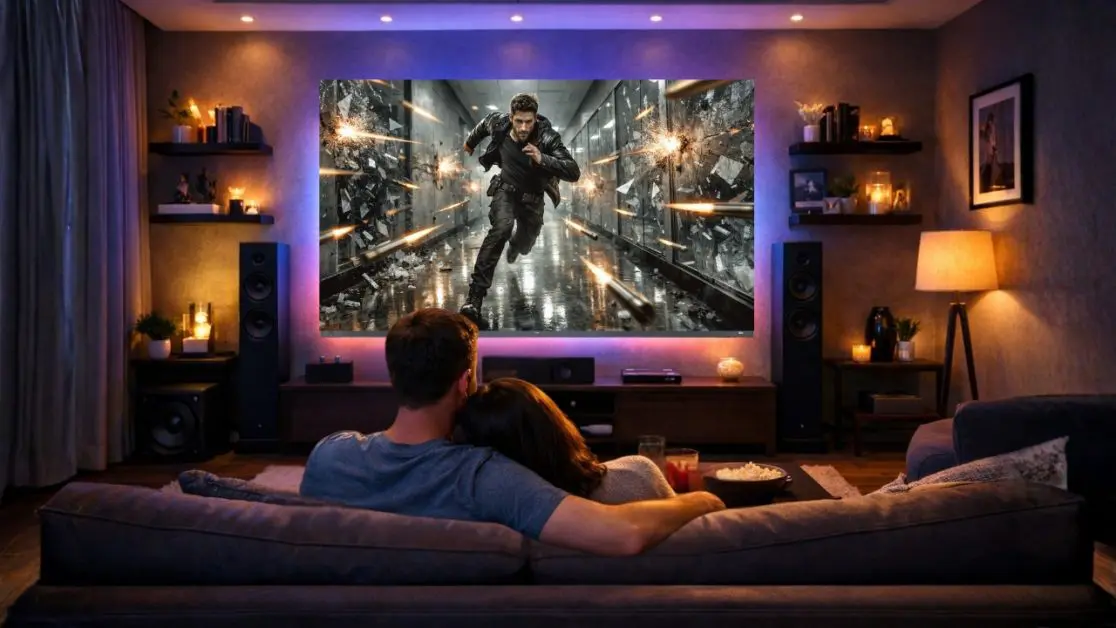
Most people underestimate sound.
Until they experience a bad sound.
Dialogue becomes unclear.
Background music overwhelms speech.
Action scenes feel flat.
AI audio systems now solve these problems dynamically.
Modern smart TVs analyse content type and adjust sound positioning automatically.
For example:
- Sports commentary gets vocal clarity
- Movies get cinematic depth
- Music gets wider separation
- Gaming gets directional enhancement
The Haier New M92 Series 164cm (65) QD-Mini LED AI Smart Google TV (H65M92FUX) integrates Sound by KEF, Dolby Atmos, and a 2.1 channel speaker system for richer and more immersive sound performance.
Meanwhile, the Haier New M96 Series 254cm (100) QD-Mini LED AI Smart Google TV (H100M96FUX) features a powerful 6.2.2 channel speaker setup for layered three-dimensional audio.
Why AI Audio Matters More in Apartments
Indian homes are getting denser.
Soundbars are not always practical.
AI-powered sound optimization helps televisions create fuller audio without requiring complicated setups.
Good sound expands space psychologically.
That is why theatres feel larger than they are.
AI Content Recommendations Reduce Decision Fatigue
People no longer struggle to find content.
They struggle to choose content.
There is a difference.
Most households now subscribe to multiple OTT platforms simultaneously.
Netflix.
YouTube.
JioHotstar.
Prime Video.
Sony LIV.
Too much choice creates exhaustion.
AI recommendation systems solve this by learning behavioural patterns.
The Haier New M92 Series and M96 Series Google TVs provide personalized recommendations and unified content discovery across platforms through Google TV integration.
The Real Benefit Is Not Discovery
The real benefit is reduced friction.
The best technology saves mental energy.
A television that understands preferences quietly returns time back to the user.
That matters more than most specifications.
Hands-Free Voice Control Is Becoming Everyday Behaviour
Voice assistants initially felt gimmicky.
Now they feel normal.
Especially in multitasking households.
Cooking while searching recipes.
Cleaning while changing playlists.
Parents controlling TV without searching for remotes.
Hands-free AI voice control simplifies behaviour.
The Haier New M92 Series 189cm (75) QD-Mini LED Smart AI Google TV (H75M92FUX) supports hands-free Google Assistant voice commands for operating the TV and connected smart home devices.
Voice Control Is Really About Interruptions
The remote is not the problem.
Interruptions are.
AI removes small interruptions repeatedly throughout the day.
That is how convenience compounds.
AI Brightness And Ambient Sensing Protect The Viewing Experience
One overlooked AI use case is eye comfort.
Screens now stay active for longer hours than ever before.
Late-night binge watching.
Children attending online classes.
Weekend gaming marathons.
AI ambient sensing systems automatically adjust brightness and colour temperature depending on room conditions.
The Haier New M92 Series 189cm (75) QD-Mini LED Smart AI Google TV (H75M92FUX) includes AI Ambient Sense technology that intelligently adapts brightness based on surrounding light conditions for more comfortable viewing.
That matters because fatigue changes entertainment quality.
A comfortable screen gets watched longer.
AI Is Turning TVs Into Smart Home Control Hubs
This is where the future becomes visible.
The television is slowly becoming the digital centre of the home.
Not just an entertainment device.
A command centre.
The HaiSmart ecosystem inside the Haier New M92 Series televisions allows users to connect and control compatible smart appliances across rooms directly from the TV.
Why This Shift Matters
Homes are filling with connected appliances:
- Smart ACs
- Robot vacuum cleaners
- Refrigerators
- Lighting systems
- Security devices
One option is managing separate apps for everything.
The second option is disconnected smart devices that never truly communicate.
The third option is a central intelligent ecosystem.
The third system always wins eventually.
Because simplicity scales.
AI Is Also Making TVs More Energy-Aware
People assume AI increases energy consumption.
Sometimes the opposite happens.
Smart optimisation systems reduce unnecessary processing and adjust settings dynamically.
Features like Energy Saving Modes and adaptive brightness systems help televisions consume power more intelligently.
Even the Solar Remote included with the Haier New M92 Series and M96 Series reflects a broader move toward sustainable convenience.
The future of smart homes is not just intelligence.
It is efficient intelligence.
The Most Important AI Use Case Is Invisible
This is the part many people miss.
The best AI feature in a television is not one feature.
It is orchestration.
Picture optimization talking to motion systems.
Audio systems reacting to scene intensity.
Gaming settings adjusting automatically.
Recommendations for learning behaviour patterns.
Haier describes this integrated ecosystem as Ultra Sense AI, where visuals, sound, gaming, and entertainment algorithms work together to improve the overall viewing experience.
That is the hidden system modern televisions are building toward.
Not smarter screens.
Smarter experiences.
And that changes how homes feel.
Because the future of entertainment is not about adding more technology to the room.
It is about making technology disappear into the rhythm of life.
A truly intelligent TV does not ask for attention constantly.
It quietly improves the moments people already care about.
The cricket final.
The Friday movie night.
The solo gaming session after work.
The Sunday family binge-watch.
That is where AI in smart TVs becomes meaningful.
Not in the specifications.
In the feeling.
Frequently Asked Questions
How does AI help me find something worth watching faster?
AI-powered recommendation engines learn your viewing habits and surface content you are more likely to enjoy. Instead of jumping between apps, platforms like Google TV can aggregate recommendations across multiple streaming services, reducing endless scrolling and helping you find content faster.
Why do I spend more time browsing than actually watching TV?
This is a common problem known as “choice overload.” AI recommendation systems reduce decision fatigue by analyzing viewing patterns, watch history, preferred genres, and time-of-day usage to suggest relevant content automatically.
Can my smart TV learn different preferences for different family members?
Many modern smart TV platforms support personalized profiles and recommendation systems. Over time, AI can distinguish viewing habits and provide more relevant suggestions for each user.
What is the biggest everyday benefit of AI recommendations?
It is not necessarily discovering new content. The biggest benefit is saving time and mental energy by reducing the effort required to choose what to watch.
Do AI TVs actually improve picture quality, or is it just marketing?
Modern AI TVs can genuinely improve picture quality by analyzing scenes in real time and adjusting brightness, contrast, color accuracy, sharpness, and motion handling automatically.