
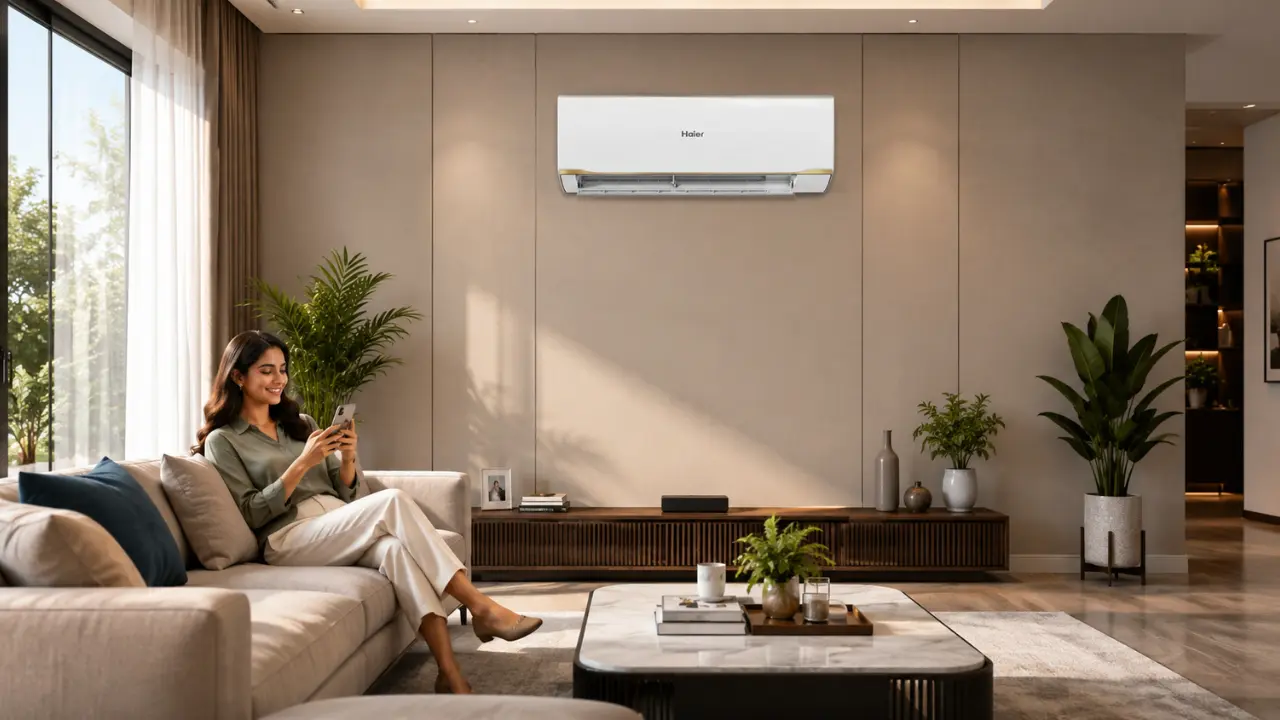

What actually makes cooling “smart” today?
Smart cooling technology is not about faster cooling. It is about adaptive cooling.
A smart AC studies the room, adjusts power in real time, manages humidity, and reduces energy waste without manual intervention. The result is consistent comfort, lower bills, and a system that quietly works in the background of everyday life.
That’s the difference.
Cooling is no longer a feature. It’s a system.
Why do most cooling decisions go wrong?
Walk into any electronics store in May.
The conversation is predictable:
- “Room size kitna hai?”
- “1.5 ton le lo.”
- “Cooling fast hogi.”
It sounds logical. It’s incomplete.
Because cooling is not about tonnage alone. It’s about how intelligently that tonnage is used.
That’s not a small error. That’s a system failure.
Most people don’t buy the wrong AC. They buy the wrong logic.
Smart cooling is a response to Indian homes, not just weather
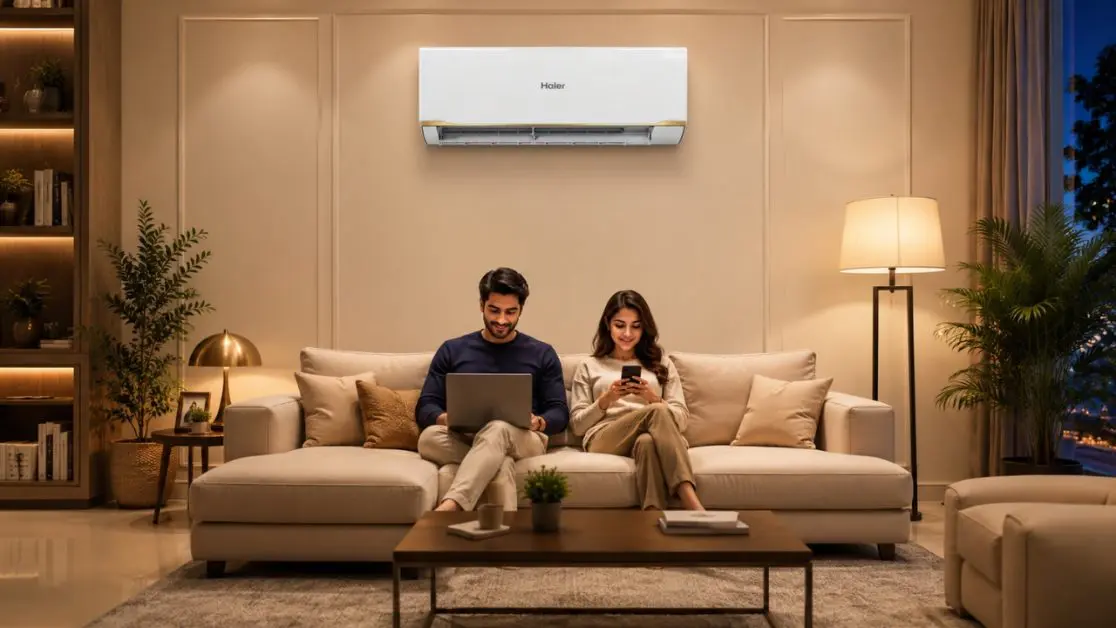
Indian homes have changed.
- Open layouts instead of closed rooms
- Larger windows and heat exposure
- Higher ceilings
- Mixed usage spaces: work + sleep + leisure
A fixed-speed AC struggles here. A smart cooling system adapts.
What smart cooling actually responds to:
- Room temperature fluctuations across the day
- Heat load from sunlight and appliances
- Number of people in the room
- Humidity levels during monsoon
Cooling is no longer static. It’s contextual.
The three layers of smart cooling technology
Most buyers look at features individually. That’s the mistake.
Smart cooling works as a layered system.
1. Sensing layer: understanding the room
This is where intelligence begins.
- Temperature sensors track real-time conditions
- Humidity sensors adjust moisture levels
- Smart detection identifies usage patterns
Without this layer, everything else becomes guesswork.
2. Decision layer: choosing how to cool
This is where the AC decides what to do.
- Inverter compressors adjust speed instead of switching on/off
- AI-based modes optimise cooling based on usage history
- Eco modes balance comfort with energy savings
According to the International Energy Agency, inverter ACs can reduce energy consumption by up to 40% compared to fixed-speed units.
That’s not efficiency. That’s compounding savings.
3. Execution layer: delivering comfort
This is what you actually feel.
- Multi-directional airflow ensures even cooling
- Stable operation during voltage fluctuations
- Faster pull-down cooling when needed
This is where brands differentiate.
Because execution is where theory meets reality.
How to evaluate a smart AC without getting lost in features
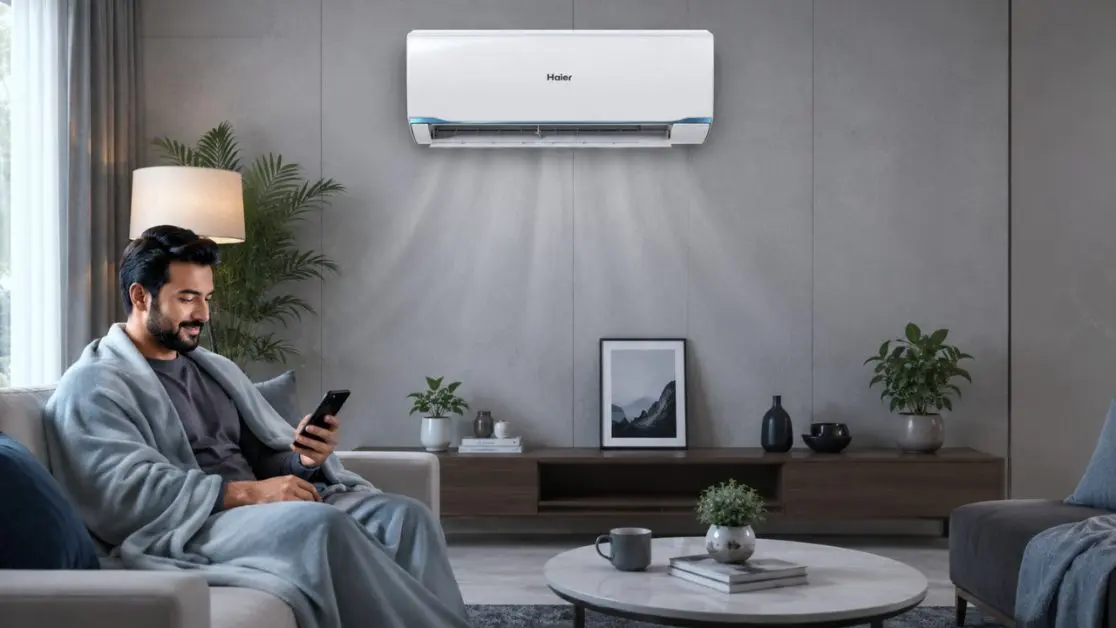
Features don’t matter. Outcomes do.
Instead of asking “What does this AC have?”, ask:
What problem does it solve?
Here’s a simple framework:
One option: Cooling-focused systems
- Faster cooling
- High tonnage performance
- Works well for peak summer
Cost: Higher electricity usage
Best for: Large, heat-exposed rooms
Second option: Efficiency-focused systems
- Strong inverter technology
- Energy-saving modes
- Lower long-term cost
Cost: Slightly slower cooling
Best for: Daily use, long hours
Third option: Balanced smart systems
- Adaptive cooling modes
- AI-driven optimisation
- Consistent comfort + efficiency
Cost: Slightly higher upfront price
Best for: Most modern households
The real question is not “Which AC is best?”
The real question is “Which system matches how you live?”
What features actually matter in Indian conditions
Not all features are useful. Some are essential.
Must-have smart cooling features
- Inverter compressor technology
- Convertible modes for flexible cooling
- High energy rating (5 Star preferred)
- Stabiliser-free operation
- Sleep mode for night comfort
Nice-to-have but powerful features
- AI climate control
- App or voice control
- Self-cleaning technology
- Anti-bacterial filters
Often overvalued features
- Extremely high tonnage for small rooms
- Overly complex control panels
- Features that don’t match daily usage
Complexity does not create comfort. Alignment does.
A real-world scenario: where smart cooling shows its value
Think about a typical weekday.
- 9 AM: Room is empty
- 2 PM: Heat builds up
- 7 PM: Family returns
- 2 AM: Everyone is asleep
A traditional AC treats all these moments the same.
A smart AC doesn’t.
It reduces power when the room is empty.
It increases cooling when heat peaks.
It stabilises temperature during sleep.
That’s not a feature. That’s awareness.
Where Haier fits into this system
This is where implementation matters.
Brands don’t just sell ACs. They design cooling behaviour.
Haier has focused heavily on adapting cooling systems to Indian conditions rather than generic global standards.
Take the Haier 1.7 Ton 5 Star Desert Rose Air Conditioner as an example.
It reflects a few important shifts:
- AI-based cooling optimisation for dynamic conditions
- Convertible cooling modes that adapt to usage
- High energy efficiency designed for long Indian summers
- Design that blends into modern interiors instead of standing out
This is not about adding features.
It’s about removing friction from daily life.
The hidden cost of not choosing smart cooling
Every system has a cost. Some are visible. Some are delayed.
Immediate costs:
- Higher electricity bills
- Uneven cooling
Long-term costs:
- Lower appliance lifespan
- Reduced comfort over time
Invisible costs:
- Interrupted sleep
- Daily discomfort that becomes normal
People adjust to bad cooling. They shouldn’t have to.
How to make the right decision
Most buying guides overcomplicate this.
Keep it simple.
Ask three questions:
- How long will the AC run daily?
Longer usage demands higher efficiency. - How does the room behave?
Sunlight, ceiling height, insulation all matter. - What kind of comfort do you want?
Fast cooling or consistent comfort?
A simple decision map:
- Short usage + extreme heat → Cooling-focused
- Long usage + cost sensitivity → Efficiency-focused
- Mixed usage + lifestyle focus → Smart balanced system
Smart cooling is not a luxury anymore
It used to be optional.
Now it’s expected.
Because the environment has changed. Homes have changed. Lifestyles have changed.
That’s the direction the industry is moving in.
Not bigger machines. Smarter systems.
The final insight: cooling is about control, not power
People think cooling is about how strong the AC is.
It’s not.
It’s about how precisely it responds.
A powerful AC cools fast.
A smart AC cools right.
And over time, that difference compounds.
In comfort.
In cost.
In quality of life.
The best cooling system is the one you stop noticing.
Because when it works perfectly, it disappears into the background.
And that’s exactly where it should be.
Frequently Asked Questions
Do I really need a smart AC, or is a regular inverter AC enough?
If your cooling needs are simple and predictable, a standard inverter AC may be sufficient. However, if your room experiences varying temperatures, changing occupancy, or long daily usage, a smart AC can automatically adjust cooling and improve comfort while reducing energy waste.
How do I know whether I should prioritise cooling performance or energy efficiency?
It depends on your usage pattern. Rooms exposed to intense sunlight may benefit from stronger cooling performance, while households running the AC for many hours daily often gain more from energy-efficient smart systems.
Is a higher-tonnage AC always better?
No. Oversizing can increase costs and reduce efficiency. The goal is matching cooling capacity to room conditions, insulation, occupancy, and usage patterns, not simply buying the biggest unit available.
Why do so many AC buying recommendations focus only on room size?
Room size is only one factor. Ceiling height, sunlight exposure, window placement, number of occupants, and daily usage patterns all influence cooling requirements.
What is the biggest mistake people make when buying an AC?
Focusing solely on tonnage and cooling speed while ignoring how intelligently the system manages temperature, humidity, and energy consumption over time.