

single door vs double door refrigerator, refrigerator comparison, refrigerator buying guide, frost-free refrigerator, direct cool refrigerator
The thing nobody wants to think about when buying a fridge is defrosting. But it’s one of the biggest differences between single- and double-door models, and it matters way more than it sounds like it should. A single-door refrigerator seems fine at the showroom. Then three months in, you open the freezer, and there’s half an inch of ice coating everything. Now it’s your problem to fix.
The decision between single and double door is really about choosing between two different cooling approaches and everything that comes with each one. Understand what those approaches actually mean for daily life, and the choice becomes clearer.
How Single Door Cooling Actually Works vs Double Door Technology
Single door refrigerators typically use direct cool technology. Cold air blows directly into the fridge compartment, and that cools everything down. Simple, straightforward. But here’s what happens: moisture in the air freezes onto the coils. Ice accumulates. After a few months, there’s visible ice buildup. Eventually the ice gets thick enough that it actually blocks airflow, which makes the cooling less effective. Temperature becomes unstable. At that point someone’s opening the fridge to defrost it manually.
Double door models work completely differently. They use frost-free technology. The cooling system cycles between active cooling and defrost periods. When ice starts building up, the system automatically warms slightly to melt it. You never see ice, you never touch it, you never have to do anything. The unit just handles it silently in the background.
The difference sounds minor. In practice, it changes everything about how you experience the refrigerator year after year.
Read More: Single Door vs Double Door What is Better for Small Families
Space and Organization Matter More Than You Think
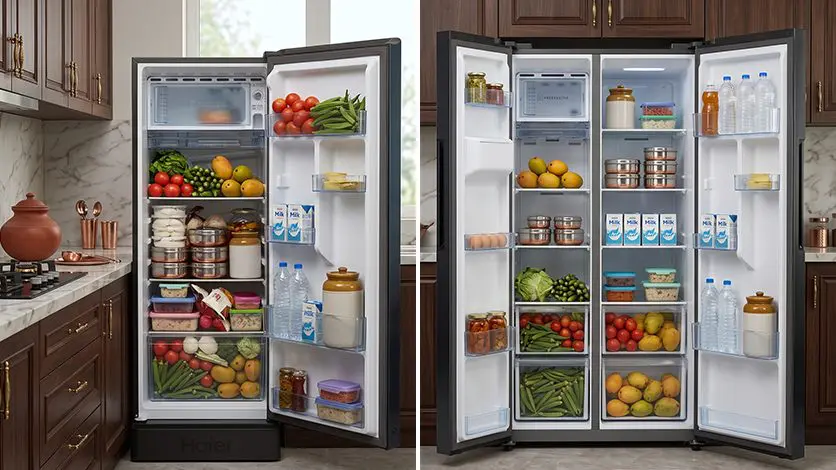
A single-door fridge is basically one compartment. You get a small freezer at the top or bottom, and everything else is fresh storage. That’s it. No separate zones, no flexibility. Whatever shelving came with it is what you get. For one person or a couple, this works fine. For families, it becomes frustrating quickly. Everything’s crammed in together, and finding what you want takes actual searching.
Double door models split the space logically. Top and bottom, or side by side depending on the format. Some models let you convert sections between fridge and freezer based on what you need that week. This flexibility actually matters. One week you’re storing more frozen items, the next week it’s all fresh produce. With organized compartments, you adapt. With one big box, you’re just reorganizing everything constantly.
For a family of four or five, a single-door refrigerator becomes genuinely limiting. You run out of space. Produce wilts because it’s crammed somewhere inaccessible. People forget what’s in there because things get lost. A double door solves most of that just through better organization.
The Defrosting Reality Nobody Discusses Honestly
Manual defrosting happens every three to six months depending on humidity, usage, and climate. India’s humidity means ice builds faster. You open the freezer one day, and notice cooling isn’t as efficient anymore. You know what’s coming. You have to spend an afternoon letting ice melt, wiping down, cleaning the coils, putting everything back.
It’s not complicated. But it’s annoying. And it happens repeatedly over the years you own the unit. Some people don’t mind. They accept it as part of ownership. Others absolutely hate it and wish every time they’d paid extra for frost-free.
Frost-free technology eliminates this entirely. You literally never deal with ice accumulation. The compressor does extra work, but quietly and automatically, no problem to manage.
Electricity Bills and Efficiency Aren’t What Most People Think
Direct-cool single-door models use less electricity because the technology is simpler. No automatic defrost cycles, no fancy electronics, just cold air circulation. A 200-litre direct cool unit typically runs around 150-200 watts daily. That sounds cheaper.
But then there’s the frost-free model. Same size, probably 180-240 watts daily because of the automatic defrost cycles and more sophisticated compressor work. The difference on your bill isn’t massive, maybe 500-1000 rupees extra monthly depending on usage. But it adds up over years.
The real efficiency question isn’t direct cool versus frost-free. It’s about the specific model’s star rating and compressor technology. A well-designed frost-free refrigerator with proper insulation and an inverter compressor performs just as efficiently as a direct cool model. Compare actual star ratings, not just technology type.
India’s power fluctuations matter. Models designed for Indian homes with stabilizer-free operation handle voltage swings better. That stability actually improves efficiency and extends compressor lifespan.
Who Actually Needs Which Type
Single door makes sense for someone living alone or with one other person. You’re shopping multiple times weekly anyway, so capacity isn’t an issue. You don’t mind occasional maintenance. Upfront cost is lower. Monthly bills are slightly lower. It’s a practical choice.
Double door makes sense for families. The space prevents constant reorganization and food waste. Frost-free operation means no defrosting sessions disrupting your life. Organized zones mean vegetables actually stay fresh because they’re in dedicated storage instead of wedged wherever they fit. Yes, it costs more initially, and monthly electricity is slightly higher. But the convenience and food preservation are worth it for households managing multiple people’s needs.
What Haier’s Options Actually Offer You
Haier’s 2-Door Convertible Refrigerator isn’t trying to be one thing. Smart Convertible technology lets you adjust the fridge-freezer split up to 100 percent either way, depending on what your household actually needs that week. Some weeks you’re stocking more frozen items; next week it’s fresh produce. This flexibility genuinely matters. External Digital Display means you adjust temperature without opening the door constantly. Expert Inverter runs efficiently despite complexity. Smart Sense AI learns your household’s patterns and cools before you need it. The Jumbo Ice Maker actually produces enough ice for summer heat.
Top-mounted refrigerators offer 10-in-1 convertible modes with separate vegetable and fruit zones. Magic Cooling maintains a stable temperature, and Triple Inverter with Dual Fan distributes cold evenly across shelves. One Hour Icing Technology means ice’s actually ready when you want it.
For budget-conscious buyers, Haier’s Direct Cool Refrigerator uses an inverter compressor for efficiency, Diamond Edge Freezing technology for better food preservation, handles voltage fluctuations without a stabilizer, and comes with the same 10-year compressor warranty. Toughened glass shelves handle real household use. It’s honest equipment for people accepting regular defrosting.
Read More: Which Refrigerator Is Better for a Family: 2-Door or 3-Door?
Making the Actual Decision
Your choice depends on what you’re willing to deal with and what you’re willing to spend. Single door costs less upfront and monthly, but you’re committing to periodic defrosting. A double door costs more both ways, but you get convenience and better food preservation. There’s no wrong answer, just different trade-offs. Know what matters more to your household and choose accordingly.
Frequently Asked Questions
Is a double-door refrigerator worth the extra money?
For a family of four or more shopping multiple times weekly, yes. The organized zones, automatic frost-free operation, and larger capacity reduce daily frustration and food waste. For single people or couples eating fresh daily, probably not necessary.
Which refrigerator type saves more electricity?
Direct-cool single-door models typically consume less electricity because the technology is simpler. But a well-designed frost-free model with good star ratings performs comparably. Compare specific models rather than assuming frost-free always costs more monthly.
Is manual defrosting inconvenient?
It depends on your tolerance for occasional maintenance. If you’re comfortable defrosting every three to six months, it’s manageable. If you prefer appliances that require no attention, frost-free eliminates this task entirely.
Which refrigerator lasts longer?
Properly maintained units of either type typically last 10-15 years. Frost-free models have more complex electronics, so they’re theoretically more prone to issues. Direct cool models have simpler systems but harder-working compressors due to ice buildup stress. Quality of manufacture matters more than type.