
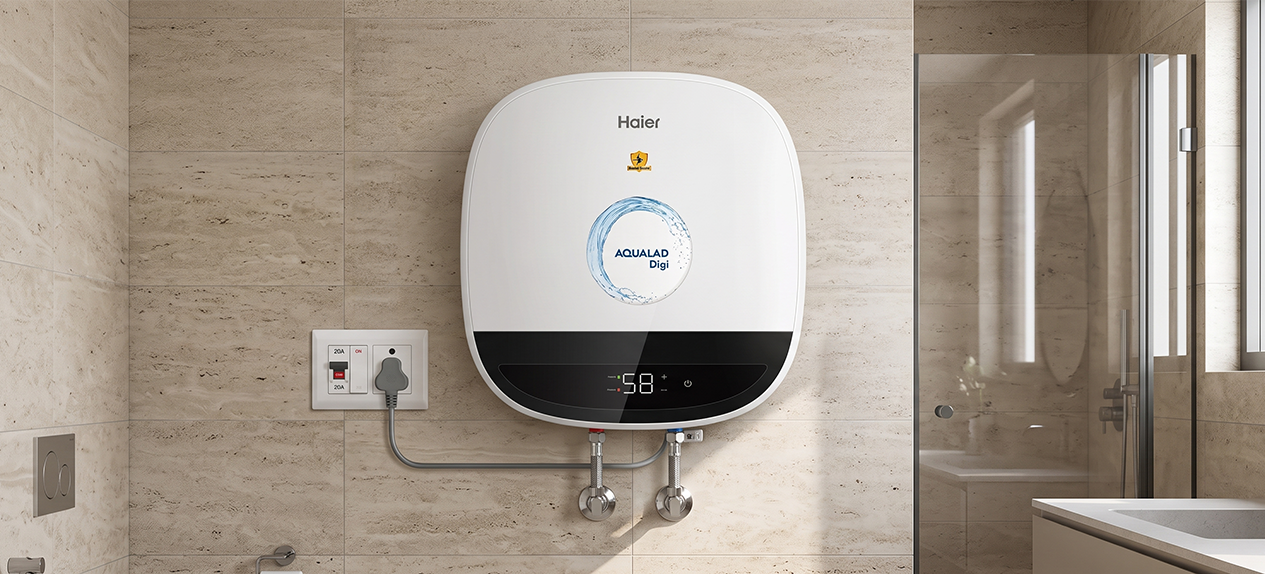

Picking the right geyser is more than simply how fast it heats the water or how much hot water it can produce. Equally important is the electrical side of the installation, especially if the appliance is rated at a higher wattage.
The wiring, MCB, earthing and other electrical connections all have a part to play once the geyser is switched on. By taking a closer look at these areas, you can better understand what should be checked prior to installation and why electrical readiness deserves a place in the buying decision as well.
Now, let’s understand how to note down the electrical load of your house, as per your usage, before finalising the geyser. So that you are not left confused/double-minded when making the final decision.
Know the Electrical Load Before You Choose a Geyser
The power rating of a geyser might look like just another number in the specifications, but it tells you a lot about the behaviour of the appliance once it is switched on. Once you have that number, the rest of the electrical requirements are much easier to figure out.
- Begin with the geyser’s wattage. Check the wattage specified in the product specifications. In general, a higher wattage means the heating element can heat water quicker, but the appliance will also consume more electrical power while in operation.
- Use a simple geyser load calculation. A simple geyser load calculation can give you an idea of the current the appliance might draw. Divide the wattage by the supply voltage, and you get a rough current calculation. For example, a 3000W geyser needs about 13A at 230V, and a 4500W geyser needs close to 20A.
- Understand what a higher wattage means for the circuit. If you upgrade from a low-power geyser to a higher-power geyser, you will notice a difference in the amount of current flowing through the circuit. That is why the electrical requirement of the exact model is important instead of assuming that every geyser puts the same load on the home.
- Include the geyser load with other appliances. The load of the geyser on the home electrical supply is not in isolation. Air conditioners, ovens, induction cooktops and other high-power appliances can be used at the same time, so it is worth considering the overall electrical demand of the household.
- Electrical requirements should be checked before finalising the model. Haier’s water-heater range is now available in different power ratings, including 3 kW and 4.5 kW instant water heaters. It is easier to understand what the installation may require and what should be checked with an electrician beforehand, such as the rated power, before purchase.
Find Out If Your Home Wiring Is Up to the Load
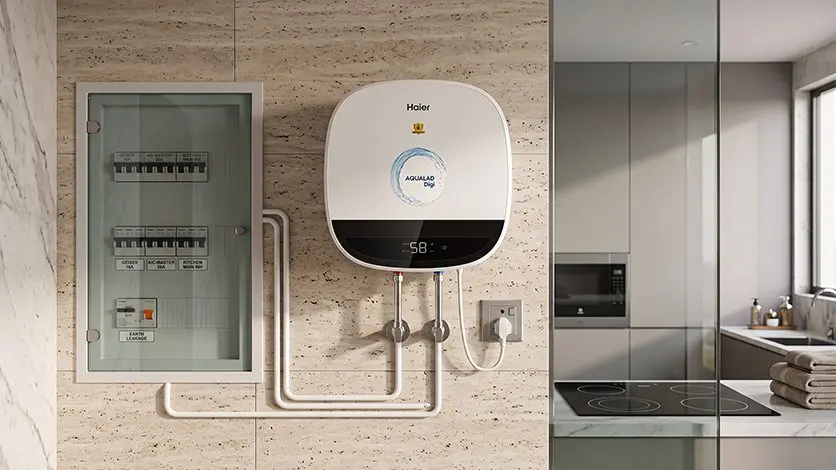
A high-power geyser adds to the home’s electrical demand, so the surrounding setup is worth understanding a little better. There are a number of things that can impact how that load is handled:
- Consider what else is running at the same time. A geyser may be switched on while an air conditioner, induction cooktop, microwave or other high-power appliance is already in use. Looking at this combined demand gives a more realistic picture of the geyser load on the home rather than considering the water heater on its own.
- Look at the home’s overall electrical supply capacity. The geyser may have its own power requirement, but the home also has an overall supply capacity to work within. Adding another high-load appliance makes it worth checking whether the incoming electrical setup is comfortably suited to the household’s combined demand.
- Factor in how far the geyser is from the distribution board. The distance between the distribution board and the water heater also matters. Longer cable runs can contribute to voltage drop, so the route needs to be considered when planning electrical wiring for geyser installation.
- Pay attention to how the wiring is routed. A cable running freely does not always behave the same way as one enclosed in a conduit or grouped closely with other loaded cables. Installation method and surrounding conditions can influence how much current a cable can safely carry, which is why house wiring capacity for geyser use cannot be judged from cable size alone.
- Check how the load is distributed in a three-phase home. If the home has a three-phase supply, it is also useful to see how appliances are distributed across the phases. Placing too many high-load appliances on one phase can create an uneven load even when the overall supply appears sufficient.
Notice the Warning Signs Before Wiring Becomes a Problem
Electrical issues don’t always present themselves all at once. If you listen to them early, you will know when you need to check the electrical setup closely:
- MCB tripping repeatedly. If the MCB trips often when the geyser is switched on, it may be due to an overload, short circuit or some other electrical fault. So it’s not a good idea to reset it repeatedly without checking what’s causing it.
- Heat in an odd location at the switch or point of connection. A geyser switch, socket or nearby connection that becomes noticeably hot may indicate a loose connection, excessive current or another wiring problem that needs attention.
- Visible discolouration or burning smell. Never ignore a burnt smell, dark marks or melting around switches, sockets or wiring. Switch off the geyser and have a qualified electrician check the electrical installation.
- Buzzing, crackling or sparking noises. Electrical connections should normally be silent. Buzzing, crackling or visible sparks around the geyser switch or connection point can indicate a poor or damaged connection.
- Electrical changes when the geyser turns on. If flickering lights, heating connections or other electrical anomalies are observed when the geyser is switched on, the geyser load on home wiring may need to be checked before regular use resumes.
(Keen to know about our offering?
Read through Safety First: The Multi-Layered Protection System in Haier Water Heaters Explained)
Do These Electrical Checks Before Installation
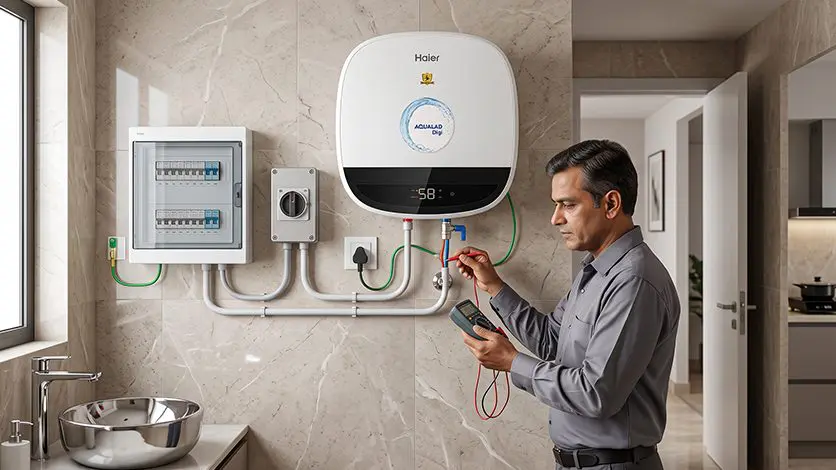
A good geyser installation is often all in the details you might not think of beforehand. It is worth considering a few practical points in advance to avoid unnecessary alterations, inappropriate connections or surprise electrical work when the installation starts:
- Verify the total connected load of the house. A geyser is not a solitary object in the house. Air conditioners, induction cooktops, ovens and other high power appliances may be running at the same time, so the electrician needs to consider whether the overall electrical supply is able to comfortably carry the combined demand.
- Look at the distribution board more closely. The distribution board should be in good condition and have sufficient space for the new connection. An overcrowded board, ageing components or badly laid connections may need attention before installing another high-load appliance.
- Plan the location of the isolator switch. The geyser should be provided with a suitable means of cutting off the electrical supply when necessary. It should be fitted in a readily accessible place and away from areas where it is likely to be continually exposed to splashes or water.
- Do not use extension boards and ad-hoc connections. A geyser should not be attached to any household extension boards, multi-plug adaptors or temporary wire joints. Hookups for high-load appliances require proper design, not a convenient workaround never meant for continuous electrical use.
- Follow the electrical requirements for the model as indicated. Installation requirements will differ from one water heater to another. Before connection, it is advisable to check the product manual and manufacturer specifications to ensure that the electrical setup meets the requirements of the particular geyser being installed.
Choose a Haier Water Heater Your Electrical Setup Can Support
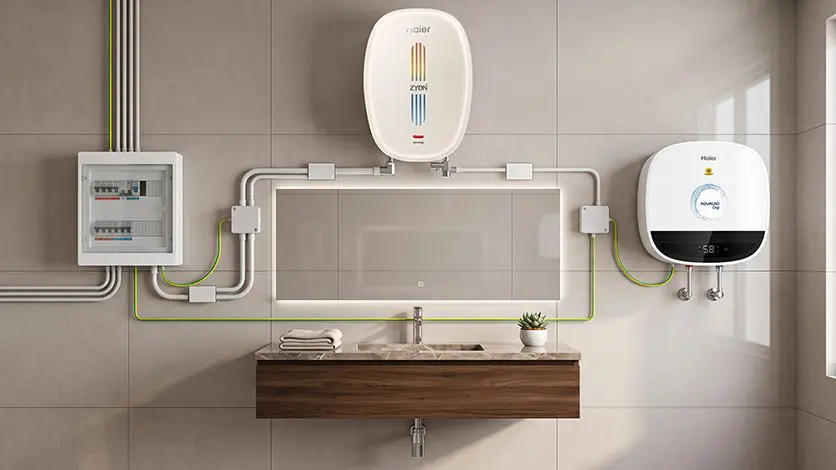
Haier offers models with different power ratings, so it pays to look beyond capacity and heating speed and consider how much electrical load the selected model will place on the circuit as well:
Match the power rating to the available electrical capacity
Haier’s current instant water-heater range includes 3 kW as well as 4.5 kW models. Since the higher-powered option draws more current, the existing circuit should be checked against the specific model rather than assuming that every geyser can use the same electrical connection.
Choose faster heating only when the circuit is ready for it
A higher power rating can support quicker heating, but it also brings a greater electrical demand. For example, Haier’s ZYON instant range includes both 3 kW and 4.5 kW options. The practical choice is the one that balances the required heating performance with what the home’s wiring and protective devices are designed to handle.
Look at storage models when you want more flexibility in power use
Selected Haier storage water heaters offer more than one power option, with models such as the AQUALAD Digi providing 2 kW and 3 kW settings. This gives homeowners another factor to consider when matching hot-water requirements with the electrical setup available at home.
Keep built-in safety features in the bigger picture
Haier water heaters also include Shock Proof technology, while some instant models also offer Dual Thermal Proof and IPX4 water resistance. These features add important layers of appliance safety, but they should work alongside correctly rated wiring, earthing and circuit protection rather than being treated as substitutes for them.
Conclusion
When choosing the right water heater, it’s not just about capacity, heating speed or features, but also if it fits the electrical setup already available at home. Comparing the appliance specs to the circuit capacity is a good way to streamline the installation process and determine if any electrical upgrades are needed before installation begins.
For more powerful models, a qualified electrician can check whether the existing circuit is suitable and make the necessary changes where required. The geyser is chosen this way, keeping in mind the regular requirements of hot water and the electrical preparedness of the home.
Frequently Asked Questions
How do Haier water heaters ensure safety against electrical leakage and shocks?
Haier water heaters come with Shock Proof technology that reduces voltage to safe levels in case of electrical leakage. Some of the instant models also come with IPX4 water resistance and dual thermal protection.
What electrical load capacity is typically required to run an instant kitchen or bathroom geyser safely?
Depends on the geyser’s power rating. A 3 kW geyser at around 230 V draws about 13 A, while a 4.5 kW takes up to 20 A. Now Haier offers 3 kW and 4.5 kW instant water heaters. Therefore, the circuit, wiring and protective devices should be chosen according to the specific model and not one standard setup for every geyser.
Why is proper earthing (grounding) critical for high-power water heaters?
Proper earthing gives a safer path for fault or leakage current and helps to reduce the risk of electric shock. This is even more important with water heaters because electricity is being used in close proximity to water. The BIS safety requirements for electric water heaters specify the following areas of protection against electric shock, leakage current and provision of earthing.
Do instant tankless water heaters consume electricity continuously, or only when in use?
Instant water heaters heat water on demand, rather than constantly heating and storing a tank of water. Their power draw can be relatively high when heating, but the heating element doesn’t just keep running all day to keep stored hot water hot. That’s why instant models can be a good choice for short bursts of use, such as kitchen sinks or quick bathroom bursts.
Can I plug a high-power instant geyser into a normal wall socket?
No, not always, and it should never be assumed to be safe. BIS household socket and plug standards are rated at 6 A and 16 A, while a 4.5 kW geyser will draw almost 20 A at 230 V. A high-power model will therefore need a dedicated electrical connection that is suitably rated, rather than being plugged into an ordinary wall socket.
Does purchasing a Haier water heater include assistance with safe installation and wiring guidelines?
Haier offers installation and service support through its service network, and customers can schedule an installation appointment via Haier India’s official support channels. However, it can depend on the model, purchase terms and location whether installation is included at no extra cost. Any additional electrical work such as wiring upgrades or a new dedicated circuit must be confirmed separately and done by a licensed professional.