
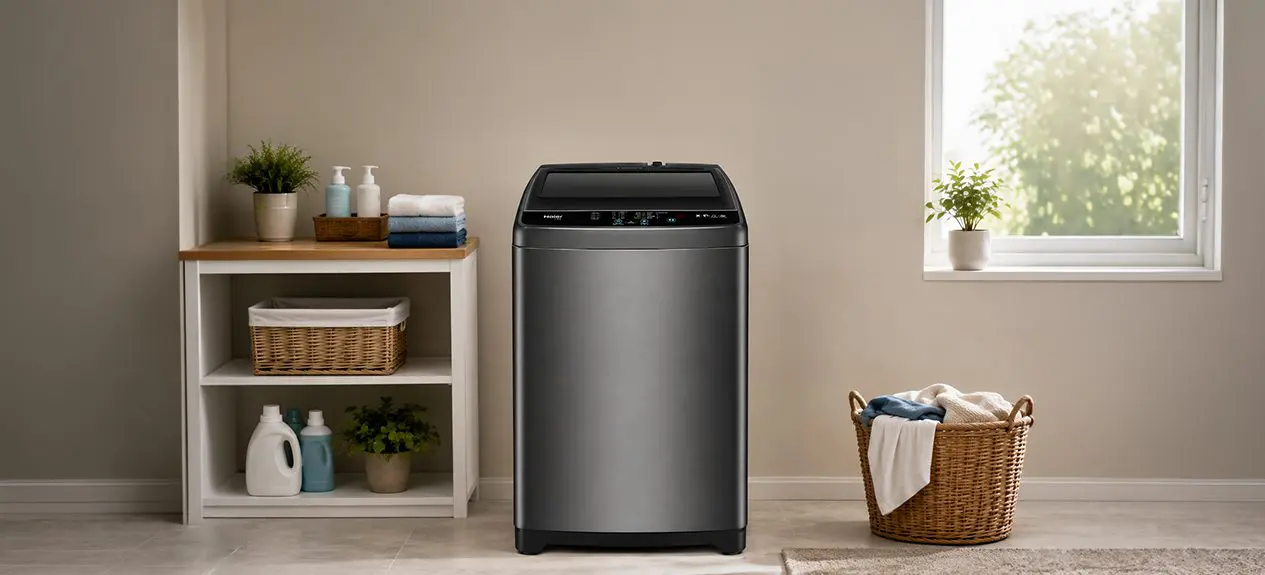

Buying a washing machine in India usually comes down to one early decision: how much manual effort you are willing to put in every wash. A single-tub washing machine answers that question by handling wash, rinse, and spin inside one drum, without the tap-and-transfer routine that older formats need. It has become the default pick for buyers who want less effort and steadier results. This guide covers what the term means, where the efficiency gains come from, and what to check before you buy one.
What Is a Single Tub Washing Machine?
Such a machine uses one drum for the whole process. Clothes go in, water fills on its own, the wash cycle runs, rinsing happens inside that same drum, and spinning finishes the job. Nothing is moved by hand at any stage. This differs from a twin tub unit, where washing happens in one tub and spinning in a separate one, requiring clothes to be transferred manually. Sensors and programmed logic take over most of the manual steps here, which is why the format is usually called fully automatic.
Single Tub Washer vs Semi-Automatic: The Real Difference
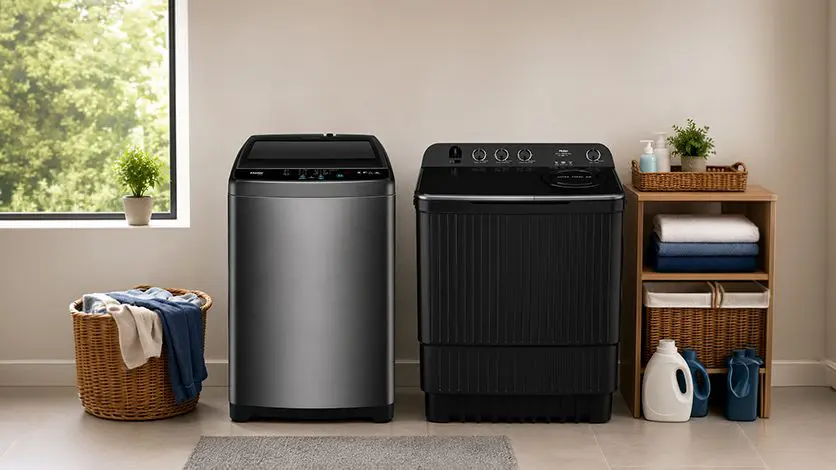
The gap between these formats shows up in daily use. A semi-automatic machine typically involves nine steps: selecting water level, opening the tap, closing it manually, setting a wash timer, draining dirty water, refilling twice for rinsing, then lifting wet clothes into a separate spin tub. A fully automatic single tub washer cuts this to two steps. Load the clothes, select a programme, and walk away.
| Parameter | Fully Automatic | Semi-Automatic (Twin Tub) |
| Operation steps | Two, load and start | Nine, manual transfer involved |
| Supervision | Minimal, can run unattended | Continuous monitoring needed |
| Water usage | Set by load weight | Often exceeds actual need |
| Motor experience | Smoother, less mechanical noise | More audible during wash and spin |
| Portability | Fixed installation, needs plumbing | Easier to move on castors |
Neither format suits every household equally. A semi-automatic unit still works for buyers who relocate often or lack a fixed water connection. For anyone who values consistent results with less manual work, the fully automatic option does more of the job on its own.
Efficiency: What Actually Changes the Bill
Single tub washing machine efficiency comes down to three things: load sensing, water metering, and motor design. When a machine detects how much laundry is inside the drum, it draws only the water that load needs, instead of filling to a fixed level every time. This alone accounts for a meaningful share of monthly water savings. Energy use follows a similar pattern, since a motor running only as hard as the load demands consumes less power per cycle than one fixed at a flat setting regardless of size.
Lab comparisons across brands support this. Some fully automatic top load machines record water use of roughly 10 to 12 litres per kg per cycle, while others in the same segment cross 15 litres per kg. Across a week of washing, that gap adds up to tens of litres saved, with no drop in wash quality.
Compact Washing Machine, Smaller Footprint
Space is tight in most Indian bathrooms and utility areas. A compact washing machine built on this design skips the extra floor area a twin tub unit needs for its second drum. Capacities between 6.5 kg and 8 kg suit smaller families well, and larger households can move up to 10 or 11 kg without much change in footprint, a practical fit for apartments where every corner of utility space counts.
Features Worth Checking Before You Buy
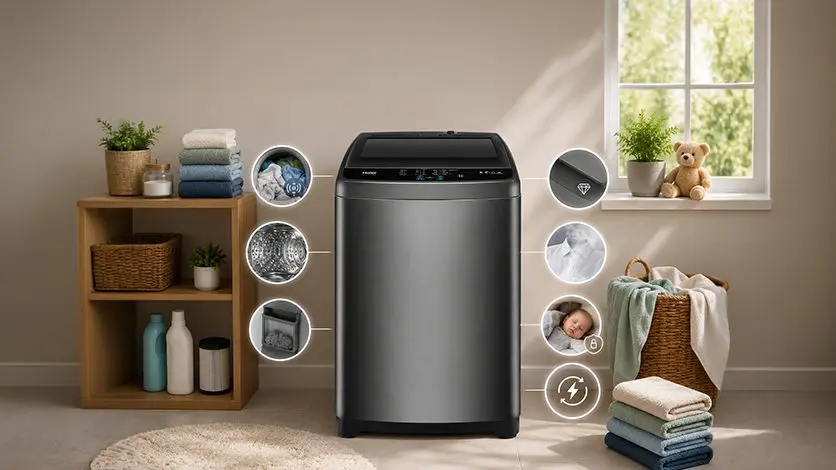
Not every machine in this category is built the same way. A handful of single-tub washer features separate a genuinely useful purchase from a basic one:
- Load and fabric sensing, so water and detergent adjust to what’s inside, not a fixed default.
- Drum design, since a wider diameter reduces tangling and improves how clothes move during a wash.
- Filter quality, where a proper lint filter keeps the tub cleaner and cuts down on odour.
- Toughened glass lid, which resists scratches and impact better than standard tempered glass.
- Hygiene wash options, such as an in-built heater, useful where bacteria build up inside a damp tub.
- Child lock and auto restart, additions that matter in homes with children or frequent power cuts.
These details shape everyday performance more than the badge on the front panel.
How to Choose the Best Option in India
Finding the best single tub washing machine in India for buyers’ needs starts with household size, not marketing claims. A family of two or three is usually served well by a 6.5 to 8 kg machine. Larger households, especially those washing bedding or heavier fabrics often, benefit from 9 kg and above. Beyond capacity, check the installation space, since these machines need a fixed water inlet and drainage point nearby. A longer motor warranty is also a useful signal, since it points to a component the manufacturer expects to outlast the rest of the appliance.
How Haier Designs Its Single-Tub Washing Machines
At Haier, we build our fully automatic range around one idea. Laundry should ask less of the person doing it. Our top load lineup uses the Oceanus Wave Drum, a design that mimics the gentle motion of hand washing rather than aggressive mechanical agitation. This keeps fine fabrics from twisting together and reduces wear over repeated washes.
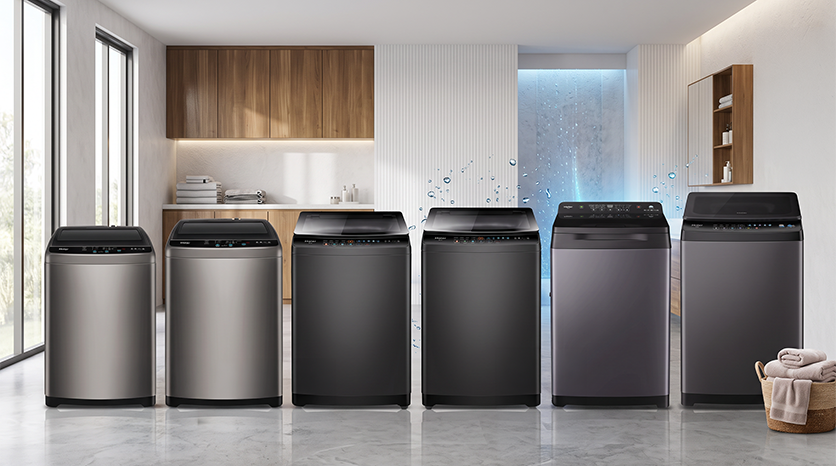
Our AI Wash function reads the load weight automatically and adjusts water and detergent accordingly, so nothing is wasted on a half-filled drum. Many models also carry a butterfly-shaped built-in heater, engineered with a longer heating surface for even hot water distribution, supporting better stain removal and hygiene. We use Ultra Fresh Air circulation to keep the tub dry between washes, cutting down on the musty smell that builds up in a closed, damp drum. Toughened glass lids and anti-scaling protection round out the durability of our design.
This shows up differently across our top load lineup depending on what a household needs. The HWM65-306S8, at 6.5 kg, suits smaller families and pairs Ultra Fresh Air with the Oceanus Wave Drum in a compact frame. The HWM70-306ES5N1, at 7 kg, adds Softfall closing for a gentler lid, while the HWM80-320BK at 8 kg carries Auto Restart alongside the same drum technology. For families needing more capacity, the HWM90-H688BK and HWM100-H326BK bring the in-built heater and Ultra Fresh Air together at 9 kg and 10 kg, while the HWM110-H688BK extends this to 11 kg for larger homes without giving up AI Wash or the toughened glass lid found across the range.
For households that prefer front load machines, our range includes models built around the 525mm Super Drum and a Direct Motion Motor, offering a quieter, beltless wash with steam-based hygiene cycles. For those not ready to move away from a twin tub setup, our semi-automatic range carries additions like anti-rat mesh and anti-bacterial pulsators, so the upgrade path stays open whenever a household is ready.
Conclusion
Choosing one of these machines is less about one standout feature and more about how much manual effort it removes from a weekly chore. The right pick depends on household size, available space, and how much automation matters to you over hands-on control. Understanding how water use, motor design, and drum technology work together will help you choose a machine suited to your home, not the spec sheet alone.
FAQs
What is a single-tub washing machine?
It is a fully automatic washing machine that uses one drum to wash, rinse, and spin clothes without manual transfer between stages. Water filling, draining, and timing happen automatically, unlike semi-automatic twin tub units that need constant supervision throughout.
How does Haier design its single-tub fully automatic washing machines?
Haier’s top load range combines the Oceanus Wave Drum, AI Wash load sensing, and a butterfly-shaped in-built heater for even hot water distribution. Toughened glass lids and Ultra Fresh Air circulation add durability and hygiene across daily use.
How do single-tub fully automatic machines compare in terms of water and energy efficiency?
Fully automatic machines generally use less water and power per kg than semi-automatic units, since they meter usage against actual load weight. Lab comparisons show automatic top load models often using less water per cycle than twin tub alternatives.
What role does Haier’s Super Drum technology play in fabric care?
The 525mm Super Drum, used across Haier’s front load range, gives clothes more room to move freely during a wash. This reduces tangling, improves stain removal, and results in fewer wrinkles compared to smaller, tightly packed drums.