
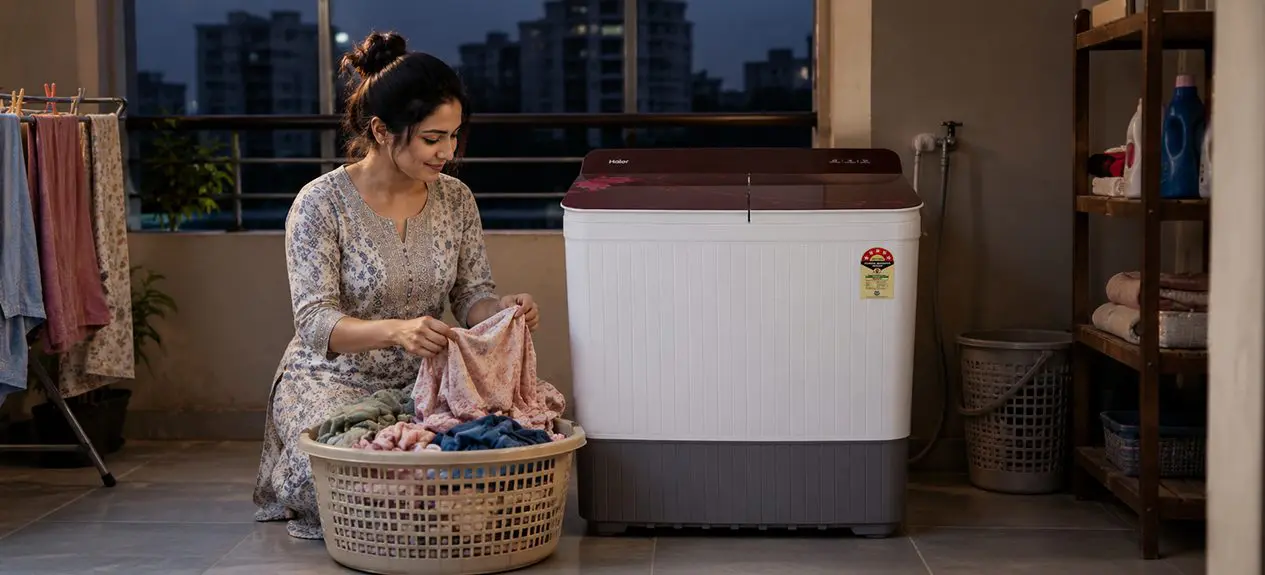

Power cuts can stop the fan and lights, but the laundry basket still keeps filling. Planning laundry during power cut hours can get tricky in many Indian homes. A semi-automatic washing machine can make things easier here. It handles washing and spinning as separate steps, so you can pause between them when the power goes off. There is no need to restart the entire wash cycle from the beginning. You can finish washing when electricity returns, then move clothes to the spin tub. It takes some extra effort, but that control can help when the power supply is unpredictable. For homes with frequent outages, this setup can be more practical.
Why Power Cuts Disrupt Fully Automatic Machines
Fully automatic machines depend on a chain of electronic steps. The inlet valve opens, the drum fills, the motor runs, and the drain pump clears the water, all under a control board. When supply drops mid-chain, every step stops together. Many front-load models also keep the door locked while water remains in the drum. What happens after power returns depends on the model, since some resume and others need a fresh start.
This is why using a washing machine during power cut hours is difficult with a fully automatic model when the outage runs long. These machines also need a steady water supply. Here is how the two formats compare.
| Situation | Fully automatic | Semi-automatic |
| Water filling | Through the inlet valve, which needs power | By tap, hose or bucket, with no power needed |
| Wash and spin | One programme in a single drum | Two tubs, each with its own timer |
| Power goes off mid-cycle | The programme pauses, and recovery depends on the model | The tub stops, and clothes stay in place until power returns |
| Your control | Set once, then wait | Move step by step at your own pace |
How Semi-Automatic Machines Cope With Power Cuts
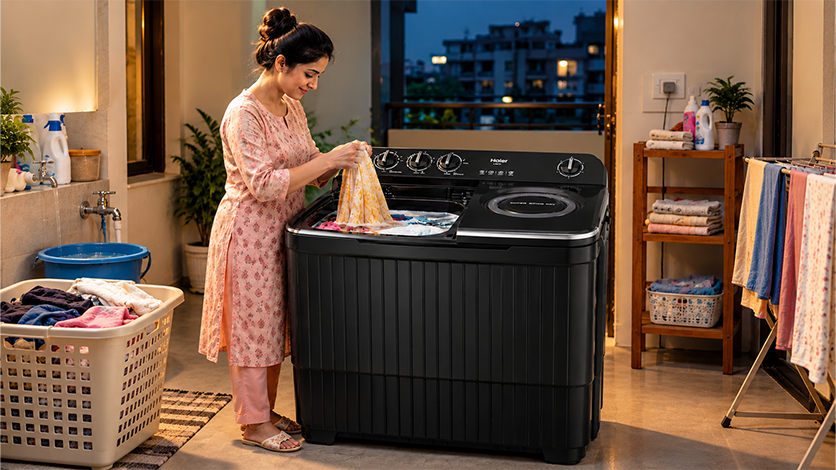
Take a semi-automatic washing machine power cut situation where electricity goes off during the wash cycle. The motor stops, but the clothes and water stay in the tub. Nothing gets lost. Some models with Auto Restart continue from the same point when power returns. Others may need you to reset the timer before starting again. That small difference matters during frequent outages. You can still plan laundry around power cuts, but the machine needs electricity before the motor can start working again.
1> Manual Water Filling
Water goes in by tap, hose or bucket, so the machine never waits for an inlet valve to open. This also answers a common question about continuous supply. A semi-automatic machine works without one, because you add only the quantity required and set it on the water level selector. People often ask about a washing machine without electricity. The motors do need power, yet filling, soaking, and sorting can all go ahead while you wait.
2> Separate Wash and Spin Tubs
A semi-automatic machine has one tub for washing and another for spinning, and each has its own timer. The combination of a wash tub and a spin tub gives you control over when every step happens. If power goes off after the wash, the clothes can rest in the wash tub or move to the spin tub for later. You can also run only one motor at a time, which keeps the demand lower on backup power.
Can You Run a Washing Machine on an Inverter?
Yes, running a washing machine on inverter backup works when the inverter is rated for the load. The wash and spin motors need power, so a washing machine without electricity stays idle until backup starts. Motors draw more power for a moment at start than while running, so leave some headroom above the figure on the machine’s rating label. Compare that number with the inverter’s capacity, and prefer a pure sine wave inverter, which generally suits motors better. Washing first and spinning later spreads the demand across time, which is gentler on the battery.
A washing machine can also run on a generator when the output is steady, and the capacity covers the starting load. Keep the generator outdoors in open air for safety.
Semi-Automatic Advantages Beyond Power Cuts
The semi-automatic washing machine benefits extend well past outages. Many households find that a semi-automatic machine uses less electricity than a fully automatic one, because its two motors run only for the minutes set on the timers. Actual use still depends on load size and wash time.
- Fills from any tap or bucket, which helps where water pressure is low or supply comes at fixed hours.
- Castor wheels let you move the machine to a balcony or utility corner.
- Separate tubs mean a second load can start washing while the first one spins.
- Larger capacities handle bedsheets and heavy fabrics in fewer rounds.
Trade-Offs to Consider
A semi-automatic machine asks for more of your time than a fully automatic one. You fill the tub, move clothes to the spin tub and keep an eye on the timers. Water use depends on how you fill and rinse, and the water level selector helps match the amount to the load. Running a washing machine during power cut hours still needs a plan for the motors, either backup power or a wait for the grid.
Want to know whether an automatic or a semi-automatic machine suits your routine better?
Read this blog: Automatic vs Semi-Automatic vs Manual Washing: Which Is Right for You?
Is a Semi-Automatic Right for Your Area?
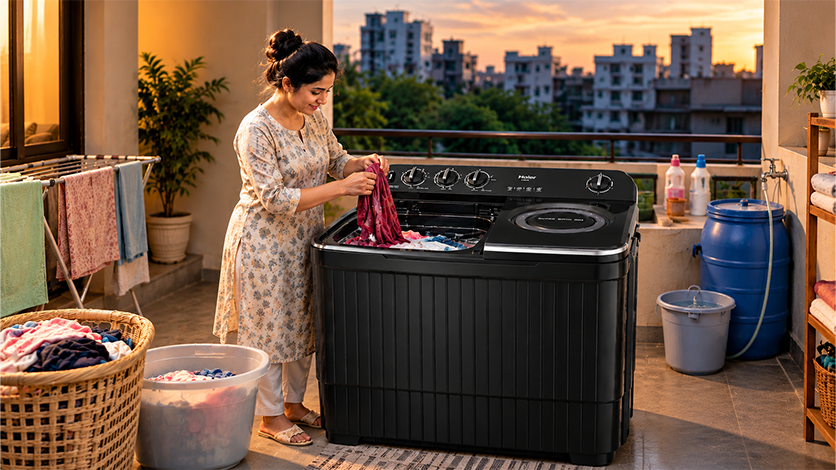
It depends on how often your power goes off and how reliable your water supply stays. Homes with frequent outages, tank-fed water, or fixed supply hours can find this format useful. Rented homes and smaller utility areas also benefit, especially when the machine needs to move around. Planning laundry during power cut days becomes easier because you can fill the tub, soak clothes, and wash them in stages. There is some manual work involved. Still, that flexibility makes semi-automatic machines practical for many Indian households, where electricity and water supply may not always follow the same schedule.
Our Haier Semi-Automatic Range for Homes With Power Cuts
At Haier, we make semi-automatic washing machines from 8 kg to 14 kg, so households of different sizes can pick a suitable capacity. Our Haier Semi Automatic Washing Machine 10 KG 196BK has a 6 kg spin capacity and a spin speed of 1300 rpm, along with a 30-minute soak time that is handy while you wait for supply. The 08 KG 178 suits compact households, and the 14 KG 196BK serves large families.
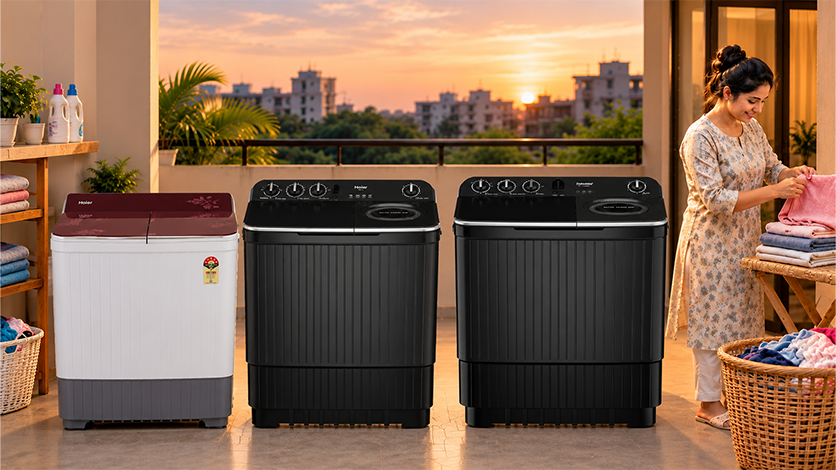
Each of the models carries an Anti Rat Mesh at the base to protect the wires and motor. Castor wheels make repositioning easy, and the Magic Filter collects lint and threads during the wash. Most models also include Oxyi Dry, a spin technology that reduces moisture after washing, so clothes dry sooner on the line when the fan is off.
Our range also includes Auto Restart, which starts the wash from the same point after a power cut, so there is no need to reset the programme. In a semi-automatic washing machine power cut situation, our twin tub design also lets you pause after any stage. We focus on the semi-automatic washing machine benefits that matter in daily use, such as control over each stage and easy movement. If you use backup power, a washing machine on an inverter setup works with our range once the inverter capacity matches the rating label. We back these machines with a 2-year comprehensive warranty, plus 5 years on the motor and the spin motor. Explore the full range of Haier semi-automatic washing machines to find your fit.
Conclusion
Outages interrupt many routines, yet laundry can carry on in steps with the right machine. A semi-automatic model fills by hand, washes and spins in separate tubs, and stops exactly where you left off. With an inverter of suitable capacity, it keeps the wash going through longer breaks. For homes with regular cuts, laundry during power cut days becomes easier to manage when you set the pace.
FAQs
Can a washing machine work during a power cut?
A washing machine needs electricity to run its motors, so it pauses during a power cut. A semi-automatic model lets you fill, soak and sort clothes in the meantime, then continue the wash once supply or inverter backup returns.
Are semi-automatic washing machines better for power cuts?
Many households find them easier to manage during outages because water filling is manual and the wash and spin stages run separately. Haier models with Auto Restart also resume the wash from the same point when power returns
Can I run a washing machine on an inverter?
Yes, if the inverter’s rating covers the machine’s starting load. Check the rating label and user manual, leave some headroom, and prefer a pure sine wave inverter, since it generally suits motors better than a modified one.
Do semi-automatic machines use less electricity?
Many households find that they do, because the two motors run only for the minutes set on each timer. Actual use still depends on load size, wash time and how often you run the spin tub.
What happens if power goes off mid-cycle?
The motor stops, and the clothes stay in the tub with the water. Once power returns, machines with Auto Restart continue from the same point, while others need the timer set again, so earlier steps are not repeated.
Is a semi-automatic machine good for areas with frequent outages?
Yes, it suits such areas well because filling is manual and each stage can be paused. Pairing it with an inverter of matching capacity keeps your laundry schedule steady during longer outages.