
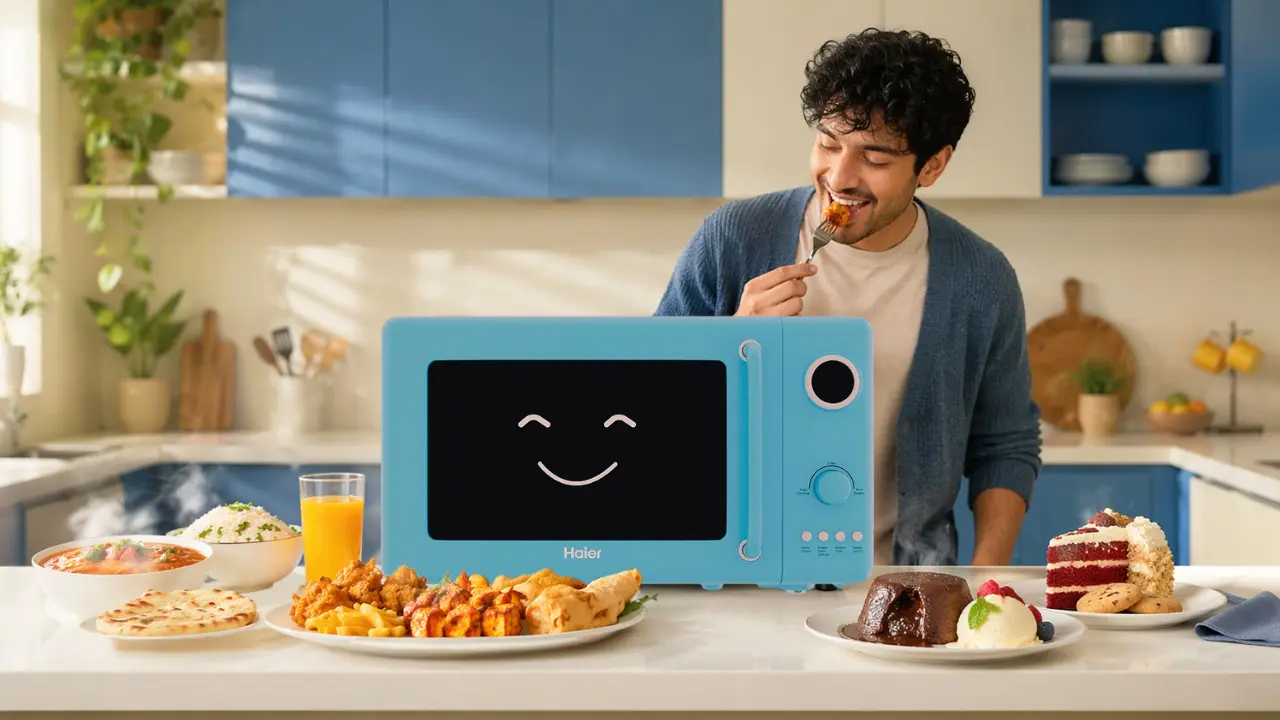

Design shapes user experience by reducing effort, removing confusion, and guiding behavior without words.
A well-designed product does not ask you to think. It quietly shows you what to do next, saves time, and makes everyday actions feel simple, fast, and even enjoyable.
Why do some everyday products feel effortless while others feel exhausting?
It is 9:30 PM.
Dinner is done. Someone walks into the kitchen to heat leftovers.
Two microwaves. Same function. Same job.
One has cluttered buttons. Tiny labels. You pause.
The other has a clean dial. Clear display. One press. Done.
Same task. Different experiences.
That difference is design.
Design is not how something looks. Design is how something removes friction.
Design is not decoration. It is decision-making
Most people think design is about colors and finishes.
That is surface thinking.
Real design answers one question:
How many decisions does the user need to make?
Every extra decision adds friction.
Every removed decision creates ease.
Think about modern Indian homes today:
- Dual-income households
- Late work hours
- Limited time for routine tasks
In this environment, good design becomes invisible support.
The hidden system behind good design
Good design operates like a silent system:
| Design Element | What it Does | User Impact |
| Clear controls | Reduces confusion | Faster decisions |
| Smart presets | Removes guesswork | Consistent results |
| Visual cues | Guides behavior | Less learning needed |
| Ergonomic layout | Saves effort | Comfortable usage |
The insight is simple:
When design works, you stop noticing it. When it fails, it becomes a problem.
Why modern homes demand better design
Indian homes are changing fast.
Smaller kitchens. Faster routines. Higher expectations.
That shift changes everything.
People are not asking:
- How powerful is this appliance?
- How many features does it have?
They are asking:
- How easy is it to use?
- How quickly can I get things done?
Design answers that.
Three ways design directly impacts user experience
1. Design reduces decision fatigue
Laundry. Cooking. Cooling. Heating.
None of these tasks are difficult.
The decisions around them are.
Which mode? What setting? How long?
Now imagine a system that removes that thinking.
One option is manual control.
- Full flexibility
- High effort
- Requires learning
The second option is guided design.
- Presets
- Clear controls
- Lower effort
The third option is intelligent automation.
- No decisions
- System adapts
- Maximum ease
The best design moves from control to clarity.
2. Design saves time without announcing it
Good design does not say “I saved you time.”
It just does.
Take something as simple as an instant start function.
Press once. Heating begins immediately.
No menus. No steps.
That single interaction removes seconds every day.
Over a year, it adds up to hours.
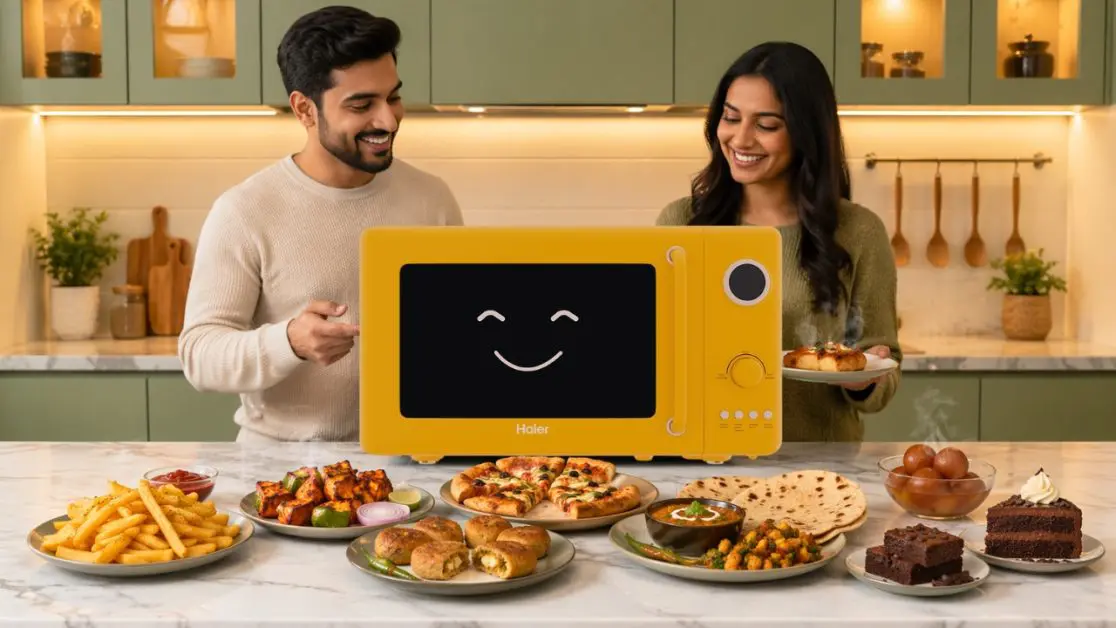
In appliances like the Haier Vogue 20L Yellow Solo Microwave Oven With Auto Cook Menus Digital Display (HIL20V1MYPD), features like Instant Start and Auto Cook Menus are built exactly for this purpose. They reduce steps and create flow in everyday cooking.
Time saved in seconds compounds into lifestyle changes.
3. Design creates emotional connection
Not all values are functional.
Some of it is emotional.
A product that looks good gets used more.
A product that feels intuitive builds trust.
Even small details matter.
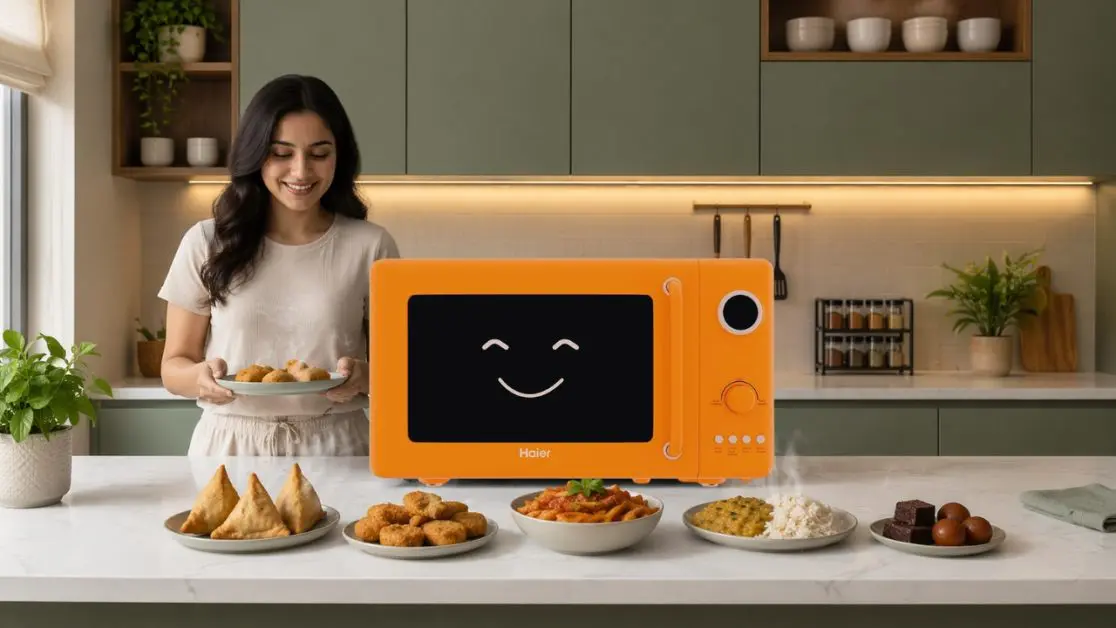
The smiley glass door in models like the Haier Vogue 20L Orange Solo Microwave Oven With Auto Cook Menus Digital Display (HIL20V1MOPD) does not improve cooking performance.
But it changes how you feel when you use it.
It adds warmth. Personality. A sense of ease.
People do not just use products. They live with them.
When design meets lifestyle, experience improves
Design is not isolated.
It fits into real life.
Think about three everyday scenarios:
Scenario 1: The Working Professional
Come home late. I need food quickly.
What matters:
- Speed
- Simplicity
- No thinking
Design solution:
- One-touch start
- Clear display
- Preset cooking
Outcome:
- Task completed in seconds
- No mental load
Scenario 2: The New Couple Setting Up a Home
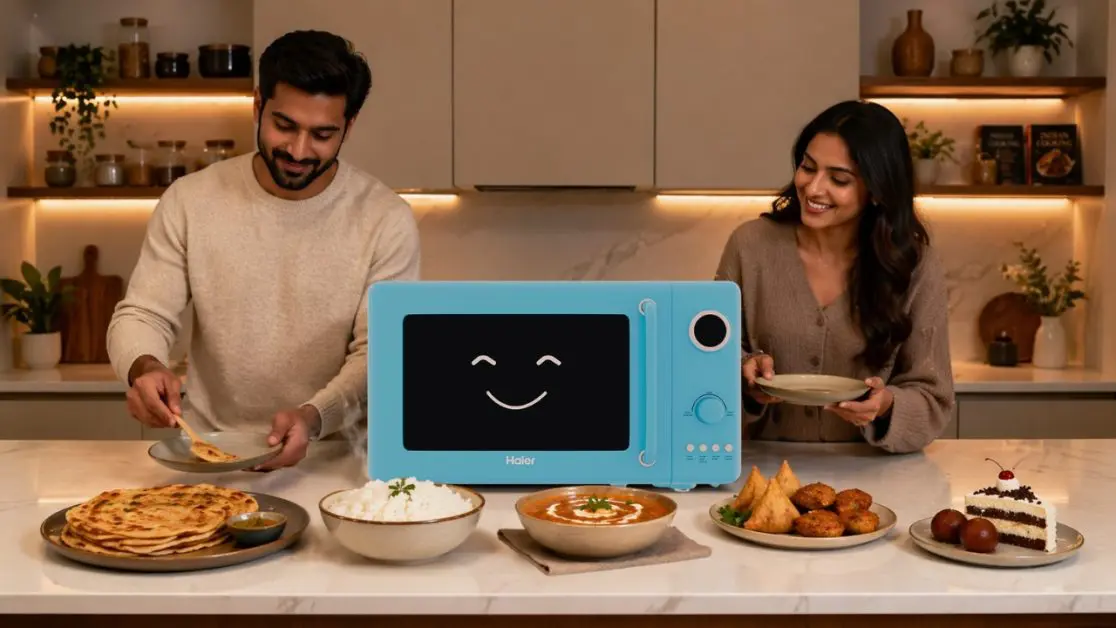
Everything is new. Nothing is familiar.
What matters:
- Ease of learning
- Minimal confusion
- Aesthetic appeal
Design solution:
- Intuitive controls
- Clean layout
- Stylish finishes with multiple colour options
Appliances like the Haier Vogue 20L Blueberry Solo Microwave Oven With Auto Cook Menus I Digital Display (HIL20V1MBPD) even offer vibrant colour choices like blue, orange, and yellow to match modern kitchen aesthetics.
Outcome:
- Faster adaptation
- Stronger emotional connection
Scenario 3: The Family Kitchen
Multiple users. Different habits.
What matters:
- Consistency
- Ease for all age groups
- Reliability
Design solution:
- Auto cook menus
- Simple jog dial controls
- Clear feedback
Outcome:
- Anyone can use it
- Same results every time
The real shift: From features to experience
There was a time when more features meant better products.
That time is over.
Today, more features without better design creates confusion.
Here is the shift:
| Old Thinking | New Thinking |
| More features = better | Better experience = better |
| User learns the product | Product adapts to user |
| Control is power | Simplicity is power |
Complexity is easy to build. Simplicity is hard to design.
What good design actually looks like in appliances
Good design is not one thing. It is a combination of small decisions.
Key design principles that improve user experience
- Clarity over options
Fewer, better choices - Speed over process
Faster outcomes with fewer steps - Guidance over control
Help the user decide - Consistency over variation
Same result every time - Emotion over neutrality
Make it feel good to use
Why this matters more than ever
We are not short on technology.
We are short on attention.
People are tired.
Busy. Distracted. Managing too much.
In this reality:
Design becomes a form of respect.
It respects your time.
It respects your attention.
It respects your mental energy.
The invisible advantage of good design
Good design does something subtle.
It removes friction so consistently that life feels smoother.
Not dramatically different.
Just easier.
Meals happen faster.
Routines feel simpler.
Homes feel calmer.
You do not notice the product.
You notice the absence of struggle.
So what should you actually look for?
When choosing appliances or upgrading your home, think of systems.
Not features.
Ask better questions:
- Does this reduce decisions or add more?
- Can anyone in the house use it without help?
- Does it save time in small, repeatable ways?
- Does it feel intuitive within seconds?
If the answer is yes, the design is working.
The final insight: Design is how life feels, not how products look
Most people underestimate design.
They see it as styling.
But design is structure.
It shapes behavior. It influences habits. It defines daily experience.
A well-designed home is not just beautiful.
It is efficient. Calm. Predictable.
And the best part?
You do not have to think about it.
Because the design already has.
Good design does not demand attention. It earns trust quietly.
And over time, that trust turns everyday living into something smoother, simpler, and a little more human.
Frequently Asked Questions
Why do I feel tired using some appliances even when the task is simple?
Because poor design makes you think too much. Extra buttons, unclear labels, and too many settings add mental effort.
How does good design reduce my daily decision fatigue?
It gives you fewer, clearer choices through presets, simple controls, and guided actions.
I come home late and just want to heat food quickly. What design features matter most?
One-touch start, clear display, auto cook menus, and controls that do not require reading a manual.
Why do too many features sometimes make a product harder to use?
More features without clear design create confusion. Better experience matters more than more options.
How does design actually save my time at home?
Good design removes small repeated steps, like menu scrolling or setting confusion, so daily tasks finish faster.
Is an instant start button really useful or just a small feature?
It is useful because it removes extra decisions. One press means the task starts immediately.