
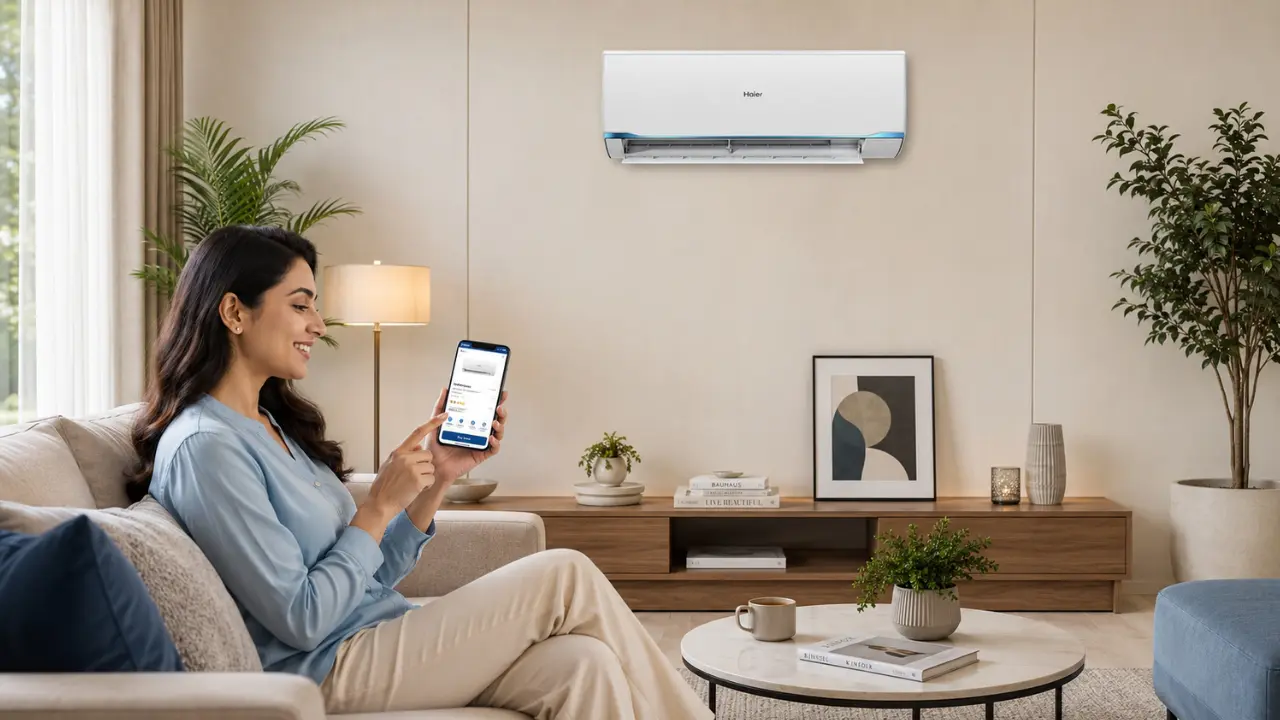

Should You Buy an AC Online or Offline?
Buying an air conditioner online gives you price transparency, wider model comparisons, and convenience.
Buying offline gives you physical inspection, face-to-face guidance, and faster decision confidence. The right choice depends less on discounts and more on how your household makes decisions. A good AC purchase is not a transaction. It is a five-summer commitment.
Summer arrives quietly in Indian homes.
One day the ceiling fan feels enough. The next day someone says, “Yeh room itna garam kyun lag raha hai?”
Then the research begins.
Tabs open. Store visits happen. WhatsApp screenshots of prices start circulating inside family groups. One cousin says online is cheaper. Another says offline stores give better installation support. Someone else warns about fake reviews.
This is where most AC buying guides fail.
They compare prices. But they ignore behavior.
An AC is not just a product. It is a long-term household system involving cooling, electricity, maintenance, sleep quality, and service experience.
And systems behave differently online and offline.
The Internet Sells Convenience. Stores Sell Confidence.
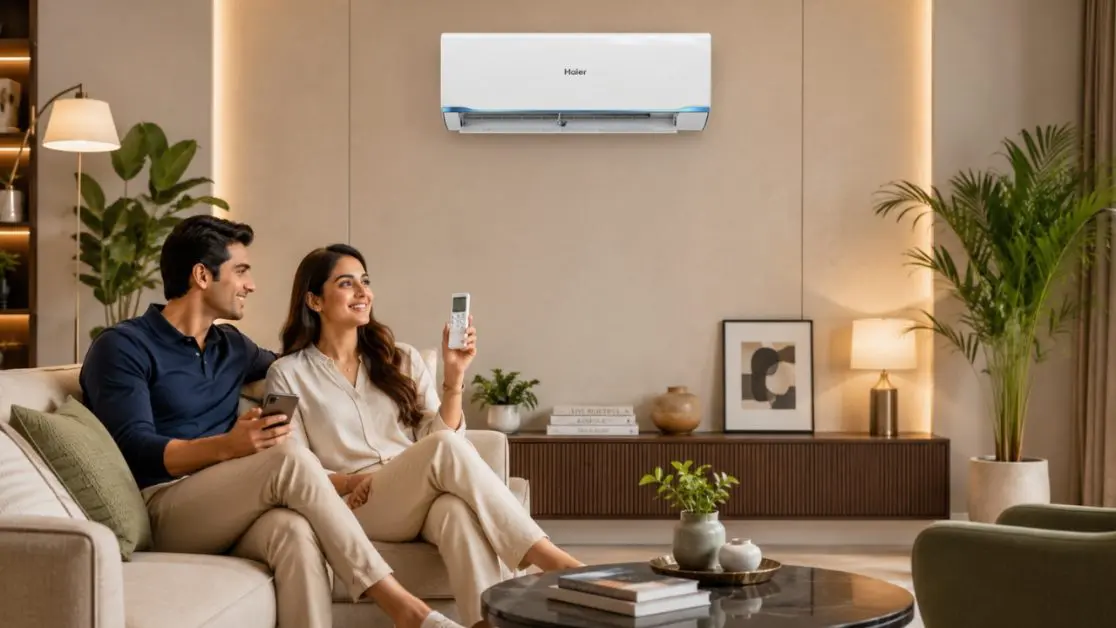
Online and offline AC buying work on two different psychological systems.
Online platforms optimize for speed.
Offline stores optimize for certainty.
That changes everything.
Why Online AC Buying Feels Easier
At 11:45 PM, you can compare:
- 1.5 Ton vs 1.8 Ton
- 3 Star vs 5 Star
- Inverter vs non-inverter
- Smart AC vs traditional AC
- EMI options
- Installation offers
Without stepping outside.
That matters in modern Indian households where time feels permanently compressed.
A working professional in Bengaluru may not have time for three showroom visits. A newly married couple furnishing an apartment may want all appliances delivered together. Online shopping compresses decision-making into one screen.
Convenience scales because attention is limited.
Why Offline AC Buying Still Exists
Now flip the situation.
A family in Lucknow walks into a store during peak May heat. They stand in front of a live AC demo. They feel airflow. They compare indoor unit sizes. They ask questions in Hindi. They negotiate.
That experience solves a different problem.
Not information.
Reassurance.
People do not just buy appliances. They buy reduced uncertainty.
What Online AC Buying Gets Right
The biggest advantage online is visibility.
You can compare ten AC models in twenty minutes. That changes buyer power.
Earlier, buyers depended entirely on what a store displayed. Today, buyers arrive informed.
That is a structural shift.
1. Better Price Transparency
Online platforms reveal:
- Seasonal discounts
- Cashback offers
- Exchange benefits
- No-cost EMI
- Installation packages
Price opacity disappears.
This matters because AC purchases in India are highly seasonal. Demand spikes between March and June. During this window, pricing changes rapidly.
A smart buyer watches patterns instead of impulse offers.
2. Easier Feature Comparison
Modern ACs are no longer simple cooling machines.
Now buyers compare:
| Feature | Why It Matters |
| AI Cooling | Adjusts cooling based on room conditions |
| Convertible Modes | Helps manage electricity usage |
| Air Purification | Useful in polluted urban areas |
| Smart App Control | Enables remote management |
| High Ambient Cooling | Important during Indian peak summers |
For example, Haier’s AI Climate Control ACs focus heavily on adaptive cooling systems, AI-based energy optimisation, and convertible usage modes. Features like AI Human Detection and AI Eco monitoring directly address energy wastage patterns in Indian homes.
Online research makes these comparisons easier because buyers can slow down and evaluate logic instead of relying purely on showroom persuasion.
3. Reviews Reveal Real Usage Patterns
Product specifications tell you what an AC can do.
Reviews tell you how people actually live with it.
That distinction matters.
One review may mention low noise during sleep. Another may mention fast cooling in top-floor apartments. A third may discuss electricity savings after switching from an older fixed-speed AC.
Patterns emerge.
And patterns are often more useful than marketing.
What Offline AC Buying Still Does Better
Physical retail survives because some decisions require sensory trust.
You cannot feel airflow through a product thumbnail.
1. Human Conversations Reduce Decision Fatigue
Most buyers are not confused about brands.
They are confused about fit.
Questions like:
- Is 1.5 Ton enough?
- Will this work for a west-facing room?
- What happens during voltage fluctuations?
- How noisy is the indoor unit?
- Will installation happen quickly?
A good store salesperson simplifies complexity.
That still matters in India where appliance purchases are often family decisions, not solo purchases.
2. You See the Design in Real Life
This sounds superficial until the AC gets installed in your living room for the next eight years.
Design matters because appliances now function as visible parts of interior spaces.
A glossy white panel behaves differently visually than a gold deco strip finish.
That is why premium AC categories increasingly focus on aesthetics alongside performance.
For example, Haier’s Desert Rose series combines AI-driven climate control with decorative finish options like Blue Deco Strip and Gold Deco Strip designs.
Appliances moved from utility corners into visual living spaces.
That changed buying behavior permanently.
3. Installation Coordination Feels Simpler
Offline retailers often coordinate:
- Delivery
- Installation
- Basic accessories
- Technician scheduling
- Immediate escalation support
This creates emotional comfort.
Especially for first-time buyers.
Especially during peak summer panic buying.
The Hidden System Nobody Talks About: Installation Quality
Most buyers obsess over brand comparisons.
Few obsess over installation quality.
That is backward.
A badly installed premium AC performs worse than a properly installed mid-range AC.
Poor copper piping. Improper drainage slope. Weak wall mounting. Incorrect vacuuming.
These things quietly destroy efficiency.
Cooling systems are ecosystems.
The machine is only one part.
Questions Every Buyer Should Ask
Whether buying online or offline, ask these:
- Is installation included?
- What accessories cost extra?
- What pipe length comes standard?
- How fast is after-sales support?
- Is stabiliser compatibility needed?
- What ambient temperature can the AC handle?
- Are warranty conditions linked to authorised installation?
For example, many modern inverter ACs include free installation offers but still apply conditions around authorised servicing and maintenance schedules.
The hidden costs are rarely in the sticker price.
They live in the ecosystem around it.
Online vs Offline Depends on the Kind of Buyer You Are
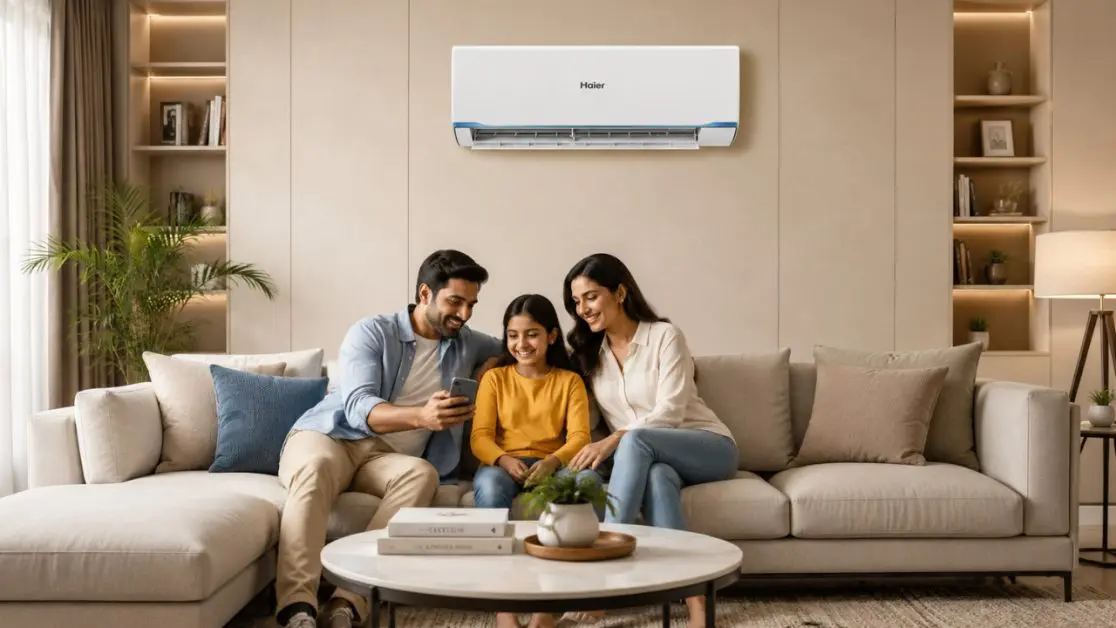
There is no universal winner.
There are only different decision systems.
One Option Is the Research-Heavy Buyer
This buyer:
- Watches YouTube reviews
- Compares ISEER ratings
- Reads Reddit threads
- Tracks electricity consumption
- Understands tonnage calculations
Online works beautifully here.
Because information compounds.
The Second Option Is the Trust-Driven Buyer
This buyer values:
- Store demonstrations
- Human reassurance
- Negotiation
- Immediate answers
- Local dealer familiarity
Offline works better here.
Because confidence compounds.
The Third Option Is the Hybrid Buyer
This is increasingly the Indian mainstream.
Research online.
Buy offline.
Or inspect offline and purchase online during sales.
Hybrid behaviour is now normal because consumers no longer separate digital and physical experiences cleanly.
The internet became the showroom.
The showroom became the verification layer.
The Smartest Buyers Focus on Ownership Cost, Not Purchase Price
A cheap AC with poor efficiency becomes expensive every month.
A slightly higher upfront investment often reduces long-term electricity costs.
That is why energy ratings matter.
For instance:
| AC Type | Typical Long-Term Impact |
| 3 Star AC | Lower upfront price, higher yearly electricity usage |
| 5 Star AC | Higher initial cost, lower long-term running cost |
| Inverter AC | Better load adjustment and energy savings |
| Convertible AC | Flexible usage depending on occupancy |
Many modern inverter ACs now combine AI-based optimisation with energy-saving systems that automatically shift modes based on usage patterns. Some models claim up to 56% energy savings through adaptive AI Eco systems and inverter technologies.
The best appliance decisions age well.
That is the real metric.
Why This Debate Is Bigger Than ACs
Online vs offline is no longer just about appliances.
It reflects how modern Indian households make decisions.
One generation trusts relationships.
Another trusts research.
Most families now use both.
That hybrid behavior explains why smart appliance brands increasingly build experiences across apps, stores, service networks, and digital ecosystems simultaneously.
Because buyers no longer want products alone.
They want continuity.
An AC today cools rooms. But it also affects sleep, electricity bills, work-from-home comfort, afternoon productivity, and even family arguments over remote settings.
Tiny systems. Big consequences.
The Best Buying Decision Feels Quiet After Purchase
That is the real test.
Not excitement on delivery day.
Not discounts.
Not cashback screenshots.
A successful AC purchase disappears into daily life.
The electricity bill feels manageable.
The sleep feels deeper.
Nobody talks about the AC anymore.
That silence is the real signal that the system works.
And whether you buy online or offline, that is the outcome worth optimising for.
Frequently Asked Questions
Should I buy my AC online or from a local store?
If you value convenience, price comparison, and late-night research, online works well. If you prefer reassurance, physical inspection, and human guidance, offline often feels safer.
Why do I feel overwhelmed while choosing an AC?
Modern ACs involve tonnage, star ratings, inverter technology, AI features, installation costs, and long-term electricity usage. The decision feels heavy because it affects comfort for years, not weeks.
Is cheaper online always better for AC buying?
Not necessarily. A lower online price can sometimes hide installation charges, accessory costs, delayed service coordination, or warranty limitations.
Why do my parents trust offline AC stores more?
Offline buying reduces uncertainty through face-to-face conversations, live demonstrations, and local dealer accountability.
Is researching online and buying offline a smart strategy?
Yes. Many Indian buyers now follow hybrid behavior, using the internet for research and stores for final confidence.
What are the biggest advantages of buying an AC online?
Better price transparency, easy model comparison, EMI offers, cashback visibility, and convenience.
Are ACs really cheaper online in India?
Often yes during seasonal sales, but final ownership cost depends on installation, service quality, and energy efficiency.