
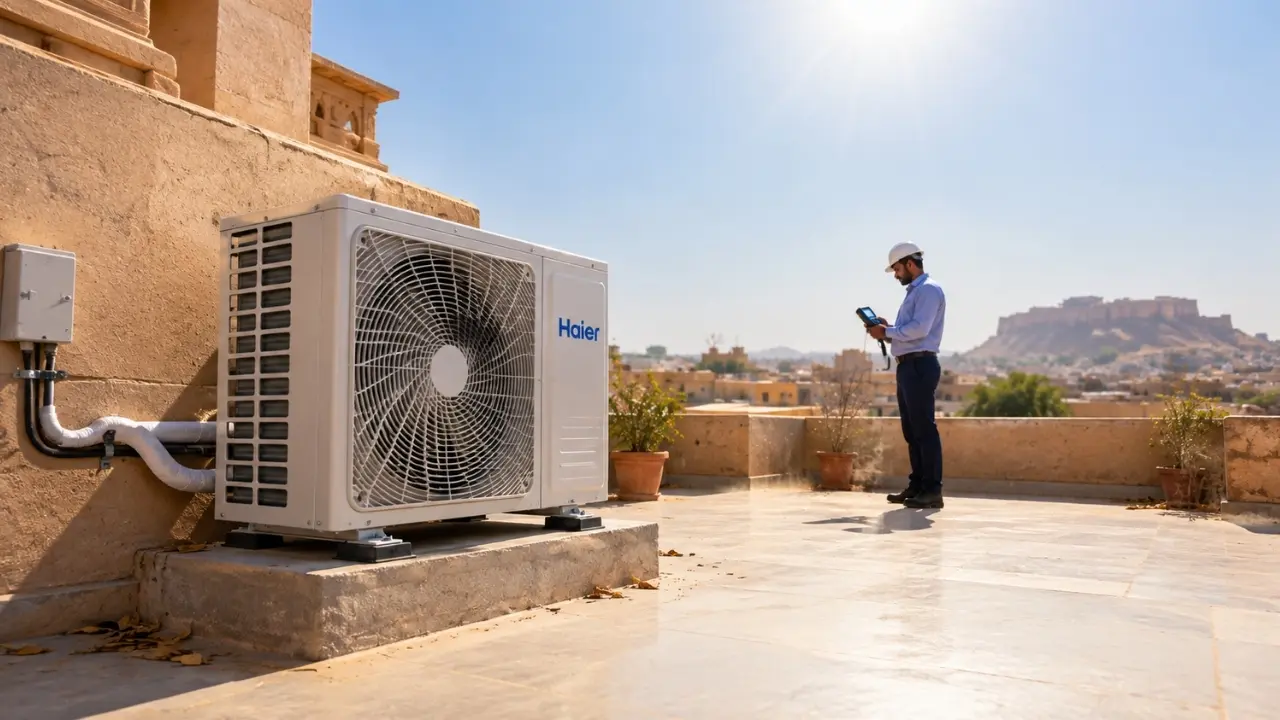

When summer is at its hottest, come into any electronics store and you’ll hear a lot of buzzwords cooling quicker, inverter technology, AI features, larger sizes, and improved energy ratings. Fair enough. However, one factor that is largely overlooked from manufacturing floors is UV testing.
Odd, isn’t it?
Most folks think that an air conditioner is simply supposed to cool well when it’s installed. The true test is far down the road. Will it perform the same after months of intense exposure to the sun, dust storms, humidity, monsoon showers and constant use? This is where UV testing comes in.
UV durability is not just a technical feature for Indian homes that have to face the heat of the sun and weather changes year after year. It is one of the various tests that support manufacturers to guarantee long-lasting reliability and dependability, and uniform visual appeal.
Why UV Exposure Is a Bigger Challenge Than Most People Realise
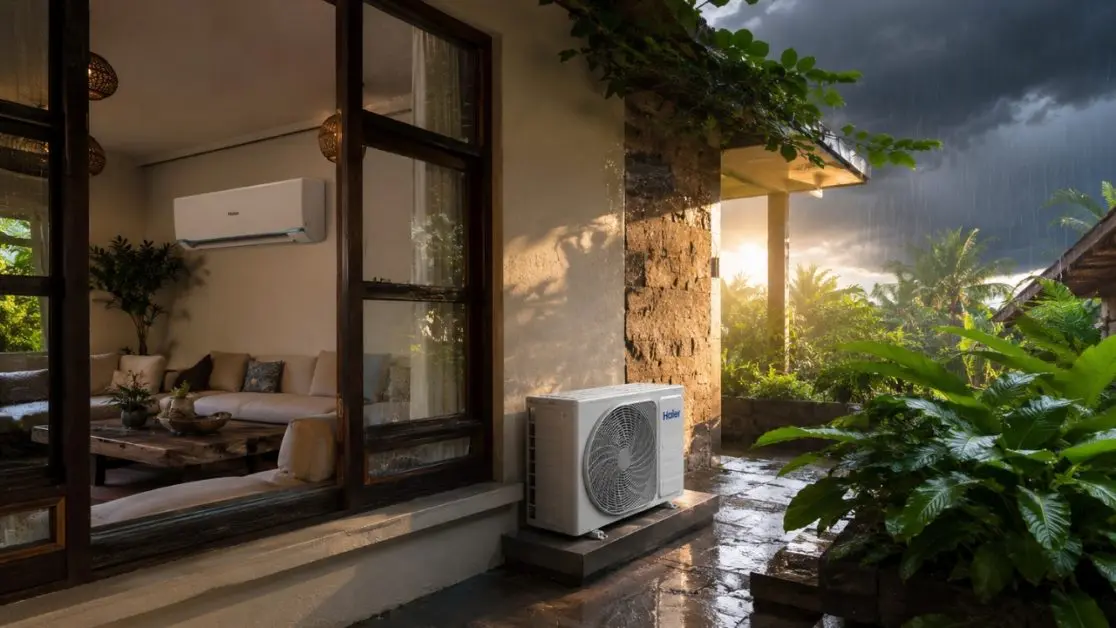
Think about where your AC actually lives.
The indoor unit enjoys a relatively controlled environment, but the outdoor unit has a completely different story.
It deals with:
- Direct summer sunlight for hours every day
- High UV radiation during peak months
- Dust accumulation
- Heavy rainfall
- Coastal humidity in many regions
- Constant temperature fluctuations
These conditions slowly affect plastics, protective coatings, painted surfaces and external materials. Over time, prolonged UV exposure can contribute to fading, surface deterioration and ageing if components are not engineered and validated appropriately.
That’s why reputed appliance manufacturers invest considerable effort in durability testing before products ever reach customers.
What Exactly Is UV Testing in an Air Conditioner?
UV testing is a controlled evaluation process where materials and components are exposed to simulated ultraviolet radiation under laboratory conditions.
The objective isn’t to make the product look good in a showroom.
It’s to understand how materials behave after years of environmental exposure.
Manufacturers typically evaluate factors such as:
| UV Testing Evaluates | Why It Matters |
| Colour stability | Helps components retain their appearance over time |
| Surface durability | Supports resistance against premature ageing |
| Material integrity | Evaluates how plastics and coatings respond to sunlight |
| Protective coatings | Ensures external layers continue performing effectively |
| Long-term reliability | Builds confidence that components remain dependable throughout regular use |
When these evaluations are part of product development, customers receive an appliance that’s designed with long-term usage conditions in mind, not just initial performance.
It’s Not Only About Looks
Let’s be honest.
Nobody buys an air conditioner because they want to admire the outdoor unit.
Yet appearance often reflects something deeper.
Materials that maintain their finish after prolonged exposure usually indicate careful engineering, quality coatings and comprehensive validation during development.
More importantly, UV testing complements other reliability checks that manufacturers conduct before launching a product.
Instead of focusing on a single component, the idea is to evaluate how the entire system withstands real-life conditions over extended periods.
Why Indian Weather Makes UV Testing Even More Important
India doesn’t have one climate.
It has many.
A home in Jaipur experiences very different environmental conditions compared to one in Kochi or Guwahati.
Across the country, an air conditioner may need to operate through:
Intense Summer Heat
Outdoor temperatures frequently cross 45°C in several regions.
Strong sunlight combines with heat to increase stress on exposed materials.
Heavy Monsoon Seasons
Rain, humidity and moisture challenge protective coatings and external components.
Coastal Conditions
Salt-laden air introduces another layer of environmental exposure for outdoor equipment.
Year-Round Operation
Many households now use air conditioners beyond summer for humidity control, better sleep and comfortable indoor temperatures throughout much of the year.
All of these factors make durability testing increasingly relevant during product development.
Reliability Begins Long Before Installation
One misconception persists among buyers.
Many believe product quality begins after installation.
Actually, it begins months, sometimes years earlier.
Before an AC reaches a customer’s home, responsible manufacturers conduct multiple evaluations covering performance, energy efficiency, durability and environmental resilience.
UV testing forms one part of this broader quality assessment process.
Rather than evaluating cooling alone, manufacturers examine whether materials can continue supporting reliable operation under prolonged environmental exposure.
That bigger picture matters.
Modern Air Conditioners Need Smarter Engineering Not Just More Cooling
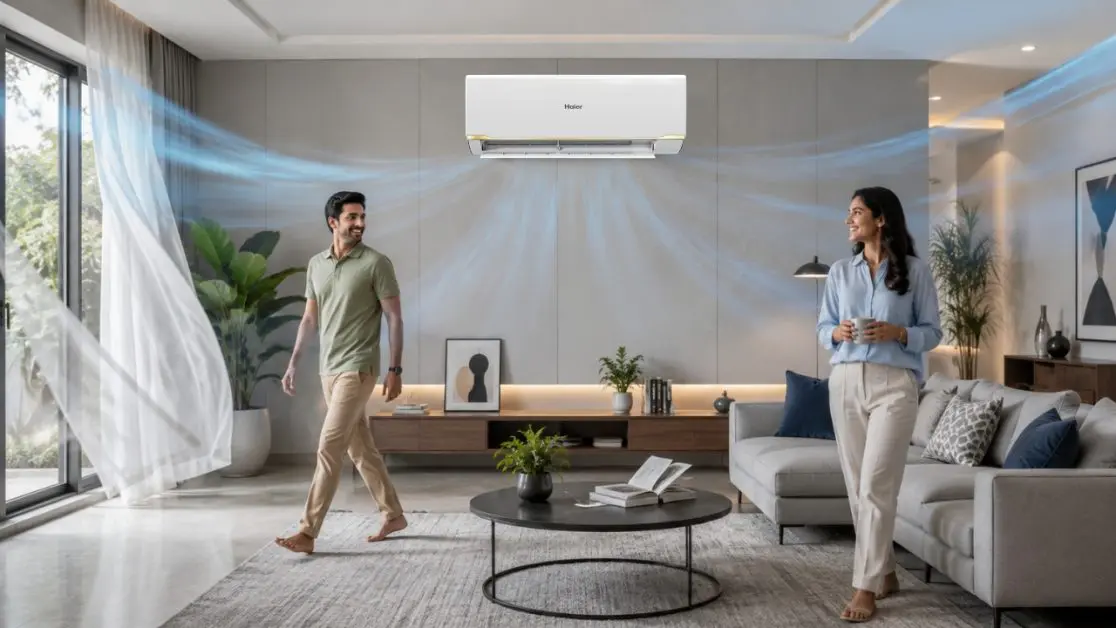
Cooling capacity alone no longer defines a premium air conditioner.
Today’s homeowners expect an appliance that can intelligently adapt to changing conditions while remaining efficient throughout its lifespan.
This is where Haier has taken a different approach with its AI-powered Desert Rose series.
The Haier 1.7 Ton 5 Star Desert Rose Air Conditioner (HSA20DSD-GAI5NB-I) and the Haier 1.7 Ton 5 Star Desert Rose Air Conditioner (HSA20DSD-NAI5NB-I) combine advanced AI-driven climate management with multiple technologies designed to improve comfort, energy management and long-term operation.
Some of the standout features include:
- AI-ATMOX that analyses the surrounding environment and usage patterns to deliver smarter comfort.
- AI Climate Control, which automatically considers weather conditions and indoor temperature before selecting an appropriate operating mode.
- AI Human Detection that helps minimise unnecessary energy usage by recognising room occupancy.
- AI for Savings, capable of monitoring electricity usage and automatically shifting to AI ECO mode, with energy savings of up to 56% under supported operating conditions.
- AI for Service, featuring automatic cleaning functions for both indoor and outdoor units to help maintain efficiency and deliver cleaner, odour-free air.
- Hexa Inverter technology designed for efficient cooling performance with lower energy consumption.
- 7-in-1 Convertible Cooling, allowing users to adjust cooling capacity according to changing requirements.
- Supersonic Cooling in just 10 seconds, 20-metre long air flow, and cooling capability even at ambient temperatures up to 60°C.
Instead of relying on a single headline feature, these models combine intelligent cooling, adaptive operation and maintenance-focused technologies to support everyday comfort across varying Indian weather conditions.
How UV Testing Supports Long-Term Performance
It’s tempting to think of UV testing as a cosmetic check. In reality, it plays a supporting role in a much bigger quality framework.
When an air conditioner is developed, manufacturers evaluate how various materials respond to environmental stress over time. UV testing contributes to this by assessing the resilience of exposed components under simulated sunlight, helping engineers validate material selection before the product reaches consumers.
That becomes particularly valuable in a country like India, where an air conditioner is expected to deliver dependable cooling year after year despite challenging outdoor conditions.
In simple terms, better-tested materials often contribute to greater confidence in long-term product durability.
Beyond UV Testing: Features That Help Everyday Performance
A durable air conditioner isn’t built on one test alone. It’s the result of multiple technologies working together to improve cooling, efficiency and maintenance.
Here’s how the Haier Desert Rose series addresses everyday needs.
Intelligent Comfort That Adapts Automatically
Rather than relying on constant manual adjustments, the AI-powered system learns usage patterns and analyses indoor conditions before selecting an appropriate operating mode.
That means the air conditioner isn’t simply running, it is adapting.
Benefits include:
- Reduced need for frequent temperature adjustments
- Comfort that responds to changing weather conditions
- Better optimisation across different seasons
Smarter Energy Management
Electricity consumption is a major concern for Indian households.
Instead of leaving users guessing, AI-powered energy monitoring helps track consumption while AI ECO mode automatically adjusts operation to minimize unnecessary energy usage whenever suitable. According to the product specifications, this can deliver energy savings of up to 56% under supported conditions.
Self-Cleaning Features That Help Maintain Efficiency
Regular servicing remains important, but intelligent maintenance features can help reduce dirt accumulation inside the system.
The Desert Rose series includes:
- AI for Service
- Indoor Frost Self Clean
- ODU Cyclone Clean
These features are designed to clean both indoor and outdoor units, helping maintain efficiency while supporting cleaner, odour-free airflow over time.
Built for Challenging Indian Summers
Extreme temperatures are no longer limited to a handful of cities.
Many regions now experience prolonged heat waves.
The Haier Desert Rose series is designed to provide cooling even at ambient temperatures up to 60°C, while its Hexa Inverter technology supports efficient operation and 20-metre long air flow helps distribute cooled air more effectively across larger spaces.
A Quick Checklist Before Buying Your Next Air Conditioner
Instead of comparing only star ratings or tonnage, ask yourself these questions.
| Buying Consideration | Why It Deserves Attention |
| Has the product been developed with durability testing in mind? | Long-term reliability depends on more than cooling capacity. |
| Does it offer intelligent climate management? | Smart automation improves everyday convenience. |
| Are there energy-saving features beyond inverter technology? | Advanced AI-based optimisation can help reduce unnecessary power consumption. |
| Does it include self-cleaning functions? | Cleaner internal components help maintain efficiency. |
| Can it handle Indian weather extremes? | High ambient cooling capability becomes increasingly valuable during peak summers. |
| Is it designed for modern connected homes? | Smart app and voice assistant compatibility simplify daily control. |
Why the Haier Desert Rose Series Stands Out
Buying an air conditioner today is no longer about choosing the most powerful model on paper.
It’s about choosing one that’s engineered for how Indian families actually live.
The Haier 1.7 Ton 5 Star Desert Rose Air Conditioner (HSA20DSD-GAI5NB-I) and the Haier 1.7 Ton 5 Star Desert Rose Air Conditioner (HSA20DSD-NAI5NB-I) combine intelligent AI-powered cooling with features that focus on comfort, energy management and ongoing performance. From AI Climate Control and AI Human Detection to AI for Savings, AI for Service, Hexa Inverter technology, 7-in-1 Convertible Cooling, Supersonic Cooling in 10 seconds and operation in temperatures up to 60°C, these models are designed to support the evolving cooling needs of Indian households.
For homeowners looking beyond specifications on a product label, this balanced combination of intelligent technology and thoughtfully engineered features makes the Desert Rose series worth considering.
Keeping Comfort Future-Ready
A good air conditioner cools your room.
A thoughtfully engineered one is designed with years of use in mind.
While UV testing is only one part of a manufacturer’s overall quality validation process, it reflects an important principle: products should be built to handle the environments they’ll actually face.
At Haier India, this philosophy extends beyond individual tests. The Desert Rose range features AI powered innovations, intelligent energy control, self cleaning features and engineering design that is focused on performance instead of the user.
When buying the next air conditioner, you would be better off considering things other than its capacity and star rating. Over the years, a more satisfying ownership experience can be gained by paying attention to the engineering of the product, including the durability testing and attention to intelligent features.
Frequently Asked Questions
1. What is UV testing in an air conditioner?
UV testing evaluates how materials and external components respond to prolonged exposure to ultraviolet light. It helps manufacturers assess the durability of materials under simulated sunlight conditions.
2. Does UV testing improve cooling performance?
UV testing itself does not increase cooling capacity. Instead, it forms part of broader product validation aimed at assessing the long-term durability of materials used in the air conditioner.
3. Why is UV testing important for Indian weather?
Indian air conditioners often operate under intense sunlight, high temperatures, humidity and seasonal weather changes. UV testing helps manufacturers evaluate how exposed materials perform under such environmental conditions.
4. Which Haier Desert Rose models feature AI-powered climate technologies?
The Haier 1.7 Ton 5 Star Desert Rose Air Conditioner (HSA20DSD-GAI5NB-I) and the Haier 1.7 Ton 5 Star Desert Rose Air Conditioner (HSA20DSD-NAI5NB-I) include AI-powered features such as AI-ATMOX, AI Climate Control, AI Human Detection and AI for Savings.
5. What smart features are available in the Haier Desert Rose series?
The Desert Rose series supports AI-powered climate management, AI ECO mode, electricity monitoring, AI for Service, Hai Smart App connectivity and voice control compatibility with Alexa and Google Assistant, according to the product specifications.
6. Can the Haier Desert Rose air conditioners operate in extremely high temperatures?
According to the product specifications, both models are designed to provide cooling at ambient temperatures of up to 60°C, making them suitable for demanding summer conditions.