

Intelligent cooling for modern Indian homes means air conditioning that understands people, patterns, and purpose.
It cools when needed, eases off when not, saves power without reminders, and blends quietly into everyday life. No constant adjustments. No guesswork. Just comfort that feels considered.
That is the short answer.
The longer one begins at home.
Why does cooling still feel like work in many Indian homes?
It is a familiar evening.
You walk in after a humid commute.
The room feels heavy.
You switch on the AC.
Five minutes later, it feels too cold.
Ten minutes later, someone says, “Reduce it.”
At midnight, you wake up to switch it off.
This is not a comfort problem.
It is a system problem.
Traditional cooling assumes two things.
That temperature is static.
That humans should do the thinking.
Indian homes prove both wrong.
India does not have one climate. It has many micro-climates
Within the same home.
- A sun-facing bedroom heats faster in the afternoon
- A living room cools differently when guests arrive
- A study needs focus cooling, not blanket chill
- Nights demand restraint, not brute power
Manual control cannot keep up with this rhythm.
Intelligent cooling exists because homes are dynamic systems, not boxes.
The quiet shift from control to intelligence
Older appliances waited for instructions.
Modern ones take responsibility.
This is where AI-driven climate control changes the relationship between people and cooling. Instead of chasing comfort, the system observes it.
According to Haier’s AI Atmox platform, modern AI climate systems continuously analyse temperature, humidity, usage patterns, and occupancy to optimize cooling in real time without manual input .
The insight here is simple.
Comfort improves when machines learn faster than humans need to react.
What intelligent cooling actually does differently
Not all smart features matter equally. In Indian homes, a few make a disproportionate difference.
1. Cooling that prepares, not reacts
AI pre-cooling predicts arrival using location awareness and behaviour patterns, then starts cooling before you enter the room.
The benefit is not luxury.
It is timing.
No overcooling.
No waiting.
Just readiness.
In practical terms, this reduces peak power spikes and shortens compressor strain cycles, which helps energy efficiency over time .
2. Cooling that targets people, not empty space
Traditional ACs cool volume.
Intelligent systems have cool intentions.
AI target cooling focuses airflow where people actually sit or sleep, instead of flooding the entire room uniformly.
This delivers two outcomes at once.
- Faster comfort
- Lower energy waste
The room does not need to feel cold.
You need to feel comfortable.
That distinction matters.
3. Cooling that learns household behaviour
Homes run on patterns.
- Dinner happens around the same time
- Sleep schedules repeat
- Weekend usage differs from weekdays
AI-based climate control builds a living consumption model by learning usage duration, mode preferences, and power patterns.
The result is fewer manual corrections and a system that adapts naturally to household rhythm rather than forcing habits to change .
The best automation does not announce itself. It simply removes friction.
Energy efficiency without anxiety
Power bills are emotional in Indian households.
They arrive with expectation.
They are open with tension.
They are discussed with concern.
Intelligent cooling changes this relationship by making energy visible and predictable.
How intelligent systems save power without discomfort
AI Eco 2.0 modes do not reduce performance blindly.
They adjust cooling capacity based on the gap between current room temperature and target temperature.
For example, Haier’s AI Eco 2.0 system automatically shifts operating levels as the temperature stabilises, moving from higher capacity to lower power modes without human intervention .
This does three things at once.
- Prevents overcooling
- Reduces unnecessary compressor load
- Extends appliance lifespan
Savings happen quietly. Comfort stays intact.
Electricity monitoring 2.0 turns usage into understanding
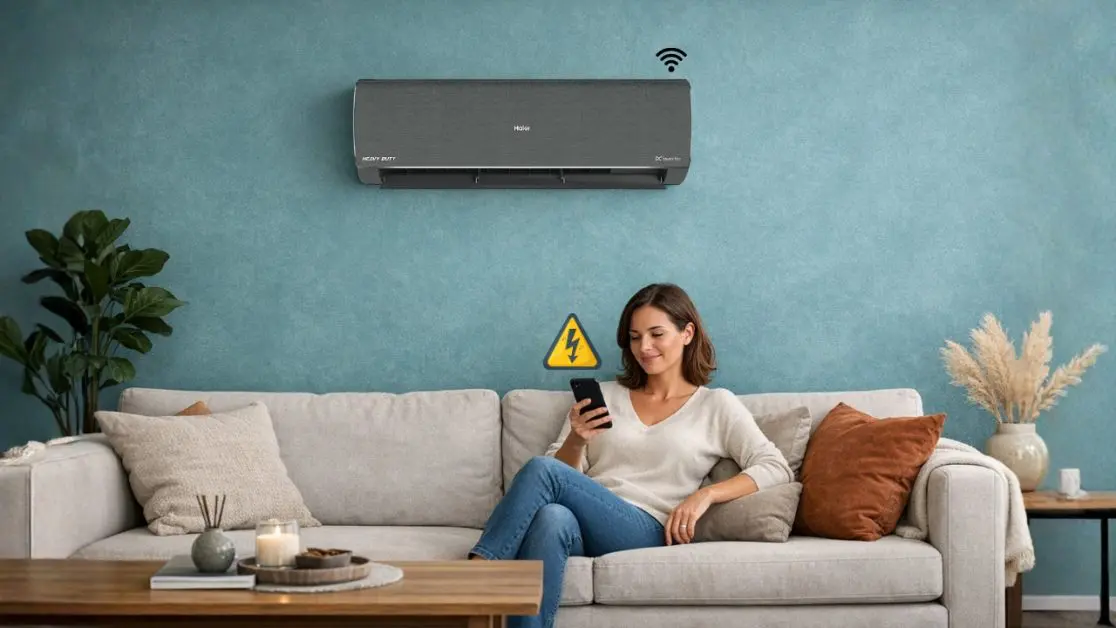
When power consumption is shown in charts, calendars, and even currency, behaviour changes naturally.
You begin to notice patterns.
- Higher usage on humid evenings
- Lower usage during cooler nights
- Seasonal shifts in consumption
This visibility creates trust. Not guilt.
People save more when they understand more.
When the room knows if you are there
One of the most underappreciated innovations in intelligent cooling is human detection.
If no movement is detected, the system eases into energy-saving mode.
If absence continues, it powers down responsibly.
No reminders.
No timers.
No forgotten switches.
According to Haier’s AI human detection framework, occupancy sensing enables predictive energy conservation without compromising comfort when people return .
This matters because empty rooms do not need loyalty.
People do.
Self-cleaning is not hygiene. It is performance
Dust is not just a cleanliness issue.
It reduces airflow.
It strains compressors.
It increases power draw.
Intelligent self-cleaning systems automatically maintain indoor and outdoor units using frost-based and reverse airflow cleaning cycles.
The outcome is simple.
- Faster cooling
- Lower bills
- Consistent performance year-round
Maintenance stops being a task and becomes a background process .
Intelligent cooling during Indian seasons
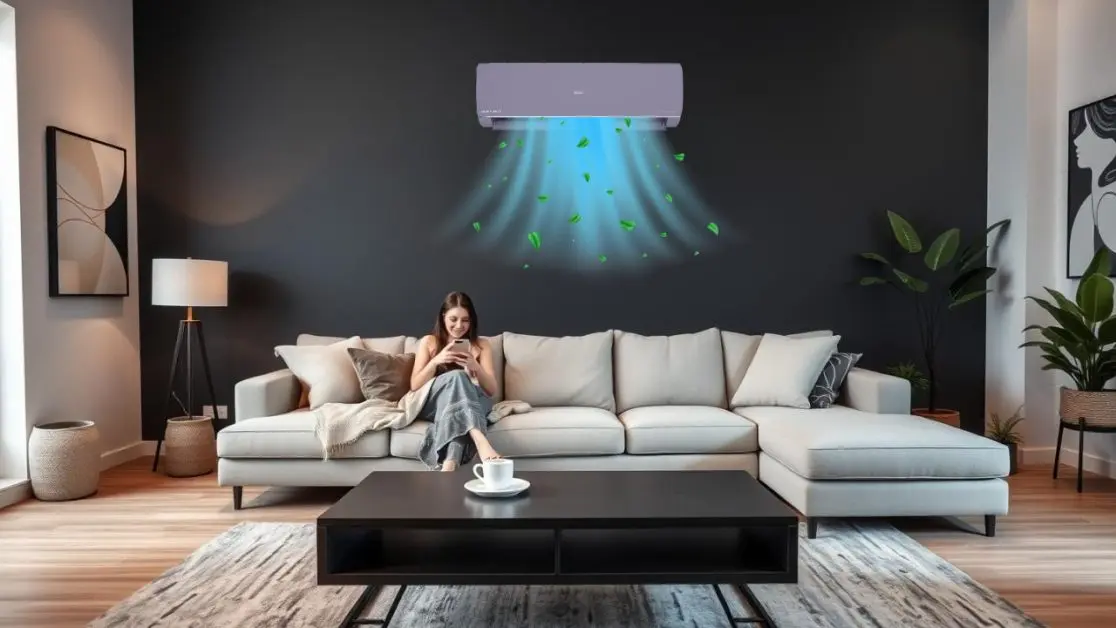
India does not cool evenly across the year.
Each season asks for a different kind of intelligence.
Summer
- Rapid cooling without peak load stress
- Targeted airflow instead of full-room blast
Monsoon
- Humidity-aware adjustments
- Preventing that heavy, sticky feeling
Winter nights
- Gentle temperature maintenance
- Avoiding unnecessary compressor cycles
Intelligent cooling systems are designed to adapt across seasons automatically, instead of forcing the same logic year-round.
The real value is mental space
The biggest benefit of intelligent cooling is not technical.
It is cognitive.
You stop thinking about temperature.
You stop arguing about settings.
You stop waking up to switch things off.
That mental space returns to more important things.
Family conversations.
Rest.
Focus.
Technology succeeds when it gives attention back to people.
What this shift tells us about modern Indian homes
Indian homes are evolving.
They are smaller yet smarter.
Busier yet more intentional.
More aware of energy, comfort, and design.
Intelligent cooling fits into this evolution because it respects how people actually live.
Not perfectly.
But predictably.
The future of cooling is not colder. It is calmer
More power does not mean more comfort.
More control does not mean better outcomes.
The future belongs to systems that learn, adapt, and step back.
Intelligent cooling is not about features.
It is about trust.
When your home understands you, life feels easier.
That is the quiet promise modern cooling finally keeps.
Frequently Asked Questions
Why does using my AC still feel like work every day?
Because traditional ACs expect you to manage comfort. You keep adjusting temperatures, modes, and timers because the system doesn’t understand changing humidity, sunlight, occupancy, or sleep cycles. Intelligent cooling removes this mental load by adapting automatically.
Why am I always adjusting the temperature at night?
Night cooling needs restraint, not constant power. Conventional ACs don’t understand sleep patterns, so they overcool. Intelligent systems gradually ease cooling as body temperature drops, avoiding midnight wake-ups.
Why does one room in my house feel hotter than another even with the same AC setting?
Because Indian homes have internal micro-climates. Sun-facing rooms, kitchens, and occupied living areas heat differently. Traditional ACs treat all rooms as static boxes; intelligent cooling adapts to real heat behavior.
Does intelligent cooling really matter in Indian weather, or is it just marketing?
It matters more in India than in uniform climates. With heat, humidity, monsoons, and mild winters, intelligent cooling adjusts logic seasonally instead of using one fixed cooling approach.
What happens if I forget to switch off the AC when I leave?
Intelligent systems detect absence and automatically reduce power or shut down. When you return, cooling resumes without punishment or reminders.
Is human detection really useful or just a gimmick?
It’s practical. Empty rooms don’t need cooling. Occupancy sensing prevents wasted energy without compromising comfort when people return.
Is self-cleaning just about hygiene?
No. Dust reduces airflow, increases power draw, and strains compressors. Self-cleaning maintains performance, efficiency, and consistent cooling year-round.