
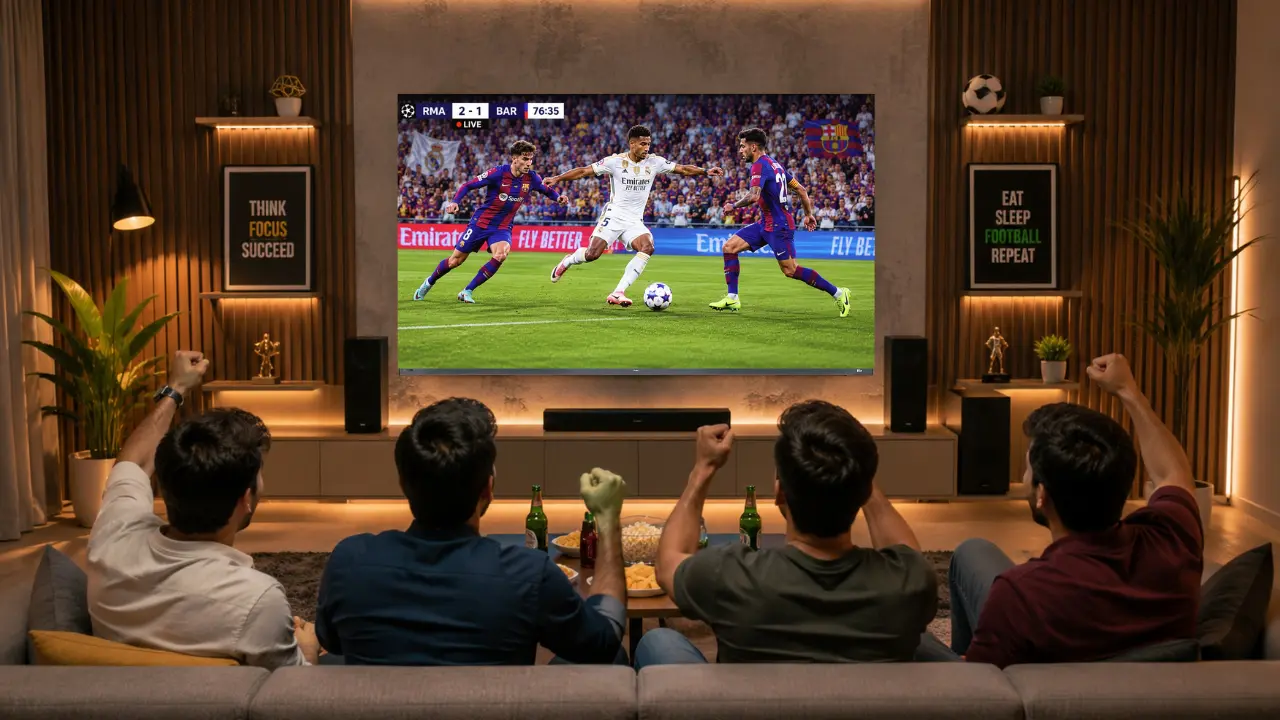

There is a moment every sports fan knows.
The ball leaves the bowler’s hand at 145 km/h. The batsman edges it. The camera follows. The crowd is irritating.
And then…
The image blurs.
You miss the edge. You miss the spin. You miss the detail that actually changed the game.
The funny thing is, most people blame the broadcast.
Often, the real culprit is the television.
For years, TV buying conversations in India revolved around one thing: screen size.
“Should I buy a 55-inch or a 164 cm (65)?”
“Will a 189 cm (75) fit my living room?”
“Is bigger always better?”
Not necessarily.
When it comes to sports viewing, motion performance can have a far greater impact on your experience than simply adding more inches to the screen.
A giant display means very little if fast-moving action looks smeared, shaky, or blurry.
And that’s where modern television technology is changing the game.
The Sports Viewing Problem Nobody Talks About
Let’s be honest.
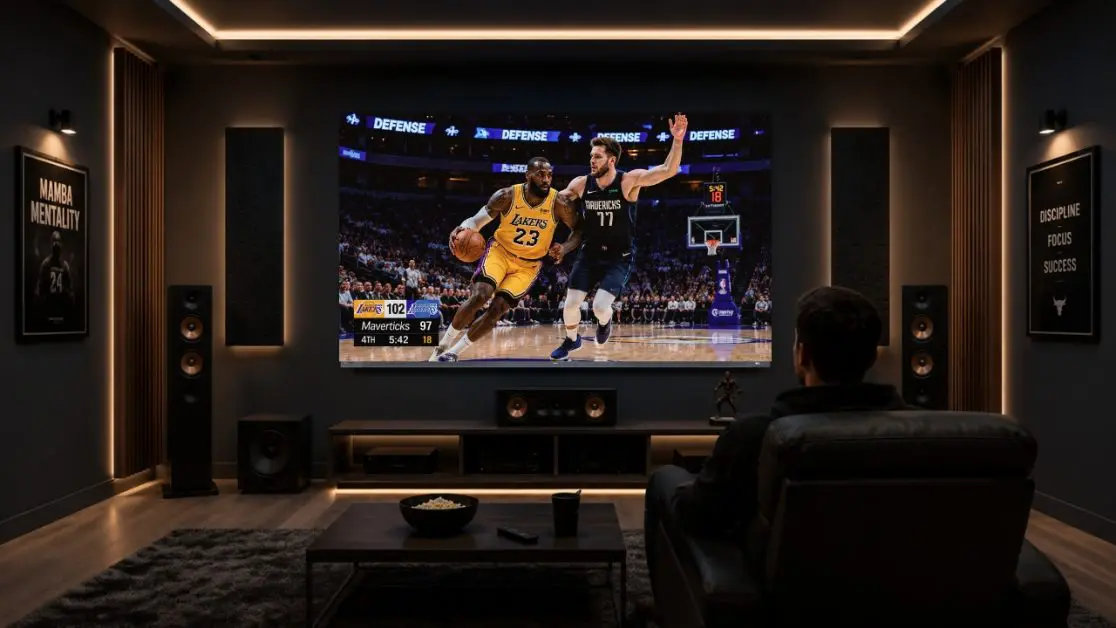
Sports is probably the most demanding content a television will ever display.
Movies have controlled camera movements.
TV shows have predictable scenes.
Even documentaries move at a comfortable pace.
Sports? Complete chaos.
A cricket ball travels across the screen in milliseconds.
Football players sprint across wide camera angles.
Tennis matches demand rapid tracking.
Formula 1 broadcasts push televisions to their limits.
Every frame matters.
Every movement matters.
The challenge is simple:
Can your TV keep up?
Because if it cannot, the experience immediately feels less immersive.
Bigger Screens Magnify Motion Problems
Here’s something many buyers discover only after bringing home a massive television.
Larger screens don’t hide imperfections.
They expose them.
You might not notice a little bit of motion blur on a smaller screen.
Try enlarging that image on a 65”, 75”, or 100” screen, and now every flaw is magnified. That is why motion handling becomes more critical the larger your screen gets. Let me explain.
Larger screens require sharper images.
If the motion processing in your TV isn’t up to par, bigger televisions can actually degrade your sports watching experience rather than enhance it.
But what is Motion Performance?
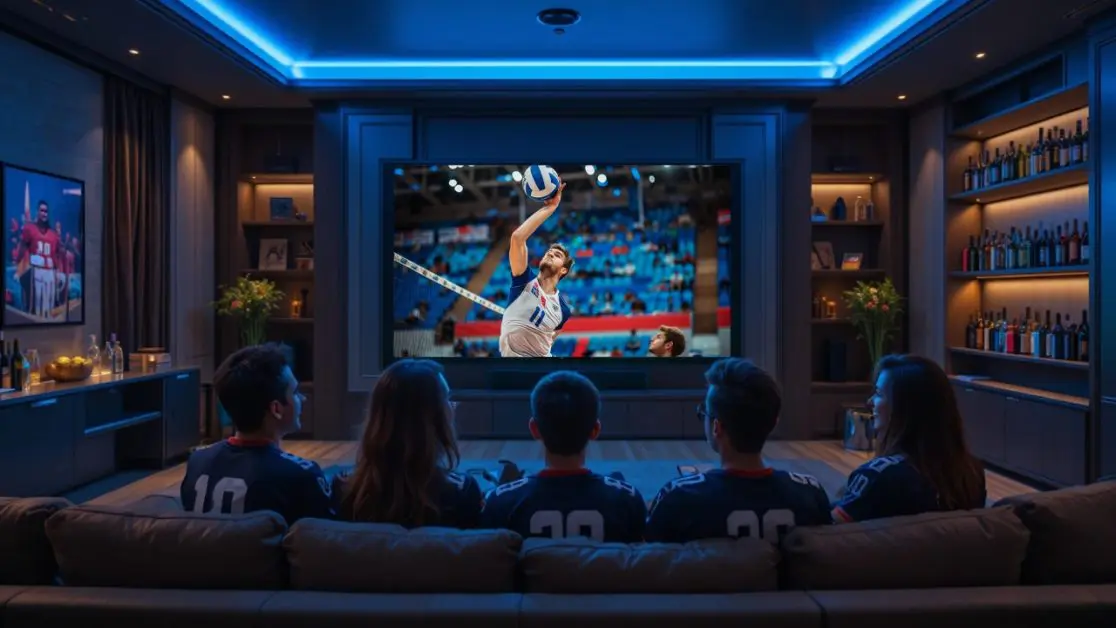
Motion performance is how well your TV can play moving objects on screen without the appearance of blur, judder, ghosting or lag. A number of technologies affect motion:
| Motion Performance Element | Why It Matters For Sports |
| Refresh Rate | Keeps fast action smooth |
| Motion Processing | Improves object tracking |
| AI Scene Detection | Adjusts picture dynamically |
| MEMC Technology | Reduces stutter during movement |
| Response Handling | Maintains image clarity |
| Local Dimming Control | Preserves detail during fast transitions |
When these technologies work together, motion looks natural.
When they don’t, sports start looking messy.
Why Refresh Rate Changes Everything
Imagine watching a fast cricket delivery.
Now imagine watching that delivery 144 times every second instead of 60.
That’s essentially what a higher refresh rate helps achieve.
A television with a 144Hz refresh rate can refresh the image significantly more often, helping reduce motion blur during fast-paced scenes.
For sports fans, that translates into:
- Cleaner ball tracking
- Sharper player movement
- Reduced image tearing
- Smoother camera pans
- Better visibility during action sequences
The difference becomes especially noticeable during:
- IPL matches
- International cricket tournaments
- Football leagues
- Tennis championships
- Formula 1 races
- Kabaddi broadcasts
The Haier M92 and M96 Series QD Mini LED TVs feature a 144Hz refresh rate designed specifically to deliver smoother motion and reduced blur during sports and action content.
Why AI Has Become Important for Sports Viewing
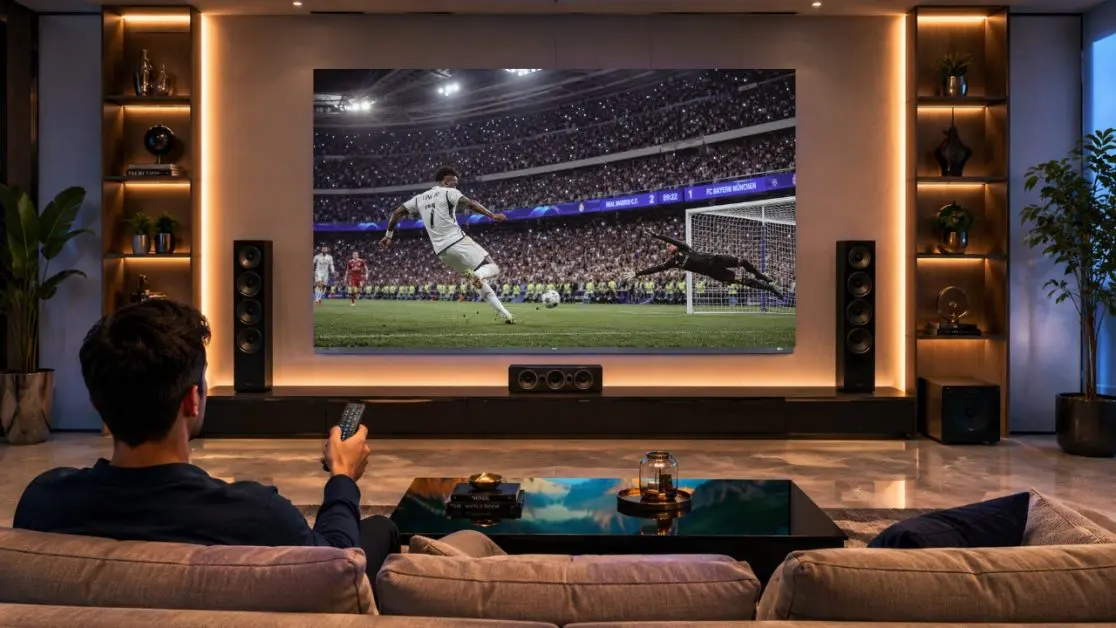
A few years ago, televisions displayed whatever signal they received.
Today, advanced TVs actively analyse content.
That’s a major shift.
Modern AI-powered televisions can identify scenes, recognise movement patterns, optimise contrast, and improve motion clarity in real time.
In other words, the TV is constantly working behind the scenes.
The Haier AI Ultra Sense Processor is designed to enable scene recognition and intelligent tuning for sharper motion, colour, contrast, and depth, it integrates picture, sound, gaming, and entertainment optimization into a unified viewing experience.
For sports fans, this means:
Faster Scene Adaptation
The television recognises changing action instantly.
Improved Motion Tracking
Moving objects remain clearer across the screen.
Better Depth Perception
Players, fields, and stadium environments feel more lifelike.
Enhanced Visual Stability
Less distraction during rapid camera movements.
And honestly, that’s what people notice.
Not the processor name.
Not the technical specifications.
Just the feeling that everything looks smoother.
Sports Isn’t Just About Picture Quality
Audio matters too.
A lot.
The roar of a packed stadium.
The sound of leather hitting willow.
The referee’s whistle.
The crowd chanted after a goal.
Sports become more emotional when sound feels present.
That’s why premium sports viewing increasingly depends on both picture and audio performance.
The Haier M92 Series features Sound by KEF, 2.1 Channel Speaker systems, Dolby Atmos support, and Total Sonic sound enhancement technologies designed to create a richer viewing environment.
Meanwhile, the flagship Haier New M96 Series elevates immersion further with Sound by KEF, Dolby Atmos and a 6.2.2 channel speaker architecture designed to deliver a more expansive three-dimensional sound field.
Because sports should feel like an event.
Not background noise.
The Real Advantage of QD Mini LED for Sports
Let’s talk about visibility.
Many Indian homes have bright living rooms.
Large windows.
Natural sunlight.
Reflective surfaces.
Traditional televisions often struggle in these conditions.
That’s where QD Mini LED technology offers meaningful advantages.
The Haier M92 and M96 Series use QD Mini LED technology with advanced dimming control, high brightness performance, and enhanced colour reproduction.
This helps deliver:
- Better contrast during daytime viewing
- Improved visibility in bright rooms
- More detailed highlights
- Deeper blacks
- Enhanced colour accuracy
The flagship M96 Series further combines high peak brightness with advanced local dimming capabilities and low-reflection screen technology to help maintain picture quality across varied viewing conditions.
That matters when a Sunday afternoon match starts at 3 PM and sunlight floods the room.
Common Buying Mistakes Sports Fans Make
Mistake #1: Buying Based Only on Screen Size
A larger display doesn’t guarantee a better sports experience.
Motion handling remains critical.
Mistake #2: Ignoring Refresh Rate
Many buyers focus only on resolution.
Sports viewers should pay equal attention to refresh rate.
Mistake #3: Overlooking Processing Power
The processor influences how effectively motion is managed.
Mistake #4: Ignoring Audio
Sports broadcasts depend heavily on atmosphere and crowd engagement.
Mistake #5: Not Considering Viewing Conditions
Room brightness affects picture quality more than many realise.
Who Should Prioritise Motion Performance?
Motion-focused televisions make the biggest difference for:
- Cricket enthusiasts
- Football fans
- Tennis followers
- Formula 1 viewers
- Kabaddi audiences
- Esports viewers
- Sports bars and entertainment spaces
If sports represents a major part of your screen time, motion performance should sit near the top of your buying checklist.
Maybe even above screen size.
Haier’s Approach to Sports-Focused Viewing
Rather than focusing on display size alone, Haier’s latest QD Mini LED lineup combines multiple technologies that directly impact sports performance.
Highlights include:
Haier New M92 Series QD Mini LED AI Smart Google TV
Available in:
Key capabilities include:
- 144Hz Refresh Rate
- AI Ultra Sense Processor
- Dolby Vision IQ
- HDR10+
- Sound by KEF
- Dolby Atmos
- AMD FreeSync Premium Pro
- Google TV
- Hands-Free Voice Control
Haier New M96 Series 254 cm (100) QD Mini LED AI Smart Google TV (H100M96FUX)
Flagship features include:
- 144Hz Refresh Rate
- AI Ultra Sense Processor
- Dolby Vision IQ
- HDR10+
- Sound by KEF
- Dolby Atmos
- 6.2.2 Channel Speaker System
- AMD FreeSync Premium Pro
- Low Reflection Screen Technology
- Google TV
These features work together to support smoother motion, sharper visuals, immersive sound, and a more engaging sports viewing experience.
Final Thoughts
People often assume bigger screens automatically create better sports experiences.
Not always.
A larger television simply gives motion more room to succeed—or fail.
That’s why motion performance deserves far more attention than it usually gets.
The ability to track a fast-moving cricket ball, follow a football counterattack, or enjoy a Formula 1 race without blur has a direct impact on viewing satisfaction.
Screen size impresses guests.
Motion performance impresses sports fans.
And when advanced technologies such as AI Ultra Sense Processor, 144Hz refresh rate, QD Mini LED display technology, Dolby Vision IQ, and KEF-powered audio come together, the difference becomes difficult to ignore.
Because the best sports television isn’t the one that looks the biggest.
It’s the one that keeps up with the game.
Frequently Asked Questions
Why do sports sometimes look blurry on expensive TVs?
Price and screen size alone don’t guarantee strong motion performance. Refresh rate, processing power, response handling, and motion compensation technologies play major roles.
Does screen size improve sports viewing automatically?
No. Larger screens magnify both strengths and weaknesses. If motion performance is poor, a bigger display may actually make the viewing experience worse.
What specifications should I prioritize if I mainly watch cricket and football?
Focus on refresh rate, motion processing, AI picture optimization, brightness, local dimming, and audio quality before simply choosing the largest screen available.
Why does a cricket ball sometimes disappear during fast deliveries?
Motion blur occurs when the TV struggles to keep up with rapid movement. Lower refresh rates and weaker motion processing can make fast-moving objects appear smeared.
Why do football matches look less sharp during camera pans?
Rapid camera movement challenges motion handling systems. TVs with stronger motion processing maintain better image clarity during pans.